
Quick Answer: Evaluating the Musso D7's Value
Finding the right seating solution for your home office involves balancing support, adjustability, and cost. If you are considering the Musso D7 within the popular ₱3,000 to ₱15,000 price range, the overall value of this chair depends heavily on your specific body proportions, daily usage hours, and feature priorities. While some users prioritize full-mesh breathability to handle warm afternoons, others require thick, high-density foam cushioning for long-term comfort.
The Musso D7 occupies a competitive spot in the Philippine market, bridging the gap between entry-level utility and mid-range customization. However, because specifications, exact retail pricing, and local warranty terms can vary across different e-commerce platforms and authorized distributors, buyers must verify current details directly from the manufacturer or official sellers before making a purchase.
Core Features to Compare in the ₱3K–₱15K Bracket
Navigating the ₱3,000 to ₱15,000 ergonomic chair market in the Philippines requires looking beyond aesthetic appeal. This price range represents a critical transition tier, bridging basic office task chairs with advanced ergonomic models designed for prolonged use. To determine if the Musso D7 or a competing model is the right investment for your workspace, you must evaluate how different chairs perform across three fundamental comparison pillars: physical construction, adjustability, and climate-appropriate comfort.
Products mentioned in this guide
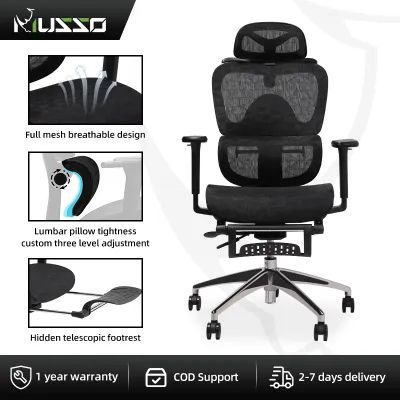
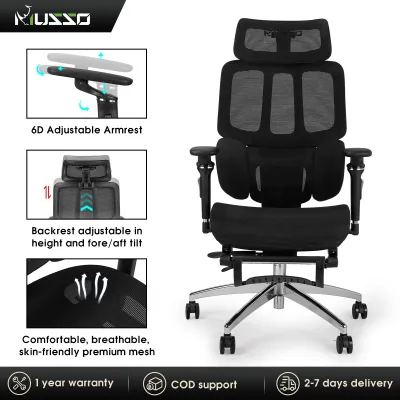
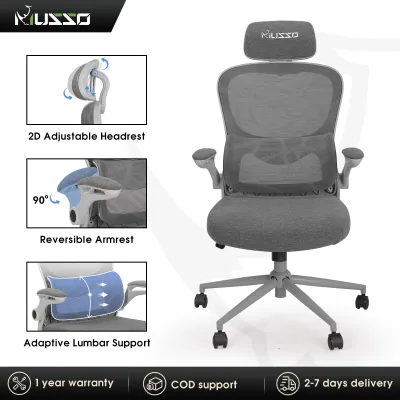
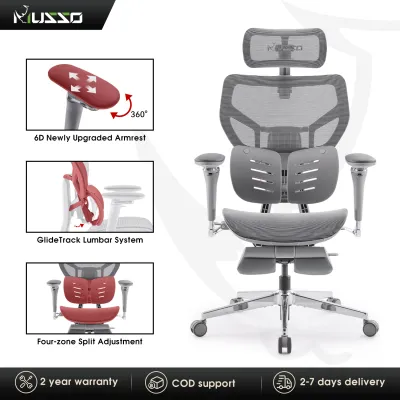
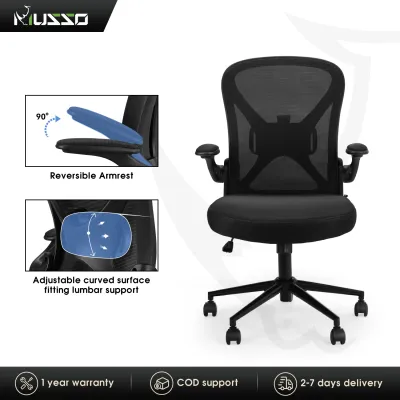
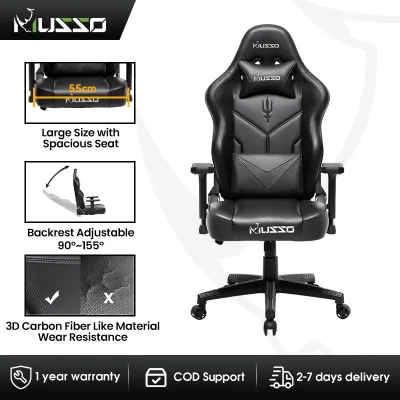
Prices are valid at publication and may change. Please refer to the product page for the latest price.

Build Quality, Materials, and Weight Capacity
When comparing options in this price bracket, the materials used in construction dictate both the upfront comfort and the long-term structural integrity of the chair. Lower-end models in this segment often utilize standard nylon bases and lower-density foam that can compress permanently over time, whereas mid-to-high-tier options frequently feature reinforced nylon or polished aluminum bases paired with high-density, resilient foam or high-tension mesh. To evaluate the Musso D7 against its peers, you should check its official weight capacity, base material, and caster type. For instance, polyurethane (PU) casters are typically preferred for hardwood or tile floors to prevent scratching, while standard nylon casters are better suited for carpeted areas.
It is vital to remember that material names alone do not guarantee durability or resistance to wear. A mesh backrest or a steel-reinforced frame is only as reliable as its joints, assembly points, and overall manufacturing quality. To protect your investment, look for verified manufacturer warranties, mentions of official BIFMA safety and durability testing, and user feedback regarding structural stability over months of continuous use. Checking the thickness of the steel plates under the seat pan and the class rating of the gas lift cylinder (ideally Class 3 or Class 4) provides a more objective measure of safety than promotional labels.
Adjustability and Ergonomic Features
The primary purpose of an ergonomic chair is to adapt to your body rather than forcing your body to adapt to the chair. In the ₱3,000 to ₱15,000 bracket, the level of adjustability varies wildly. Standard features you should expect to evaluate include seat height adjustment, tilt tension control, tilt lock mechanisms, and some form of lumbar support. Armrest adjustability is another major differentiator, ranging from fixed armrests to 1D (height only), 2D (height and angle), 3D (height, angle, and forward-backward), or even 4D (adding sideways adjustment) designs.
When analyzing the Musso D7, compare its specific adjustment mechanisms with other models in the same price tier. Chairs positioned near the lower limit of ₱3,000 generally offer basic height and tilt adjustments with fixed or simple flip-up armrests and static lumbar pads. Conversely, models approaching the ₱15,000 threshold typically introduce highly granular lumbar depth and height adjustments, independent seat slide mechanisms to adjust seat depth, and multi-dimensional armrests. Assessing how closely a chair’s adjustability matches your daily tasks—such as typing, reclining, or switching between multiple users—will help you identify whether a model offers sufficient customization.
Comfort and Breathability for Tropical Climates
Working in the tropical climate of the Philippines introduces unique demands for office furniture, where high humidity and warm temperatures can make poorly ventilated chairs highly uncomfortable. Buyers must choose between full-mesh designs, which promote maximum airflow across the back and seat, and hybrid or cushion-seat designs that utilize foam covered by fabric or leather. While high-density foam cushions offer excellent initial pressure distribution, they can retain body heat over long working hours if the workspace lacks continuous air conditioning.
If you are evaluating the Musso D7, assess the balance between its mesh tension and edge cushioning. A common issue with full-mesh seats in budget-to-mid-range chairs is that the mesh can sag over time, causing the user’s thighs to press against the hard plastic frame of the seat pan. To prevent restricted blood circulation, look for chairs that incorporate a sloping “waterfall” front edge or a foam insert beneath the front edge of the mesh. Because comfort is ultimately subjective and dependent on your unique body shape, checking the seller’s return policies or visiting a physical showroom to test the seat pan depth and lumbar pressure is highly recommended.
Price-to-Value Assessment in the Mid-Budget Market
To make an informed decision, it helps to understand how the ₱3,000 to ₱15,000 market is segmented in terms of features and expectations. The lower tier, spanning roughly ₱3,000 to ₱7,000, generally delivers basic ergonomic support. Chairs in this sub-range are suitable for light daily usage (3 to 5 hours) and typically feature nylon frames, standard mesh backrests, fixed or 1D armrests, and basic spring-tilt mechanisms. While highly affordable, these models may require more frequent replacement or adjustment under heavy daily use.
The upper tier, ranging from ₱8,000 to ₱15,000, introduces advanced ergonomic features and more robust build quality designed for full-day professional use (8+ hours). Here, you can expect to find dynamic lumbar support systems that automatically adjust to your movements, multi-angle tilt locks, seat sliding capabilities, aluminum alloy bases, and highly durable mesh fabrics. When assessing the Musso D7’s value proposition, place its retail price within these tiers to see if its feature set matches or exceeds what competitors offer at that exact price point.
Never assume that a higher price tag automatically translates to superior durability or comfort. Instead, measure value by the presence of essential ergonomic features that match your physical needs, the length and comprehensiveness of the local warranty, and the responsiveness of the brand’s local customer support. Additionally, factor in potential hidden costs that can affect your total budget. Heavy furniture items often incur substantial shipping fees within the Philippines, especially if you reside outside Metro Manila. You should also verify if professional assembly is included, as self-assembly of complex ergonomic mechanisms can be challenging without the proper tools.
Decision Framework: When to Choose the Musso D7
To simplify your purchasing decision, consider the following conditional framework based on your specific workspace requirements, body type, and budget constraints.
Choose the Musso D7 if:
- The chair's official dimensions, seat height range, and armrest spacing align precisely with your physical measurements and desk height.
- You prefer the specific combination of materials it offers (such as its mesh-to-cushion ratio) and its aesthetic matches your workspace.
- The retail price fits comfortably within your budget while being backed by a clear, verifiable local warranty from an authorized Philippine distributor who can supply replacement parts if needed.
Choose a competing chair if:
- You require specialized features not present on the Musso D7, such as an integrated extendable footrest for reclining, highly specific 4D armrests for specialized gaming or typing postures, or a highly adjustable headrest designed for taller or shorter statures.
- Your desk setup has unique height constraints that require a chair with an exceptionally low or high minimum seat height that the D7 cannot accommodate.
- You prefer a full-mesh seat pan for maximum heat dissipation, whereas the D7 model you are viewing utilizes a foam cushion, or vice-versa.
Neither option may fit if:
- Your body weight or height exceeds the standard limits specified by manufacturers in this price bracket, requiring you to seek heavy-duty, commercial-grade chairs with reinforced steel frames and wider seat pans.
- You require specialized medical-grade orthopedic support due to chronic back or neck conditions, which typically necessitates consulting a physical therapist and investing in high-end ergonomic brands outside this budget tier.
Verify first if:
- You are purchasing from a third-party online marketplace or an unauthorized reseller. Always confirm the seller's authorization status, verify the exact model version (as manufacturers sometimes update model numbers or features without changing the name), and ask for clear photos of the packaging and warranty card to avoid counterfeit, refurbished, or outdated stock.
Essential Pre-Purchase Checks
Before finalizing your order online or purchasing from a local showroom, complete these practical checks to ensure a seamless setup:
- Space and Dimensions: Measure your available workspace, paying close attention to the distance between your desk's legs and the height of the desk underside. Ensure the chair's maximum armrest height allows it to slide fully under the desk when not in use. Additionally, measure your home's doorways, hallways, and elevator access to confirm the shipping box can be delivered to your room without obstruction.
- Weight and Usage Limits: Cross-reference the manufacturer's official maximum weight capacity with your actual weight. If you plan to sit in the chair for more than 8 hours a day, verify that the cushioning and structural components are rated for continuous, heavy-duty usage rather than light office tasks.
- Assembly Requirements: Determine whether the chair is shipped fully assembled or requires DIY setup. If self-assembly is required, check if all necessary tools (such as Allen wrenches) and clear English instructions are included in the package. Consider whether you need to pay extra for professional assembly services if you are uncomfortable handling heavy metal bases and gas cylinders.
- Warranty and Returns: Read the fine print of the warranty policy. Ensure you understand which parts are covered (e.g., the gas lift, the mechanism, the casters, or the mesh) and for how long. Clarify the return process for items damaged during transit, including who covers the return shipping costs for heavy furniture.
Frequently Asked Questions (FAQ)
How long do ergonomic chairs in the ₱3K–₱15K range typically last?
The lifespan of an ergonomic chair in this price range typically varies from two to five years, depending heavily on daily usage hours, the user’s weight, environmental humidity, and maintenance habits. Chairs at the lower end of the budget may experience foam compression or mesh sagging sooner, while models closer to ₱15,000 often utilize higher-grade plastics and reinforced bases that extend their longevity. To get a realistic estimate of durability, rely on the manufacturer’s official warranty period as a baseline. You can maximize your chair’s lifespan by regularly tightening loose bolts, cleaning the casters to remove hair and debris, and keeping the chair out of direct sunlight to prevent material degradation.
Can I upgrade the armrests or casters on the Musso D7 later?
Compatibility for aftermarket upgrades on the Musso D7 depends entirely on the exact dimensions of the mounting points and stem sizes used by the manufacturer. Standard office chair casters often use a universal grip ring stem (typically 11mm x 22mm), allowing you to swap them out for smooth-rolling rollerblade-style wheels. However, upgrading armrests is significantly more complex, as mounting bolt patterns under the seat pan vary widely between brands and models. Before purchasing any third-party upgrades, measure your existing parts precisely with a caliper or consult the manufacturer’s customer support to verify compatibility and ensure the modification does not void your warranty or compromise structural safety.

Community discussion
Share your experience or ask a question. Comments are reviewed before publication.