
The Musso E600 Pro is a highly competitive contender in the Philippine home office landscape, offering a compelling balance of ergonomic features and build quality that justifies its position in the mid-range ₱3,000 to ₱15,000 budget. If you spend four to six hours at your desk daily and require targeted lower-back support, this chair delivers essential physical adjustments that outperform entry-level ₱3,000 utility chairs, yet it avoids the high price of premium ergonomic models that reach ₱15,000 or more. Your decision to purchase should hinge on your daily sitting duration, physical dimensions, and specific climate needs.
While it represents a balanced compromise for standard office workers and remote employees looking for solid mesh support, it may not suit everyone. If you are exceptionally tall, require highly customized seat depth adjustments, or plan to sit for over eight hours daily, you may find that the upper limit of your ₱15,000 budget offers more robust mechanical solutions. Understanding how this model matches your specific physical needs will ensure your investment directly translates to daily comfort.
Quick Verdict: Positioning the Musso E600 Pro in the ₱3K–₱15K Range
Within the wide ₱3,000 to ₱15,000 price spectrum, the Musso E600 Pro typically occupies the mid-point of this budget. This positioning makes it highly appealing to remote workers and gamers who require reliable lumbar support and breathable mesh without crossing the ₱10,000 threshold. It serves as a practical bridge between basic, non-adjustable office chairs and premium ergonomic chairs that feature advanced mechanical engineering.
Products mentioned in this guide
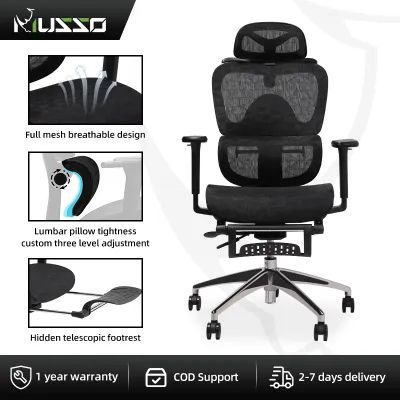
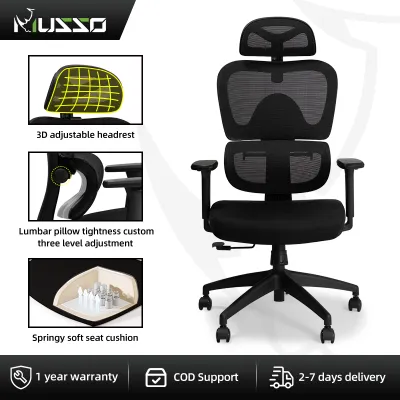
Prices are valid at publication and may change. Please refer to the product page for the latest price.
The primary deciding factor for its value lies in its targeted ergonomics. It offers essential physical adjustments, such as adaptive lumbar support and multi-directional armrests, which are often absent in cheaper models. However, it maintains a reasonable cost by utilizing high-strength polymer plastics instead of the polished aluminum frames found in high-end office furniture.
This chair is best suited for standard desk workers, remote professionals, and students who need reliable everyday support. If you require specialized medical-grade orthopedic adjustments or a highly customizable seat slider, you should look toward the higher end of the ₱15,000 budget. For the majority of users, the E600 Pro offers a highly functional middle ground that satisfies core ergonomic requirements.
Evaluating Ergonomic Adjustability Against Mid-Range Standards
Ergonomic comfort is not a single setting but a system of adjustable components that adapt to your body’s unique proportions. Within the ₱3,000 to ₱15,000 price range, the level of adjustability varies dramatically. At the lower end (₱3,000 to ₱7,000), you should expect fixed or basic height-adjustable lumbar support, simple 1D armrests that only move up and down, and a basic tilt-lock mechanism that tilts the seat and backrest together at a fixed angle.

As you move toward the higher end (₱8,000 to ₱15,000), chairs should introduce independent seat depth adjustment (seat sliders), 3D or 4D armrests (which adjust for height, depth, angle, and width), and synchro-tilt mechanisms that tilt the backrest at a faster rate than the seat to keep your feet flat on the floor. The Musso E600 Pro positions itself as a strong contender in this mid-to-high tier by offering a dedicated adaptive lumbar support system.
This adaptive mechanism is designed to pivot and press gently against your lower back as you shift postures, providing consistent contact without requiring manual adjustments every time you move. For users who struggle with lower back stiffness during long typing sessions, this adaptive design is a significant upgrade over the static plastic bands found on budget chairs. It helps maintain the natural inward curve of your lower spine, reducing muscle fatigue over long hours.
Armrest adjustability is another critical ergonomic checkpoint where the E600 Pro seeks to justify its price. It features multi-directional armrests that allow you to align the pads with your desk height and keyboard angle. This adjustment helps reduce strain on your shoulders and rotator cuffs by preventing your elbows from dangling or being forced too far outward. When evaluating this feature, check if the armrest pads are sufficiently cushioned; hard plastic armrests can compress the ulnar nerve over hours of continuous use.
To verify these ergonomic features before you buy, pay close attention to the mechanism specifications listed by the manufacturer. If you are testing the chair in a physical showroom, sit fully back in the seat pan and ensure your feet rest flat on the floor while your knees form a 90-degree angle. Check that the lumbar support aligns directly with the natural curve of your lower spine, just above your beltline. If you are purchasing online, look for detailed diagrams showing the exact range of travel for the armrests and the recline tension knob, which allows you to adjust how much resistance the backrest offers when you lean back.
Material Durability and Build Quality for Tropical Climates
Operating a home office in the Philippines presents unique challenges for furniture durability, primarily due to high relative humidity and elevated room temperatures. In a tropical climate, material selection directly affects both your comfort and the chair’s lifespan. Fully upholstered leather or thick polyurethane (PU) leather chairs often trap body heat, leading to sweating and eventual peeling of the synthetic material within a couple of seasons.
High-quality mesh, on the other hand, allows air to circulate freely around your back and thighs, keeping you cool even during afternoon power outages or when operating under fan-only cooling. The Musso E600 Pro utilizes a high-tensile mesh backrest that balances breathability with structural support. Unlike cheap, loose mesh that sags after a few months of use, premium mesh maintains its tension to keep your spine properly aligned.
To verify the quality of the mesh when inspecting a chair, press firmly on the center of the backrest; it should feel taut and spring back immediately without leaving visible indentations or loose wrinkles near the frame joints. Beyond the upholstery, the base and structural frame dictate the chair’s overall stability and load capacity. Budget chairs under ₱5,000 often use lightweight nylon bases that can flex under heavy loads or crack over time. The E600 Pro typically upgrades this component to a heavy-duty reinforced nylon or metal base, which provides a solid, wobble-free foundation.
When reviewing product specifications, check for the following safety and quality indicators on the product label or listing:
- Gas Lift Certification: Ensure the chair uses a Class 3 or Class 4 gas lift cylinder certified by international testing bodies like SGS or BIFMA. A Class 4 cylinder has thicker walls and offers safer, smoother height adjustments over years of use.
- Weight Capacity: Look for a verified structural weight limit of at least 120kg to 150kg. Even if you weigh significantly less, a higher weight rating indicates stronger joints and more durable caster wheels.
- Caster Wheel Material: Verify that the wheels are made of polyurethane (PU) or nylon with a soft coating. Hard plastic casters can scratch delicate wood laminates or tile grout lines common in Philippine homes.
Maintaining your chair in a humid environment requires a simple but consistent routine. Dust tends to settle in the mesh pores and mix with moisture, which can degrade the synthetic fibers over time. Vacuum the mesh backrest monthly using a soft brush attachment, and wipe down the plastic frame with a damp microfiber cloth. Avoid using harsh chemical solvents or alcohol-based cleaners, as these can strip the protective coatings on the plastic and accelerate the aging of the mesh.
Expected Trade-Offs and Potential Upgrades in This Budget
When shopping within the ₱3,000 to ₱15,000 price bracket, it is important to recognize that no single chair will offer flawless, high-end commercial performance. The Musso E600 Pro, while highly capable, involves specific trade-offs that keep it within an accessible price point. For instance, while it provides excellent lumbar support and multi-directional armrests, it may lack the advanced synchro-tilt mechanisms found in premium chairs costing upwards of ₱20,000.
In these high-end models, the seat pan slides forward and down as you recline, keeping your knees at an optimal angle and preventing the front edge of the seat from lifting your feet off the floor. Another common compromise in mid-range chairs is the extensive use of hardened polymer plastics in the frame rather than polished aluminum alloys. While these structural plastics are incredibly durable and help keep the chair lightweight, they can exhibit minor flexing or squeaking when you shift your weight abruptly.
This is a perfectly acceptable trade-off for standard home office use, but it highlights the difference between a functional mid-range tool and a luxury aesthetic statement. If you find that the E600 Pro falls slightly short in specific areas, you do not necessarily need to return the chair or stretch your budget to a premium tier. You can easily implement low-cost aftermarket upgrades to customize your setup:
- Ergonomic Footrest: If the seat height cannot be lowered enough for your feet to rest flat on the floor, a simple wooden or foam footrest can instantly correct your posture and relieve pressure on your under-thighs.
- Rollerblade Caster Wheels: Replacing the stock casters with rubberized rollerblade-style wheels (widely available on local online marketplaces) will make the chair glide silently across tile floors and protect delicate surfaces.
- Seat Cushions: If you prefer a highly cushioned feel over the firm support of a mesh seat, adding a memory foam or gel seat pad can provide customized pressure relief without compromising the chair's lumbar support.
Ultimately, paying closer to the ₱15,000 limit should deliver a noticeable improvement in mechanism smoothness, plastic finish, and joint tolerances compared to a ₱3,000 baseline. The E600 Pro sits comfortably in this spectrum, offering a highly functional middle ground that satisfies the core ergonomic requirements of most users without unnecessary luxury markups.
Pre-Checkout Checklist: Avoiding Hidden Costs and Verifying Warranties
Before you finalize your purchase on any local e-commerce platform or official brand webstore, it is crucial to calculate the total cost of ownership. Large, heavy items like ergonomic office chairs often incur substantial shipping fees, especially if you reside outside Metro Manila. In some cases, delivery charges to provinces in Luzon, Visayas, or Mindanao can add ₱1,000 to ₱3,000 to your total bill, pushing a seemingly budget-friendly chair past your intended limit.
Always enter your exact delivery address during the checkout preview to verify these bulky-item shipping surcharges before entering your payment details. Assembly is another practical factor that can carry hidden costs or require significant personal effort. Most ergonomic chairs are shipped flat-packed to reduce transport damage and shipping volume. While manufacturers include basic tools and printed instructions, assembling a chair can take anywhere from 30 minutes to an hour.
If you are not comfortable handling heavy components or aligning metal bolts with pre-drilled holes, check if the seller offers an optional professional assembly service. In major metropolitan areas, some authorized distributors provide pre-assembled delivery for a nominal fee, which guarantees the chair is put together correctly and safely.
Protecting your investment requires a clear understanding of the manufacturer’s warranty policy. A reputable mid-range chair should come with a warranty that lasts at least one to three years. However, you must read the fine print to understand exactly what is covered:
- Gas Cylinder and Mechanism: These are the most active mechanical parts and should always be covered under the primary warranty period.
- Mesh and Fabric: Tearing or sagging of the mesh is often excluded from standard warranties or covered for a much shorter duration, as this is frequently classified as general wear and tear.
- Frame and Base: Structural components should have long-term coverage against cracking or manufacturing defects.
To ensure your warranty is honored, always purchase through authorized dealers or official flagship stores on major e-commerce platforms. Parallel importers or unauthorized third-party sellers may offer a slightly lower initial price, but they often lack access to genuine replacement parts or direct communication channels with the manufacturer. If a critical component like the gas lift fails after six months, an unauthorized purchase could leave you with an unusable chair and no recourse for replacement parts, effectively doubling your long-term costs.
Specification-Based Alternatives if the E600 Pro Falls Short
If the specific design features or trade-offs of the Musso E600 Pro do not align with your personal preferences, you can use a specification-based approach to find a better alternative within the ₱3,000 to ₱15,000 range. By focusing on particular mechanical and material specifications rather than brand names, you can easily filter options on local online marketplaces to match your exact ergonomic needs.
If your primary concern is maximum adjustability and you have a budget closer to the ₱10,000 to ₱15,000 range, prioritize chairs that explicitly list 3D or 4D armrests, an adjustable seat slider (depth adjustment), and a multi-angle synchro-tilt mechanism. These features allow you to fine-tune the chair to highly specific body dimensions, making them ideal for users who are exceptionally tall or short, or those who transition frequently between typing, drawing, and reclining.
On the other hand, if your budget is strictly constrained to the lower end of the spectrum (₱3,000 to ₱6,000), you should avoid chairs that promise complex, multi-adjustable features at an impossibly low price. Instead, focus on finding a model that does the basics exceptionally well. Look for a chair with a certified Class 4 gas lift, a reinforced nylon base, and a fixed but well-contoured lumbar support frame. Prioritizing structural safety and basic material durability over complex, cheap plastic adjustment joints will yield a much longer-lasting and safer seating experience.
Frequently Asked Questions (FAQ)
How long should a mid-range ergonomic chair last?
In the ₱3,000 to ₱15,000 price range, a well-constructed ergonomic chair should typically last between three to five years of daily use. The actual lifespan depends heavily on your daily usage hours, your weight relative to the chair’s maximum capacity, and the climate conditions of your workspace. Over time, you may notice gradual mesh sagging, slight compression of foam cushions, or a slow loss of pressure in the gas lift cylinder. Performing basic monthly maintenance, such as tightening loose bolts and keeping the chair out of direct sunlight, will significantly extend its functional lifespan.
Is a headrest necessary for an office chair in this price range?
A headrest is not strictly necessary for maintaining a healthy posture while actively typing or working at a computer, as your head should naturally remain balanced over your spine. Headrests are primarily useful when you recline to read, watch videos, or take short breaks, as they relieve pressure on your neck muscles during passive sitting. If you spend most of your day in an upright, active working posture, you can safely deprioritize an adjustable headrest. Instead, redirect your budget toward a chair that offers superior lumbar support, a higher-quality gas lift, or more adjustable armrests.

Community discussion
Share your experience or ask a question. Comments are reviewed before publication.