Furniture Practical guides
Nightstands & Bedside Tables

Nightstands with Hidden Compartments: Choosing the Right Drawer Cabinet with a Secret Compartment

Discover how to choose a secure drawer cabinet with a secret compartment in the Philippines. Learn about materials, locking mechanisms, and space planning for tropical homes.

Add us as a preferred source on Google

Finding a secure way to store personal items right by your bed requires looking beyond standard bedside tables. In the Philippines, where tropical humidity, space constraints, and home security are practical considerations, a drawer cabinet with a secret compartment offers a smart blend of daily convenience and discreet storage. Rather than relying on highly visible lockboxes that draw immediate attention, these specialized nightstands integrate hidden voids, false bottoms, or magnetic locks directly into the furniture frame. This design allows you to keep essential items close at hand while keeping them completely out of sight from visitors, household staff, or curious children.

Selecting the right nightstand involves understanding how different materials react to the local climate and how various locking mechanisms perform over time. High humidity can cause wood to expand, potentially jamming a poorly designed secret latch, while low-quality hardware may fail after only a few months of use. By focusing on robust construction, reliable hardware, and smart layout planning, you can find a bedside cabinet that serves as both a functional piece of bedroom furniture and a dependable security measure. This guide will walk you through the essential features, mechanisms, and verification steps to help you make an informed purchase.

Why Choose a Nightstand with a Hidden Compartment?

Standard bedside tables typically feature open shelves or standard drawers that offer zero privacy. Anyone walking into your bedroom can easily open a drawer to find what is inside. A true drawer cabinet with a secret compartment, however, utilizes clever engineering to create storage spaces that are invisible to the untrained eye. These compartments are built into areas of the nightstand that normally appear to be solid wood or empty space, such as the plinth base, the back panel, or a double-layered drawer bottom.

Products mentioned in this guide
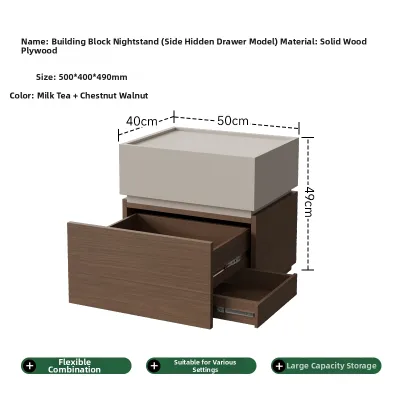
The primary purpose of these hidden compartments is to secure items that require quick access but must remain private. Common use cases include storing emergency cash, passports, land titles, prescription medications, or personal electronics. For parents, keeping medications in a secret compartment adds an extra layer of safety, ensuring children cannot accidentally access potentially harmful substances. It also provides peace of mind when hosting guests or when service providers enter the home for maintenance and cleaning.

However, choosing a nightstand with hidden storage involves clear trade-offs. Because these compartments are built within the existing footprint of the nightstand, they inevitably reduce the overall usable volume of the standard drawers. A drawer that looks deep from the outside might only have half that depth internally to accommodate a false bottom. Additionally, the extra wood panels, double walls, and locking hardware make the furniture significantly heavier. This added weight can make rearranging your bedroom or moving houses more difficult, and it requires sturdier flooring and drawer glides to support the structure.

Key Features to Evaluate in a Drawer Cabinet with a Secret Compartment

When comparing different models of a drawer cabinet with a secret compartment, the material and build quality should be your first consideration. In the Philippines, the tropical climate brings high humidity and seasonal temperature shifts that cause wood to expand and contract. Solid hardwoods like mahogany, acacia, and gmelina are highly durable and naturally resistant to warping if properly seasoned and sealed. If you opt for engineered wood, such as medium-density fiberboard (MDF) or particle board, ensure it features a high-quality veneer or laminate finish on all sides, including the back and underside, to prevent moisture absorption. Check the joint construction of the drawers; traditional dovetail joints or dowel reinforcements are far more durable than simple stapled or glued joints, which can pull apart under the weight of stored items.

drawer cabinet with secret compartment

Dimensions and proportions are equally critical for both functionality and aesthetics. The overall height of the nightstand should align closely with the top of your mattress, typically ranging between 60 and 70 centimeters, allowing you to reach both the tabletop and the secret compartment comfortably from a lying position. Measure the width and depth of the unit to ensure it fits comfortably beside your bed frame without blocking pathways or wardrobe doors. Do not forget to check the internal dimensions of the secret compartment itself; a compartment that is too shallow or narrow will not be able to hold bulkier items like document folders or medication bottles.

The reliability of the hardware and slides determines how long your secret compartment remains functional and hidden. High-quality, full-extension ball-bearing drawer glides are essential, as they allow standard drawers to open smoothly and fully, exposing the hidden areas behind or beneath them without sticking. For the secret compartment itself, evaluate the release mechanism. Whether it uses a magnetic key, a spring-loaded push latch, or a mechanical trigger, the action must be smooth and silent. A mechanism that squeaks, rattles, or requires excessive force to open not only frustrates daily use but also risks revealing the secret location to anyone nearby.

Types of Hidden Storage Mechanisms

Understanding the different types of hidden storage mechanisms allows you to choose the level of security and accessibility that fits your lifestyle. The most common design is the false bottom or false back panel. A false bottom consists of a thin, removable panel that sits flush against the bottom of a standard drawer, matching the wood grain and color of the drawer interior perfectly. To access the space beneath, you must use a specific tool, such as a magnetic key or a small suction cup, to lift the panel. False back panels utilize the empty space at the rear of the cabinet frame, accessible only when the main drawer is pulled out to a specific point or completely removed from its tracks. These visual-deception methods are highly effective because they do not look like storage spaces at all.

Another approach involves integrated locking drawers and safes. These units feature a dedicated drawer that is secured by a physical key lock, a mechanical combination dial, or a digital keypad. Some modern designs hide these locks behind a sliding decorative trim or a false drawer front to maintain a seamless look. Digital keypads and biometric fingerprint scanners offer rapid access without the need for a physical key, but they require battery power. When choosing an electronic lock, always verify the accessibility of the external battery terminal or the physical backup key slot, ensuring you can still open the compartment if the batteries die while you are away.

Diversion and concealed slots are smaller, highly specialized compartments built into the structural elements of the nightstand. These can include a sliding tabletop that reveals a shallow tray underneath, or a hollowed-out side molding that pops open when pressed. While these slots are excellent for hiding flat items like passports, cash envelopes, or spare keys, they have strict space limitations. They cannot accommodate larger or bulkier items, and their unique opening mechanisms can sometimes be discovered accidentally if someone grabs the nightstand to move it or leans heavily on a specific trim piece.

How to Verify Quality and Security Before Buying

Verifying the quality and security of a drawer cabinet with a secret compartment requires a systematic approach, whether you are shopping in a physical showroom or browsing online marketplaces. If you are inspecting a unit in-store, start by checking the overall stability of the nightstand. Place your hands on the tabletop and apply gentle pressure to see if the frame wobbles or sways. A loose frame can cause the drawers to sag over time, which will misalign the hidden compartment and make it difficult to open or lock. Pull the drawers out completely to inspect the underside and the rear tracks. Operate the secret mechanism at least ten times in succession; the release should feel consistent, and the panel should reseal without leaving any visible gaps or uneven seams that might catch the eye.

When shopping online, you must rely on specifications, seller communication, and user feedback. Read the product description carefully to confirm the exact materials used and the type of locking mechanism installed. Analyze customer reviews, paying close attention to any complaints regarding misaligned drawers, broken latches, or electronic lock failures. Look for photos uploaded by actual buyers to verify if the finish of the false bottom matches the rest of the drawer interior. Additionally, check the seller’s return and warranty policies. Heavy furniture is expensive to ship, so ensure the seller covers return shipping costs or offers a local service center in case the locking mechanism arrives defective.

It is also vital to understand the inherent security limitations of these furniture pieces. A wooden nightstand with a hidden compartment is an excellent deterrent against casual snooping, curious children, or opportunistic theft, but it is not a substitute for a certified, bolted-down steel safe. A determined intruder with basic tools can easily break open a wooden drawer or simply carry the entire nightstand out of your home. For high-value assets, irreplaceable family heirlooms, or firearms, you should always rely on a heavy, fire-rated safe that is securely anchored to your home’s concrete floor or wall framing.

Space and Layout Considerations for Your Bedroom

Integrating a new nightstand into your bedroom layout requires careful spatial planning to ensure it remains both functional and discreet. Begin by measuring the available floor space beside your bed frame. Be sure to account for the thickness of your baseboards, the location of wall outlets, and any light switches that might be blocked by a tall cabinet. Ideally, you should leave a gap of at least 5 to 10 centimeters between the nightstand and the bed to allow for easy bed-making and to prevent the furniture pieces from rubbing against each other, which can cause annoying squeaks and damage the wood finish.

Next, consider the clearance required for the drawers and any swinging panels. A drawer cabinet with a secret compartment needs ample space to open fully. Measure the distance from the front of the nightstand to the opposite wall, wardrobe, or bedroom door to ensure that when the drawers are fully extended, they do not block walkways or create a tripping hazard in the dark. If the secret compartment is accessed via a sliding tabletop or a side-opening panel, make sure there is enough clearance on the top or sides of the unit to operate the mechanism without having to move bedside lamps, alarm clocks, or decorative items every time.

The visual weight and design style of the nightstand also play a role in maintaining its secret nature. A nightstand that stands out too much from the rest of your bedroom decor will naturally draw attention, defeating the purpose of a hidden compartment. Choose a design, wood stain, or paint color that matches or closely complements your existing bed frame and wardrobe. A cohesive, well-integrated piece of furniture blends into the background, ensuring that visitors see only a beautiful bedside table rather than a secure storage unit.

Where to Look and What to Verify When Shopping Online

Finding a reliable drawer cabinet with a secret compartment in the Philippine market requires navigating local e-commerce platforms and specialized furniture retailers with care. Start by using highly specific search terms such as “drawer cabinet with secret compartment,” “hidden compartment nightstand,” or “bedside table with lock.” Broad searches like “bedroom cabinet” will yield thousands of irrelevant results, making it harder to find units with actual hidden features.

When browsing online marketplaces, prioritize verified sellers, official brand stores, or local furniture manufacturers. Check if the seller has a physical showroom or warehouse in the Philippines, particularly in major hubs like Metro Manila, Cebu, or Davao. Purchasing from a local warehouse significantly reduces shipping times, lowers delivery fees, and minimizes the risk of transit damage. It also makes it much easier to coordinate returns or repairs if the locking mechanism is damaged during shipping. Avoid listings with extremely low prices and no user reviews, as these are often low-quality imports made of thin, unsealed particle board that will quickly warp in tropical humidity.

Before finalizing your purchase, review the assembly requirements and warranty terms. Many high-quality nightstands are shipped fully assembled, which ensures that the hidden compartment is perfectly aligned and calibrated by professional carpenters. If the unit requires self-assembly, make sure a detailed instruction manual is included, and check if you will need specialized tools to install the locking hardware. Finally, compare the total cost in Philippine Pesos (₱), ensuring that the price includes delivery and any necessary assembly services. Factoring in these additional costs upfront prevents unexpected expenses and ensures you get a high-quality, durable piece of furniture that fits your budget.

Frequently Asked Questions (FAQ)

Can I install a hidden compartment in my existing nightstand?

Yes, retrofitting an existing nightstand is a viable option if you enjoy DIY projects, but it requires precision and care. The simplest method is to create a false bottom by cutting a thin piece of plywood or MDF to the exact dimensions of your drawer interior, then supporting it with small wooden cleats glued to the drawer sides. However, DIY modifications carry structural risks. Cutting into the frame or drawer backs can weaken the furniture, cause drawers to sag, and void any existing manufacturer warranties. If you lack woodworking experience or have a high-value nightstand, consulting a professional local carpenter is highly recommended to ensure a seamless, invisible finish that operates smoothly.

How do I maintain the locking mechanism of a secret drawer?

Regular maintenance is essential to prevent the hidden compartment from jamming over time. Dust the drawer tracks, glides, and locking hardware monthly using a dry microfiber cloth or a can of compressed air, as dust and lint buildup can interfere with latches and sensors. Avoid overloading both the standard drawers and the hidden compartment, as excess weight can warp the wood frame and misalign the locking pins. For digital, RFID, or biometric locks, refer to the manufacturer’s manual to check battery levels regularly, and replace them before they drain completely to avoid getting locked out of your compartment.

Are hidden compartments in nightstands fireproof or waterproof?

No. Standard nightstands made of solid wood, MDF, or plywood do not provide protection against fire or water damage. In the event of a house fire or severe tropical flooding, the contents of a hidden wooden compartment will be damaged. For irreplaceable documents, digital backup drives, or high-value jewelry, always use a certified fireproof and waterproof safe, which can be kept inside the hidden compartment if space permits.

Community discussion

Share your experience or ask a question. Comments are reviewed before publication.

Join the discussion

Name and email are required. Your email will not be published. Links are not allowed.

Nightstands & Bedside Tables

Nightstands with Hidden Compartments: Choosing the Right Drawer Cabinet with a Secret Compartment

Discover how to choose a secure drawer cabinet with a secret compartment in the Philippines. Learn about materials, locking mechanisms, and space planning for tropical homes.

Add us as a preferred source on Google

Finding a secure way to store personal items right by your bed requires looking beyond standard bedside tables. In the Philippines, where tropical humidity, space constraints, and home security are practical considerations, a drawer cabinet with a secret compartment offers a smart blend of daily convenience and discreet storage. Rather than relying on highly visible lockboxes that draw immediate attention, these specialized nightstands integrate hidden voids, false bottoms, or magnetic locks directly into the furniture frame. This design allows you to keep essential items close at hand while keeping them completely out of sight from visitors, household staff, or curious children.

Selecting the right nightstand involves understanding how different materials react to the local climate and how various locking mechanisms perform over time. High humidity can cause wood to expand, potentially jamming a poorly designed secret latch, while low-quality hardware may fail after only a few months of use. By focusing on robust construction, reliable hardware, and smart layout planning, you can find a bedside cabinet that serves as both a functional piece of bedroom furniture and a dependable security measure. This guide will walk you through the essential features, mechanisms, and verification steps to help you make an informed purchase.

Why Choose a Nightstand with a Hidden Compartment?

Standard bedside tables typically feature open shelves or standard drawers that offer zero privacy. Anyone walking into your bedroom can easily open a drawer to find what is inside. A true drawer cabinet with a secret compartment, however, utilizes clever engineering to create storage spaces that are invisible to the untrained eye. These compartments are built into areas of the nightstand that normally appear to be solid wood or empty space, such as the plinth base, the back panel, or a double-layered drawer bottom.

Products mentioned in this guide
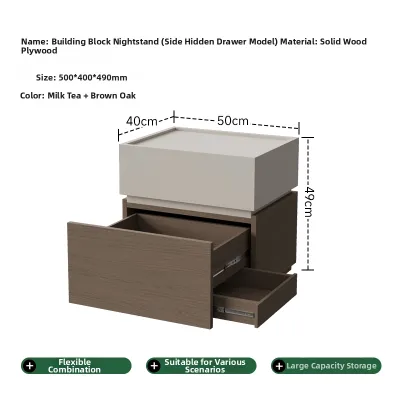
The primary purpose of these hidden compartments is to secure items that require quick access but must remain private. Common use cases include storing emergency cash, passports, land titles, prescription medications, or personal electronics. For parents, keeping medications in a secret compartment adds an extra layer of safety, ensuring children cannot accidentally access potentially harmful substances. It also provides peace of mind when hosting guests or when service providers enter the home for maintenance and cleaning.

However, choosing a nightstand with hidden storage involves clear trade-offs. Because these compartments are built within the existing footprint of the nightstand, they inevitably reduce the overall usable volume of the standard drawers. A drawer that looks deep from the outside might only have half that depth internally to accommodate a false bottom. Additionally, the extra wood panels, double walls, and locking hardware make the furniture significantly heavier. This added weight can make rearranging your bedroom or moving houses more difficult, and it requires sturdier flooring and drawer glides to support the structure.

Key Features to Evaluate in a Drawer Cabinet with a Secret Compartment

When comparing different models of a drawer cabinet with a secret compartment, the material and build quality should be your first consideration. In the Philippines, the tropical climate brings high humidity and seasonal temperature shifts that cause wood to expand and contract. Solid hardwoods like mahogany, acacia, and gmelina are highly durable and naturally resistant to warping if properly seasoned and sealed. If you opt for engineered wood, such as medium-density fiberboard (MDF) or particle board, ensure it features a high-quality veneer or laminate finish on all sides, including the back and underside, to prevent moisture absorption. Check the joint construction of the drawers; traditional dovetail joints or dowel reinforcements are far more durable than simple stapled or glued joints, which can pull apart under the weight of stored items.

drawer cabinet with secret compartment

Dimensions and proportions are equally critical for both functionality and aesthetics. The overall height of the nightstand should align closely with the top of your mattress, typically ranging between 60 and 70 centimeters, allowing you to reach both the tabletop and the secret compartment comfortably from a lying position. Measure the width and depth of the unit to ensure it fits comfortably beside your bed frame without blocking pathways or wardrobe doors. Do not forget to check the internal dimensions of the secret compartment itself; a compartment that is too shallow or narrow will not be able to hold bulkier items like document folders or medication bottles.

The reliability of the hardware and slides determines how long your secret compartment remains functional and hidden. High-quality, full-extension ball-bearing drawer glides are essential, as they allow standard drawers to open smoothly and fully, exposing the hidden areas behind or beneath them without sticking. For the secret compartment itself, evaluate the release mechanism. Whether it uses a magnetic key, a spring-loaded push latch, or a mechanical trigger, the action must be smooth and silent. A mechanism that squeaks, rattles, or requires excessive force to open not only frustrates daily use but also risks revealing the secret location to anyone nearby.

Types of Hidden Storage Mechanisms

Understanding the different types of hidden storage mechanisms allows you to choose the level of security and accessibility that fits your lifestyle. The most common design is the false bottom or false back panel. A false bottom consists of a thin, removable panel that sits flush against the bottom of a standard drawer, matching the wood grain and color of the drawer interior perfectly. To access the space beneath, you must use a specific tool, such as a magnetic key or a small suction cup, to lift the panel. False back panels utilize the empty space at the rear of the cabinet frame, accessible only when the main drawer is pulled out to a specific point or completely removed from its tracks. These visual-deception methods are highly effective because they do not look like storage spaces at all.

Another approach involves integrated locking drawers and safes. These units feature a dedicated drawer that is secured by a physical key lock, a mechanical combination dial, or a digital keypad. Some modern designs hide these locks behind a sliding decorative trim or a false drawer front to maintain a seamless look. Digital keypads and biometric fingerprint scanners offer rapid access without the need for a physical key, but they require battery power. When choosing an electronic lock, always verify the accessibility of the external battery terminal or the physical backup key slot, ensuring you can still open the compartment if the batteries die while you are away.

Diversion and concealed slots are smaller, highly specialized compartments built into the structural elements of the nightstand. These can include a sliding tabletop that reveals a shallow tray underneath, or a hollowed-out side molding that pops open when pressed. While these slots are excellent for hiding flat items like passports, cash envelopes, or spare keys, they have strict space limitations. They cannot accommodate larger or bulkier items, and their unique opening mechanisms can sometimes be discovered accidentally if someone grabs the nightstand to move it or leans heavily on a specific trim piece.

How to Verify Quality and Security Before Buying

Verifying the quality and security of a drawer cabinet with a secret compartment requires a systematic approach, whether you are shopping in a physical showroom or browsing online marketplaces. If you are inspecting a unit in-store, start by checking the overall stability of the nightstand. Place your hands on the tabletop and apply gentle pressure to see if the frame wobbles or sways. A loose frame can cause the drawers to sag over time, which will misalign the hidden compartment and make it difficult to open or lock. Pull the drawers out completely to inspect the underside and the rear tracks. Operate the secret mechanism at least ten times in succession; the release should feel consistent, and the panel should reseal without leaving any visible gaps or uneven seams that might catch the eye.

When shopping online, you must rely on specifications, seller communication, and user feedback. Read the product description carefully to confirm the exact materials used and the type of locking mechanism installed. Analyze customer reviews, paying close attention to any complaints regarding misaligned drawers, broken latches, or electronic lock failures. Look for photos uploaded by actual buyers to verify if the finish of the false bottom matches the rest of the drawer interior. Additionally, check the seller’s return and warranty policies. Heavy furniture is expensive to ship, so ensure the seller covers return shipping costs or offers a local service center in case the locking mechanism arrives defective.

It is also vital to understand the inherent security limitations of these furniture pieces. A wooden nightstand with a hidden compartment is an excellent deterrent against casual snooping, curious children, or opportunistic theft, but it is not a substitute for a certified, bolted-down steel safe. A determined intruder with basic tools can easily break open a wooden drawer or simply carry the entire nightstand out of your home. For high-value assets, irreplaceable family heirlooms, or firearms, you should always rely on a heavy, fire-rated safe that is securely anchored to your home’s concrete floor or wall framing.

Space and Layout Considerations for Your Bedroom

Integrating a new nightstand into your bedroom layout requires careful spatial planning to ensure it remains both functional and discreet. Begin by measuring the available floor space beside your bed frame. Be sure to account for the thickness of your baseboards, the location of wall outlets, and any light switches that might be blocked by a tall cabinet. Ideally, you should leave a gap of at least 5 to 10 centimeters between the nightstand and the bed to allow for easy bed-making and to prevent the furniture pieces from rubbing against each other, which can cause annoying squeaks and damage the wood finish.

Next, consider the clearance required for the drawers and any swinging panels. A drawer cabinet with a secret compartment needs ample space to open fully. Measure the distance from the front of the nightstand to the opposite wall, wardrobe, or bedroom door to ensure that when the drawers are fully extended, they do not block walkways or create a tripping hazard in the dark. If the secret compartment is accessed via a sliding tabletop or a side-opening panel, make sure there is enough clearance on the top or sides of the unit to operate the mechanism without having to move bedside lamps, alarm clocks, or decorative items every time.

The visual weight and design style of the nightstand also play a role in maintaining its secret nature. A nightstand that stands out too much from the rest of your bedroom decor will naturally draw attention, defeating the purpose of a hidden compartment. Choose a design, wood stain, or paint color that matches or closely complements your existing bed frame and wardrobe. A cohesive, well-integrated piece of furniture blends into the background, ensuring that visitors see only a beautiful bedside table rather than a secure storage unit.

Where to Look and What to Verify When Shopping Online

Finding a reliable drawer cabinet with a secret compartment in the Philippine market requires navigating local e-commerce platforms and specialized furniture retailers with care. Start by using highly specific search terms such as “drawer cabinet with secret compartment,” “hidden compartment nightstand,” or “bedside table with lock.” Broad searches like “bedroom cabinet” will yield thousands of irrelevant results, making it harder to find units with actual hidden features.

When browsing online marketplaces, prioritize verified sellers, official brand stores, or local furniture manufacturers. Check if the seller has a physical showroom or warehouse in the Philippines, particularly in major hubs like Metro Manila, Cebu, or Davao. Purchasing from a local warehouse significantly reduces shipping times, lowers delivery fees, and minimizes the risk of transit damage. It also makes it much easier to coordinate returns or repairs if the locking mechanism is damaged during shipping. Avoid listings with extremely low prices and no user reviews, as these are often low-quality imports made of thin, unsealed particle board that will quickly warp in tropical humidity.

Before finalizing your purchase, review the assembly requirements and warranty terms. Many high-quality nightstands are shipped fully assembled, which ensures that the hidden compartment is perfectly aligned and calibrated by professional carpenters. If the unit requires self-assembly, make sure a detailed instruction manual is included, and check if you will need specialized tools to install the locking hardware. Finally, compare the total cost in Philippine Pesos (₱), ensuring that the price includes delivery and any necessary assembly services. Factoring in these additional costs upfront prevents unexpected expenses and ensures you get a high-quality, durable piece of furniture that fits your budget.

Frequently Asked Questions (FAQ)

Can I install a hidden compartment in my existing nightstand?

Yes, retrofitting an existing nightstand is a viable option if you enjoy DIY projects, but it requires precision and care. The simplest method is to create a false bottom by cutting a thin piece of plywood or MDF to the exact dimensions of your drawer interior, then supporting it with small wooden cleats glued to the drawer sides. However, DIY modifications carry structural risks. Cutting into the frame or drawer backs can weaken the furniture, cause drawers to sag, and void any existing manufacturer warranties. If you lack woodworking experience or have a high-value nightstand, consulting a professional local carpenter is highly recommended to ensure a seamless, invisible finish that operates smoothly.

How do I maintain the locking mechanism of a secret drawer?

Regular maintenance is essential to prevent the hidden compartment from jamming over time. Dust the drawer tracks, glides, and locking hardware monthly using a dry microfiber cloth or a can of compressed air, as dust and lint buildup can interfere with latches and sensors. Avoid overloading both the standard drawers and the hidden compartment, as excess weight can warp the wood frame and misalign the locking pins. For digital, RFID, or biometric locks, refer to the manufacturer’s manual to check battery levels regularly, and replace them before they drain completely to avoid getting locked out of your compartment.

Are hidden compartments in nightstands fireproof or waterproof?

No. Standard nightstands made of solid wood, MDF, or plywood do not provide protection against fire or water damage. In the event of a house fire or severe tropical flooding, the contents of a hidden wooden compartment will be damaged. For irreplaceable documents, digital backup drives, or high-value jewelry, always use a certified fireproof and waterproof safe, which can be kept inside the hidden compartment if space permits.

Community discussion

Share your experience or ask a question. Comments are reviewed before publication.

Join the discussion

Name and email are required. Your email will not be published. Links are not allowed.