
Finding the right bedside storage in a compact bedroom often requires creative solutions that do not involve drilling holes into your walls. Whether you are renting a condo with concrete walls or simply want to avoid damaging your painted plaster, no-drill side cabinets and shelves offer a practical alternative. The best option for your space depends entirely on your bed frame material, wall surface, and what you plan to store. By evaluating adhesive, magnetic, and tension-based designs, you can secure a stable bedside companion without a single screw.
Key Criteria for Selecting a No-Drill Bedside Cabinet
Before purchasing any no-drill bedside storage, you must clearly define your bedroom’s physical constraints and your daily habits. It is easy to overestimate how much weight a floating shelf can support, leading to dropped items and damaged surfaces. Start by listing the exact items you need within arm’s reach, such as a smartphone, a glass of water, a reading lamp, or heavy books.
Every manufacturer specifies a maximum weight capacity for their products, and these limits must be strictly matched to your intended load. A lightweight plastic adhesive tray might hold a charging phone and eyeglasses, but it will likely fail under the weight of a ceramic lamp or a stack of magazines. Always verify these weight thresholds on the product packaging or official specification sheets before making a decision.
Products mentioned in this guide
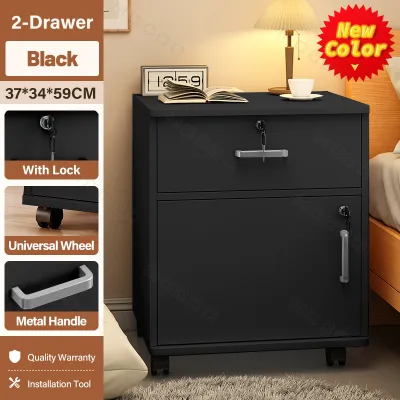
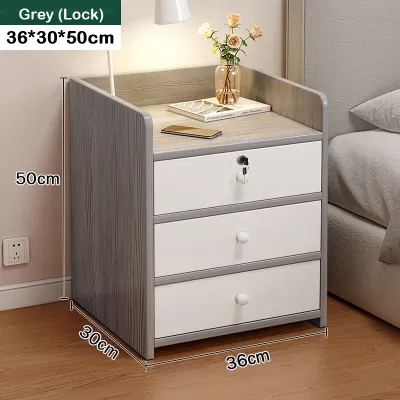
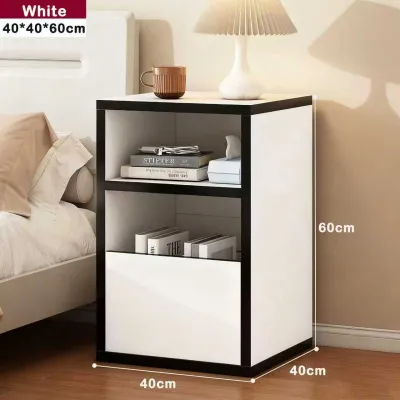
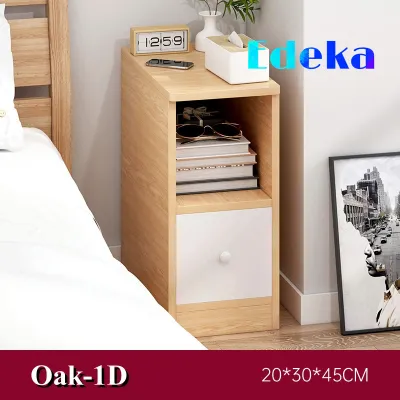
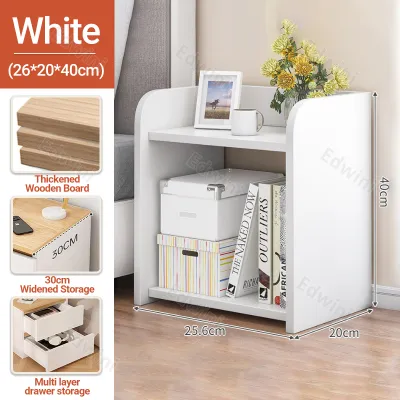
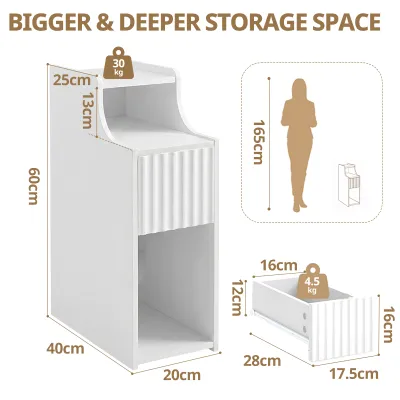
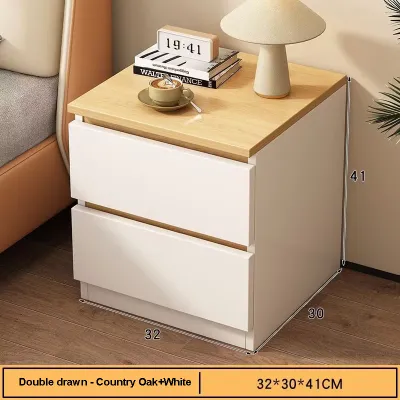
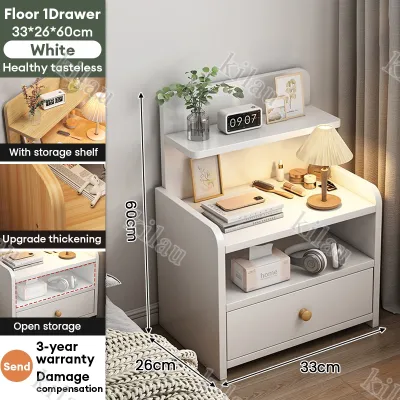
Prices are valid at publication and may change. Please refer to the product page for the latest price.
Next, measure the physical clearance around your bed. You need to assess both the horizontal gap between your mattress and the wall, and the vertical space available above or below the bed frame. In tight condo layouts, a cabinet that protrudes too far can block walkways or interfere with wardrobe doors, making precise measurements of finished dimensions essential.
Finally, identify the exact composition of your mounting surface. An adhesive shelf requires a completely different surface type than a magnetic organizer or a clamp-on tray. Inspecting whether your wall is painted concrete, drywall, or wood paneling—and checking if your bed frame is metal, solid wood, or upholstered—will immediately filter out incompatible options.
Adhesive Side Cabinets: Wall Compatibility and Limits
Adhesive-mounted side cabinets and shelves are highly popular for their clean, floating appearance, but their success depends entirely on wall compatibility. These systems rely on high-strength adhesive strips or liquid glues that require a completely smooth, non-porous, and clean surface to bond correctly. Ideal surfaces include glazed ceramic tiles, smooth glass, sealed metal, or flat varnished wood.

Conversely, textured walls, rough concrete, brick, and wallpaper are highly unsuitable for adhesive mounts. If your bedroom walls have a textured plaster finish or peeling paint, the adhesive will fail to establish full contact, leading to a sudden collapse. Furthermore, applying adhesives to freshly painted walls is a common mistake; the paint must fully cure for several weeks according to the paint manufacturer’s guidelines before any adhesive is applied.
In tropical environments like the Philippines, ambient humidity and temperature play a critical role in adhesive performance. High humidity can interfere with the curing process, meaning you must strictly follow the manufacturer’s instructions regarding curing times—often requiring 24 to 72 hours of completely dry, load-free waiting before placing any items on the shelf. Failing to wait out this curing period is the primary cause of early adhesive failure.
You must also carefully evaluate the long-term risks of wall damage, especially if you are renting your home. While many adhesives claim to be removable, pulling them off can tear away drywall paper or peel layers of latex paint, potentially violating your lease agreement. Before installation, check your tenancy rules and inspect the stability of your wall’s paint layer to ensure it can handle the tension of removal.
Magnetic Side Cabinets: Bed Frame Requirements and Risks
Magnetic side cabinets offer an incredibly convenient, repositionable storage solution, but they are only viable if you have the correct type of bed frame. These organizers rely on strong magnets that must attach directly to a ferromagnetic metal surface. Before buying a magnetic shelf, you must physically test your bed frame or headboard with a standard household magnet to confirm it contains iron, steel, or another magnetic metal.
Many modern bed frames are constructed from aluminum, brass, solid wood, or composite materials, none of which will hold a magnetic mount. Even if your frame is metal, a thick layer of decorative powder coating or fabric upholstery can significantly reduce the magnetic pull. Testing the surface beforehand ensures you do not purchase a cabinet that simply slides down to the floor.
Once you confirm compatibility, check the manufacturer’s labels for the exact maximum load capacity of the magnetic cabinet. Magnetic mounts are highly susceptible to shear force, meaning they might hold a heavy object when pulled straight out, but will slide downward when loaded from above. Distribute your items evenly across the shelf surface to prevent gradual slipping or sudden detachment.
Additionally, you must consider the safety of the items you store on a magnetic shelf. Strong magnetic fields can interfere with sensitive electronics, mechanical watches, medical devices like pacemakers, and magnetic stripe cards. Keep these items away from the mounting zone, and ensure your charging cables or electronic devices are positioned safely to avoid any potential interference or damage.
Tension-Rod and Clamp-On Options: Fit and Surface Protection
Tension-rod shelves and clamp-on bedside trays provide excellent mechanical stability without relying on adhesives or magnetic metals. Clamp-on options typically attach directly to the edge of your bed frame or headboard using a screw-clamp mechanism. To ensure a secure fit, you must measure your bed frame’s edge thickness, the depth of any decorative lip, and the thickness of any upholstery.
If your bed frame has a rounded edge, a very shallow lip, or thick, plush fabric upholstery, a standard clamp may not grip securely, causing the shelf to tilt or wobble. For tension-rod systems that wedge between the floor and the ceiling or between two horizontal surfaces, you must verify the vertical clearance. Ensure there are no structural obstructions like ceiling fans, light fixtures, or decorative crown molding in the path of the rod.
Protecting your furniture’s finish is another critical step when installing clamp-on or tension systems. The high pressure exerted by metal clamps can easily dent soft woods, scratch painted finishes, or crush delicate fabric upholstery. Always use the manufacturer-recommended protective padding, such as rubber grips or felt pads, between the clamp and your bed frame to distribute the pressure safely.
When adjusting tension rods, apply pressure gradually and check the stability of both the floor and the ceiling. In some modern condo constructions, drop ceilings or plasterboard panels may not be strong enough to withstand the upward force of a heavy-duty tension rod. Always anchor the rod against solid concrete or structural wooden beams to prevent structural damage or a sudden collapse of the shelving unit.
Pre-Installation Checks and When to Avoid No-Drill Solutions
Before finalizing any no-drill cabinet installation, conduct a thorough review of all product manuals and warranties. Read both the cabinet’s installation guide and the care instructions for your bed frame or wall finish. Some high-end furniture warranties are voided if third-party clamps or heavy adhesives are applied directly to the wood or fabric, making this a crucial step to protect your investments.
It is also important to recognize the limitations of initial stress tests. Just because an adhesive shelf or a magnetic tray holds a heavy book for five minutes does not mean it is safe for long-term use. Over time, factors like daily vibrations, changes in room temperature, and cumulative weight can weaken the mount, risking damage to fragile items like glass cups, tablets, or expensive reading glasses.
If you find that your bedroom walls are uneven, your bed frame lacks a compatible clamping edge, or your storage needs exceed the weight limits of no-drill options, do not force the installation. Forcing an unstable shelf to work poses a safety hazard to anyone sleeping nearby. In these situations, it is best to stop the installation and opt for a stable, freestanding bedside table or consult a qualified professional to explore safe, low-impact drilling alternatives.
Frequently Asked Questions (FAQ)
How do I know the exact weight limit for a no-drill bedside shelf?
To find the exact weight limit, always refer to the manufacturer’s official specification sheet, product packaging, or the user manual. Do not rely on visual estimates or general online guides, as load capacities vary significantly based on materials and mounting mechanisms. Additionally, check if the manufacturer specifies a distributed load limit versus a single-point weight limit to ensure safe daily use.
Can I use adhesive cabinets on textured or painted walls?
Adhesive cabinets should not be used on textured, rough, or freshly painted walls. The uneven surface of textured paint prevents the adhesive from forming a complete bond, leading to premature failure. On painted drywall or plaster, the weight of the cabinet can easily pull the paint layer away from the wall, causing the shelf to fall and leaving behind unsightly wall damage that requires patching and repainting.

Community discussion
Share your experience or ask a question. Comments are reviewed before publication.