
When shopping for an office chair with headrest in the Philippines, your budget dictates the level of adjustability, material durability, and structural safety you can expect. At the ₱3,000 entry-level tier, headrests are typically fixed or offer basic single-axis height adjustments, paired with simpler nylon frames. Moving up to the ₱7,000 mid-range tier introduces multi-dimensional (2D or 3D) headrest adjustments, independent lumbar support, and more robust tilt mechanisms. At the premium ₱15,000 tier, you should expect highly responsive, adaptive headrests, high-tension mesh designed to withstand tropical humidity, and heavy-duty chassis components with extended warranties. Understanding these distinctions prevents costly purchasing mistakes and ensures you select a chair that matches your physical dimensions and daily working habits.
Defining Your Priorities Across Budget Tiers
Navigating the office furniture market requires a clear understanding of how price correlates with physical support. A higher budget does not merely buy aesthetic appeal; it directly influences the mechanical complexity of the chair and its ability to adapt to your body. When working within a strict budget, prioritizing structural integrity over complex adjustments is essential. A stable base, a certified gas lift, and reliable casters are non-negotiable safety baselines that must take precedence over highly adjustable components.
Allocating your budget involves critical trade-offs. If a low-cost chair features an overly complex, multi-adjustable headrest, the manufacturer may have compromised on the quality of the seat foam, the backrest frame, or the tilt mechanism. In contrast, a well-designed entry-level chair often features a simpler, fixed headrest but maintains a sturdy frame. By identifying your primary physical needs—whether you require constant neck support during long typing sessions or simply need a comfortable recline during calls—you can decide where to compromise and where to invest.
Products mentioned in this guide
![[COD] Office chair Ergonomic Chair Computer Chair Gaming Chair Reclining Chair With Foot Mesh With Headrest Comfortable Breathable Office Chair Learning Chair Computer Chair 360°Rotation](https://img.lazcdn.com/g/p/36a625eef59eb4768be784ae6fac9598.png_400x400q80.png_.webp)
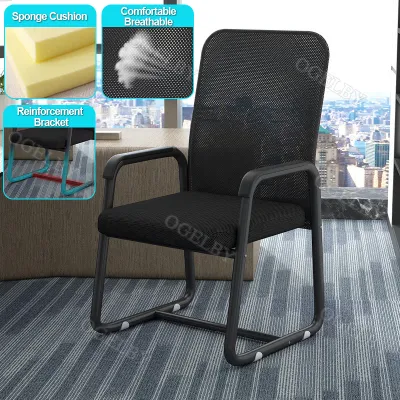
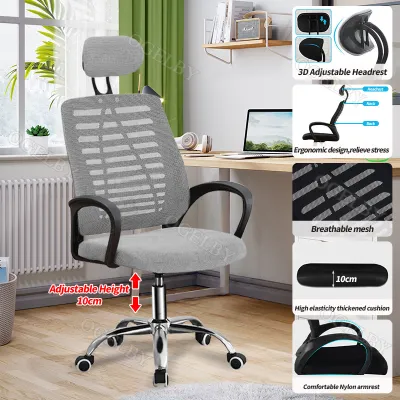
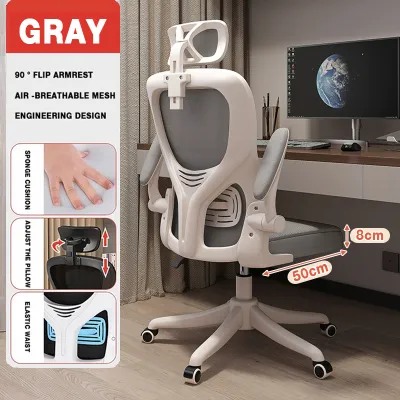
Prices are valid at publication and may change. Please refer to the product page for the latest price.
The ₱3,000 Tier: Evaluating Basic Support and Fixed Features
At the ₱3,000 price point, buyers should expect straightforward, utilitarian designs. Headrests in this tier are almost exclusively fixed molded plastic or offer basic single-axis vertical height adjustment. Because these headrests cannot tilt or move forward, they rely entirely on your natural posture aligning with the pre-set curve of the chair. When evaluating these options, it is vital to check the physical dimensions of the backrest to ensure the headrest actually cradles your neck rather than pushing your shoulders forward or pressing uncomfortably against the back of your skull.

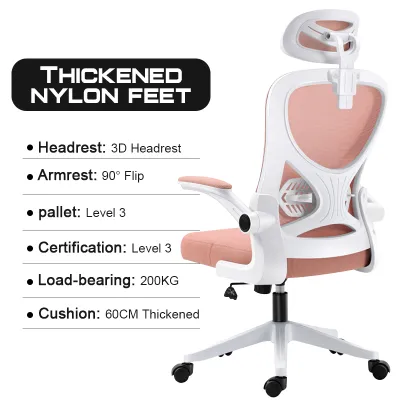
Safety must remain a priority even at an entry-level price. Before purchasing, inspect the gas lift cylinder for stamped safety certifications, which indicate the component has undergone standardized pressure testing. Additionally, examine the five-star base; at this price point, bases are typically made of nylon or lightweight steel. Verify the manufacturer’s stated weight capacity and check the thickness of the plastic joints to ensure they can support daily movement without flexing or cracking.
A common trap in this budget range is the use of low-density foam covered in thin fabric or low-grade mesh. In the warm, humid climate of the Philippines, non-breathable materials trap body heat and sweat, leading to rapid degradation of the padding and unpleasant odors. Furthermore, rigid plastic headrests without sufficient cushioning or flexible mesh can cause localized pressure points and neck strain during extended use. If the budget is tight, look for chairs that prioritize a simple, breathable mesh backrest over complex but poorly executed plastic adjustments.
The ₱7,000 Tier: Assessing Adjustability and Build Upgrades
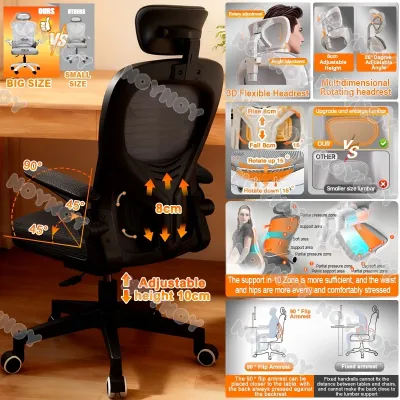
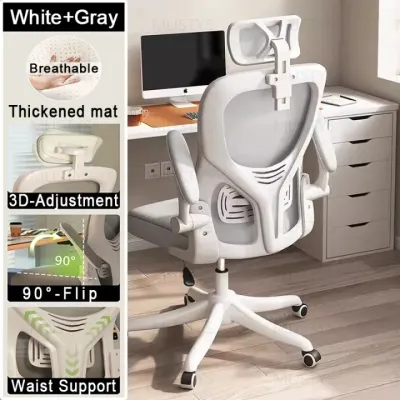
Stepping up to the ₱7,000 tier introduces significant improvements in both mechanical adjustability and material quality. At this level, headrests transition from fixed designs to 2D or 3D mechanisms, allowing you to adjust not only the height but also the angle and, in some cases, the depth of the support. This multi-dimensional movement is crucial for aligning the headrest with your cervical spine when switching between upright typing and a relaxed recline. When testing these chairs, apply gentle pressure to the headrest to verify that the locking mechanisms hold their position securely without slipping.
The overall build of the chair receives substantial upgrades in this mid-range bracket. You should expect independent lumbar support systems that can be adjusted vertically to match the curve of your lower back. Synchronized tilt mechanisms, which allow the backrest and seat pan to recline at a harmonious ratio, become common, providing better support for your pelvis and spine. Armrests also upgrade from fixed designs to height-adjustable configurations, reducing strain on your shoulders and complementing the neck support provided by the headrest.
Long-term value at this price point depends heavily on post-purchase support. Because mid-range chairs represent a larger financial commitment, it is important to verify the warranty terms offered by the seller. Look for documented warranties that cover structural components, such as the gas lift, tilt mechanism, and frame, for at least one to two years. Additionally, inquire about the availability of replacement parts, such as casters or replacement mesh panels, to ensure the chair can be serviced rather than discarded if a single component wears out.
The ₱15,000 Tier: Verifying Premium Ergonomics and Materials
At the ₱15,000 tier, chairs are engineered for intensive daily use, featuring advanced ergonomic designs and premium materials. Headrests in this category often utilize adaptive or 4D articulating joints that automatically adjust to your head movement without requiring manual knob adjustments. These dynamic systems respond to the subtle shifts in your posture, maintaining continuous support for your cervical spine whether you are leaning forward to read a document or reclining during a virtual meeting.
The materials used in premium chairs are selected for durability and comfort under demanding conditions. High-tension mesh is a hallmark of this tier; unlike cheaper alternatives, premium mesh retains its elasticity over years of use and does not sag. This is particularly beneficial in tropical environments, as high-quality mesh maximizes airflow to keep you cool. The tilt chassis is typically constructed from heavy-duty cast aluminum or fiberglass-reinforced polymers, often utilizing precise wire-control systems for smooth, effortless tension adjustments. Edge-friction finishing on plastic and metal joints prevents squeaking and ensures silent operation.
When investing in a premium chair, the purchasing experience should reflect the price point. Verify whether the seller provides professional assembly services, as incorrect home assembly can compromise the chair’s ergonomic benefits and safety. Look for extended structural warranties of three to five years or more, and confirm that the brand has an authorized service network or a physical showroom in the Philippines. This ensures that any necessary repairs or adjustments can be handled promptly by trained technicians using genuine parts.
Pre-Purchase Checklist: Verifying Specs and Avoiding Traps
Before finalizing your purchase, especially when buying online, it is essential to perform a thorough verification of the chair’s specifications. Start by cross-referencing the physical connection points shown in product photos with the manufacturer’s technical data sheet. Pay close attention to how the headrest mounting bracket attaches to the backrest frame; a secure metal-to-metal or reinforced polymer connection is far more durable than a simple plastic slide-on fit. Inspect the chassis joints and the thickness of the mounting plates to ensure they match the advertised heavy-duty claims.
Always calculate the total landed cost of the chair before checking out. Because office chairs are bulky and heavy, shipping fees can add a substantial premium to the base price, particularly for deliveries outside major metropolitan areas. Check if the seller charges extra for assembly services or if you are expected to provide your own tools. Furthermore, review the return shipping policy; because returning a large, heavy box can be incredibly expensive, clarify whether the seller covers return shipping liabilities in the event of a manufacturing defect.
Establish strict stop-conditions to protect your investment. If a seller cannot provide clear dimensional diagrams showing the seat height, backrest width, and headrest adjustment range, do not proceed with the purchase. Similarly, abandon the transaction if there are no verifiable safety labels on the gas lift cylinder or if the store refuses to provide a documented, written return and warranty policy. Relying on vague product descriptions or unverified seller claims often results in a chair that is physically incompatible with your workspace or body type.
Frequently Asked Questions (FAQ)
Is a headrest strictly necessary for an ergonomic office chair?
The primary function of a headrest is to support the cervical spine and reduce muscle fatigue in the neck and shoulders, particularly when you recline. If your daily work involves frequent phone calls, video conferences, or reading documents in a slightly tilted position, a headrest provides valuable resting support. However, if your tasks require you to sit upright and lean forward slightly while typing, your head will naturally move away from the backrest. In these active, task-focused postures, a headrest is rarely utilized, making it a matter of personal preference rather than a strict ergonomic necessity.
Can I add an aftermarket headrest to a chair that lacks one?
Adding an aftermarket headrest is technically possible but comes with significant structural risks. For a secure installation, the chair’s backrest frame must have pre-drilled mounting holes or a flat, rigid top section designed to accommodate a bracket. Many aftermarket headrests rely on universal clamping mechanisms that squeeze the frame. In a humid climate, these clamps can slip, scratch the frame, or tear the backrest mesh under pressure. Furthermore, modifying your chair with third-party accessories often voids the manufacturer’s warranty, so it is generally safer to purchase a chair with an integrated headrest from the start.

Community discussion
Share your experience or ask a question. Comments are reviewed before publication.