
The most space-saving cabinet organizer for your buffet cabinet depends entirely on the physical dimensions of your furniture and the specific items you need to store. There is no single, universal winner. If your buffet cabinet is deep and filled with heavy serving platters, a pull-out shelf will save the most usable space by eliminating hard-to-reach dead zones at the back. If your cabinet features tall, fixed shelves with lots of unused vertical clearance, tiered racks or stackable risers will maximize your storage capacity. For shallow cabinets or those with unused door clearance, door-mounted organizers utilize otherwise wasted space. To find the perfect fit, you must evaluate your cabinet’s unique constraints, including depth, shelf adjustability, door clearance, and weight limits.
Assessing Your Buffet Cabinet's Constraints and Initial Assessment
Before purchasing any cabinet organizer space saver, you must thoroughly measure and assess your buffet cabinet’s interior. Buffet cabinets, especially traditional wooden credenzas or modern dining room sideboards, often have unique structural designs that differ from standard kitchen cabinets. Start by measuring the clear interior depth, width, and height of each compartment. Always measure from the narrowest points, which means accounting for protruding hinges, door latches, and the cabinet frame itself rather than just measuring wall-to-wall.
Next, evaluate the door clearance and swing radius. Many buffet cabinets feature inset doors or decorative molding that reduces the actual opening width when the doors are fully open. If you plan to install pull-out drawers or sliding shelves, they must clear these doors and hinges without scraping the wood or getting stuck. For door-mounted solutions, measure the gap between the inside face of the closed door and the front edge of the internal shelves. If this gap is too narrow, any basket or rack mounted to the door will prevent the cabinet from closing completely.
Products mentioned in this guide
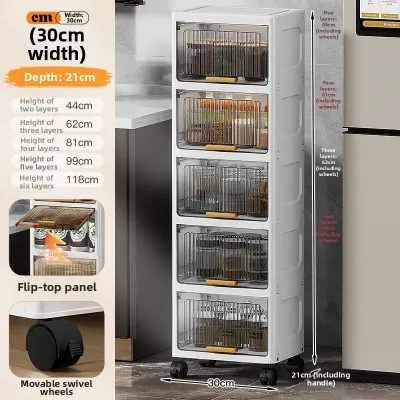
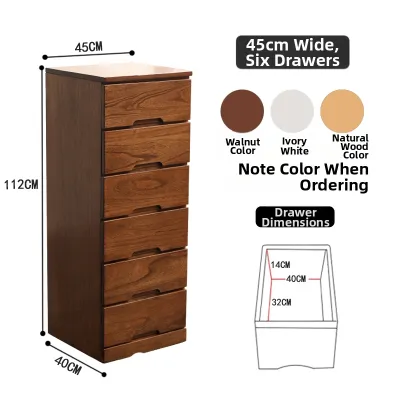
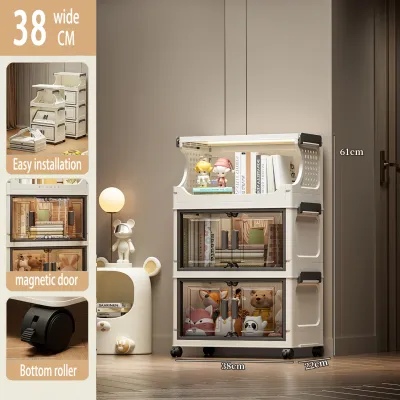
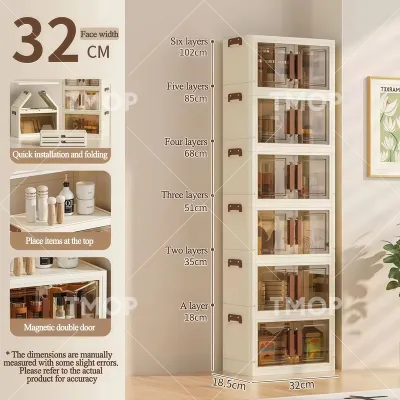
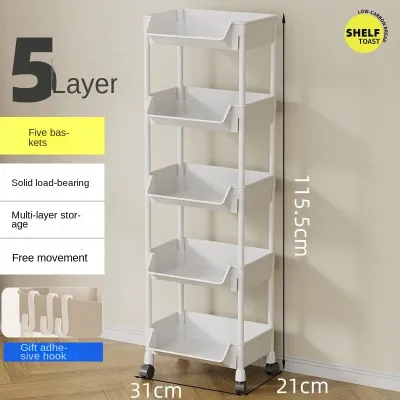
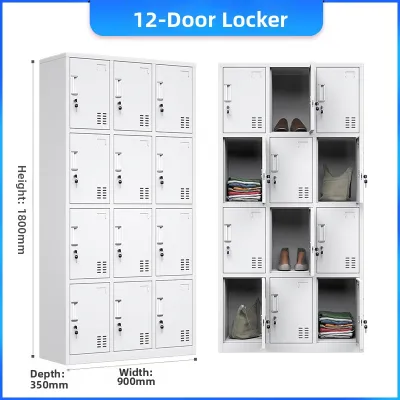
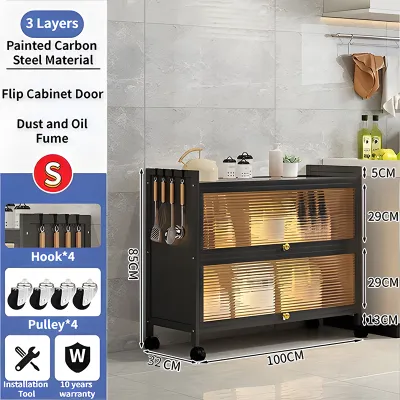
Prices are valid at publication and may change. Please refer to the product page for the latest price.
Finally, check the weight capacity and material of your existing shelves and cabinet floor. Buffet cabinets in Filipino homes often store heavy heirloom dinnerware, ceramic serving bowls, glass pitchers, and heavy stoneware. A sagging shelf or a flimsy cabinet bottom cannot safely support the added weight of heavy organizers loaded with plates. Inspect the shelf supports and the thickness of the wood or composite board to ensure they can handle both the organizer and your heaviest dining pieces without bowing or collapsing over time.
Pull-Out Shelves: Maximizing Deep Cabinet Space
Pull-out shelves, also known as sliding drawers or slide-out baskets, are highly effective for deep buffet cabinets where items frequently get lost in the dark corners at the back. In a typical deep cabinet, you might find yourself stacking plates in front of bowls, making it incredibly frustrating to reach the items stored behind. Pull-out organizers solve this problem by bringing the entire contents of the shelf directly to you, allowing you to utilize every single centimeter of depth without having to bend down and rummage through the cabinet.

Installing these systems requires careful attention to mounting specifications. Pull-out shelves generally come in side-mount or bottom-mount configurations. Bottom-mount slides are often easier to install in buffet cabinets because they screw directly into the existing shelf or cabinet floor, bypassing the need to match the exact interior width of the cabinet walls. However, you must ensure there is sufficient clearance on the sides so the drawer glides smoothly past the door hinges and frame.
While pull-out shelves offer unmatched accessibility, they do have distinct limitations. The sliding hardware, brackets, and drawer sides themselves consume a small amount of vertical and horizontal space, slightly reducing the absolute volume available for storage. Additionally, the weight capacity of the slide glides is a critical safety factor. High-quality steel ball-bearing slides are necessary to support heavy ceramic plates and glass platters. If the weight limit is exceeded, the slides may bend, bind, or pull loose from the cabinet base, potentially damaging your valuable dinnerware.
Tiered Racks: Organizing Vertical Space on Fixed Shelves
Tiered racks, step shelves, and stackable risers are the ideal solution for buffet cabinets with tall, fixed shelves. Many beautiful dining room sideboards feature fixed wooden shelving that leaves a large amount of empty vertical space above shorter items like coffee mugs, teacups, and small dessert bowls. Without an organizer, stacking these items too high becomes unstable and risks chipping or breaking your glassware. Tiered racks create distinct, stable levels that allow you to store and access items safely.
When selecting tiered racks, material quality and stability are paramount. Look for organizers made from sturdy materials like coated steel, solid bamboo, or thick, high-grade acrylic that will not sag under the weight of heavy ceramic plates. Non-slip feet, such as rubber pads or silicone grips, are essential to prevent the rack from sliding around on the smooth, polished surface of your cabinet shelves. Proper weight distribution is also crucial; place heavier items on the bottom level or directly over the support legs to prevent the rack from tipping or bowing.
It is important to understand that tiered racks do not actually increase the physical cubic volume of your cabinet. Instead, they optimize the existing space by improving visibility and accessibility. By separating different types of dinnerware into individual layers, you no longer have to lift a heavy stack of dinner plates just to reach a salad plate underneath. This makes your daily table setting routine much faster and significantly reduces the risk of accidental chips and cracks.
Door-Mounted Solutions: Utilizing Dead Space on Cabinet Doors
Door-mounted racks, baskets, and hooks are excellent for capturing and utilizing the ‘dead space’ that often exists between the front of your cabinet shelves and the closed cabinet doors. This area is frequently left empty, but with the right organizer, it can become highly functional storage. Door-mounted solutions are best suited for storing lightweight, flat, or narrow items that do not require deep shelves, such as small serving trays, cloth napkins, placemats, or specialized dining accessories.
Before installing any door-mounted organizer, performing a precise clearance check is absolutely vital. You must measure the distance between the inside of the closed cabinet door and the front edge of your internal shelves. If your internal shelves extend all the way to the front frame of the cabinet, there may not be enough clearance for a door-mounted basket, and attempting to install one will prevent the cabinet doors from closing. Additionally, ensure that the height of the door organizer does not interfere with the positions of the internal shelves.
Weight limits and cabinet door construction are major constraints for this type of organization. Buffet cabinet doors are often suspended on decorative or concealed hinges that are designed to support only the weight of the door itself. Adding heavy items to a door-mounted rack can put excessive strain on these hinges, causing the doors to sag, misalign, or fail to close properly over time. Furthermore, if your buffet cabinet features delicate glass panels or thin decorative wood veneer doors, drilling screws into them is highly risky and can cause permanent structural or aesthetic damage.
Comparing Space-Saving Organizers for Buffet Cabinets
To help you determine which organizer type best fits your specific storage challenges, the table below outlines the key characteristics, ideal use cases, and physical requirements of each option.
| Organizer Type | Best For | Space Optimization Method | Installation Effort | Weight Capacity |
|---|---|---|---|---|
| Pull-Out Shelves | Deep cabinets, heavy dinnerware, and hard-to-reach back corners | Maximizes depth by sliding items forward for full access | Moderate to High (requires drilling and mounting hardware) | High (dependent on slide rail specifications) |
| Tiered Racks | Tall, fixed shelves and stacked plates, bowls, or mugs | Maximizes vertical clearance by creating multiple stable levels | None (freestanding and ready to use) | Medium (dependent on material thickness and support legs) |
| Door-Mounted Solutions | Shallow items, linens, and utilizing empty space behind doors | Maximizes unused front clearance on cabinet doors | Low to Moderate (requires screws, adhesive, or hooks) | Low (limited by door hinge strength and door material) |
How to Choose the Right Organizer for Your Needs
Selecting the ideal cabinet organizer space saver requires a systematic approach that balances your cabinet’s physical structure with your personal storage goals. Start by identifying your primary frustration: are you tired of bending down to search the dark depths of a deep sideboard, or are you frustrated by the wasted vertical space above your plates? Your answer to this question will point you directly toward the most effective solution.
Use this conditional framework to guide your final decision:
- Choose pull-out shelves if your buffet cabinet is deep, you own heavy ceramic or stoneware sets, and you want to access items at the back without lifting or moving other pieces. This is a permanent upgrade that offers the highest level of convenience for deep storage.
- Choose tiered racks if you have tall, fixed shelves, want an instant setup without drilling holes, or live in a rental property where permanent modifications are not allowed. They are highly versatile and can be easily rearranged as your dinnerware collection changes.
- Choose door-mounted solutions if you have at least a few centimeters of clearance between your closed doors and internal shelves, and you need a dedicated spot for lightweight items like table linens, small trays, or drink coasters.
In many cases, the most efficient setup involves combining these solutions. For example, you can place a low tiered rack on a pull-out shelf to organize small saucers and cups, while utilizing a door-mounted basket for fabric napkins. No matter which option or combination you choose, always double-check your manual measurements against the manufacturer’s specified product dimensions before making a purchase to ensure a seamless, frustration-free fit.
Frequently Asked Questions (FAQ)
Can I install pull-out shelves in a buffet cabinet with a center stile?
A center stile is the vertical wooden post located in the middle of a double-door cabinet frame. If your buffet cabinet has a center stile, it will block a single, full-width pull-out shelf from sliding out. To work around this, you can install two narrower, independent pull-out shelves side-by-side, one behind each door opening. Before attempting to remove a center stile, consult a professional furniture maker, as many stiles are structural components that support the weight of the cabinet top and the shelves inside.
Do door-mounted organizers damage the cabinet finish?
The potential for damage depends entirely on the mounting method you choose. Screw-mounted organizers require drilling into the inside of the cabinet door, which leaves permanent holes but provides the most secure hold. Adhesive hooks or over-the-door tension brackets do not require drilling, but they carry other risks. In hot, humid tropical climates, adhesives can degrade over time, potentially peeling away and taking the wood finish or paint with them. Always check your cabinet’s warranty and test any adhesive on an inconspicuous area first.

Community discussion
Share your experience or ask a question. Comments are reviewed before publication.