
Setting Expectations for the ₱3,000 to ₱15,000 Budget Range
Finding the right reclining office chair in the Philippines requires balancing personal comfort with the realities of local climate and material durability. Within the ₱3,000 to ₱15,000 price range, buyers will encounter a vast spectrum of options, ranging from basic entry-level task chairs to highly adjustable ergonomic models. Navigating this market requires clear expectations of what different price points actually deliver.
It is important to clarify what “reclining” means for an office chair compared to a living room lazy chair or lounge chair. An office chair’s recline is designed primarily to support active sitting, posture variation, and brief micro-breaks throughout the workday. It is engineered to keep your spine supported as you shift angles, rather than serving as a bed for deep, horizontal sleeping.
When choosing a chair within this budget, your decision framework should center on three core pillars: recline smoothness, ergonomic adjustability, and material durability—especially under tropical humidity. Higher price tags in this bracket do not merely pay for aesthetic upgrades. Instead, they buy superior mechanical engineering, advanced materials that resist wear, and highly precise adjustment points that protect your body during long hours of sitting.
Products mentioned in this guide
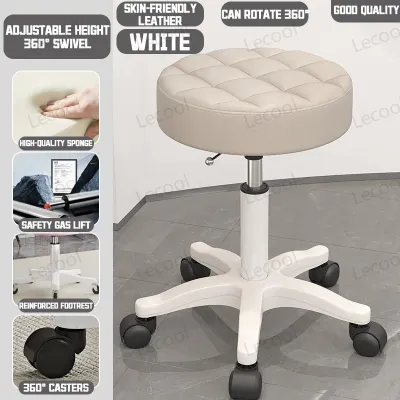
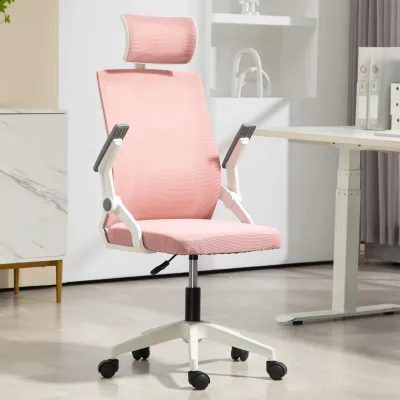
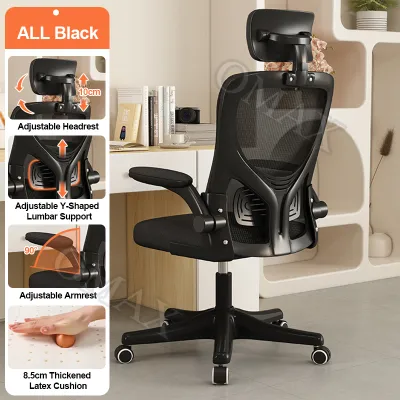
![[COD] Office chair Ergonomic Chair Gaming Chair Computer Chair Reclining Chair With Foot Mesh With Headrest Comfortable Breathable Office Chair Learning Chair Computer Chair 360°Rotation](https://img.lazcdn.com/g/p/a25f4d7043e09940b2a2ce74a5f5c36b.jpg_400x400q80.jpg_.webp)
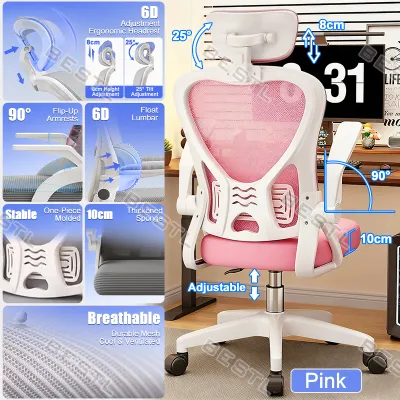
![Ergonomic Office Chair Reclining Computer Chair Home Office Swivel Chair Gaming Chair Pink [COD]](https://img.lazcdn.com/g/p/e7c620ea9cbf7a9e26d107ec76845250.png_400x400q80.png_.webp)
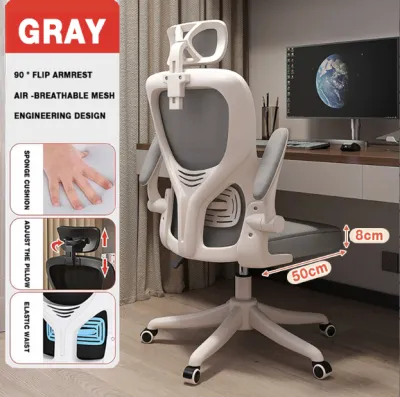
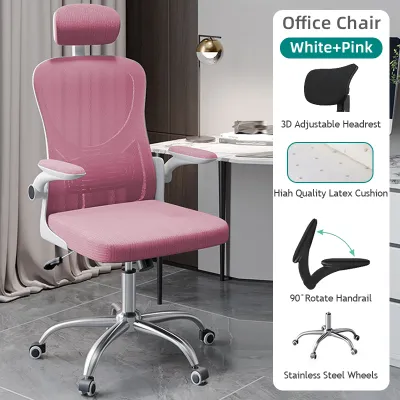
Prices are valid at publication and may change. Please refer to the product page for the latest price.
Entry-Level Recliners (₱3,000 – ₱5,000): Basic Comfort and Limitations
At the entry-level tier of ₱3,000 to ₱5,000, reclining office chairs focus on basic functionality. While these chairs offer a reclining feature, the engineering behind them is simple, meaning users must accept certain compromises in adjustability and long-term durability.

Reclining Mechanism Chairs in this price range typically utilize a basic center-tilt or tilt-tension mechanism. When you lean back, the seat pan and the backrest tilt backward together at the same angle, resembling a rocking bucket. This motion often causes your feet to lift off the floor, which can put pressure on the back of your thighs. These mechanisms usually offer either no lock at all—relying solely on a manual spring-tension knob under the seat to adjust resistance—or a single upright locking position. The maximum recline angle is generally limited, ranging only from 90 to 110 degrees.
Build and Materials To keep costs low, manufacturers at this tier rely on budget-friendly materials. You will commonly find standard polyurethane (PU) leather or basic polyester mesh. In hot and humid environments, low-grade PU leather is prone to cracking, peeling, and trapping body heat within 6 to 12 months of daily use. The seat cushions usually consist of standard-cut foam, which feels soft initially but tends to compress permanently under consistent weight. The structural bases and casters are almost exclusively made of lightweight nylon or molded plastic.
Ergonomic Features Adjustability is highly restricted in this budget bracket. Armrests are typically fixed in place, often designed as loops that connect both the seat pan and the backrest. This design puts structural stress on the mounting screws whenever you recline. Lumbar support is usually fixed or offers only minor manual sliding adjustments. Headrests, if included, are typically static extensions of the backrest.
Compromises and Verification If you purchase a chair in this price range, it is critical to verify the manufacturer’s stated weight capacity. Entry-level gas lifts (often Class 1 or Class 2) and plastic bases have lower tolerances, making them less suitable for heavier users. These chairs are best reserved for light, occasional daily usage of under four hours.
Mid-Range Recliners (₱6,000 – ₱10,000): The Ergonomic Sweet Spot
Moving into the ₱6,000 to ₱10,000 price range introduces a significant leap in mechanical sophistication and material quality. This tier represents the most practical investment for full-time professionals and remote workers who require reliable daily support.
Reclining Mechanism The defining upgrade in this mid-range tier is the transition to a synchronous tilt (or synchro-tilt) mechanism. With synchro-tilt, the backrest and the seat pan recline at a synchronized ratio—typically 2:1 or 3:1. As you lean back, the backrest reclines deeper while the seat pan tilts only slightly. This keeps your feet flat on the floor, maintains proper blood circulation in your legs, and keeps your eyes aligned with your monitor. These chairs also feature multi-position recline locks, allowing you to secure the backrest at several comfortable angles, such as 90, 105, and 120 degrees.
Build and Materials Materials in this tier are much better suited for tropical climates. Backrests generally feature high-elasticity, breathable mesh that allows air to circulate freely, keeping you cool during warm afternoons. Seat cushions transition from cheap cut foam to high-density molded foam, which retains its shape and supportive properties for years. The structural bases are upgraded to reinforced heavy-duty nylon or entry-level polished aluminum alloy.
Ergonomic Features Adjustability becomes highly customizable in the mid-range bracket. You can expect 2D or 3D adjustable armrests that move up and down, forward and backward, and sometimes pivot inward or outward to support your forearms during typing. Lumbar support is typically independent and height-adjustable, allowing you to position the support exactly against your lower back. Headrests are also adjustable, allowing you to fine-tune both height and tilt angle.
Value Proposition For individuals sitting for eight hours or more daily, this tier offers the best return on investment. It delivers the physiological support necessary to prevent chronic back fatigue and strain without requiring the premium price tag of high-end commercial brands.
Premium Recliners (₱11,000 – ₱15,000): Advanced Mechanisms and Durability
At the upper end of the budget, from ₱11,000 to ₱15,000, office chairs transition into high-performance ergonomic territory. These chairs prioritize precision engineering, premium materials, and long-term structural integrity.
Reclining Mechanism Premium chairs feature advanced wire-controlled or dual-lever chassis systems. The reclining action is exceptionally smooth, offering a deeper recline angle that often reaches 130 to 135 degrees. Many models in this tier incorporate dynamic weight-sensing tilt. This system automatically detects your body weight and adjusts the recline resistance accordingly, eliminating the need to manually turn a tension knob under the seat. The recline lock is highly precise, offering multiple secure locking points or a smooth tension-assisted free float.
Build and Materials The materials used at this level are designed for heavy-duty use. Instead of standard mesh, you will find premium elastomeric mesh woven with high-tensile fibers that resist sagging over years of use. Structural bases are made of robust, polished aluminum alloy, which provides superior stability and a premium aesthetic. The pneumatic cylinders are upgraded to Class 4 gas lifts, which are certified to handle higher weight loads and offer smoother height adjustments.
Ergonomic Features Adjustability is comprehensive in this tier. Armrests are typically 4D, allowing adjustment in height, depth, width, and angle to accommodate any desk height or typing posture. Lumbar support systems are often adaptive or flexible, meaning they pivot and flex dynamically to track your spine’s movement as you shift from side to side. Many premium models also feature integrated, retractable footrests that slide out from under the seat pan, allowing for comfortable resting during breaks.
Long-Term Value Investing in this premium tier is highly beneficial for heavy users who spend ten or more hours a day at their desks. These chairs are built to withstand constant use, and they typically come with longer, more comprehensive manufacturer warranties covering moving parts, mechanisms, and mesh wear.
How to Prioritize Features Based on Your Daily Routine
To get the most value out of your purchase, you should align your budget with your actual daily sitting habits. This prevents you from overpaying for unnecessary features or under-buying and risking physical discomfort.
- Usage Duration: If you sit at your desk for eight or more hours a day, prioritize ergonomic support over all else. You should target the mid-range or premium tiers to secure a synchronous tilt mechanism and adjustable lumbar support. If your desk use is occasional—such as two to four hours a day—an entry-level chair with a basic tilt mechanism will likely suffice.
- Primary Posture: Consider how you work. If you constantly shift between active typing (upright) and reading, editing, or taking calls (reclined), prioritize a chair with a multi-position lock and smooth tension adjustments. If you remain strictly upright all day, a deep reclining mechanism is less critical.
- Smart Trade-Offs: If your budget is tight, learn which features to sacrifice. For example, skipping an integrated footrest can save you money that is better spent on a higher-quality mesh backrest or a sturdier Class 4 gas lift. Choosing 2D armrests over 4D armrests can also free up budget to secure a superior synchronous tilt mechanism.
- When to Delay Your Purchase: If your daily routine demands a highly durable chair for long hours, but your current budget only allows for an entry-level ₱3,500 model, it is often wiser to delay your purchase. Saving up for a ₱6,000 mid-range chair will save you money in the long run, as cheap chairs often need to be replaced within a year due to compressed foam or broken mechanisms.
Quality Traps and Pre-Purchase Verification Checklist
Online shopping makes it easy to buy office furniture, but it also exposes buyers to misleading marketing. Use this checklist to verify critical safety and build quality specifications before finalizing your purchase.
- Verify Gas Lift Safety: The pneumatic cylinder is the most critical safety component of any office chair. Look for explicit confirmation of a Class 3 or Class 4 gas lift certification, which is typically stamped directly onto the metal cylinder. Avoid chairs that do not specify their gas lift rating.
- Scrutinize Weight Capacity Claims: Many budget chairs claim a weight capacity of "up to 150 kg" without providing structural proof. Check the base material. A plastic or thin nylon base is much more likely to crack under heavy loads than a reinforced nylon or aluminum alloy base. Look for certifications like BIFMA or EN 1335, which indicate the chair has undergone standardized durability testing.
- Assess Recline Stability: A poorly engineered reclining chair can feel unstable or tip backward when fully reclined. When shopping in-store, test the chair at its maximum recline angle to ensure your center of gravity remains secure. If shopping online, read user reviews specifically searching for terms like "tipping," "unstable," or "wobbly."
- Check Warranty and Return Policies: Understand what the warranty actually covers. Many budget warranties only cover manufacturing defects upon arrival, rather than component failures over time. Ensure the warranty covers the gas lift, reclining mechanism, and frame. Additionally, check the retailer's return policy regarding comfort issues, as a chair's ergonomics must fit your unique body shape.
Frequently Asked Questions (FAQ)
Is a built-in footrest worth the extra cost?
A built-in footrest is highly beneficial if you frequently use your chair for resting, reading, or watching media in a deeply reclined position. However, it is unnecessary for active working postures, as your feet should remain flat on the floor to maintain proper ergonomic alignment. Be cautious of cheap built-in footrests on low-end chairs, as they are often made of flimsy plastic rails that can bend, rattle, or interfere with your leg movement when tucked away.
How can I maintain the reclining mechanism over time?
To prolong the life of your chair’s reclining mechanism, perform a visual inspection every six months to check for loose screws or bolts under the seat pan and tighten them as needed. Avoid dropping heavily into the chair while it is in a reclined position, as this places sudden, high-impact stress on the tension springs and locking teeth. Keep the under-seat area free of dust, pet hair, and debris. Only apply lubrication to the joints if the manufacturer’s care manual explicitly recommends it, using the specific lubricant type they suggest.

Community discussion
Share your experience or ask a question. Comments are reviewed before publication.