
Finding the right rotatable chair between ₱3,000 and ₱15,000 requires balancing immediate physical comfort with long-term mechanical safety. In the Philippines, where high humidity and warm temperatures can accelerate the wear of office furniture, making an informed choice is essential for both your posture and your wallet. At the entry-level price point, your primary focus must be structural safety and verifying certified components. As your budget scales toward the ₱15,000 mark, the decision shifts toward highly adjustable, breathable materials that support intensive daily use. By understanding what features are realistic within each price bracket, you can avoid common purchasing pitfalls and select a chair that provides reliable, long-term spinal support.
Defining Your Must-Haves vs. Nice-to-Haves in a Rotatable Chair
Every rotatable chair serves a core functional purpose: providing 360-degree mobility and foundational spinal support to ease the physical strain of prolonged desk work. The ability to swivel smoothly allows you to access different areas of your workspace without twisting your spine awkwardly, while a well-designed backrest helps maintain the natural curvature of your lumbar region. However, not all features are created equal, and understanding which components are non-negotiable will help you navigate the wide range of options available in the market.
When shopping at any price point, certain safety and structural features must be treated as non-negotiable. These include a certified gas lift cylinder to control height adjustment safely, a stable five-star base that resists tipping, and a backrest with a built-in lumbar curve. These components form the foundation of a safe, functional chair.
Products mentioned in this guide
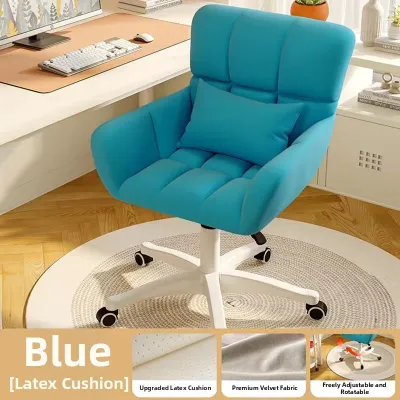
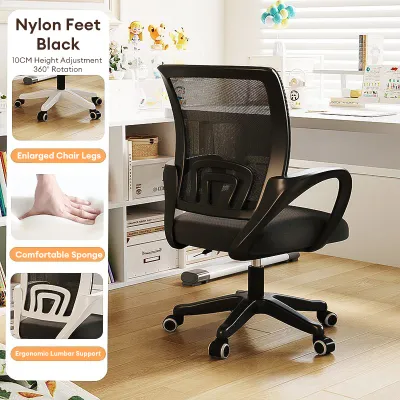
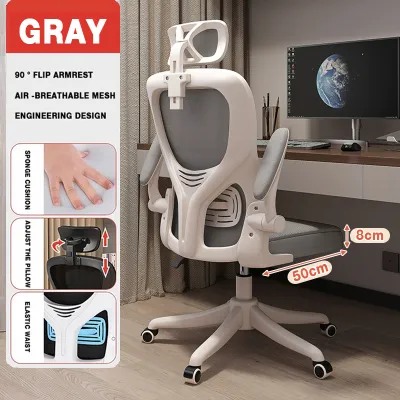
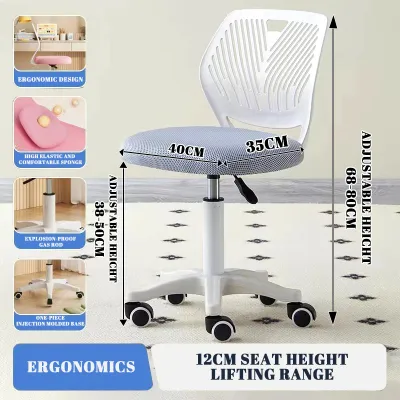
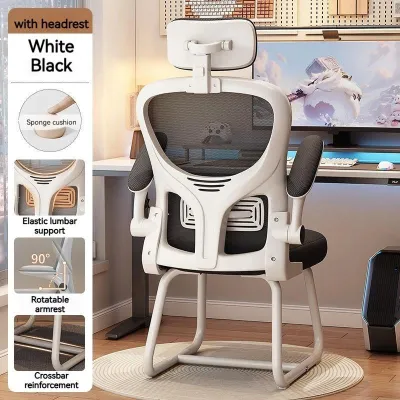
Prices are valid at publication and may change. Please refer to the product page for the latest price.
On the other hand, “nice-to-have” features are luxury upgrades that scale with your budget rather than essential safety requirements. Upgrades such as 4D adjustable armrests, full-mesh upholstery, independent seat pan depth adjustment, and advanced tilt-tension controls provide micro-adjustments for personalized comfort, but their absence does not compromise the basic utility of the chair.
To allocate your budget effectively, consider a simple heuristic based on your daily usage habits:
- Occasional Use (1 to 3 hours daily): An entry-level chair focusing on basic safety and structural stability is highly cost-effective.
- Moderate Use (4 to 6 hours daily): A mid-range chair with upgraded breathability and adjustable lumbar support is recommended to prevent fatigue.
- Intensive Use (8+ hours daily): Investing in an upper-mid-range chair with advanced ergonomics and high-elasticity materials is a necessary commitment to protect your physical health and ensure product longevity.
Entry-Level (₱3,000 – ₱6,000): Prioritizing Safety and Basic Support
At the entry-level tier, manufacturers manage production costs by utilizing standard, widely available materials. You can expect seat cushions made of high-density foam covered in basic fabric or polyurethane (PU) leather, paired with standard nylon or molded plastic five-star bases. While these materials are functional, they do not offer the longevity or advanced pressure distribution found in premium alternatives. The overall build quality at this price point is straightforward, focusing on basic utility rather than intricate design.

Your absolute priority in this budget range is verifying the safety of the gas lift cylinder. The gas cylinder is the pressurized metal chamber responsible for height adjustments, and low-quality, uncertified cylinders pose a genuine risk of sudden pressure loss or mechanical failure. Before purchasing, check the metal cylinder body for visible laser-etched certification stamps from recognized testing bodies such as SGS, BIFMA, or TÜV. If a seller cannot verify the certification of the gas lift, it is best to look elsewhere, regardless of how attractive the chair appears.
To stay within this budget, you must accept several functional compromises. Armrests in this price bracket are typically fixed to the frame or offer only basic 1D (height-only) adjustment. The reclining mechanism is usually a simple knee-tilt or upright-lock system, meaning the chair either remains completely upright or tilts backward as a single rigid unit. Additionally, lumbar support is often non-adjustable, consisting of a fixed plastic strip molded into the backrest frame.
It is highly advisable to avoid cheap “gaming-style” chairs in this price range. These products often prioritize aggressive, racing-seat aesthetics and bulky synthetic leather padding over actual ergonomic support. In the humid Philippine climate, low-grade PU leather traps body heat, causes excessive sweating, and quickly begins to peel, flake, and crack within a few months of use. Choosing a simple, fabric-upholstered office chair with a breathable mesh backrest will deliver far better comfort and durability than a low-end gaming chair.
Mid-Range (₱6,000 – ₱10,000): Upgrading Adjustability and Breathability
Stepping into the mid-range budget introduces a significant upgrade in comfort, primarily through the widespread use of mesh backrests. In tropical environments, solid foam backrests act as insulators, trapping heat against your body. Mesh backrests allow air to circulate freely, keeping your back cool and dry even during warm afternoons. This material upgrade drastically improves the daily sitting experience in non-air-conditioned or moderately cooled home offices.
This price tier also introduces essential adjustability upgrades that allow you to customize the chair to your body dimensions. You will typically find height-adjustable lumbar support pads, 2D armrests that adjust for both height and angle or width, and multi-position tilt lock mechanisms. These features allow you to change your posture throughout the day, reducing muscle stiffness and localized pressure points.
If you are considering a chair with a mesh seat pan rather than a traditional foam cushion, a physical verification check is highly recommended. Press down on the mesh and inspect the front edge of the seat frame. If the mesh tension is too loose, your thighs will sink and press directly against the hard plastic or metal front frame, which can restrict blood flow and cause numbness over time. Look for a chair that features a curved “waterfall” front edge lined with high-density foam padding beneath the mesh to protect your circulation.
Another major mechanical upgrade in this range is the synchro-tilt mechanism. Unlike basic tilt mechanisms that rock the seat and backrest at the same angle, a synchro-tilt mechanism reclines the backrest at a faster ratio than the seat pan (typically 2:1). This movement allows you to stretch and recline while keeping your feet flat on the floor, preserving proper pelvic alignment and preventing your lower back from sliding out of contact with the lumbar support.
Upper-Mid (₱10,000 – ₱15,000): Advanced Ergonomics and Build Quality
In the upper-mid-range tier, you are paying for premium materials designed for heavy-duty, long-term use. Seats and backrests feature high-elasticity, imported woven mesh that resists sagging over years of continuous pressure. The structural base upgrades from nylon to heavy-duty polished aluminum or reinforced alloy, which increases stability and weight capacity. Additionally, any foam components utilize high-density molded foam, which retains its shape and supportive properties far longer than standard cut foam.
This budget unlocks advanced ergonomic features designed for precise micro-adjustments. You will find 3D or 4D armrests that adjust for height, depth, horizontal angle, and width, allowing you to position them perfectly to support your elbows without straining your shoulders. These chairs also feature weight-sensing tilt tension dials that automatically adjust the reclining resistance based on your body weight, alongside multi-dimensional headrests that adjust for both height and tilt angle.
At this level, the mechanical chassis beneath the seat is significantly more robust. Premium chairs utilize heavy-duty, multi-function mechanical chassis made of thick cast iron or steel. These mechanisms provide incredibly smooth reclining transitions, eliminating the jerky movements or sudden, noisy snap-backs common in cheaper models. This mechanical refinement ensures that the chair moves fluidly with your body, supporting dynamic sitting postures.
Finally, you should carefully scrutinize the warranty terms when investing in this price range. While cheap chairs often come with a basic 6-month seller warranty, reputable brands in the ₱10,000 to ₱15,000 range should offer at least a 2- to 3-year warranty covering structural parts, the gas lift cylinder, and the reclining mechanism. A longer warranty is a strong indicator of the manufacturer’s confidence in the product’s durability and ensures your investment is protected.
Hidden Costs, Delivery, and Warranty Checks
Before finalizing your purchase, it is important to factor in potential shipping and logistical surcharges. An ergonomic rotatable chair is a bulky, heavy item, with packaged boxes often weighing between 15 and 25 kilograms. While delivery within Metro Manila may be affordable, shipping fees to provincial areas in Luzon, Visayas, or Mindanao can add a substantial amount to your total expense. Always calculate the final landed cost, including shipping, before committing to a specific budget tier.
Performing a pre-purchase spatial check of your home is another critical step that is easily overlooked. Measure the width of your doorways, hallway clearances, and elevator doors to ensure the large shipping box can easily pass through. Additionally, check the height of your desk’s underside; some ergonomic chairs have wide, non-folding armrests that may prevent the chair from being rolled completely under the desk when not in use, taking up valuable floor space in small rooms.
Consider the assembly requirements of your chosen chair. Most online purchases arrive flat-packed and require DIY assembly. While manufacturers include basic tools and instructions, assembling a heavy chair alone can be physically challenging, especially when aligning the heavy seat chassis with the backrest. Check if the seller offers professional assembly services for an additional fee, or if the chair can be delivered fully assembled if purchased from a physical showroom.
Lastly, verify the availability of after-sales support and replacement parts with the local distributor. Over years of daily use, components like casters, armrest pads, or gas lifts can wear out. Confirm whether the seller stocks these individual replacement parts locally, and clarify if the warranty covers both the cost of the replacement parts and the labor required to install them, or if you will be responsible for transporting the heavy chair to their service center.
Frequently Asked Questions (FAQ)
Will the rotating casters scratch my hard floor?
Standard hard nylon or plastic casters, which are common on most budget and mid-range chairs, can easily scratch, scuff, or wear down hard flooring surfaces such as hardwood, laminate, or delicate ceramic tiles over time. This damage occurs when small particles of dust and grit get trapped beneath the hard plastic wheels, acting like sandpaper as you roll.
To protect your floors, you can place a dedicated polycarbonate or tempered glass chair mat over the high-traffic area. Alternatively, you can replace the stock casters with aftermarket soft polyurethane (PU) wheels or rollerblade-style rubber casters. These softer wheels glide silently, distribute weight more evenly, and will not scratch or mark sensitive hard floors.
How do I test the swivel and tilt mechanism before committing?
If you are visiting a physical showroom, you can evaluate the mechanical quality of a chair by performing a few simple physical tests. First, sit in the chair and perform a full 360-degree rotation in both directions. Listen closely for any grinding, clicking, or squeaking noises, and feel for any uneven resistance or wobbling in the base, which can indicate a poorly aligned bearing or a low-quality gas cylinder.
Next, test the recline and tilt-lock functions. Lean back slowly to check if the movement is smooth and controlled, or if there is a sudden drop in resistance. Lock the backrest at various angles to ensure the mechanism holds your weight securely without slipping. Finally, unlock the recline and sit up slowly; the backrest should follow your spine smoothly without snapping back violently or making loud popping noises as the tension releases.

Community discussion
Share your experience or ask a question. Comments are reviewed before publication.