
Selecting a San Yang ergonomic chair within the ₱3,000 to ₱15,000 price range requires balancing essential support features with build quality. At the lower end of this budget, you will find functional, straightforward seating designed for light daily use, while the upper limit introduces sophisticated mechanical adjustments that allow you to customize the support to your specific body proportions. By focusing on verifiable specifications rather than marketing buzzwords, you can secure a chair that supports your posture and fits your workspace comfortably.
Choosing the right model is not just about finding the lowest price; it is about matching your daily sitting duration and physical space with the specific adjustability features and material durability offered at each price tier. In tropical climates where humidity is a constant factor, selecting materials that promote airflow and checking the structural integrity of the frame are essential steps to ensure your investment lasts. This guide maps out what you can realistically expect at different price points within this range, helping you prioritize adjustability, verify material specifications, and avoid common purchasing pitfalls.
Understanding Budget Expectations for San Yang Ergonomic Chairs
When navigating the ₱3,000 to ₱15,000 price range, managing your expectations regarding materials and mechanical features is key to making a satisfying purchase. Entry-level ergonomic chairs, typically priced from ₱3,000 to ₱6,000, focus on providing basic seating comfort with limited adjustable parts. These models are highly suitable for students or professionals who spend only a few hours at their desks each day and do not require highly customized support.
Products mentioned in this guide
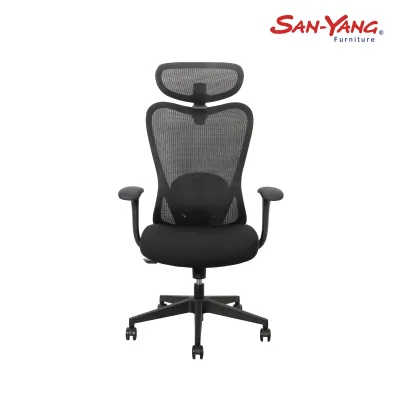
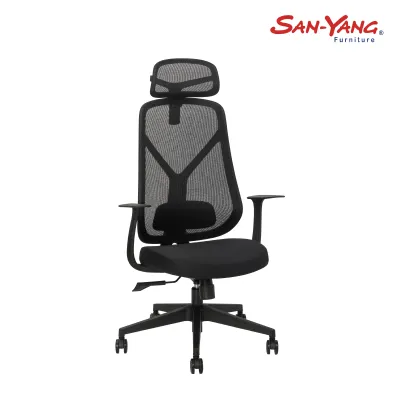
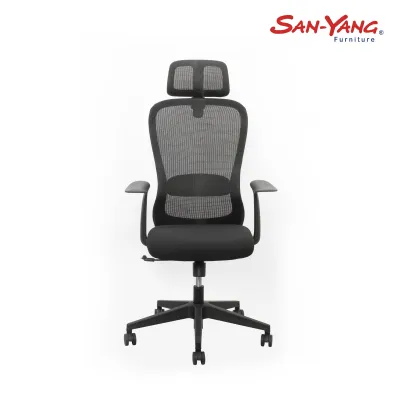
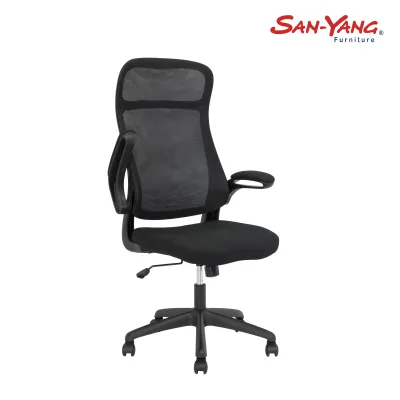
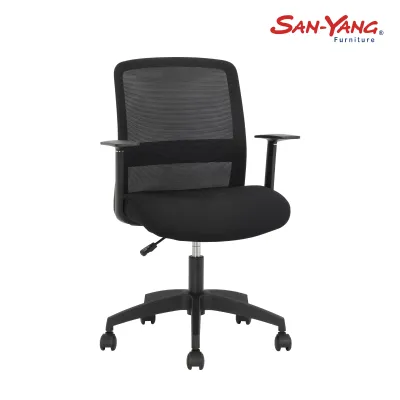
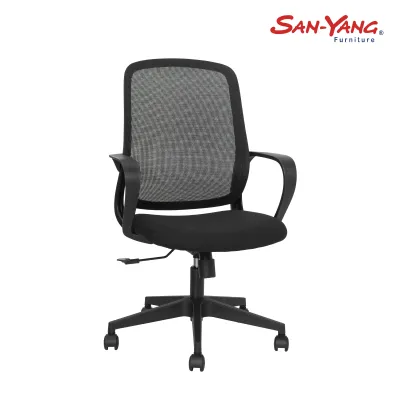
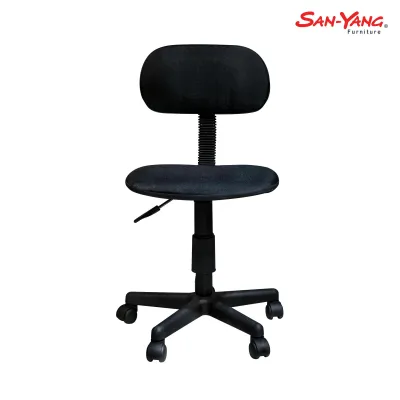
Prices are valid at publication and may change. Please refer to the product page for the latest price.
As your budget moves into the mid-range tier of ₱7,000 to ₱15,000, the chairs begin to offer independent adjustment mechanisms. Instead of a single lever that controls only the seat height, higher-priced models often feature separate controls for backrest tilt tension, seat depth, and multi-directional armrest positioning. This added complexity allows you to fine-tune the chair to support your body’s unique alignment, reducing physical strain during long working sessions.
Before finalizing your budget, it is crucial to account for the total cost of acquisition. Bulky furniture items often incur significant shipping fees, particularly if you are ordering from an online marketplace for delivery outside major metropolitan hubs. Additionally, check if the seller charges extra for assembly services or if local taxes are included in the displayed price, ensuring the final checkout amount remains firmly within your planned budget.
Key Ergonomic Features to Evaluate at Each Price Point
To get the most value out of your purchase, you must evaluate the specific mechanical features offered at your chosen price point. Understanding the difference between entry-level baselines and mid-range upgrades prevents you from overpaying for features you do not need.

Entry-Level Adjustability (Lower Budget Tier)
In the lower budget tier, ergonomic features are streamlined to keep the chair affordable while maintaining basic functionality. You can expect a standard pneumatic gas lift for smooth height adjustment, allowing you to align your feet flat on the floor. The tilt mechanism is usually a basic upright lock, meaning you can either lock the backrest in a vertical position for active working or unlock it to allow for a relaxed rocking motion.
Armrests at this price point are typically fixed to the seat frame or feature a simple flip-up design. Flip-up armrests are particularly useful for compact home offices, as they allow you to slide the chair completely under your desk when it is not in use, saving valuable floor space. The seat and backrest materials usually consist of standard nylon mesh and fabric-covered foam; you should verify the density of the seat foam in the manufacturer’s specifications to ensure it will not flatten out after a few months of use.
Mid-Range Enhancements (Upper Budget Tier)
Stepping up to the upper budget tier unlocks advanced adjustments that cater to prolonged sitting. Multi-dimensional armrests, often designated as 2D or 3D, allow you to adjust the height, depth, and angle of the arm pads to support your elbows and forearms while typing. This customization helps relieve tension in your shoulders and neck, which is a common issue during extended workdays.
Furthermore, mid-range models frequently feature independent lumbar support systems that can be adjusted vertically or horizontally to fit the natural curve of your lower spine. When browsing these options, consult the manufacturer’s manual or detailed product listings to check the locking mechanisms and recline angles. A high-quality tilt tension knob is also standard at this level, letting you adjust the resistance of the backrest to match your body weight for a controlled, effortless recline.
Build Quality, Materials, and Weight Capacity Checks
A chair’s durability is directly tied to its structural components and material specifications, which must be verified before purchase. Do not rely solely on generic marketing terms like “heavy-duty” or “premium quality.” Instead, look for the manufacturer’s stated weight capacity, which typically ranges from 100 kilograms for entry-level models to 150 kilograms or more for robust mid-range options.
The material of the chair’s base is a primary indicator of its overall stability and lifespan. Lower-priced chairs often utilize reinforced nylon bases, which are lightweight and cost-effective but can flex under heavy loads over time. Mid-range models frequently upgrade to steel or aluminum alloy bases, offering superior rigidity and resistance to wear. Additionally, check the type of casters provided; polyurethane (PU) coated casters are ideal for protecting hard floors like tile or wood from scratches, while standard nylon casters are better suited for carpeted areas.
Safety is another critical factor that should never be overlooked, particularly regarding the gas lift cylinder. Ensure the product specifications or safety labels indicate a Class 3 or Class 4 gas lift certified by recognized testing bodies such as BIFMA or SGS. This certification guarantees that the cylinder has undergone rigorous pressure and durability testing, minimizing the risk of sudden failure.
Finally, be realistic about material performance in relation to your local environment. While mesh backrests are excellent for promoting airflow in warm, humid climates, low-grade mesh can sag over time, losing its ergonomic support. Review the structural warranty terms and care instructions provided by the manufacturer to understand the limits of the materials and how to maintain them properly.
Pre-Purchase Measurements and Assembly Considerations
Before placing your order on any e-commerce platform, take precise measurements of your workspace to avoid delivery and installation headaches. Measure the height of your desk from the floor to the underside of the frame to ensure the chair’s armrests can slide underneath. You should also measure the available floor space, keeping in mind the clearance needed for the chair’s base diameter and the full recline angle of the backrest.
If you live in a multi-story building or a condominium, check the dimensions of your doorways, hallways, and elevator cabins. Ergonomic chairs often ship in large, bulky boxes that can be difficult to maneuver through tight spaces. Verifying these clearances beforehand ensures a smooth delivery process and prevents potential damage to your walls or the product packaging during transport.
Most chairs in this price range require self-assembly. While the necessary tools, such as an Allen wrench and screws, are usually included, having a sturdy flat surface and a clean workspace makes the process much easier. Follow the step-by-step instructions in the manual. If you encounter resistance when aligning parts, stop immediately and consult the manufacturer’s customer support, as forcing a misaligned bolt can permanently strip the threads and compromise safety.
Lastly, review the seller’s return policy and warranty terms before finalizing your purchase. Ensure there is a clear process for handling missing hardware or components damaged during transit. Keeping the original packaging intact for at least a week after assembly is highly recommended, as most logistics providers require the original box to process returns or exchanges.
Frequently Asked Questions (FAQ)
Are San Yang chairs suitable for long hours of desk work?
Whether a chair is suitable for long hours of desk work depends heavily on how well its adjustable features match your individual body dimensions. A chair with fixed lumbar support may cause discomfort if the support pad does not align with the curve of your lower back. For extended use, prioritize models with adjustable seat depth, height-adjustable armrests, and customizable lumbar support. Regardless of how ergonomic your chair is, it is vital to take regular standing and stretching breaks every hour to maintain healthy blood circulation and reduce muscle fatigue.
What should I check if the chair arrives with missing or damaged parts?
If your chair arrives with missing or damaged parts, stop the assembly process and locate the packing list included in the box. Cross-reference every screw, washer, and structural component against the list to identify exactly what is missing or damaged. Take clear, well-lit photographs of the affected parts, the shipping label, and the condition of the outer box. Contact the seller or manufacturer through the e-commerce platform’s official customer service channel right away, providing the photographic evidence to initiate a replacement part request or a return under the product’s warranty policy.

Community discussion
Share your experience or ask a question. Comments are reviewed before publication.