
Choosing between a Sanyang foldable desk and a Sanyang L-shaped desk depends entirely on your room’s permanence, available floor area, and daily equipment requirements. If you work from a highly constrained, multi-purpose space such as a studio condo or a shared bedroom where the workspace must disappear after hours, the Sanyang foldable desk is the ideal choice. Conversely, if you have a dedicated home office corner, use dual monitors, or require distinct physical zones for computer work and physical paperwork, the Sanyang L-shaped desk provides the permanent, robust station you need.
Neither design is universally superior; instead, each serves a distinct work style and spatial reality. Evaluating how you interact with your workspace daily will point you toward the configuration that optimizes both your productivity and your home’s layout.
Space Efficiency and Room Layout Compatibility
Foldable desks offer a distinct advantage in multi-use environments common in urban residential areas. When unfolded, a Sanyang foldable desk provides a functional workspace, but its true value lies in its ability to collapse into a slim, wall-hugging profile or slide into a closet when the workday ends. This temporary footprint is highly beneficial in studio apartments where the same room must transition from a professional office during the day to a relaxing living space or bedroom at night. Using a foldable model helps maintain a psychological boundary between work and personal life, as the physical reminders of your job can be tucked completely out of sight.
Products mentioned in this guide
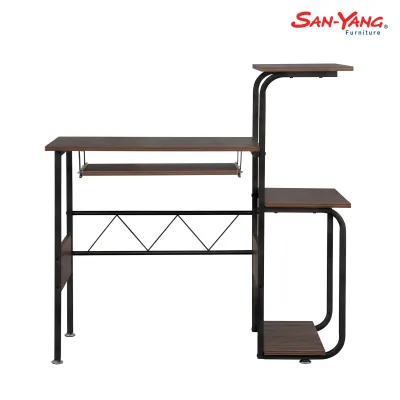
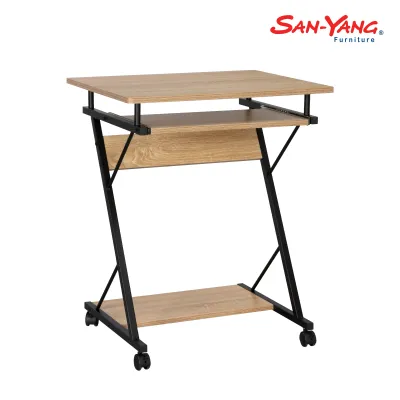
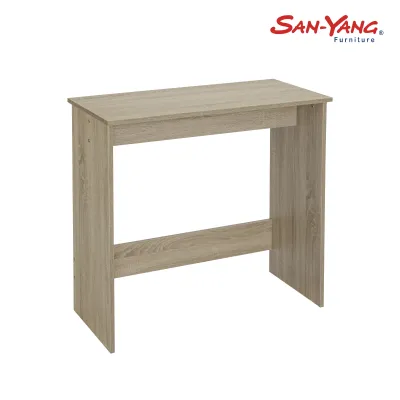
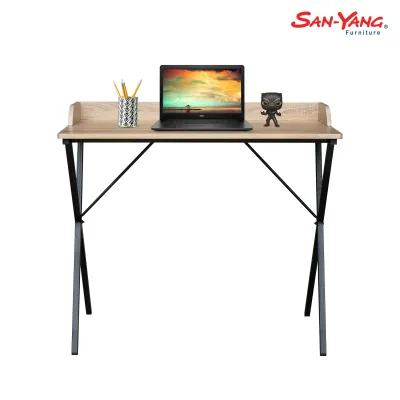
Prices are valid at publication and may change. Please refer to the product page for the latest price.
L-shaped desks, on the other hand, are designed to maximize underutilized corner spaces in dedicated rooms. While they occupy a permanent footprint, they turn “dead” corner areas into highly productive zones. An L-shaped desk anchors the layout of a room, establishing a clear, permanent boundary for your home office. This configuration is particularly effective in larger bedrooms or dedicated study rooms where you do not need to reclaim the floor space after hours. The permanent nature of the desk allows you to keep your office setup intact, saving you the effort of packing and unpacking your work tools every day.
Mapping your room’s layout is a crucial step before selecting either desk style. You must visualize how the furniture will interact with the existing environment, taking into account door swings, window clearances, and walking paths. A foldable desk requires a clear, unobstructed path for daily deployment, meaning you cannot place other furniture in its unfolding arc. An L-shaped desk, while stationary, must be positioned so that it does not block access to built-in wardrobes, electrical outlets, or air conditioning airflow. In tropical climates, ensuring your desk placement does not obstruct natural ventilation or the path of cooling fans is essential for maintaining a comfortable working environment.
Workspace Area and Ergonomic Needs
Comparing the usable surface area reveals a fundamental difference in how these two designs support your professional work style. A foldable desk typically offers a single, linear surface. This streamlined setup encourages a minimalist approach, forcing you to keep only your essential devices within reach. It is highly efficient for digital-first professionals who work almost exclusively on a laptop and do not rely on physical documents, reference books, or secondary screens.

In contrast, an L-shaped desk provides a dual-zone advantage that naturally supports multitasking. You can dedicate one wing of the desk entirely to your computer setup, including a monitor, keyboard, and mouse, while utilizing the adjacent wing for analog tasks such as writing, reviewing printed documents, or organizing reference materials. This physical separation of tasks can improve focus and workflow efficiency, as you only need to pivot your chair to transition from digital to physical work.
Equipment capacity is another critical differentiator. Sanyang L-shaped desks are constructed with sturdy structural panels that can support heavier, bulkier items, including desktop tower PCs, dual monitors, printers, and heavy document trays. Foldable desks are engineered with lightweight frames and hinges optimized for portability, making them better suited for lightweight laptops, tablets, or single small monitors. Before purchasing, it is vital to verify the specific weight capacity listed on the product label of your chosen Sanyang model to ensure it can safely support your devices without compromising structural integrity.
Ergonomics also depend heavily on your desk configuration. An L-shaped desk allows you to pivot easily between tasks, reducing repetitive neck and back strain by keeping your active work directly in front of you as you turn. Foldable desks require a fixed, forward-facing posture. Because foldable models often have slightly shallower depths to facilitate easy storage, you must pay close attention to your eye-to-screen distance to avoid eye strain. Ensuring your chair can adjust to the height of your chosen desk is essential for maintaining a healthy, ergonomic posture throughout long working hours.
Setup Flexibility, Assembly, and Daily Use
Living with, moving, and maintaining your office furniture introduces practical daily realities that vary significantly between these two desk types. Sanyang foldable desks generally require minimal assembly, often arriving pre-assembled or requiring only basic leg attachment. This makes them highly portable and easy to relocate. If you rent your home and move frequently, a foldable desk can be collapsed in seconds and transported easily in a standard passenger vehicle, minimizing the risk of damage during transit.
L-shaped desks require a more intensive, multi-step assembly process involving structural panels, cam locks, and numerous screws. Because of their size and weight, they are designed to remain in one place once assembled. Moving an L-shaped desk to another room or a new home often requires partial or complete disassembly. Repeatedly assembling and disassembling composite wood furniture can strip screw holes and weaken joints, so these desks are best suited for long-term residential setups.
The daily routine associated with each desk is a major lifestyle consideration. Operating a foldable desk requires a daily commitment of time and physical effort. Every morning, you must unfold the frame, secure the locking mechanisms, and set up your laptop, mouse, power cables, and accessories. At the end of the day, you must reverse this process if you wish to reclaim the floor space. For some, this routine is a helpful ritual that signals the start and end of the workday; for others, the convenience of a permanently ready L-shaped station where you can leave your work exactly as it is overnight is far more appealing.
Cable management presents unique challenges for each design. L-shaped desks often feature built-in grommets or dedicated channels underneath the desktop, allowing you to route power strips and device cables neatly out of sight. This creates a clean, professional aesthetic and keeps cables safe from accidental pulls. Foldable desks, because they must fold flat, cannot accommodate permanent, rigid cable trays. If you choose a foldable model, you will need to rely on flexible, detachable solutions such as Velcro straps or reusable cable ties to keep your cords organized without interfering with the folding joints.
How to Measure Your Space Before Buying
To ensure your chosen Sanyang desk fits your home safely and functions as intended, you must perform precise measurements of your room before making a purchase. Do not rely on visual estimation alone, as furniture often appears smaller in retail showrooms or online images than it does in a compact residential room.
Measuring for a Foldable Desk
- Storage Dimensions: Measure the exact width, depth, and height of the closet, niche, or wall area where you plan to store the desk when it is folded. Ensure there is enough clearance to slide the desk in and out without scraping walls or door frames.
- Operational Footprint: Measure the floor area where the desk will be unfolded. You must account for the depth of the desk itself plus an additional 70 to 90 centimeters of rear clearance to accommodate your office chair and allow you to sit down and stand up comfortably.
- Wall Clearance: If you are considering a wall-mounted foldable desk, verify the structural integrity of the wall. Concrete or solid wood walls are necessary for secure anchoring; hollow drywall may require professional reinforcement to support the weight of the desk and your equipment.
Measuring for an L-Shaped Desk
- Corner Wall Lengths: Measure both intersecting walls of the corner where the desk will sit. Compare these measurements against the lengths of the desk's two wings, noting whether the desk has equal-length wings or a asymmetrical design (left-return or right-return).
- Obstruction Check: Verify that the height of the desk will not block low-hanging window sills, electrical outlets, or wall switches. Ensure the longest wing of the desk does not extend into the natural walking path of the room or block door openings.
- Delivery Access: Measure the width and height of your home's entryways, hallway corners, stairwells, and elevator doors. Sanyang L-shaped desks are delivered in large, heavy flat-pack boxes that must be able to navigate these passages to reach your assembly room.
Before finalizing your purchase, cross-reference your physical room measurements with the precise dimensions, weight limits, and material care instructions listed on the official Sanyang product packaging or physical tag. In humid or tropical areas, check that the desk’s laminate finish is completely sealed along the edges. Unsealed edges can absorb moisture from the air, causing the composite wood underneath to swell or warp over time.
Final Decision Framework
To help you finalize your choice, use this structured checklist to align your spatial constraints and work habits with the strengths of each Sanyang desk design.
Choose the Sanyang Foldable Desk if:
- Your workspace must share floor area with a living room, dining area, or bedroom, and needs to disappear after hours.
- You work primarily on a lightweight laptop or tablet and do not use heavy external monitors or desktop towers.
- You live in a rented apartment or condo and value highly portable furniture that is easy to transport during moves.
- You prefer a minimalist setup that discourages the accumulation of physical paperwork and clutter.
Choose the Sanyang L-Shaped Desk if:
- You have a dedicated corner in a home office or bedroom that does not need to be repurposed for other activities.
- Your work setup includes heavy or multiple devices, such as dual monitors, a printer, or a desktop PC tower.
- You require distinct physical zones to organize different types of tasks, such as computer work and physical paperwork.
- You prefer a permanent, always-ready workstation that eliminates the daily task of setting up and packing away your equipment.
Verify First if:
- You are unsure about the load capacity of your floors or walls, especially for wall-mounted foldable models.
- Your available corner space is borderline, as you must ensure the desk does not block essential pathways, outlets, or ventilation.
- You need to coordinate delivery through narrow condo elevators or tight stairwells, which may require measuring package dimensions beforehand.
Frequently Asked Questions (FAQ)
Can I use a foldable desk for a dual monitor setup?
Whether you can safely use dual monitors on a foldable desk depends on the specific Sanyang model’s weight capacity and desktop depth. Foldable desks are generally engineered for lighter loads, and placing two heavy monitors on the surface can strain the folding hinges, locking pins, or leg joints, potentially compromising stability. Additionally, foldable desks often have shallower desktop depths, which can place large screens too close to your eyes, leading to ergonomic discomfort and eye strain. If you must use two screens on a foldable desk, opt for lightweight, compact monitors, avoid using heavy clamp-on monitor arms that concentrate weight on a single point of the edge, and always verify that the combined weight of your screens, stands, and computer does not exceed the maximum load limit specified on the product label.
Are L-shaped desks difficult to assemble in small apartments?
Assembling an L-shaped desk in a small apartment can be challenging due to the limited floor space required to lay out the parts. Sanyang L-shaped desks are delivered in large, heavy flat-pack boxes containing multiple structural panels, metal frames, and hardware kits. To make assembly manageable, clear a workspace in the room where the desk will permanently reside that is at least twice the size of the completed desk. This avoids the difficult task of maneuvering a fully assembled, heavy L-shaped structure through narrow doorways or tight hallways. Lay down the cardboard packaging or a soft blanket to protect your floors and the desk’s finish from scratches during assembly. Having a second person assist you is highly recommended to hold the heavy panels in place while you secure the joints, ensuring a square, stable, and safe build.

Community discussion
Share your experience or ask a question. Comments are reviewed before publication.