
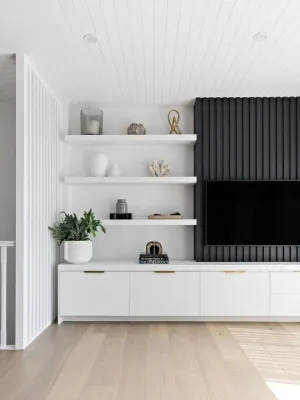
Creating an organized, clutter-free home study room requires storage solutions that maximize vertical space without overwhelming the room’s visual design. Wooden invisible shelves—commonly known as wooden floating shelves—offer an elegant way to display reference books, binders, and study accessories while maintaining a clean, minimalist aesthetic. By eliminating visible brackets and bulky support frames, these shelves create the illusion of wood planks hovering effortlessly against the wall. However, achieving this seamless look while ensuring the shelf can safely support heavy academic materials requires a careful evaluation of structural mechanisms, material properties, and installation methods.
When selecting the ideal wooden invisible shelves for a study room, you must look beyond surface aesthetics. The tropical climate of the Philippines introduces specific environmental challenges, such as high relative humidity, which can cause certain wood materials to warp, swell, or degrade over time. Additionally, the construction of your home’s walls—whether they are solid concrete, concrete hollow blocks, or drywall—directly dictates the type of mounting hardware and shelf design you can safely install. By understanding how these factors interact, you can select a shelving system that combines structural integrity with the warm, natural beauty of wood.
Understanding Shelf Mechanisms and Material Finishes
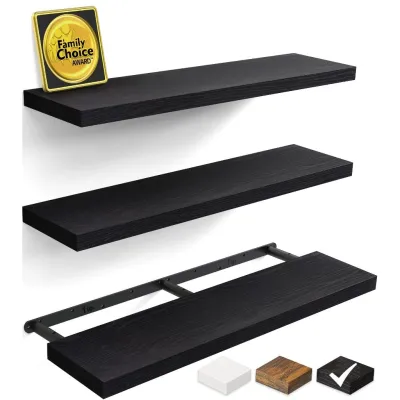
To achieve a true floating appearance, invisible shelves rely on hidden mounting systems that are completely concealed once the shelf is installed. The most common mechanism is the internal metal bracket system, which consists of a flat backplate welded to solid steel support rods. This backplate is screwed directly into the wall, and the wooden shelf—which features pre-drilled receiving holes in its rear edge—slides over the rods. This system provides a highly secure hold and keeps the shelf flush against the wall surface, provided the rear pocket is routed with precision.
Products mentioned in this guide


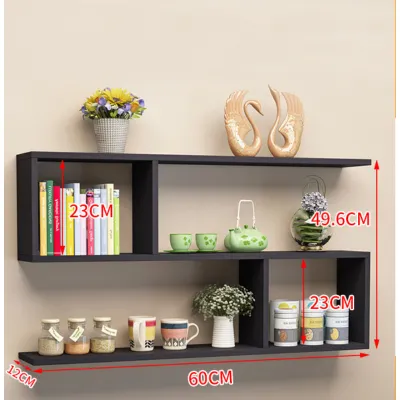
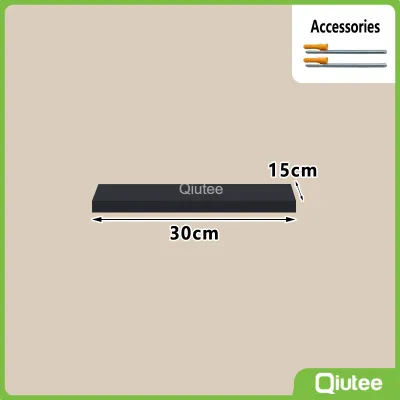
Prices are valid at publication and may change. Please refer to the product page for the latest price.
An alternative mechanism is the concealed wooden cleat, often used for thicker, box-style floating shelves. A wooden cleat is a strip of wood with a beveled edge that is anchored to the wall; the shelf itself has a matching recessed cavity that hooks over the cleat. While cleat systems are highly stable and excellent for distributing weight across a wider wall area, they typically require a thicker shelf profile to hide the internal framework. When comparing these systems, inspect the manufacturer’s product diagrams to ensure the mounting plate is thin enough to sit completely flush, preventing any unsightly gaps between the wood and your wall.
The choice of wood material also plays a critical role in both the shelf’s longevity and its resistance to environmental factors. Solid wood shelves, crafted from species like acacia, mahogany, or pine, offer exceptional natural grain patterns and high structural rigidity. However, solid wood is highly reactive to moisture, meaning it can expand and contract as humidity levels fluctuate in a tropical study room. Engineered wood, such as high-density fiberboard (HDF) or plywood finished with a natural wood veneer, provides excellent dimensional stability and is less prone to warping. When opting for engineered wood, carefully inspect the edge banding to ensure it is tightly sealed, as loose edges can allow moisture to penetrate the core and cause swelling.
Surface treatments are your primary defense against scratches from book covers, desk organizers, and daily wear. Before purchasing, check the manufacturer’s specifications for the type of finish applied to the wood. A polyurethane or lacquer topcoat provides a hard, protective barrier that resists moisture and prevents ink or water stains from penetrating the wood fibers. Matte or satin finishes are particularly well-suited for study rooms, as they minimize glare from desk lamps and reading lights while highlighting the natural texture of the wood grain.
Evaluating Weight Capacity and Wall Compatibility
A floating shelf is only as reliable as its connection to the wall, making weight capacity and wall compatibility the most critical safety considerations for a home study. Manufacturers typically provide a maximum load rating for their shelves, which assumes the hardware is installed correctly into a compatible wall structure. It is vital to understand that this rating refers to an evenly distributed load, where weight is spread uniformly across the entire length of the shelf. Concentrating heavy items, such as a stack of thick medical or engineering textbooks, in a single spot can exert excessive leverage on the hidden brackets, causing the shelf to tilt forward or pull away from the wall.

In the Philippines, residential wall construction varies significantly, and each type requires specific mounting strategies. Solid concrete walls and concrete hollow blocks (CHB) are highly common in local homes and condos. These masonry walls offer exceptional holding power, but they require specialized installation hardware. To mount a shelf on concrete, you must use a masonry drill bit to create precise holes, followed by heavy-duty plastic expansion plugs or metal shield anchors. These anchors expand inside the concrete as the screw is tightened, creating a friction fit that can support substantial weight.
If your study room features drywall or gypsum board partitions, mounting floating shelves requires a different approach. Drywall alone cannot support the leverage of a loaded floating shelf; you must locate the wooden or metal studs behind the wall using a stud finder and anchor the bracket directly into them. If the bracket’s mounting holes do not align perfectly with your stud spacing, you will need to use heavy-duty toggle bolts or hollow-wall anchors for the non-stud attachment points. However, keep in mind that the overall weight capacity of a shelf mounted on drywall is generally lower than one installed on solid concrete.
Before finalizing your purchase, examine the physical specifications of the mounting hardware provided with the shelf. The gauge of the steel bracket plate and the diameter of the support rods are direct indicators of structural strength. Look for brackets made from heavy-duty, cold-rolled steel with a plate thickness of at least 3 millimeters and support rods that are securely welded, rather than screwed, to the backplate. A higher number of mounting points along the bracket plate allows you to distribute the load more effectively across the wall, reducing the stress on any single anchor and preventing localized wall damage.
Matching Shelf Dimensions to Study Room Storage Needs
Selecting the correct dimensions for your wooden invisible shelves is essential for both functional storage and visual harmony within your study room. The depth of the shelf determines what types of items you can safely store. Standard novels and paperbacks typically require a depth of 15 to 20 centimeters, while larger textbooks, academic binders, and reference manuals need a depth of 25 to 30 centimeters. Choosing a shelf that is too shallow will cause books to overhang, creating an unstable setup and a cluttered appearance, while an excessively deep shelf increases the leverage exerted on the wall brackets, significantly reducing the maximum weight capacity.
The length of the shelf must be balanced against its material thickness to prevent sagging, a phenomenon known as deflection. Long, thin shelves made of softwoods or low-density engineered wood are highly susceptible to bending under the weight of books. To maintain structural rigidity over time, check the manufacturer’s recommended maximum span between support brackets. For shelves longer than 90 centimeters, look for systems that include intermediate support rods or opt for thicker wood profiles—typically 3 to 5 centimeters thick—which naturally resist bending and provide a bold, substantial look that complements modern study room designs.
Spatial planning within your study room requires careful measurement of clearances to ensure the shelves do not interfere with your daily workflow. If you plan to install shelves directly above your desk, measure the height of your computer monitor, desk lamp, and any desktop organizers to ensure the lowest shelf sits well above them. Allow at least 50 to 60 centimeters of clearance between the desktop and the underside of the first shelf to maintain an open, comfortable workspace. Additionally, consider the clearance needed for your desk chair; shelves should not protrude so far into the room that you risk bumping your head when standing up or moving around.
When planning a multi-shelf configuration, such as a vertical stack or a staggered layout, maintain a consistent vertical spacing of at least 30 to 35 centimeters between shelves. This height accommodates most standard binders and tall textbooks while leaving enough breathing room to prevent the wall from looking overcrowded. Staggered layouts can add visual interest and allow you to utilize awkward wall spaces, such as corners or alcoves, but they require precise alignment to ensure the overall composition looks intentional and balanced.
Installation Prerequisites and Long-Term Care
A successful installation begins with gathering the correct tools and performing essential safety checks. You will need a high-quality spirit level to ensure the shelf is perfectly horizontal, a measuring tape, a pencil for marking drill points, a power drill with bits matching your wall type, and a hammer. Before drilling any holes into your study room walls, it is critical to verify that the target area is free of hidden utility lines. Use a multi-scanner or wall detector to check for live electrical wires and water pipes, especially if the wall is adjacent to a bathroom or kitchen.
During the installation process, pay close attention to how the hardware behaves. If you encounter unexpected resistance, if the wall material crumbles excessively, or if the expansion anchors do not grip tightly inside the drilled holes, stop immediately. These are clear signs of compromised wall structural integrity or incompatible hardware. In such cases, do not attempt to force the installation or load the shelf with books. Instead, consult a qualified carpenter or professional installer who can assess the wall condition and recommend alternative anchoring solutions, such as chemical anchors or structural reinforcement.
Once your wooden invisible shelves are safely installed, routine maintenance will preserve their appearance and structural integrity for years to come. Dust the wood surfaces regularly using a dry, soft microfiber cloth to prevent the buildup of abrasive dust particles. Avoid using harsh chemical cleaners, aerosol polishes, or excessive water, as these can strip the protective finish and cause the wood to swell or discolor. For stubborn spots, a slightly damp cloth followed immediately by a dry towel is sufficient.
In addition to surface cleaning, perform periodic structural checks to ensure the shelving system remains safe. Every six months, gently grasp the front edge of each shelf and check for any play, tilting, or wobbling. If you notice any movement, remove the books and inspect the mounting screws and wall anchors. Over time, seasonal changes in humidity can cause wood to expand and contract, which may slightly loosen the connection between the shelf and the bracket. Tightening the set screws on the underside of the shelf or adjusting the wall anchors will restore stability and keep your study room organized and safe.
Frequently Asked Questions (FAQ)
Can wooden invisible shelves hold heavy textbook collections?
Yes, wooden invisible shelves can support heavy textbook collections, but their capacity depends entirely on the internal bracket design, rod thickness, and wall anchor strength rather than the wood material alone. While a solid wood shelf plank is naturally strong, it will fail if the hidden steel bracket bends or if the wall anchors pull out of the masonry or drywall. To store dense academic books safely, you must calculate the total estimated weight of your collection—averaging about 1.5 to 2 kilograms per thick textbook—and compare it strictly against the manufacturer’s verified load specifications. Ensure you mount the brackets into solid concrete or wall studs using heavy-duty hardware to maximize load capacity.
How do I prevent wooden floating shelves from sagging over time?
Preventing wooden floating shelves from sagging requires matching the shelf’s length and material thickness to the weight of your stored items, while strictly adhering to bracket spacing guidelines. Sagging occurs when the span between support points is too wide for the stiffness of the wood. To minimize long-term deflection, select shelves with a thickness of at least 3 centimeters and ensure the internal bracket rods are spaced no more than 60 to 70 centimeters apart. When purchasing, check the product specifications for structural guarantees regarding sagging, and always distribute your books evenly across the shelf rather than stacking them all in the center.

Community discussion
Share your experience or ask a question. Comments are reviewed before publication.