
Finding the perfect way to store your footwear collection inside a closet depends on balancing your available space, the local climate, and how quickly you need to grab your shoes. While a shoe rack offers unmatched accessibility for your daily footwear, a hanging shoe organizer maximizes unused vertical space, and stackable shoe boxes provide the ultimate defense against dust and tropical humidity. The ideal choice is rarely a one-size-fits-all solution, but rather a strategic match for your specific closet layout and shoe types.
In tropical environments where humidity can quickly lead to mold, your storage choice also dictates how well your footwear is preserved. Selecting the wrong format can result in cramped closets, damaged materials, or musty odors. By evaluating how each storage type handles space efficiency, accessibility, and protection, you can build a system that keeps your shoes organized and in pristine condition.
Understanding the Three Shoe Storage Formats
To build an effective closet storage system, you must first understand the structural differences and primary use cases of shoe racks, shoe organizers, and shoe boxes. Each format serves a distinct purpose, catering to different collection sizes and spatial limitations.
Products mentioned in this guide
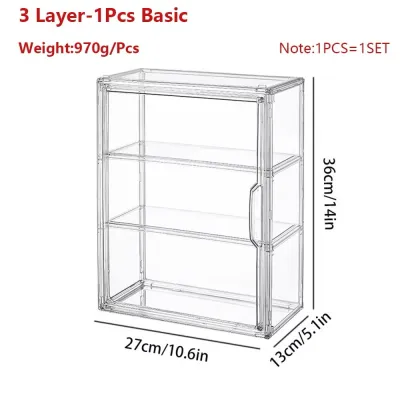
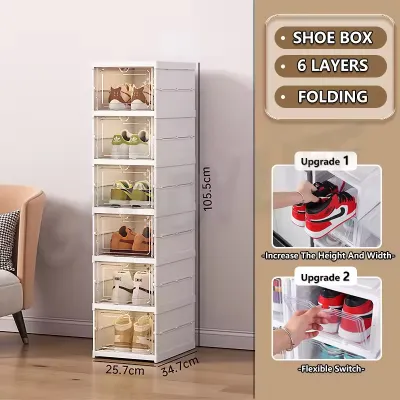
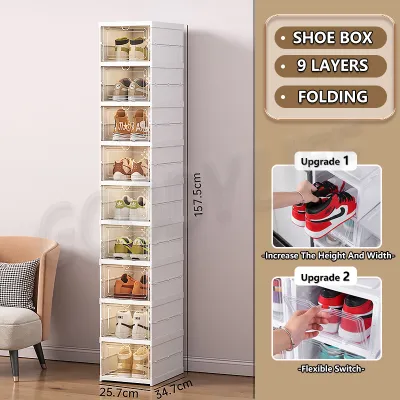
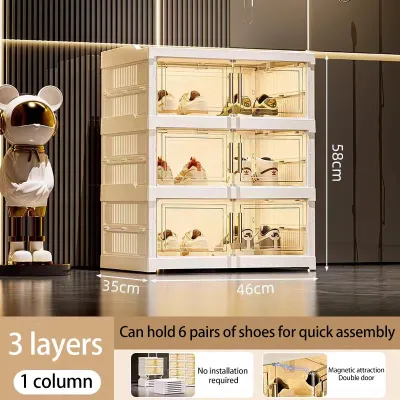
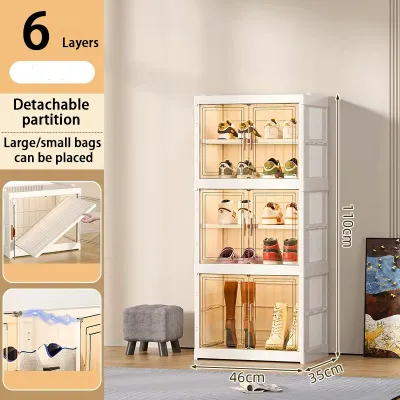
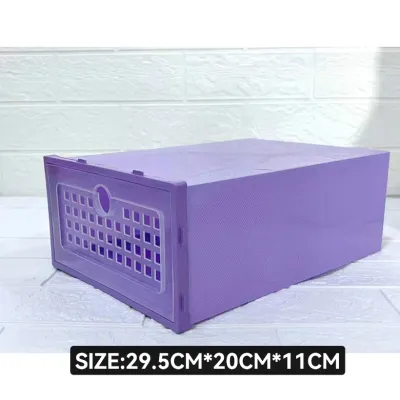
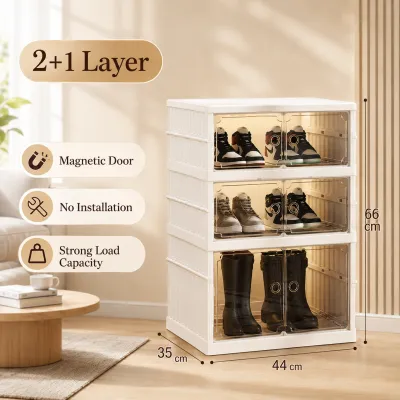
Prices are valid at publication and may change. Please refer to the product page for the latest price.
Shoe racks are open shelving units designed for the closet floor or built-in shelves. Typically freestanding or stackable, they are constructed from wood, metal, or plastic. Because they keep shoes exposed, they provide quick access and natural airflow, making them a staple for the bottom sections of wardrobes.
Shoe organizers are compartmentalized fabric, plastic, or wire systems designed to utilize alternative spaces. These include hanging organizers that suspend from a closet rod, over-the-door pocket systems, or slim zippered units meant to slide under a bed. They consolidate multiple pairs into a single, compact footprint, making them popular in smaller bedrooms where floor space is limited.
Shoe boxes are individual, modular enclosures equipped with lids or front-opening doors. Modern shoe boxes are typically made from clear plastic, though opaque plastic and cardboard options are also common. Unlike traditional retail boxes, these containers stack securely on top of one another, creating a clean, uniform wall of footwear customized to fit your closet’s height and width.
The fundamental trade-off among these formats lies between daily visibility and long-term protection. Open racks prioritize immediate accessibility and ventilation but leave shoes vulnerable to dust and ambient moisture. Enclosed boxes and organizers offer a protective barrier against environmental factors, but they require extra steps to retrieve shoes and can trap moisture if footwear is not completely dry before storage.
Comparing Space Efficiency, Accessibility, and Protection
Evaluating how these formats perform across key practical dimensions will help you determine which system aligns with your routine and closet capacity.

Space Efficiency
Hanging shoe organizers are highly efficient because they exploit vertical air space that otherwise goes unused. By hanging directly from your closet rod, they free up floor space for luggage or larger bins. Shoe racks require a dedicated footprint on the floor or a wide shelf, which can limit storage capacity if your closet is narrow. Stackable shoe boxes offer a modular middle ground; they allow you to build a vertical storage wall from the floor to the ceiling, adapting to awkward corners or sloped closet layouts.
Accessibility
For sheer convenience, open shoe racks are unmatched. You can see your entire rotation at a glance and slide pairs on or off shelves without opening doors or unzipping covers. Hanging organizers require slightly more effort, as you must peer into deep fabric pockets or search through multiple compartments. Individual shoe boxes require the most steps for retrieval, especially if you use traditional lift-off lids that require unstacking several boxes. However, choosing drop-front plastic boxes mitigates this issue by allowing you to slide shoes out from the front without disturbing the stack.
Protection
In humid climates, protecting footwear from dust, moisture, and physical damage is a constant challenge. Sealed or drop-front plastic shoe boxes offer the highest level of protection, keeping dust, insects, and ambient humidity away from delicate leather, suede, and canvas. Hanging fabric organizers provide moderate protection against dust but can sag over time, potentially causing shoes to press against each other and lose their shape. Open shoe racks offer the least protection; while they provide excellent ventilation to dry out damp shoes, they leave footwear fully exposed to dust and accidental scuffs.
Aesthetics and Visibility
The visual impact of your closet plays a major role in how organized your home feels. Open shoe racks display your collection beautifully if you keep shoes clean and neatly aligned, but they can quickly look cluttered if shoes are thrown on carelessly. Clear plastic shoe boxes create a sleek, uniform aesthetic that mimics a high-end boutique, allowing you to admire your collection while keeping visual clutter to a minimum. Fabric organizers tend to look more utilitarian and can appear bulky if the pockets stretch out or if shoes protrude from the slots.
Matching Storage Types to Your Closet Layout and Collection
Selecting the right storage format requires analyzing your closet layout, the physical characteristics of your footwear, and how often you wear each pair.
Choose Shoe Racks if:
You have ample floor space at the bottom of your closet or wide, built-in shelving. Racks are ideal for your daily rotation—such as work shoes, school shoes, and casual sneakers—that you need to grab quickly. They are also the best choice if you frequently wear heavier footwear, like leather brogues or athletic shoes, which require sturdy support and open-air ventilation to dry out after a long day of wear in warm weather.
Choose Shoe Organizers if:
Your closet floor is already occupied, but you have unused hanging space on your closet rod or empty space behind the closet door. Organizers are perfect for storing lightweight, flexible footwear such as flat sandals, flip-flops, canvas slip-ons, and slippers. They are also highly effective for seasonal storage, allowing you to tuck away lightweight shoes during the rainy season, keeping your floor clear of clutter in compact apartments.
Choose Shoe Boxes if:
You own valuable, delicate, or collectible footwear—such as designer heels, leather boots, or limited-edition sneakers—that must be preserved in a controlled environment. Stackable boxes are excellent for walk-in closets where you can build a dedicated display wall, or for top shelves where shoes are stored long-term. They are also ideal if you want to prevent dust from settling on shoes that you only wear for special occasions or formal events.
Combine Formats if:
Your footwear collection is diverse. Most households benefit from a hybrid approach. You can place a low shoe rack on the closet floor for daily-wear pairs, hang a fabric organizer on the rod for lightweight sandals, and stack clear plastic boxes on the top shelf to protect formal shoes and off-season boots. This hybrid system ensures that every shoe is stored according to its weight, value, and frequency of use.
Essential Specifications to Verify Before Purchasing
Before purchasing new storage accessories, it is crucial to verify several physical and structural specifications to ensure a perfect fit.
Dimensions and Clearances
Always measure your closet’s interior depth, width, and height before purchasing any storage unit. For shoe racks, ensure there is enough clearance for closet doors to close completely without hitting the front of the rack. If you are opting for an over-the-door organizer, measure the gap between the top of the door and the frame to ensure the hanging hooks fit without scraping. For individual shoe boxes, check the internal dimensions; high-top sneakers, platform heels, and large shoes often require extra-tall or wide boxes to fit without bending the collars.
Weight Capacity and Stability
Never overlook the load limits specified by the manufacturer. Hanging fabric organizers can sag or tear at the seams if overloaded with heavy leather shoes, putting excessive strain on your closet rod. When buying stackable plastic shoe boxes, check the structural integrity of the frames. Low-quality plastic can warp or collapse under the weight of multiple stacked pairs, potentially damaging the shoes inside. Look for boxes with reinforced corners or rigid plastic frames rated for multi-tier stacking.
Material and Ventilation
In humid environments, completely sealed plastic containers can trap moisture, leading to mold growth and unpleasant odors. If you choose plastic shoe boxes, look for models that feature built-in ventilation holes or slotted rear panels to promote air circulation. For fabric organizers, opt for breathable materials like non-woven fabric or canvas rather than solid vinyl, which traps dampness. If you are purchasing a wooden shoe rack, verify that the wood has been treated with a moisture-resistant finish to prevent warping during the humid rainy season.
Assembly and Adjustability
Consider how easy the storage system is to assemble and whether it can adapt to your changing needs. Many metal and wooden shoe racks feature adjustable shelves, allowing you to change the height clearance to accommodate ankle boots or high heels. For stackable shoe boxes, verify if they feature secure interlocking mechanisms, such as pegs or grooves, that lock the boxes together. This prevents the stack from tipping over when you open a drop-front door or accidentally bump into the stack.
Frequently Asked Questions (FAQ)
Can I store heavy boots in hanging shoe organizers?
Hanging shoe organizers are generally designed for lightweight, flexible footwear such as flats, sandals, and standard canvas sneakers. Heavy boots, such as leather riding boots or thick-soled work boots, can easily exceed the weight capacity of fabric compartments, causing the shelves to sag, the seams to tear, or your closet rod to bend. For heavy boots, it is highly recommended to use sturdy floor racks, heavy-duty stackable boxes, or dedicated boot organizers that support the weight from the ground up. Always check the manufacturer’s specified weight limit before attempting to store heavier footwear.
How do I prevent odors in stacked plastic shoe boxes?
To prevent odors and mold buildup in enclosed plastic shoe boxes, you must ensure your shoes are completely clean and dry before storing them. Never place shoes directly into a box immediately after wearing them; let them air out for at least a few hours. To combat local humidity, place silica gel packets, activated charcoal sachets, or small moisture-absorbing packets inside each box. Additionally, prioritize buying plastic boxes designed with integrated ventilation holes or slotted back panels to maintain a continuous, gentle airflow through the stack.

Community discussion
Share your experience or ask a question. Comments are reviewed before publication.