
Quick Answer: Is the Sihoo M18 the Best Choice Under ₱10,000?
In the sub-₱10,000 ergonomic chair market, buyers often face a compromise between robust adjustability and premium material longevity. The Sihoo M18 is a popular contender because it offers dedicated lumbar and headrest adjustments that are often missing in entry-level office chairs. However, whether it is the right choice depends heavily on your physical dimensions and workspace setup.
If you require highly customizable armrests or have a very compact desk, alternative models might serve you better. The Sihoo M18 aligns well with users who fit within standard height and weight specifications and prioritize targeted lower back support. For those with unique physical requirements or simpler assembly preferences, generic alternatives in this budget tier may offer a more suitable fit.
Comparing Core Ergonomic Adjustments
Evaluating the adjustability of any ergonomic chair is essential to ensure proper posture and long-term comfort. When comparing the Sihoo M18 to other budget-friendly options, you must look closely at how each model handles key support zones.
Products mentioned in this guide
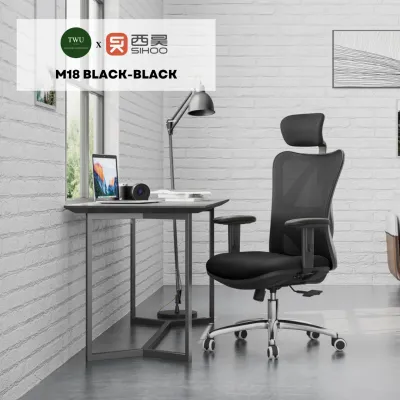
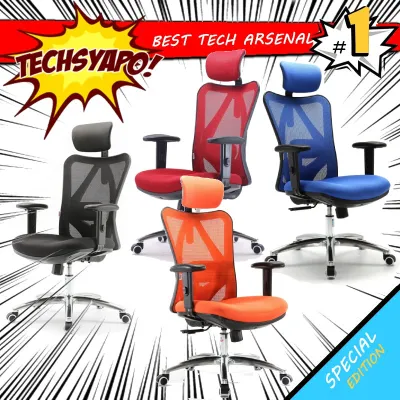
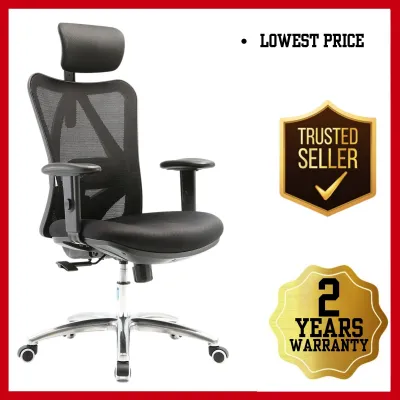
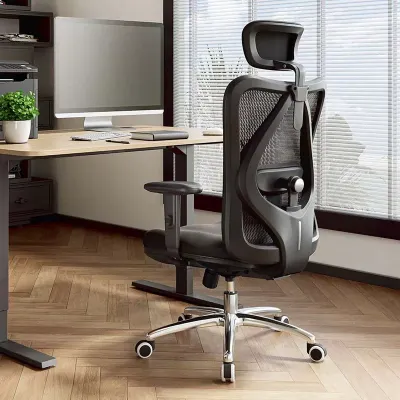
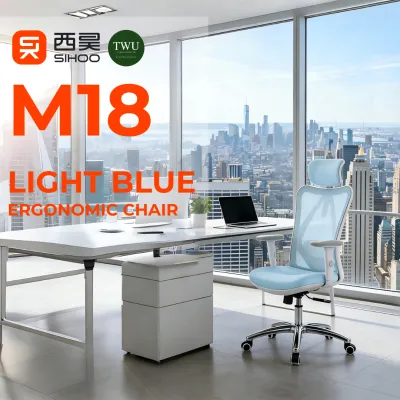
Prices are valid at publication and may change. Please refer to the product page for the latest price.

Lumbar support mechanisms vary significantly in this price range. Some entry-level chairs use a fixed plastic band, while others feature an adjustable lumbar pad. To evaluate these, check the manufacturer’s specifications to see if the lumbar support adjusts both vertically for height and horizontally for depth. This dual-axis adjustment helps target the lumbar curve of your spine more precisely than a static support frame.
Headrest and neck support are crucial if you tend to recline during calls or rest breaks. Evaluate the range of motion and locking positions by reviewing the product manual. A reliable headrest should adjust in height and tilt angle, locking securely into place so it does not slip when you lean back.
Armrest configurations directly impact desk clearance and shoulder strain. Budget chairs typically offer fixed, 1D, 2D, or 3D armrests. Fixed armrests are simple but can prevent you from pulling your chair close to your desk. 1D armrests adjust only in height, while 2D and 3D options allow forward-backward or rotational adjustments. Verify the armrest height range against your desk height to ensure comfortable elbow support at a 90-degree angle.
Recline and tilt tension allow you to shift your weight and relieve spinal pressure throughout the day. When comparing chairs, check the maximum recline angle and whether the chair features a tilt-lock mechanism. Additionally, look for a tension control knob underneath the seat pan, which allows you to adjust how much resistance the backrest offers when you lean back.
Evaluating Build Quality and Material Durability
Assessing the physical construction and material longevity of budget ergonomic chairs requires looking beyond aesthetics to check the actual specifications and component standards.
Seat cushion materials play a major role in comfort, especially in the warm, humid climate of the Philippines. High-density foam cushions offer plush, even weight distribution and excellent initial comfort, but they can trap body heat over long working hours. Full mesh seats provide superior airflow, keeping you cool, but lower-quality mesh can feel abrasive or lose tension over time. If choosing a foam seat, look for molded foam rather than cut foam, as molded foam retains its shape longer.
Backrest mesh tension must balance flexibility with support. When evaluating budget chairs, check user feedback or product specifications for mentions of mesh sagging. A high-quality mesh should feel taut and spring back immediately when pressure is released. The frame surrounding the mesh should be rigid, typically made of reinforced nylon or steel, to prevent twisting under load.
The base and casters bear the entire weight of the user and the chair. Budget chairs usually feature either a nylon base or a steel alloy base. While metal bases are generally perceived as more durable, high-strength nylon bases are also highly resilient and resistant to rust in humid environments. Ensure the casters are compatible with your flooring; nylon casters work well on carpets, while polyurethane-coated casters are preferred for hardwood or tile floors to prevent scratching.
Gas lift certifications are the most critical safety component of any office chair. When browsing online marketplaces, look for explicit mentions of safety certifications such as SGS or BIFMA Class 3 or Class 4. These classifications indicate that the cylinder has undergone rigorous pressure and durability testing, ensuring it can safely support its rated weight capacity over years of daily use.
Space, Assembly, and Daily Use Considerations
Before making a final decision, ensure the chosen chair fits your physical environment and can be assembled and maintained safely.
Footprint and clearance are vital measurements for any home office. Compare the chair’s maximum outer dimensions—including the width of the base and the height of the armrests—with your desk’s under-carriage clearance. In tight workspaces, a chair with a wide five-star base might collide with desk legs or nearby furniture, limiting your mobility.
Assembly requirements should be reviewed before purchase, as most ergonomic chairs under ₱10,000 are shipped flat-packed. Review the manufacturer’s assembly instructions online if available. Ensure the package includes all necessary hex keys or screws. When assembling, follow the specified torque and tightening sequence; tightening screws unevenly can cause the frame to warp or squeak during use.
Weight and height limits must be respected to avoid premature wear and protect your warranty. Operating a chair near or above its maximum weight capacity can accelerate wear on the gas lift and seat cushion. Similarly, check the recommended user height range. A chair designed for taller individuals may not allow a shorter user’s feet to rest flat on the floor, which is essential for proper ergonomic posture.
Regular maintenance routines extend the lifespan of your chair. For mesh components, use a vacuum cleaner with a brush attachment to remove dust and debris that accumulate in the weave. For foam seats, spot-clean spills immediately with a damp cloth and mild detergent. Periodically check and tighten the structural screws under the seat pan, and apply a silicone-based lubricant to moving joints if squeaks develop.
Decision Framework: Choosing Your Ergonomic Chair
To finalize your purchase decision, use this actionable framework to match your specific work habits and physical needs to the right chair category.
Choose the Sihoo M18 if:
- You prioritize specific adjustable lumbar and headrest features within this budget.
- You meet the official height and weight specifications provided by the manufacturer.
- You prefer a hybrid design with a supportive foam seat and a breathable mesh backrest.
Choose an alternative under ₱10,000 if:
- You require a fully mesh seat for maximum cooling in warm environments.
- You need highly adjustable 3D armrests to match a custom desk height.
- You have a body type that requires a wider seat pan or a higher weight capacity than what the Sihoo M18 officially supports.
Verify first if:
- Your primary use case involves specialized tasks, such as deep reclining for gaming or forward-leaning for drawing, which may require non-standard recline angles or seat depths.
- The seller offers local warranty support and replacement parts for the specific model you are considering.
Stop and consult:
- If you have pre-existing back conditions, chronic pain, or recent spinal injuries, consult a healthcare professional or physical therapist before relying solely on budget ergonomic claims. No chair can substitute for professional medical advice.
Frequently Asked Questions (FAQ)
How do I know if an ergonomic chair will fit my desk height?
To ensure a proper fit, first measure the distance from the floor to the top surface of your desk, as well as the clearance underneath the desk frame. Next, check the chair’s specifications for its minimum and maximum seat height, as well as the height of the armrests at their lowest and highest settings. For ideal ergonomics, your elbows should rest comfortably on the armrests or desk surface at a 90-degree angle while your feet remain flat on the floor. If the armrests cannot slide under your desk, you may be forced to sit too far back, leading to poor posture.
Is a mesh seat better than a foam seat for long working hours?
The choice between mesh and foam depends on your local environment and personal comfort preferences. In warm and humid climates, a full mesh seat offers excellent ventilation, preventing heat and moisture buildup during long working sessions. However, high-density foam cushions generally provide more consistent weight distribution and softer contouring, which can reduce pressure points on your thighs and hips. If you choose a mesh seat, ensure the mesh is of high quality to prevent sagging over time, and verify that the front edge of the seat has a waterfall design to maintain healthy blood circulation.

Community discussion
Share your experience or ask a question. Comments are reviewed before publication.