
Finding the right foldable long table for a small condo balcony in the Philippines requires balancing your available floor area with the physical space needed to move around comfortably. While a long table provides excellent surface area for dining, working, or enjoying a morning coffee, an oversized piece can easily block your sliding doors, obstruct your air conditioning exhaust, or violate strict condominium association guidelines. To find the perfect fit, you must calculate your balcony’s exact footprint and subtract the necessary clearances for seating and walkways.
In most Philippine metropolitan condominiums, balcony spaces are premium and compact, often measuring between 80 to 150 centimeters in depth. A foldable long table offers a highly versatile solution, allowing you to set up a functional outdoor bar or dining spot that can be tucked away when the space is needed for drying laundry or enjoying the open air. By focusing on precise measurements and choosing the right folding mechanism, you can maximize your outdoor living area without compromising on safety or convenience.
Measure Your Balcony Space and Clearances
Before browsing online marketplaces or visiting local furniture showrooms, you must obtain the exact dimensions of your balcony. Use a heavy-duty steel measuring tape rather than a soft tailor’s tape to ensure accuracy over longer distances. Measure the interior length from one side wall to the other, and then measure the usable depth from the outer track of your sliding glass door to the innermost edge of the balcony railing.
Products mentioned in this guide
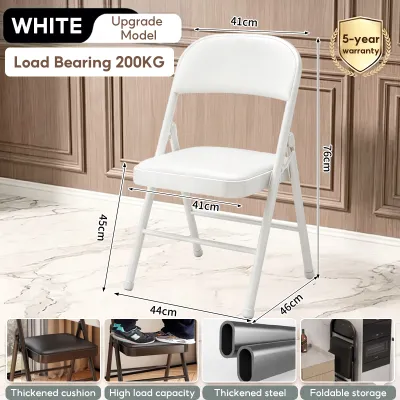
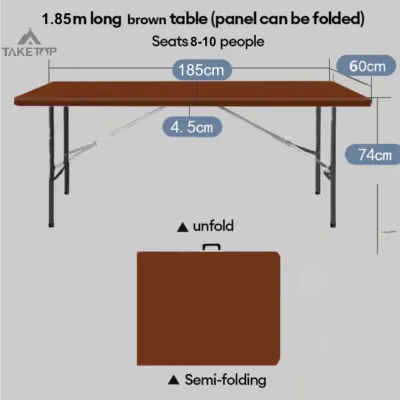
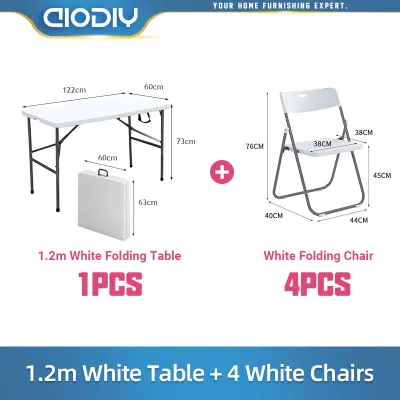
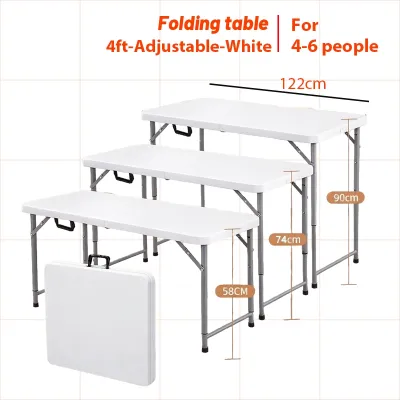
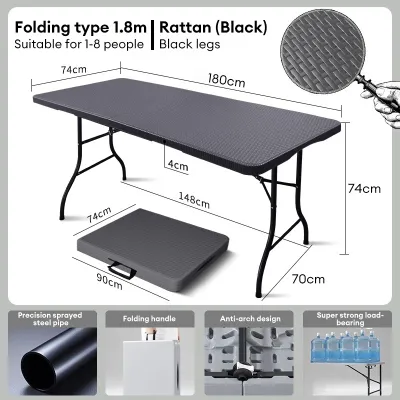
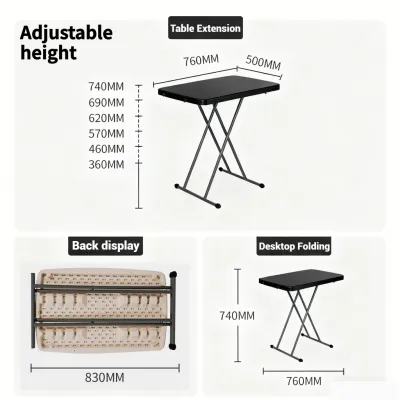
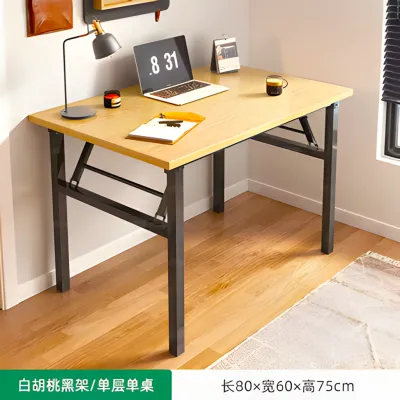
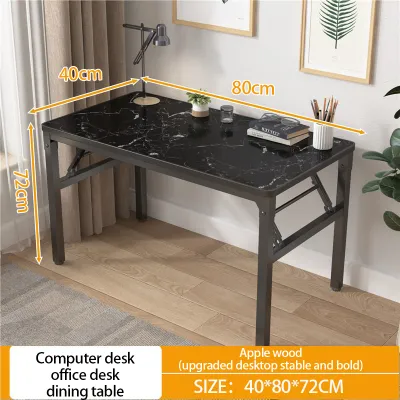
Prices are valid at publication and may change. Please refer to the product page for the latest price.
Do not assume the entire floor area is usable, as permanent physical obstacles often restrict where furniture can sit. In many Philippine condo developments, the outdoor air conditioning compressor is mounted directly on the balcony floor or low on a side wall. This unit not only occupies physical space but also discharges hot air that can make sitting nearby uncomfortable; you must measure the clearance around this unit to keep your table and seating out of the direct exhaust path.
Additionally, locate the drainage grates and any vertical downpipes on your balcony. Your table legs must not stand directly over these grates, as you need clear access to clear debris and prevent pooling water during heavy tropical downpours. If your balcony features structural columns or decorative concrete pillars, measure how far they protrude into the space, as these elements will reduce the actual length available for a flat table surface.
Finally, map out the main traffic path from your indoor living room to the balcony edge. If your balcony is accessed via a swing-out door, measure the full arc of the door swing to ensure it can open completely without striking the table. For sliding glass doors, identify which side opens and ensure that a folded or unfolded table does not block the primary entry and exit point, maintaining a clear and safe pathway at all times.
Match Foldable Long Table Lengths to Balcony Zones
To select the ideal table length, you must first decide how to zone your balcony layout. The most popular arrangement for narrow spaces is the parallel layout, where the long table is placed directly against the railing to create a bar-style setup. This configuration maximizes your view of the city skyline while keeping the center of the balcony open for movement. Alternatively, a perpendicular layout places the short end of the table against a side wall, which works well if your balcony has a deeper footprint and you prefer face-to-face dining.

To calculate the maximum allowable table length, you must subtract the space required for chairs and walkways from your total balcony dimensions. As a general rule, an occupied chair requires approximately 50 to 60 centimeters of depth from the edge of the table, and you should leave an additional 50 centimeters behind the chair for comfortable passage. If your balcony is 120 centimeters deep and you place a 40-centimeter-wide table parallel to the railing, you will have 80 centimeters of remaining depth, which is just enough for compact stools but too tight for large, high-backed chairs.
The shape of the table edges also plays a significant role in how well the furniture fits into your designated zones. Rectangular tables offer the maximum surface area for plates, laptops, and drinks, but their sharp corners can be hazardous in tight spaces, easily snagging clothing or causing painful bumps. Choosing a foldable table with rounded corners or an oval shape improves traffic flow around the ends of the table, making it much easier to navigate the narrow gaps typical of condo balconies.
To simplify your search, you can use a basic dimension matrix to match your measured balcony width to an appropriate table length. For a very small balcony with a width of 100 to 120 centimeters, a compact foldable table length of 60 to 80 centimeters is ideal. For medium balconies spanning 150 to 180 centimeters, you can comfortably accommodate a table length of 100 to 120 centimeters. If you are fortunate to have a wide balcony exceeding 200 centimeters, a longer table of 140 to 160 centimeters can work beautifully, provided you maintain the necessary side clearances for plants or laundry racks.
Verify Condo Rules and Safety Clearances
Living in a high-rise condominium in the Philippines means adhering to specific guidelines set by your building’s Property Management Office (PMO). Before purchasing any outdoor furniture, review your tenant handbook or consult the PMO regarding balcony modifications. Many condo corporations strictly prohibit drilling into exterior walls, structural columns, or railings to protect the building’s waterproofing layers and structural integrity, which means permanent wall-mounted drop-leaf tables are often not permitted.
Weight limits are another critical factor to verify with your building administration. While almost all modern balconies are engineered to support standard residential furniture, heavy materials like solid wrought iron, thick concrete, or dense natural stone can add significant dead weight. Opting for lightweight, high-strength materials ensures you stay well within safe structural limits while making the furniture much easier to handle.
Safety clearances are not just about comfort; they are vital for emergency egress. Local fire safety standards in the Philippines require that balconies, which often serve as secondary escape routes or rescue access points, remain free of major obstructions. Your foldable table must be positioned so that it does not block access to fire escape ladders, rescue windows, or utility panels, ensuring that you and your family can exit quickly in an emergency.
Furthermore, you must account for the severe weather conditions common in the Philippines, including high-velocity winds during typhoons and intense monsoon rains. A lightweight, unsecured folding table can easily become a dangerous projectile if caught by strong gusts on a high-floor balcony. You must plan to either secure your table using non-destructive methods, such as heavy-duty weighted bases or removable straps, or choose a design that is light enough to be folded and brought indoors immediately when storm warnings are raised.
Choose the Right Folding Mechanism and Storage Plan
Selecting the right folding mechanism is crucial for ensuring that your table fits your daily routine and does not become a permanent obstacle. Freestanding collapsible tables, such as those with folding scissor legs or center-folding designs, are highly versatile because they can be moved indoors for extra guest seating when needed. However, they require dedicated floor space when open. In contrast, railing-hung drop-leaf tables clamp directly onto your existing balustrade and fold completely flat against the railing when not in use, preserving almost all of your balcony’s floor space.
Before making a purchase, calculate the exact folded dimensions of the table to ensure you have a practical storage plan. Measure the thickness of the table when fully collapsed; a slim profile of 5 to 10 centimeters is ideal, as it allows you to slide the table behind a living room sofa, store it flat against an unused balcony wall, or tuck it into a narrow utility closet. If the table is too bulky when folded, it may end up permanently open on your balcony, defeating the space-saving benefits of a foldable design.
Finally, evaluate the overall weight of the table and the physical effort required to fold and unfold it. In the humid, tropical climate of the Philippines, materials must be both weather-resistant and manageable. Heavy solid wood or untreated steel can rust, warp, or become too heavy for one person to lift safely. Look for tables constructed with rust-resistant powder-coated aluminum frames, high-density polyethylene (HDPE) tops, or treated synthetic wicker, which offer excellent durability against sun and rain while remaining light enough for easy daily setup and storage.
Frequently Asked Questions (FAQ)
Can I mount a foldable table directly to my condo balcony wall or railing?
Most condominium corporations in the Philippines strictly prohibit drilling into exterior walls or railings to prevent water leaks and structural damage. Instead of permanent mounting, look for freestanding folding tables or specialized over-the-railing hook designs. These hook-on tables use adjustable clamps to hang securely from the balustrade without requiring any drilling or permanent alterations.
What is the minimum walkway width I should leave on a small balcony?
To establish a comfortable baseline, measure your own shoulder width and add 10 to 15 centimeters on either side to account for your natural walking gait. Generally, a minimum walkway width of 50 to 60 centimeters is recommended for single-file passage. You should also check your specific building’s fire safety guidelines to ensure your setup complies with local emergency egress requirements.
How do I prevent a lightweight foldable table from tipping in strong winds?
Before purchasing, check the table’s base width and center of gravity; tables with wider, lower bases are naturally more stable. To secure a lightweight table on a high-rise balcony, you can use removable sandbags, heavy patio umbrella bases, or industrial-strength hook-and-loop straps attached to the railing. Always fold the table flat and bring it indoors during severe weather alerts and typhoons.

Community discussion
Share your experience or ask a question. Comments are reviewed before publication.