
Finding a foldable wall-mounted dining table that can comfortably and safely accommodate a large family of 6 to 10 diners requires balancing spatial efficiency with structural integrity. In many households, the dining area is the heart of the home, serving as a gathering space for extended family. When space is limited, a wall-mounted folding table offers an excellent way to reclaim floor space once the meal is over. However, supporting up to 10 diners demands careful planning. You must select a table with generous, expandable surface dimensions and a highly reinforced load capacity that transfers weight safely to your home’s structure. Rather than relying on standard wall brackets alone, a high-capacity setup requires a combination of robust extension mechanisms, floor-supporting legs, and secure anchoring into solid masonry or structural studs.
Assessing Space and Dimension Requirements for Large Gatherings
To ensure everyone can dine comfortably, calculate the necessary tabletop footprint based on per-person space requirements. Each diner typically requires about 60 centimeters of width and 40 centimeters of depth. For 6 to 10 people, this translates to a substantial surface area. A table for 6 diners requires a length of at least 150 to 180 centimeters, while seating 10 people comfortably demands 240 to 300 centimeters, depending on whether you utilize the table ends.
Because a static wall-mounted panel of this size would be heavy and visually overwhelming when folded, look for smart extension mechanisms. Drop-leaf designs keep the table compact for daily use and swing up additional panels for guests. Pull-out or gateleg extensions slide out hidden tracks or rotate support frames from beneath the main tabletop. Check the manufacturer’s guidelines to confirm the exact finished dimensions in both collapsed and fully extended states.
Products mentioned in this guide
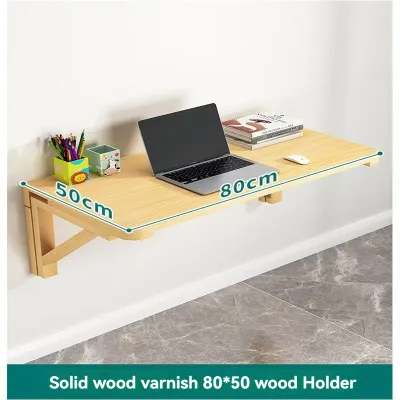
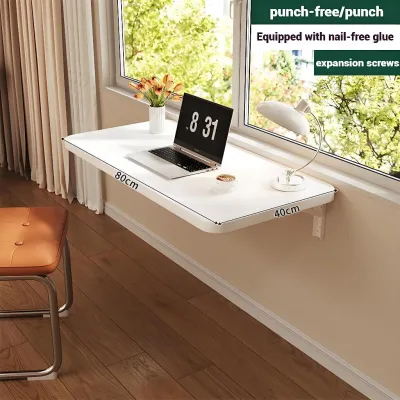
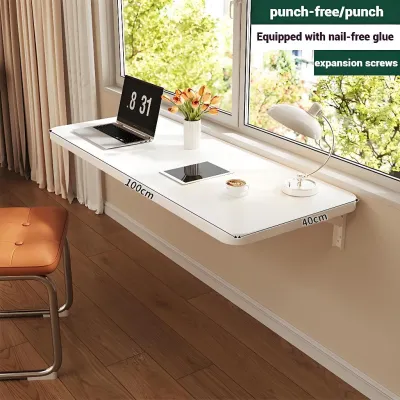
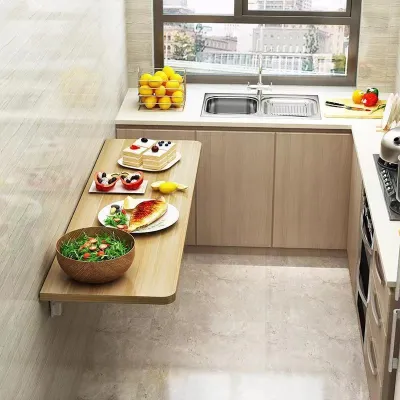
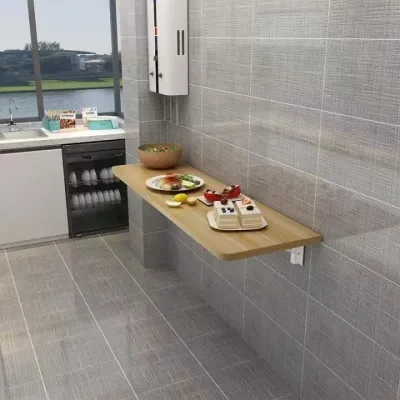
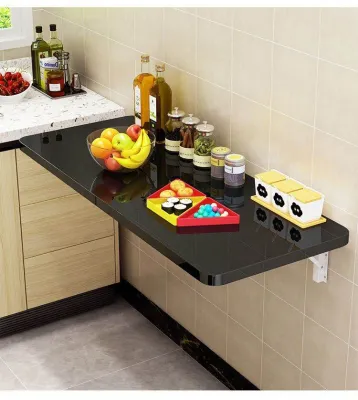
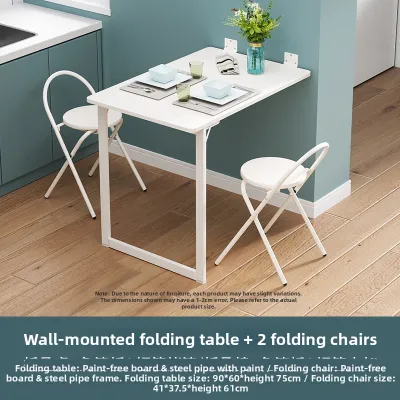
Prices are valid at publication and may change. Please refer to the product page for the latest price.
Equally important is measuring room clearance when the table is fully deployed. In many homes, dining spaces serve as main thoroughfares. To allow diners to pull out chairs and sit comfortably, maintain a clearance of 90 centimeters between the table edge and the nearest wall or furniture. For a clear walkway behind seated family members, increase this to 120 centimeters. Map these dimensions on your floor using painter’s tape before purchasing to ensure the expanded table does not block your living space. Finally, verify the packaged and finished dimensions to ensure the unit can pass through doorways, hallways, or condominium lifts during delivery and assembly.
Evaluating Weight Capacity and Structural Support
A dining table for a large family must support more than just food; it must withstand heavy serving platters, rice cookers, pitchers, and the downward force of diners leaning on the edge. Before buying, check the manufacturer’s stated maximum weight capacity on the product label or specification sheet. For a table seating 6 to 10 people, a weight capacity of at least 75 to 100 kilograms is recommended to ensure a safe margin of error.

To distribute this weight safely, high-capacity foldable tables rely on heavy-duty hinges, locking brackets, and floor-reaching support legs. While smaller wall-mounted desks can hang freely using only wall brackets, a large dining table requires legs that fold down to the floor. These legs transfer downward force directly to the ground, dramatically reducing the leverage exerted on the wall anchors. Look for steel or solid wood legs with robust locking hinges that click securely into place.
While solid wood or metal frames are popular, the material name alone does not guarantee durability or moisture resistance in humid tropical environments. Instead, inspect the quality of the protective finish, the strength of the welded or bolted joints, and the manufacturer’s care instructions to ensure the table can withstand daily use and cleaning.
The anchoring method is the most critical factor in preventing structural failure. In the Philippines, residential walls are commonly constructed from concrete hollow blocks or solid masonry, though some modern partitions use drywall over metal or wood studs. Never mount a heavy-duty foldable table directly into drywall or plaster without securing it to structural studs. For concrete or masonry walls, use heavy-duty sleeve anchors or masonry bolts. Always verify the wall type and structural integrity of your mounting surface, and strictly follow the manufacturer’s installation instructions to ensure the table remains firmly anchored under load.
Installation Clearances and Safety Checks
Installing a large foldable wall-mounted dining table requires precise alignment and safety checks to ensure smooth daily operation. First, verify the unfolding radius of the tabletop. As the table swings down or folds out, it describes a wide arc. Ensure this path is completely clear of low-hanging light fixtures, ceiling fans, wall decor, or nearby cabinets. A collision during folding or unfolding can damage both the table mechanism and your home’s fixtures.
Next, inspect the locking mechanisms that secure the table in its open position. High-quality tables feature safety latches, spring-loaded pins, or locking brackets that automatically engage when fully extended. Before placing heavy dishes or allowing family members to sit, physically test these locks to ensure they are fully seated and cannot be accidentally dislodged by an upward bump from a diner’s knee. Regularly check these joints and hinges for signs of wear, loose screws, or structural play, especially in humid climates where moisture can affect metal hardware over time.
Finally, check for wall irregularities before mounting the support brackets. Many concrete walls have slight curves, bumps, or uneven plaster finishes. Mounting a rigid metal bracket to an uneven wall can warp the bracket or put uneven stress on the hinges, preventing the table from folding completely flat against the wall when closed. Use a long spirit level to check the flatness of the wall. If irregularities are present, you may need to install a flat wooden backing board securely to the wall studs or masonry first, and then mount the table bracket to this level surface.
Alternative Configurations When Wall-Mounted Limits Are Reached
If your dining room wall cannot structurally support a single table large enough for 10 people, or if the required unfolding radius completely blocks your living space, consider alternative modular configurations. Trying to force an oversized wall-mounted table onto an inadequate wall poses a safety risk. Instead, combine a medium-sized wall-mounted table (designed for 4 to 6 people) with a separate, freestanding folding table of matching height. When hosting large gatherings, set up the freestanding table adjacent to the wall-mounted unit to create a single, long banquet-style setup, and then store the freestanding table away afterward.
Another practical layout strategy is to utilize your kitchen island or countertops as supplementary serving and seating areas. Placing heavy serving platters, rice cookers, and beverage dispensers on a nearby counter or island keeps the main wall-mounted table clear of excess weight and clutter. This reduces the physical load on the wall brackets and maximizes the usable dining space for your family members’ individual place settings.
When deciding on your dining setup, weigh the trade-offs between space-saving wall designs and traditional expandable freestanding tables. While wall-mounted tables excel at keeping small rooms open and airy, they are permanently fixed in one location and require professional-grade installation. If your family frequently rearranges the living space or if you rent your home, a high-quality freestanding expandable table—which can be stored in a closet or against a wall when not in use—might offer greater flexibility and peace of mind without the need to drill into structural walls.
Frequently Asked Questions (FAQ)
Can a standard drop-leaf wall table safely seat 10 people?
Standard drop-leaf wall tables are typically designed for light use, accommodating 2 to 4 people. They generally lack the heavy-duty framing, reinforced hinges, and floor-reaching support legs necessary to distribute the weight of 10 diners and their meals. Attempting to seat 10 people on a standard model risks structural failure and wall damage. For large gatherings, you must verify that the product is specifically rated for high capacities and features robust, floor-supporting legs.
What type of wall is required for a heavy-duty foldable dining table?
A heavy-duty foldable dining table must be mounted to a highly stable, load-bearing wall. In the Philippines, solid concrete, brick, or concrete hollow block walls are ideal, provided you use appropriate masonry anchors. If installing on a drywall partition, the mounting brackets must be screwed directly into the internal wood or metal structural studs, never into the drywall alone. Always consult the manufacturer’s guidelines or hire a qualified professional to assess your wall’s load capacity before installation.

Community discussion
Share your experience or ask a question. Comments are reviewed before publication.