
To comfortably seat 6 to 10 people around a rattan round table, you will need a table diameter ranging from 150 cm (60 inches) to 210 cm (84 inches). Specifically, a 150 cm table serves as an ideal baseline for 6 to 8 diners, while a larger 180 cm to 210 cm table is required to accommodate 8 to 10 people without crowding. Choosing the right size ensures that everyone has enough elbow room to enjoy their meals while maintaining an intimate, conversational atmosphere.
When selecting a rattan round table with chair set, the unique physical characteristics of woven furniture require careful planning. Rattan dining sets bring a warm, tropical texture to your home, but their naturally textured frames and often wider profiles mean standard dining room dimensions do not always apply. Balancing the physical footprint of the table with the specific design of your chairs is the key to creating a comfortable, functional dining space.
Baseline Diameters for 6 to 10 Diners: Where to Start
To establish a starting point for your dining layout, you must first consider the standard ergonomic space required for a single diner. On average, a comfortable dining experience requires 60 to 75 cm (24 to 30 inches) of table perimeter per person. This spacing provides enough room for place settings, glassware, and natural elbow movement during a meal without diners bumping into one another.
Products mentioned in this guide
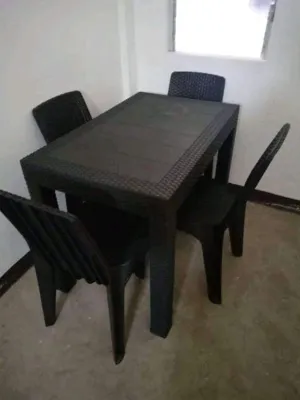
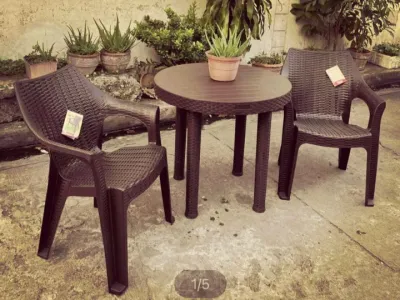
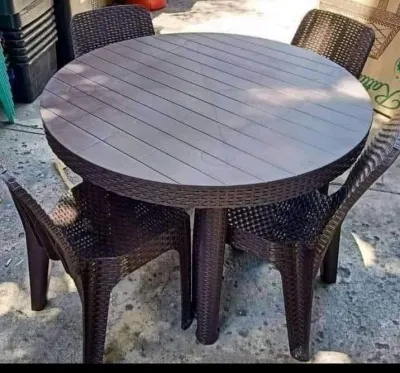
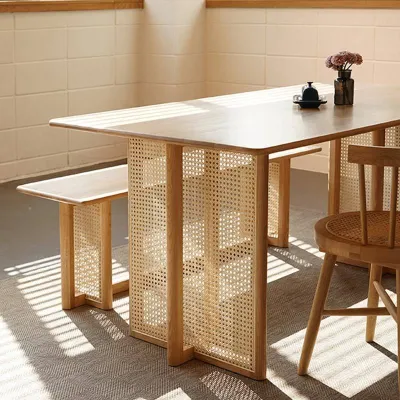
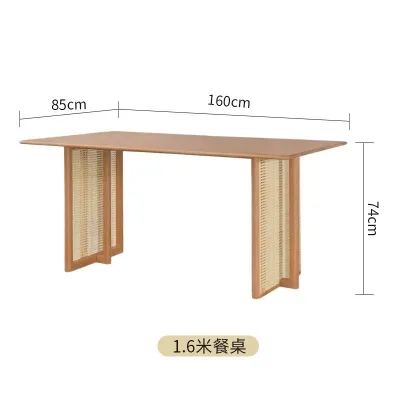
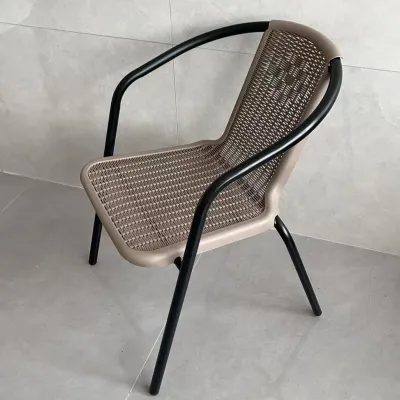
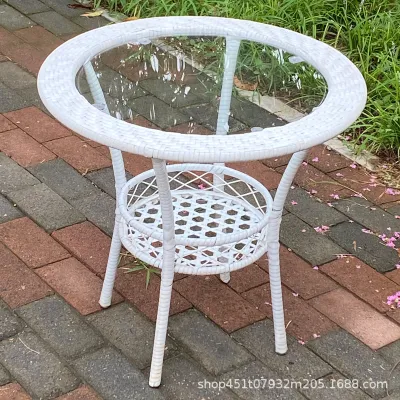
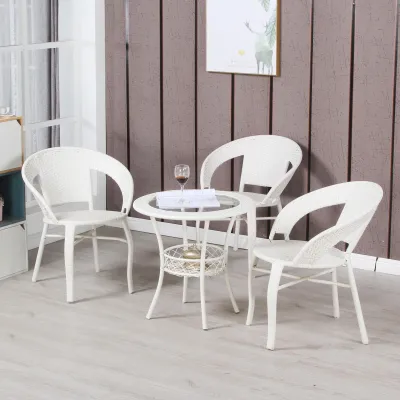
Prices are valid at publication and may change. Please refer to the product page for the latest price.
For a group of 6 diners, a table diameter of 120 cm to 150 cm (48 to 60 inches) is the standard recommendation. If you regularly host 8 people, you should look for a baseline diameter of 150 cm to 180 cm (60 to 72 inches). To comfortably accommodate 10 people, the table diameter must scale up to a range of 180 cm to 210 cm (72 to 84 inches) to ensure everyone has an equal share of the table edge.
These baseline measurements assume you are using standard, armless dining chairs with a relatively slim profile. Because rattan furniture is often handcrafted with thicker woven poles, decorative bindings, or flared legs, these standard dimensions must be treated as minimum baselines. Wider or heavily woven seating options will quickly crowd these standard diameters, requiring you to adjust your measurements upward.
Recalculating the Diameter for Bulky Rattan Chairs
When purchasing a rattan round table with chair set, the design of the chairs plays a massive role in determining the actual table size you need. Rattan dining chairs often feature generous armrests, thick woven backrests, and flared legs that demand significantly more space than minimalist metal or wooden chairs. If your chosen chairs have a wide profile, using standard table sizing baselines will result in a cramped, uncomfortable dining arrangement.

To find the precise table diameter required for your specific chairs, you can use a simple mathematical formula. Multiply the total number of chairs by the maximum width of a single chair (measured at its widest point, which is usually the armrests or the outer edge of the legs), add a 10 to 15 cm spacing buffer per chair, and then divide the total sum by Pi (3.1416). For example, if you want to seat 8 people in chairs that are 60 cm wide, your calculation would look like this:
$$\text{Required Perimeter} = 8 \times (60\text{ cm} + 10\text{ cm}) = 560\text{ cm}$$ $$\text{Required Diameter} = \frac{560\text{ cm}}{3.1416} \approx 178\text{ cm}$$
In this scenario, a standard 150 cm table would be far too small, and you would need to opt for at least a 180 cm table to prevent the chairs from clashing.
Beyond the width of the chairs, you must verify the tuck-in clearance of the armrests. Measure the distance from the floor to the underside of the table apron, and compare it to the height of the chair armrests. If the armrests cannot slide completely under the table, the chairs will remain permanently pushed out, occupying valuable floor space and disrupting the visual flow of your dining room.
Finally, pay close attention to the table’s base design and how it interacts with your guests’ legs. A central pedestal base is highly recommended for round tables because it eliminates corner legs that can block knee space. However, if the pedestal base features a wide, flared rattan weave at the bottom, it may still interfere with the feet of your wider chairs, so always check the base dimensions before finalizing your purchase.
Verifying Room Clearance for the Table and Pulled-Out Chairs
Before committing to a large round table, you must ensure that your dining room can physically accommodate the entire set when in use. The total functional footprint of a dining set is much larger than the table itself. To calculate this, take the table diameter and add twice the depth of your chairs when they are pulled out for seating (typically around 60 to 70 cm per chair).
For a 180 cm table, the functional footprint easily expands to a diameter of 300 cm to 320 cm once you account for seated guests. To maintain a comfortable flow of traffic, you should maintain a minimum clearance of 90 to 120 cm (36 to 48 inches) between the edge of the pulled-out chairs and the nearest walls, sideboards, or doorways. This clearance allows family members to walk behind seated guests without forcing anyone to squeeze or adjust their position.
In many homes, spatial obstacles can restrict where a large round table can be placed. Take note of low-hanging pendant lights, ceiling fans, and door swings that might interfere with the table or the high backrests of rattan chairs. In tropical climates where ceiling fans are constantly running for ventilation, ensuring proper clearance between the fan blades and the dining area is a vital safety check.
To avoid costly delivery mistakes, use painter’s tape or lay down sheets of newspaper on your dining room floor to map out the exact dimensions of the table and chairs. Walk around the taped area to test the traffic flow and ensure that nearby cabinet doors can open fully. Additionally, because large round tables of 180 cm or more do not fold, verify that the tabletop can fit through your home’s entryways, narrow hallways, stairwells, or condominium elevators during delivery.
Practical Alternatives When a 10-Seat Round Table Exceeds Your Space
If your measurements reveal that a permanent 10-seat round table is too massive for your dining room, there are several practical design alternatives that can help you maximize seating without overcrowding your home. One excellent option is to look for an extendable or drop-leaf round rattan table. These designs allow you to keep the table at a compact 120 cm or 150 cm diameter for daily family meals, and then expand it with leaf inserts to accommodate up to 10 guests during special gatherings.
Another space-saving strategy is to mix your seating styles by incorporating a curved bench or backless stools on one side of the table. Backless stools can be tucked completely under the table when not in use, instantly freeing up floor space and reducing the overall footprint of the dining set. This arrangement works particularly well in open-concept living spaces where traffic paths need to remain clear.
If a round shape proves too wide for a narrow dining room, transitioning to an oval or rectangular rattan table is a smart alternative. Oval tables offer the same soft, organic curves as round tables but feature a narrower width that fits comfortably into elongated rooms while still providing ample seating capacity along the straight sides.
Lastly, you can opt for a smaller 6-to-8-seat round table and pair it with a nearby accent cabinet or console table. During large gatherings, the console table can serve as a buffet station for serving dishes, rice cookers, and drinks. This keeps the main dining table clear of serving platters, allowing you to maximize the usable surface area for your guests’ individual place settings.
Frequently Asked Questions (FAQ)
Fitting 10 People Using Armless Rattan Chairs
Switching from bulky armchair designs to armless rattan chairs significantly reduces the required table perimeter per person. Because armless chairs lack wide side structures, they can be placed closer together, allowing you to fit 10 people around a 180 cm table that might otherwise only fit 8 armchairs. However, keep in mind that armless chairs offer less lateral support and may feel less comfortable during long, multi-course dinners where guests prefer to lean back and relax.
Choosing the Right Base for Large-Span Round Tables
For large-diameter tables, a central pedestal base is highly superior to a four-legged design because it provides unrestricted legroom and allows chairs to be placed anywhere around the perimeter. When selecting a pedestal base for a table larger than 150 cm, verify that the base is heavy and wide enough to prevent tipping, especially if you plan to use a heavy glass top insert. Look for bases reinforced with solid wood or metal inner frames to ensure long-term stability.
Preventing Sagging and Checking Structural Support
Large-span rattan tables are susceptible to sagging over time if they lack proper structural reinforcement. Before purchasing, check the manufacturer’s specifications to ensure the table features a sturdy under-frame, such as cross-braced timber or powder-coated steel supports beneath the woven surface. If your table features a glass top insert, ensure the glass is tempered and supported by rubber bumpers to distribute weight evenly and prevent concentrated pressure points from damaging the rattan weave.

Community discussion
Share your experience or ask a question. Comments are reviewed before publication.