
Choosing between a sliding door wardrobe and a hinged door wardrobe is one of the most critical decisions you will make when designing or upgrading your bedroom. The right choice does not just dictate how your clothes are stored; it directly impacts how easily you can move around your bed, how spacious your room feels, and how well your furniture withstands daily wear. While sliding doors offer a sleek, modern aesthetic that saves valuable floor space, hinged doors provide complete visibility and timeless design flexibility. Deciding between them requires a careful look at your room’s physical dimensions, your daily habits, and the specific environmental conditions of your home.
Evaluating Bedroom Space and Clearance Requirements
To determine which door mechanism physically fits your layout, start by measuring your available floor space and mapping out the clearance zones. A hinged wardrobe door requires a clear swing radius to open fully without striking your bed, bedside tables, or adjacent walls. Typically, a standard hinged door panel measures 45 to 60 centimeters in width, meaning you must maintain at least that much clear space directly in front of the wardrobe, plus an additional walkway margin so you can stand comfortably in front of the open door. If your bedroom layout forces you to place the wardrobe close to the foot of the bed, a hinged door will likely block traffic.
In contrast, sliding door wardrobes are highly efficient in tight spaces because the doors glide horizontally within the frame. This mechanism eliminates the need for front swing clearance, allowing you to position the wardrobe in narrow walkways or directly alongside a bed. However, sliding systems require a deeper overall wardrobe frame to accommodate the track mechanism. While a standard hinged wardrobe requires a depth of about 60 centimeters, a sliding wardrobe typically demands 65 to 70 centimeters of depth because the double-track system itself occupies roughly 8 to 10 centimeters of interior space. If your bedroom has shallow alcoves, a sliding wardrobe might protrude awkwardly into the room.
Products mentioned in this guide
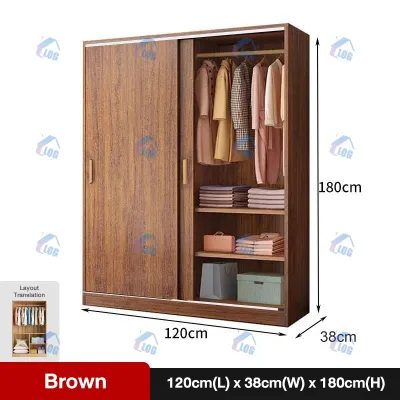
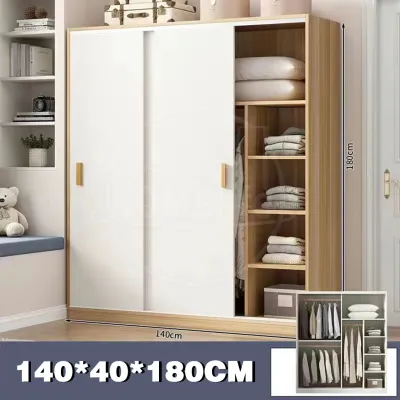
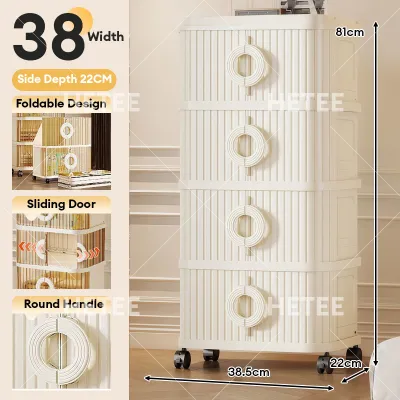
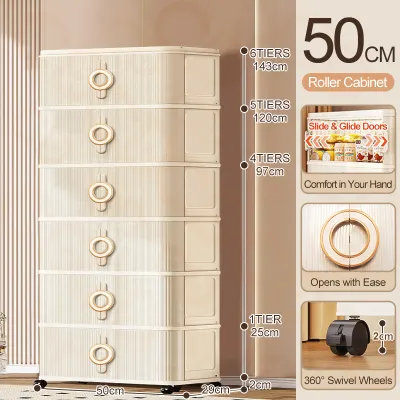
Prices are valid at publication and may change. Please refer to the product page for the latest price.
When navigating tight spaces, especially in modern condominium units or compact urban bedrooms, every centimeter counts. If you have a bedside table positioned right next to the wardrobe, a hinged door on that side will be permanently obstructed unless you leave a wide gap. A sliding door solves this issue by allowing you to slide the panel open even if a nightstand is placed close to the wardrobe front. Carefully map your room layout on paper or use masking tape on the floor to visualize these clearance zones before committing to a specific door style.
Comparing Accessibility and Internal Storage Usability
Beyond physical space, consider how you interact with your clothes daily and how the door mechanism affects internal storage usability. Hinged doors offer the distinct advantage of full-width visibility. When you open all the doors of a hinged wardrobe simultaneously, your entire wardrobe is on display, making it incredibly easy to coordinate outfits, organize laundry, or share the closet space with a partner. This layout also allows you to utilize the inside of the door panels for mounting full-length mirrors, tie racks, belt hooks, or shallow accessory organizers, maximizing every square centimeter of the wardrobe’s footprint.

Sliding door systems, by design, present partial access limitations. Because the door panels must slide over one another, you can only open one section of the wardrobe at a time, leaving the other half or two-thirds completely covered. This creates overlapping panel “blind spots” where the doors meet in the center. If two people share the wardrobe and need to get dressed at the same time, a sliding system can cause daily frustration as you constantly slide the doors back and forth to access different sections.
This accessibility limit also dictates how you configure your internal storage. For instance, pull-out drawers, wire baskets, and trouser racks must be carefully positioned away from the overlapping zones of sliding doors. If a drawer is placed too close to the center overlap or the outer frame, the sliding door panel may not clear it fully, preventing the drawer from opening or causing it to scrape against the door. When planning a sliding wardrobe, you must ensure that all internal pull-out accessories are designed with sufficient clearance or recessed handles to avoid costly structural conflicts.
Aesthetics, Materials, and Design Flexibility
The visual impact of your wardrobe plays a major role in setting the tone of your bedroom decor. Sliding door wardrobes are highly favored for contemporary, minimalist, and modern interior styles. Because the panels are large and flat, they create a clean, streamlined facade that can make a small room feel less cluttered. Integrating full-length mirrors onto sliding panels is a popular design choice; it serves a dual purpose by eliminating the need for a separate floor mirror and bouncing natural light around the room to create an illusion of greater space.
Hinged wardrobes, on the other hand, offer classic, traditional, and transitional design flexibility. The individual door panels allow for beautiful architectural details, such as shaker-style profiling, raised panels, or intricate molding that adds depth and character to the room. Furthermore, hinged doors allow you to showcase decorative hardware. Your choice of handles, knobs, or long pull bars can serve as statement pieces that tie the wardrobe into your overall bedroom design, whereas sliding doors typically rely on recessed, flush-mount handles to allow the panels to pass over one another smoothly.
Before purchasing, check the manufacturer’s specifications regarding material finishes and structural limits. In tropical climates with high humidity, wood-based panels like MDF or particleboard are susceptible to moisture absorption, which can cause large, heavy doors to warp over time. Ensure that the materials are treated with moisture-resistant laminates or veneers. For sliding systems, verify that the frame can support the weight of heavy glass or mirrored panels, as excessive weight can strain the rollers and tracks, leading to premature wear.
Installation, Maintenance, and Longevity Checks
Long-term satisfaction with your wardrobe depends heavily on proper installation and regular maintenance. Sliding doors rely on a system of tracks and rollers that require consistent upkeep. Over time, dust, lint, and hair inevitably accumulate in the bottom track, which can cause the doors to jump off their tracks, glide roughly, or get stuck. To prevent this, you must commit to vacuuming the tracks regularly and checking the rollers for wear. Additionally, if your bedroom floor is not perfectly level, sliding doors may drift open on their own or fail to close flush against the side panels, requiring adjustable rollers or track wedges to correct.
Hinged doors are generally simpler to maintain but are not entirely maintenance-free. The primary concern with hinged systems is hinge tension and door sagging. Because the entire weight of the door panel is supported by hinges mounted to one side of the carcass, gravity and frequent use can cause the doors to sag over time, leading to misaligned panels that scrape against the bottom frame or fail to latch. High humidity can exacerbate this issue by swelling the wood around the hinge screws. Fortunately, modern soft-close hinges feature adjustment screws that allow you to easily realign the doors vertically, horizontally, and in depth with a simple screwdriver.
Regardless of the door type you choose, verifying wall plumbness and floor leveling before installation is absolutely critical. If your walls are uneven or your floors slope—a common issue in both older homes and rapid-build high-rises—pre-fabricated wardrobes will not sit flush, leading to operational issues. A professional installer or carpenter can scribe filler panels to uneven walls or use leveling shims under the wardrobe base to ensure the entire structure is perfectly square, plumb, and stable.
Decision Framework: Choosing the Right Wardrobe Configuration
To make your final decision, evaluate your bedroom’s layout against your daily storage needs. Choose a sliding door wardrobe if your floor space is strictly limited, if the wardrobe must sit close to your bed or a walkway, or if you prefer a sleek, modern aesthetic with integrated mirrors. This configuration maximizes your usable floor area and keeps your bedroom looking uncluttered, provided you have the extra 10 centimeters of depth required for the track system.
Conversely, choose a hinged door wardrobe if you prioritize full, unrestricted access to your belongings, share your closet space with a partner, or prefer a classic design with decorative hardware. This option is ideal if your bedroom easily accommodates the necessary swing clearance and you want a system that is straightforward to adjust and maintain over many years.
Before finalizing your plans, check current retail pricing in ₱ across local furniture stores and custom cabinetry makers, as custom sliding mechanisms and high-quality tracks can sometimes carry a premium over standard hinged hardware. If your bedroom features sloped ceilings, uneven walls, or unusual architectural columns, consult a qualified carpenter to discuss a custom-built solution that ensures a seamless, stable fit.
Frequently Asked Questions (FAQ)
Can I convert a hinged door wardrobe to a sliding door system later?
Converting an existing hinged wardrobe to a sliding system is structurally challenging but possible if the frame has sufficient depth. Because sliding tracks require an additional 8 to 10 centimeters of depth, you must verify that your current wardrobe carcass is deep enough (ideally 65 centimeters or more) so your hanging clothes do not obstruct the new sliding panels. You will need to remove the hinges, patch the mounting holes, install top and bottom track runners, and source custom-sized sliding panels. Because precise alignment is critical to prevent the doors from derailing, it is highly recommended to consult a professional carpenter to assess the structural integrity of your wardrobe frame before attempting this modification.
Which wardrobe door type is more resistant to dust and pests?
Hinged wardrobes generally offer superior resistance to dust and pests because the doors close flush against the wardrobe frame, creating a tighter, more continuous seal. Sliding wardrobes naturally require small gaps between the overlapping door panels to allow them to glide past one another without scraping. These gaps, along with the open tracks at the top and bottom, can allow dust and small insects to enter the cabinet more easily. To mitigate this issue in sliding systems, check for wardrobes equipped with brush seals, dust-exclusion strips, or soft-closing dampeners that pull the doors tightly against the side panels when closed.

Community discussion
Share your experience or ask a question. Comments are reviewed before publication.