
Selecting the right wardrobe cabinet for your bedroom is more than just an aesthetic choice; it directly impacts how comfortably you can move around your room. The decision between a sliding door and a swing door wardrobe cabinet primarily comes down to your available floor clearance and how you prefer to access your clothes.
If your bedroom has limited floor space or if other furniture pieces stand close to the wardrobe, a sliding door wardrobe cabinet is the most practical choice. Because the doors glide horizontally within the frame, they require zero front clearance to open.
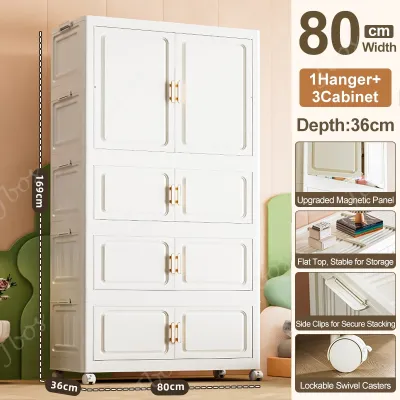
Conversely, if you have ample floor space and prefer to view your entire clothing collection at once, a swing door wardrobe cabinet is highly suitable. Swing doors open outward, offering complete, unobstructed access to the interior, provided you have enough room for the doors to swing open fully.
Products mentioned in this guide

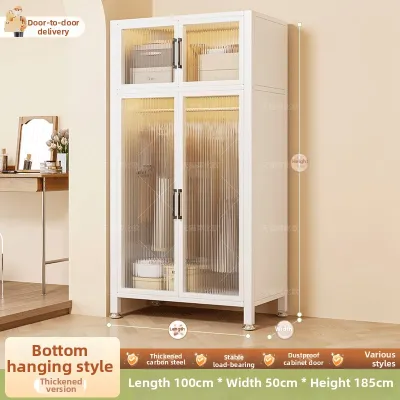

![[24-hour shipping]Mocoo Bay window cabinet Wardrobes Drawers Simple Sideboard Sideboard Cabinets Storage Cabinets Wardrobes TV cabinet shoe cabinet](https://img.lazcdn.com/g/p/9aead3867d69bb64696396a5b5433575.jpg_400x400q80.jpg_.webp)
Prices are valid at publication and may change. Please refer to the product page for the latest price.
Ultimately, making the right choice requires verifying your specific room dimensions, checking floor levelness, and understanding how different hardware systems perform over time.
Evaluating Bedroom Space and Clearance Requirements
Before purchasing any wardrobe cabinet, accurate physical measurements of your bedroom layout are essential. You must account for not only the physical footprint of the cabinet itself but also the operational space required for the doors.
For a swing door wardrobe cabinet, you must calculate the swing radius of the doors. Most standard swing doors range from 40 to 60 centimeters in width. This means you need at least that much clear space directly in front of the wardrobe, plus an additional 50 to 60 centimeters of clearance for yourself to stand comfortably while browsing. If your bed, bedside table, or bedroom entry door falls within this zone, a swing door will constantly collide with obstacles, disrupting the flow of your room.
Sliding door wardrobe cabinets solve this front-clearance issue entirely, making them excellent for narrow walkways or compact bedrooms. However, they introduce a different spatial trade-off: depth. The tracks required for sliding doors typically occupy about 8 to 10 centimeters of the wardrobe’s total depth. If you purchase a sliding wardrobe with an external depth of 60 centimeters, the actual usable internal depth may only be 50 to 52 centimeters. This can cause wider garments, like bulky jackets or suits, to rub against the sliding panels.
Ceiling height and floor leveling are also critical structural factors. In many homes, concrete floors may have minor slopes or uneven surfaces. Sliding doors rely heavily on gravity and precise track alignment; an uneven floor can cause sliding doors to drift open on their own or derail from the tracks. Swing doors are far more forgiving of minor floor variations because modern cabinet hinges allow for multi-directional adjustments to align the doors perfectly even if the frame is slightly tilted.
Finally, remember to factor in the thickness of the door panels and handles when planning your layout. Swing doors with prominent handles require extra clearance, whereas sliding doors often feature recessed pulls that keep the facade completely flush.
Accessibility and Internal Storage Systems
The way you interact with your wardrobe cabinet daily depends heavily on its door mechanism and how the internal storage is organized.

Swing doors offer the distinct advantage of full-visibility access. When you open all the doors simultaneously, every shelf, drawer, and hanging rod is visible at once. This makes organizing outfits, coordinating colors, and sharing a wardrobe with a partner much easier. It also simplifies the process of retrieving large, bulky items like travel luggage, thick blankets, or storage boxes, as there are no overlapping panels blocking the opening.
Sliding doors, by design, only allow you to access one section of the wardrobe cabinet at a time. When you slide one panel open, it overlaps with another, leaving the other half of the cabinet closed. This partial access can make it more challenging to get a complete view of your wardrobe.
This overlapping design also requires careful planning of your internal storage systems. Any pull-out accessories, such as drawers, trouser racks, or wire baskets, must be positioned away from the overlap zones. If a drawer is placed in the center where the sliding doors overlap, it will hit the door panel and fail to open. When choosing a sliding wardrobe cabinet, always verify that the internal drawers are specifically designed to clear the door frames when fully extended.
Hardware durability also plays a major role in accessibility. Sliding doors rely on rollers, guides, and tracks to support their weight. If the doors are made of heavy materials, low-quality rollers can wear out quickly, making the doors difficult to slide. Swing doors distribute their weight across multiple hinges attached to the side panels. While heavy solid-wood swing doors can put stress on hinges, high-quality soft-close hinges are highly durable and easy to replace if they wear out over time.
Aesthetics, Hardware, and Maintenance Checks
The visual style of your wardrobe cabinet sets the tone for your entire bedroom decor, but long-term satisfaction depends on hardware quality and routine maintenance.
Sliding door wardrobes are widely favored for modern, minimalist, and contemporary bedroom designs. Their large, flat panels create a clean, seamless look. Many homeowners choose sliding doors with integrated full-length mirrors, which serve a dual purpose: they provide a convenient dressing mirror and reflect light to make a small bedroom feel significantly larger and brighter.
Swing door wardrobes offer a more traditional, classic, or transitional aesthetic. The individual door panels allow for detailed design elements, such as shaker-style profiling, decorative molding, and a wide variety of handle designs. If you enjoy customizing hardware like brass, matte black, or ceramic knobs, swing doors provide the perfect canvas for these personal touches.
Maintenance requirements differ significantly between the two styles. Sliding door tracks are natural dust traps. In tropical climates like the Philippines, where open windows can let in significant amounts of dust and humidity, this debris can accumulate quickly in the bottom track. If left uncleaned, dust and hair mix with moisture to form a sticky grime that clogs the rollers, causing them to jump off the track or glide roughly. Regular vacuuming and wiping of the tracks are necessary to keep the doors operating smoothly.
Swing doors require much less frequent cleaning, as there are no open tracks to collect dust. The primary maintenance task for swing doors is adjusting the hinges. Over time, due to daily use or the natural settling of the wardrobe cabinet, the doors may begin to sag or fail to close flush. Fortunately, adjusting modern cup hinges requires only a screwdriver and a few minutes of turning the adjustment screws to restore perfect alignment.
Regardless of the door type, always inspect the quality of the materials and edge banding. High humidity can cause unsealed engineered wood, such as particle board or MDF, to absorb moisture and swell. Ensure all edges are tightly sealed with high-quality PVC or ABS edge banding to protect the core material from humid air.
How to Choose: A Decision Framework for Your Wardrobe
To make your final decision, evaluate your bedroom space against this practical framework.
Choose a sliding door wardrobe cabinet if:
- Your bedroom floor space is highly restricted, or the walkway between the wardrobe and the bed is less than 70 centimeters.
- You prefer a sleek, modern aesthetic and want to incorporate large, built-in mirrors to enhance the room's sense of space.
- Your bedroom floor is completely level, ensuring the sliding panels will remain stable and aligned.
Choose a swing door wardrobe cabinet if:
- You have at least 90 centimeters of clear floor space in front of the wardrobe, allowing doors to open fully without blocking traffic.
- You want complete, simultaneous visibility of all your clothes and storage compartments.
- You prefer a classic design with customizable handles and want a low-maintenance hardware system that tolerates minor floor unevenness.
If your bedroom walls are significantly out of plumb or the floor is highly uneven, neither option may function perfectly without structural adjustments. In such cases, consider hiring a professional installer to level the wardrobe base using shims before securing the cabinet to the wall. Always double-check the manufacturer’s specification sheet for exact external dimensions, including the depth of the door tracks and handles, to ensure a perfect fit in your layout.
Frequently Asked Questions (FAQ)
Can I convert a swing door wardrobe to sliding doors later?
Converting an existing swing door wardrobe cabinet to sliding doors is theoretically possible but highly challenging. It requires removing the existing hinges, patching the screw holes, and installing top and bottom track systems.
The primary obstacle is internal depth. Because sliding tracks require about 8 to 10 centimeters of depth, installing them inside a cabinet frame designed for swing doors will reduce the usable depth. This reduction often causes the new sliding doors to hit existing shelves, hanging clothes, or internal drawers.
Additionally, the cabinet frame must be perfectly square and structurally strong enough to support the weight of sliding panels hanging from the top track or resting on the bottom rollers. Before attempting such a modification, consult the manufacturer or a professional carpenter to assess if the frame can support the conversion.
Do sliding wardrobe doors require more maintenance than swing doors?
Yes, sliding wardrobe doors generally require more frequent routine maintenance than swing doors due to their track mechanism. The bottom tracks easily collect dust, lint, pet hair, and debris from the bedroom floor.
In humid environments, this dust can accumulate and harden, obstructing the rollers and causing the doors to stick or derail. To prevent this, you should vacuum the tracks weekly and wipe them down with a damp cloth.
In contrast, swing door hinges require very little maintenance, usually only needing a quick screw tightening or alignment adjustment once every few years. However, the overall maintenance frequency for both systems ultimately depends on the quality of the hardware installed and how gently the doors are operated daily.

Community discussion
Share your experience or ask a question. Comments are reviewed before publication.