
Finding the right wardrobe for a compact bedroom requires balancing storage capacity with the physical space needed to move around comfortably. To keep walkways clear, the ideal wardrobe dimensions typically range from a shallow depth of 50 centimeters for folded clothes to a standard 60 centimeters for hanging garments, paired with a width that leaves at least 60 centimeters of open walking space. Choosing between sliding doors, which require zero clearance to open, and hinged doors, which need at least 50 to 60 centimeters of swing space, depends entirely on the distance between your wardrobe face and the edge of your bed or other furniture.
In many homes in the Philippines, bedrooms must accommodate not just a bed and wardrobe, but also wall-mounted air conditioning units, standing fans, and sometimes study desks. High humidity levels also mean that furniture placement cannot block natural airflow or cover essential power outlets. By measuring your space accurately and selecting the correct door mechanism, you can maximize your storage without making your bedroom feel cramped or restricting daily movement.
Assessing Your Bedroom Layout and Clearance Needs
Before browsing online marketplaces or visiting local furniture showrooms, you must establish the maximum footprint your bedroom can accommodate. Start by measuring the designated wall space with a steel tape measure. Do not just measure corner-to-corner; you must subtract the thickness of baseboards and leave a gap for any wall-mounted light switches, power outlets, or window sills. If your wardrobe blocks an outlet, you lose access to charging ports or fan plugs, which are essential for daily comfort in a tropical climate.
Products mentioned in this guide
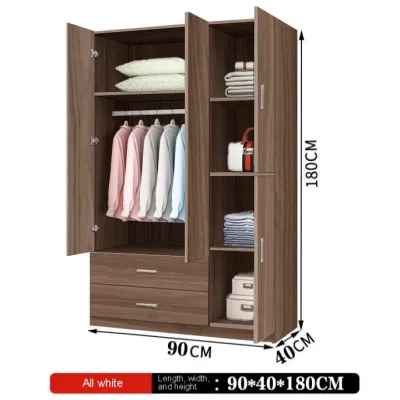

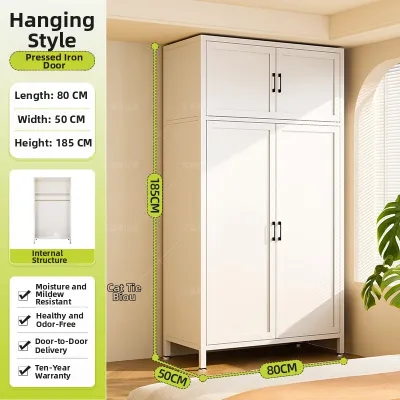
Prices are valid at publication and may change. Please refer to the product page for the latest price.
Additionally, consider the swing paths of other doors in the room. The main bedroom entry door, closet doors, and en-suite bathroom doors must all be able to open fully without colliding with your new wardrobe. Marking these swing arcs on the floor with removable painter’s tape can help you visualize the physical limits of your room before making a purchase.
Next, define your walking clearance zones. Ergonomic standards suggest maintaining a minimum pathway of 60 centimeters between your furniture pieces to allow a person to walk through comfortably without turning sideways. If the wardrobe is positioned parallel to the side of your bed, measure the distance from the wall to the mattress edge. If this distance is less than 110 centimeters, a standard hinged door will likely block the path when opened, making a sliding door or an open-shelving system a more practical choice.
In tropical climates like the Philippines, air circulation is vital for preventing mold and mildew inside your closet. When planning your layout, aim to leave a small gap of about 2 to 5 centimeters between the back of the wardrobe and the wall. This gap allows air to circulate, reducing the risk of moisture buildup that can damage both your clothes and the wooden panels of your furniture.
Finally, look upward to identify vertical and overhead obstacles. In compact rooms, ceiling fans, wall-mounted air conditioning units, and low-hanging beams can severely restrict where you can place a tall wardrobe. Ensure that a tall cabinet will not obstruct the airflow of your air conditioner or come within the clearance radius of a spinning ceiling fan, which poses a serious safety hazard.
Choosing the Right Wardrobe Dimensions
Selecting the right wardrobe dimensions is a balancing act between your storage needs and the physical limits of your room. To determine the maximum width, take the total length of your target wall and subtract the required walkway clearances and the space needed for other furniture, such as bedside tables. If you plan to place the wardrobe next to a door, ensure the wardrobe frame sits far enough back so it does not block the bedroom door from opening fully.

For single occupants, a wardrobe width of 80 to 120 centimeters is usually sufficient for a basic wardrobe. If two people are sharing a small room, you will likely need a width of 150 to 180 centimeters, which requires careful planning to ensure the larger unit does not overwhelm the room visually or physically.
The depth of the wardrobe is critical for functionality. Standard wardrobes are usually 60 centimeters deep, which is the space required to hang adult-sized hangers straight without wrinkling the sleeves of jackets or barongs. If your room is exceptionally tight, you can look for shallow wardrobes with a depth of 40 to 50 centimeters. For these shallow units, check the manufacturer’s specifications, as you will likely need to use pull-out transverse hanging rails where clothes face forward, rather than a traditional longitudinal clothes rod.
Height is another major consideration when optimizing a small room. Floor-to-ceiling wardrobes maximize vertical space, providing excellent long-term storage for seasonal bedding, extra pillows, or travel bags. However, freestanding units that stop short of the ceiling are easier to move and assemble. If you choose a tall freestanding unit, always check the manufacturer’s instructions regarding structural stability and ensure you have enough overhead clearance to upright the unit during assembly.
When assembling a flat-pack wardrobe, you often need to build it lying down on the floor and then raise it upright. This requires a ceiling height that is at least 10 to 15 centimeters taller than the wardrobe itself. Always verify these assembly clearance requirements in the product manual before purchasing to avoid getting stuck with a unit you cannot stand up.
Sliding vs. Hinged Doors: Which Mechanism Fits Your Space?
The choice between sliding and hinged doors dictates how much floor space in front of the wardrobe must remain permanently clear. While both styles can store the same volume of clothing, they interact with your bedroom’s layout in completely different ways.
Sliding doors operate entirely within the wardrobe’s frame, making them highly efficient for tight layouts, though they require regular track maintenance to prevent dust buildup. Hinged doors swing outward into the room, requiring dedicated clearance but offering complete visibility of your entire wardrobe at once.
When to Choose Sliding Doors
Sliding doors are the practical choice for narrow bedrooms where the bed sits close to the wardrobe. Because the doors slide horizontally on tracks, they require zero clearance in front of the unit to open. This allows you to place the wardrobe just 50 to 60 centimeters away from the edge of your bed without worrying about collisions or blocked pathways.
However, sliding doors come with specific trade-offs. The sliding track mechanism itself occupies about 5 to 10 centimeters of the wardrobe’s total depth, which reduces the actual internal hanging space. Additionally, sliding doors only allow you to access one side of the wardrobe at a time, as one door must always slide behind the other, which can make organizing or searching for items slightly more time-consuming.
In humid environments, dust and debris can easily accumulate in the bottom tracks of sliding doors, causing them to stick or glide unevenly. Regular vacuuming or wiping of the tracks is necessary to keep the doors operating smoothly and to prevent premature wear on the rollers.
When to Choose Hinged Doors
Hinged doors are ideal if your bedroom layout allows for at least 60 centimeters of clear space in front of the wardrobe. This traditional mechanism is highly functional because it allows you to open all doors simultaneously, giving you a complete, unobstructed view of your entire clothing collection.
Another advantage of hinged doors is the ability to utilize the inside of the door panels. You can install lightweight accessories like tie racks, belt hooks, or small mirrors, provided you do not exceed the weight limits of the hinges. To ensure smooth operation, the wardrobe must be perfectly level so the hinges remain aligned and do not sag or squeak over time.
For coastal or highly humid areas in the Philippines, look for wardrobes equipped with rust-resistant hinges, such as those made of stainless steel or treated with anti-corrosion coatings. Standard metal hinges can degrade quickly in salty or humid air, leading to squeaking, misalignment, or difficulty closing the doors properly.
Space-Saving Placement and Installation Checks
Once you have selected the dimensions and door type, you must plan for a safe delivery and installation. Many homeowners in the Philippines live in condominiums or multi-story townhouses where narrow stairwells, small elevators, and tight door frames can block the passage of large furniture pieces. Always measure these entry points before ordering, and confirm whether the wardrobe will be delivered flat-packed for in-room assembly or as a pre-assembled unit.
Before assembling or placing your wardrobe, check the levelness of your floor and the plumbness of your walls. In many buildings, floors can have slight slopes, and walls may not be perfectly vertical. An uneven floor can cause sliding doors to slide open on their own or derail from their tracks, while causing hinged doors to misalign and rub against the frame. Use a spirit level to check the surface, and use adjustable feet or shims to level the wardrobe if necessary.
Finally, safety must be a priority, especially in a country prone to seismic activity. Tall, narrow wardrobes can easily tip over if they are overloaded or during an earthquake. Always secure your wardrobe to the wall studs using anti-tip anchoring hardware, following the manufacturer’s precise instructions. If you are renting and cannot drill into the walls, look for wider, lower-profile wardrobe units that offer a more stable center of gravity.
Frequently Asked Questions (FAQ)
Can I use a freestanding wardrobe as a room divider in a small studio?
Yes, a freestanding wardrobe can serve as an effective room divider to separate your sleeping area from the living space, but safety is paramount. Because wardrobes are designed to stand against a wall, using one as a divider requires securing it properly to prevent tipping. You must use specialized room-divider brackets or anchor the unit securely to both the floor and adjacent wall studs. Additionally, ensure that the back of the wardrobe is finished or covered, and verify that the doors can open fully without blocking natural light from windows or obstructing the airflow of your air conditioning unit.
How do I maximize internal storage in a shallow wardrobe?
To maximize storage in a shallow wardrobe (under 50 centimeters deep), you should adapt your internal organization system. Instead of standard hangers, look for pull-out valet rods or transverse hanging rails that allow clothes to hang facing forward. Use slim, non-slip velvet hangers to minimize bulk, and install adjustable shelving to customize the height of your storage compartments. Always check the manufacturer’s labels for weight limits before installing heavy drawer inserts or pull-out baskets, and ensure these accessories fit the exact internal dimensions of your wardrobe frame.

Community discussion
Share your experience or ask a question. Comments are reviewed before publication.