
Selecting the right wooden board for wall shelves depends on balancing your storage weight, the room’s humidity, and your aesthetic goals. While solid wood offers unmatched natural beauty and long-term repairability, plywood provides exceptional structural stability against sagging, and Medium-Density Fiberboard (MDF) delivers a perfectly smooth, budget-friendly surface for painted finishes. To make the right choice for your home, you must evaluate how each material handles weight, resists moisture in tropical climates, and fits your installation requirements.
Material Profiles: Solid Wood, Plywood, and MDF
Solid wood represents lumber cut directly from trees, preserving the natural grain patterns, knots, and organic variations of the source timber. This material features a continuous, solid cross-section, meaning any cut or sand exposes the same authentic wood structure throughout. For wall-mounted shelves, solid wood is highly prized for its traditional aesthetic, warmth, and the unique character it brings to study rooms and living spaces.
Plywood is an engineered wood product constructed by gluing together thin layers of wood veneers, known as plies, with adjacent layers rotated 90 degrees. This cross-grained construction distributes strength evenly in both directions, minimizing the natural tendency of wood to expand, contract, or warp. When sliced for shelving, plywood displays distinctive, visible edge plies that some designers leave exposed for a modern, industrial look, while others cover them with edge banding.
Products mentioned in this guide

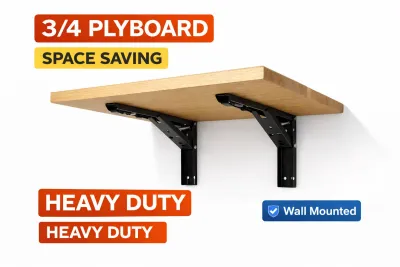
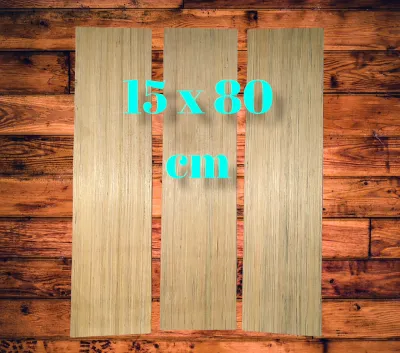
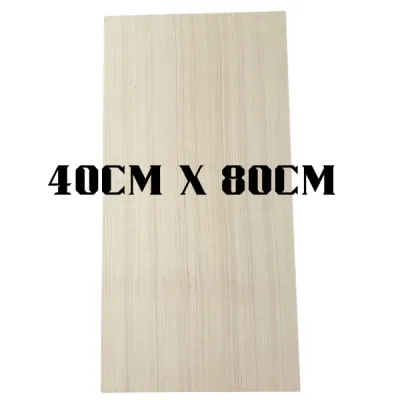
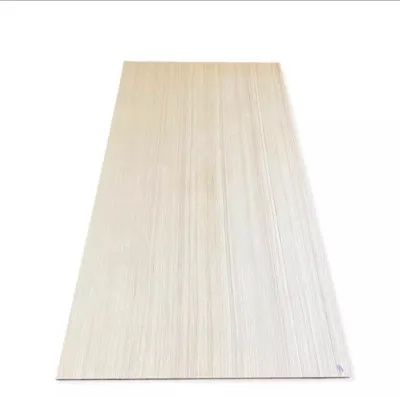

Prices are valid at publication and may change. Please refer to the product page for the latest price.
MDF, or Medium-Density Fiberboard, is manufactured by breaking down hardwood or softwood residuals into fine wood fibers, combining them with wax and a resin binder, and forming panels under high temperature and pressure. The resulting board is completely uniform, dense, and free of knots, grain patterns, or voids. Its smooth, flat surface makes it an exceptional substrate for paint, though its lack of natural grain means it cannot be stained like solid wood or plywood.
Durability and Environmental Resistance
In tropical environments where relative humidity fluctuates significantly, moisture resistance is a critical factor for wall-mounted shelving. Unsealed wood fibers readily absorb airborne moisture, which can lead to swelling, warping, and structural degradation. MDF is particularly vulnerable to moisture absorption; if water penetrates its surface, the fibers expand and can cause the board to crumble or sag permanently. Therefore, applying a high-quality sealant or primer and ensuring thorough edge sealing is mandatory when installing MDF shelves in humid areas like kitchens, bathrooms, or laundry rooms.

Plywood offers superior resistance to moisture-induced warping compared to MDF, thanks to its cross-laminated veneer structure. However, it still requires proper finishing and edge protection to prevent the individual plies from delaminating over time when exposed to damp conditions. Solid wood also reacts to humidity by expanding and contracting across its grain, which can cause slight warping or joint separation if the wood is not properly seasoned, sealed, and maintained.
Surface durability and repairability vary widely among these three materials. Solid wood excels in longevity because scratches, dents, and surface wear can be sanded down and refinished multiple times, restoring the shelf to its original condition. Plywood shelves feature a thin outer veneer that can be sanded lightly, but excessive sanding risks wearing through to the underlying ply, permanently ruining the finish. MDF cannot be sanded to reveal a new grain, but its dense surface resists minor dents well, and scratches can be filled with wood putty, sanded smooth, and repainted.
Weight Capacity and Mounting Requirements
Before purchasing any wooden board for wall installations, you must verify the manufacturer’s load ratings, thickness specifications, and recommended span limits. The span limit refers to the maximum distance allowed between wall brackets before the shelf begins to sag under its own weight and the weight of stored items. MDF has a lower structural span limit than solid wood or plywood of the same thickness, meaning it requires more frequent bracket support to prevent noticeable bowing over time.
The inherent weight of the shelving material itself directly impacts your mounting hardware requirements. MDF is exceptionally dense and heavy, often weighing more than solid wood or plywood of equivalent dimensions. This means an empty MDF shelf already places a significant load on your wall brackets and anchors before you place a single book or decorative item on it. You must calculate this combined weight to ensure your wall structure and mounting hardware can safely support the total load.
Safe installation requires matching the shelf’s weight and intended load with the correct wall brackets, anchors, and stud placements. For heavy loads, brackets should ideally be anchored directly into wooden wall studs or solid concrete walls using appropriate masonry plugs. If you must mount shelves to hollow drywall or plasterboard, you must use heavy-duty toggle bolts or specialized hollow-wall anchors, keeping in mind that these systems have lower weight capacities than stud or masonry mountings.
Regularly inspect your wall-mounted shelves for early signs of structural stress to prevent sudden failures. Look for visible bowing or sagging along the center of the shelf span, hairline cracks in the paint or finish near joint lines, and any gaps forming between the wall and the mounting brackets. If you notice brackets pulling away from the wall or anchors loosening, immediately remove all items from the shelf and reinforce the mounting hardware.
Budget and Value Assessment
Evaluating the financial aspect of shelving materials requires looking beyond the initial purchase price to consider the long-term value and expected lifespan. Solid wood typically commands the highest upfront cost, especially for premium hardwoods, but its ability to be refinished and repaired means it can last for decades, often making it the most cost-effective choice over a lifetime. Plywood offers a mid-range price point, providing excellent structural strength and a real-wood appearance at a fraction of the cost of solid timber.
MDF is generally the most budget-friendly option upfront, making it highly attractive for large-scale shelving projects or temporary installations. However, because it is difficult to repair once water-damaged or severely dented, you may find yourself replacing MDF shelves sooner than those made of plywood or solid wood. When planning your budget, always factor in secondary expenses such as edge banding for plywood, specialized primers and paints for MDF, protective sealants, and high-quality mounting brackets.
Investing in premium materials like solid wood or high-grade plywood is highly justified in specific scenarios. For instance, heavy-duty book storage in a home study or display shelving in high-traffic living areas benefits greatly from the structural stiffness and aesthetic appeal of real wood. Conversely, utility shelving in dry closets or decorative display ledges for lightweight items can be successfully and economically constructed using well-finished MDF.
Decision Framework: Which Wooden Board Fits Your Shelves?
To finalize your material choice, assess your specific room conditions, aesthetic preferences, and storage needs. Choose solid wood if you prioritize natural wood grain aesthetics, require heirloom-quality durability, and want the ability to sand and refinish your shelves over many years of use. This option is ideal for prominent living room displays or executive home offices where the warmth of natural timber is a key design element.
Choose plywood if you need a balance of high structural strength, resistance to warping, and cost-effectiveness for supporting heavy loads like extensive book collections. Plywood’s cross-laminated construction makes it highly reliable for wider spans, and it can be finished with edge banding and stain to mimic the look of solid wood at a lower price point.
Choose MDF if you require a perfectly smooth, uniform surface for a painted finish and are building shelves for lightweight decorative items, framed photos, or organized closet storage. MDF is highly stable in dry environments and offers an affordable way to achieve a clean, modern, or minimalist look without the visible grain patterns of natural wood.
Regardless of the material you select, always verify your wall type and intended load limits before installation. Ensure that your chosen brackets, anchors, and wall studs can support the combined weight of the boards and your items. If you are unsure about the load capacity of your walls or the structural integrity of your mounting plan, consult a professional installer to ensure a safe and secure setup.
Frequently Asked Questions (FAQ)
Can I paint or stain MDF and plywood shelves?
Yes, both materials can be finished, but they require different preparation steps. MDF has a highly absorbent surface and edges, meaning you must apply a solvent-based primer or a specialized MDF primer to seal the fibers before applying paint; water-based primers can cause the fibers to swell and ruin the smooth finish. Plywood features a real wood veneer that accepts stains beautifully, allowing you to highlight the natural grain patterns, though you must apply edge banding or trim to cover the exposed, layered edges before finishing. Always check the manufacturer’s guidelines for compatible sealants, primers, and paints to ensure proper adhesion and a long-lasting finish.
Do I need special wall anchors for heavy wooden shelves?
Yes, securing heavy wooden shelves safely requires matching the mounting hardware to both the shelf weight and your wall material. Mounting brackets directly into wall studs or solid concrete walls provides the highest load capacity and stability, especially for heavy solid wood or dense MDF shelves. If you must mount shelves to hollow drywall, standard plastic expansion plugs are insufficient; you must use heavy-duty toggle bolts or threaded dry-wall anchors designed for high shear loads. If you are planning an oversized installation, storing exceptionally heavy items, or feel unsure about your wall’s load-bearing capacity, stop and consult a professional carpenter or structural installer.

Community discussion
Share your experience or ask a question. Comments are reviewed before publication.