
A true solid wood wall shelf is crafted entirely from natural timber cut directly from a tree, rather than composed of wood fibers, particles, or thin veneers glued over a composite core. Understanding this distinction is crucial when selecting shelving for your home, as the material directly dictates how much weight the shelf can support, how it responds to tropical humidity, and whether you can sand and refinish it over years of use. Choosing the right material ensures your shelving remains stable, safe, and visually appealing throughout its lifespan.
Defining Solid Wood vs. Engineered Alternatives
To understand what makes a shelf truly “solid wood,” it helps to look at how different shelving materials are constructed. Solid wood shelves are made from homogenous planks of timber. When you cut a solid wood board, you find the same natural wood fibers, grain patterns, and density all the way through the piece. This material retains the natural characteristics of the tree from which it was harvested, including unique grain variations, knots, and growth rings.
In contrast, engineered wood alternatives are manufactured products. Medium-density fiberboard (MDF) and particleboard are created by breaking down wood residuals into fine fibers or chips, mixing them with synthetic resins or glues, and pressing them under high heat into dense sheets. While these materials are highly uniform and free of natural knots, they lack the structural grain alignment of natural timber.
Products mentioned in this guide
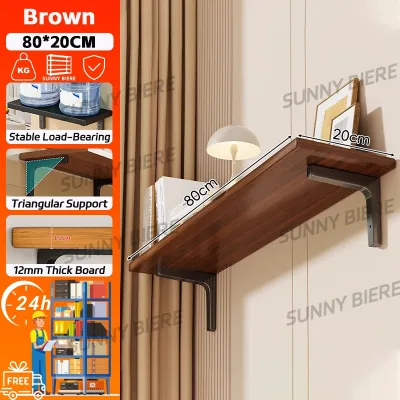
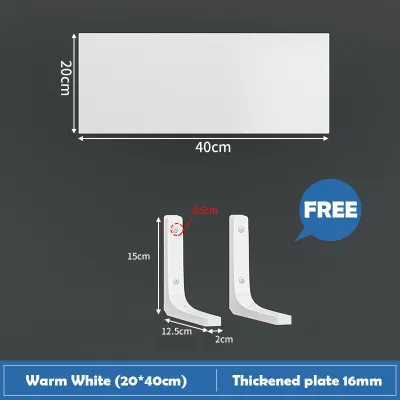
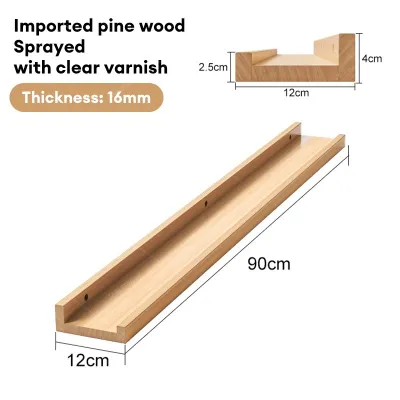
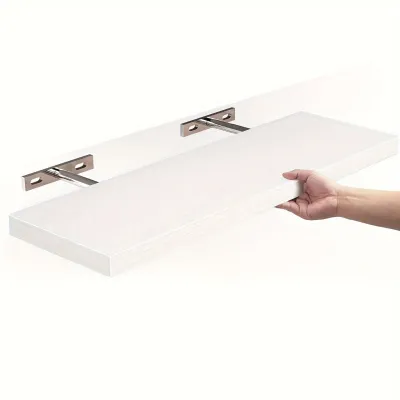
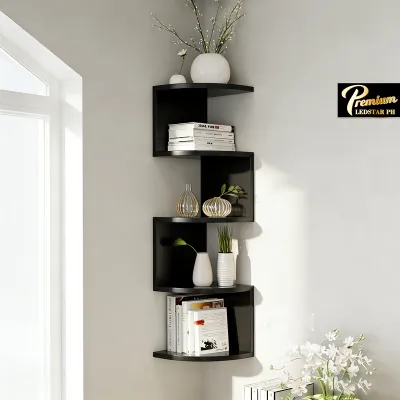
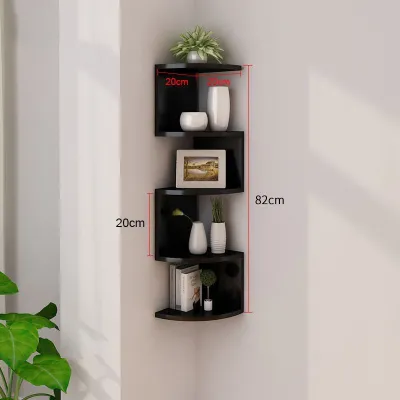
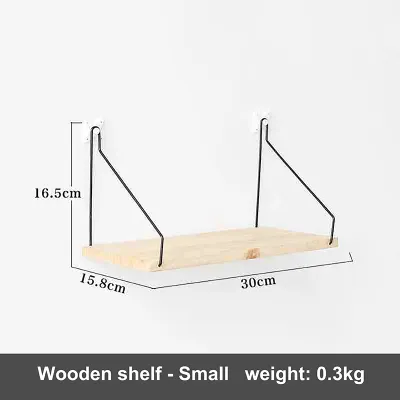
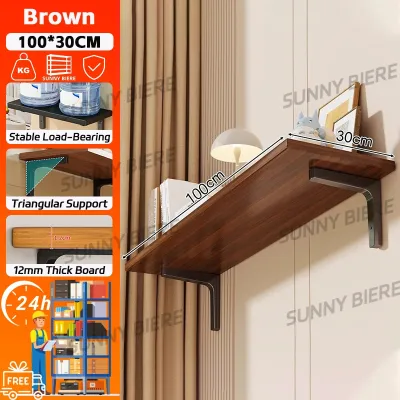
Prices are valid at publication and may change. Please refer to the product page for the latest price.
To make engineered wood look like natural timber, manufacturers often apply a veneer or a laminate. A wood veneer is a paper-thin slice of real wood glued onto the surface of the composite core. While this gives the appearance of genuine wood, the core remains engineered. Laminates, on the other hand, are plastic or paper sheets printed with a wood-grain photograph and sealed with a protective resin.
Identifying these materials requires a close visual and tactile inspection. One of the most reliable indicators is the end grain of the shelf. On a genuine solid wood shelf, the grain pattern on the end of the board will naturally wrap around and connect with the grain on the top and bottom faces. If the grain pattern abruptly changes direction, stops at a sharp seam, or looks perfectly uniform across all sides, you are likely looking at a veneered or laminated edge.
Another key indicator is edge banding. Because the raw edges of MDF or particleboard are rough and unsightly, manufacturers glue a thin strip of matching plastic or wood veneer along the sides to hide the composite core. You can often spot edge banding by looking closely at the corners for a subtle, straight seam where the edge strip meets the top surface.
Finally, be wary of ambiguous marketing terms. Phrases like “wood finish,” “wood-look,” “espresso finish,” or “walnut color” describe only the appearance or color of the surface, not the actual material. Even terms like “solid wood frame” can be misleading, as they often indicate that only the outer trim or support brackets are solid timber, while the main shelf surface is made of veneered composite board.
Why Material Choice Matters for Wall Shelves
The material you choose for your wall shelves has a direct impact on their performance, durability, and maintenance requirements over time. One of the most significant differences lies in load-bearing capacity. Natural wood fibers grow vertically in a tree, giving the timber inherent tensile strength and rigidity along the grain. When you place heavy books, potted plants, or dense decorative items on a solid wood shelf, the natural fibers resist bending and sagging.

Engineered woods like particleboard and MDF are much more prone to a phenomenon known as “creep,” where the shelf gradually and permanently bows downward under sustained weight. Over time, a sagging composite shelf can compromise the stability of your display and eventually fail. Solid wood shelves, when properly supported by brackets, maintain their flat profile under much heavier loads.
Environmental factors also play a major role in how these materials behave, particularly in tropical climates like the Philippines. Natural wood is a hygroscopic material, meaning it naturally absorbs and releases moisture from the surrounding air. During the humid wet season, wood fibers expand, and during the dry season, they contract. If a solid wood shelf is not properly seasoned, sealed, and allowed to acclimatize to your room’s specific climate before installation, this natural movement can cause the wood to warp, cup, or split.
While engineered wood is more dimensionally stable under minor humidity fluctuations because its fibers are oriented randomly, it is highly vulnerable to direct moisture exposure. If high humidity or water droplets penetrate the thin veneer of an MDF shelf, the underlying composite core will absorb the moisture like a sponge. This causes the fibers to swell permanently, bubble, and lose their structural integrity, a type of damage that cannot be repaired.
This brings us to the advantage of longevity and repairability. Solid wood is incredibly resilient because it can be restored. If a solid wood shelf becomes scratched, dented, or stained after years of use, you can simply sand down the surface to reveal fresh wood and apply a new coat of varnish, wax, or paint. With veneered shelves, a deep scratch will cut through the paper-thin wood layer and expose the dark, unsightly composite core underneath, which cannot be sanded or easily repaired.
How to Verify Solid Wood When Shopping
Verifying the authenticity of a solid wood wall shelf requires a systematic approach, especially when shopping online where you cannot physically touch the product. Start by reading the product specifications and description with a critical eye. Look for explicit, unambiguous material declarations such as “100% solid mahogany,” “solid pine,” or “solid acacia.” If the listing uses vague terms like “wood materials,” “wood composites,” or “high-density board,” it is almost certainly an engineered product.
Price can also serve as a helpful, though not absolute, indicator of material quality. Genuine solid wood requires sustainable harvesting, milling, drying, and skilled craftsmanship, which naturally increases production costs. While a genuine timber shelf represents a higher upfront investment than a ₱500 composite alternative, the long-term durability and repairability often justify the cost. If a large shelf is advertised as “solid wood” at an incredibly low price, verify the specifications carefully to ensure it is not a veneered composite.
If you are shopping in a physical store, use your senses to inspect the shelf. Lift the shelf to assess its weight. Solid hardwoods are generally heavy and feel substantial in hand, though some softwoods like pine can be relatively light. Knock gently on the surface; solid wood typically produces a solid, dull thud, whereas hollow-core or low-density composite shelves often sound hollow or high-pitched.
Examine the underside of the shelf. Manufacturers of cheap veneered shelves sometimes leave the bottom surface unfinished or use a lower-quality backing paper to save costs, assuming buyers will only see the top. A true solid wood shelf will have consistent wood grain, texture, and finish quality on both the top and bottom faces, even if the bottom is slightly less polished.
Inspect the joinery and construction details. High-quality solid wood shelves often feature robust joinery methods, such as dowels, finger joints, or mortise-and-tenon connections, rather than simple butt joints held together solely by staples or glue.
When in doubt, do not hesitate to contact the seller or manufacturer directly. Ask specific, direct questions to clarify the material composition. For example, you can ask: “Is the core of this shelf made of MDF, particleboard, or plywood, or is it solid timber throughout?” and “What specific type of protective finish or sealant has been applied to the wood?” A reputable seller should be able to provide clear, detailed answers about their materials.
Installation and Weight Capacity Considerations
Installing a solid wood wall shelf requires careful planning and execution because the shelf itself carries significant dead weight before you even place an item on it. Before beginning the installation, you must assess your wall type to ensure it can support the combined weight of the shelf and your belongings. Concrete, brick, or solid masonry walls common in many homes offer excellent support when paired with appropriate expansion shields or masonry wall plugs.
If you are installing the shelf on drywall or hollow block walls, you must locate the wooden or metal studs behind the wall to anchor the brackets securely. Mounting a heavy solid wood shelf directly into drywall using plastic anchors is highly risky, as the weight of the timber can easily pull the anchors out of the wall, causing damage and potential injury.
Always check the manufacturer’s installation instructions for the recommended bracket spacing and maximum load limits. Ensure the brackets you select are rated to support both the weight of the timber plank and your intended items. For longer shelves, adding a middle support bracket can prevent the wood from bowing over time and distribute the weight more evenly across the wall studs.
If you are dealing with complex wall structures, plaster walls, or planning to store exceptionally heavy items like a complete encyclopedia set, stop and consult a qualified professional installer. A professional can assess the structural integrity of your wall and select the precise anchoring system needed to ensure your solid wood shelf remains safely and securely mounted for years to come.
Frequently Asked Questions (FAQ)
Can I use solid wood shelves in high-humidity areas?
Yes, but you must take specific precautions to protect the timber. High-humidity environments like bathrooms or unventilated kitchens expose wood to constant moisture, which can lead to warping, mold, or rot. If you plan to use solid wood in these spaces, verify that the shelf has been treated with a high-quality, moisture-resistant sealant or polyurethane finish. Ensure the room has adequate ventilation, and regularly check the wood for signs of finish degradation so you can reapply a protective coat when necessary.
Is a solid wood shelf always stronger than engineered wood?
Not necessarily. While solid wood has excellent natural strength, the actual load capacity of any shelf depends heavily on its thickness, the species of wood (hardwoods versus softwoods), the distance between supporting brackets, and the quality of the wall anchors. A thin solid wood shelf with widely spaced brackets may sag more than a thick, well-supported engineered wood shelf. Always verify the manufacturer’s specified load limits and install brackets at recommended intervals.

Community discussion
Share your experience or ask a question. Comments are reviewed before publication.