
Finding a practical bedside table with drawers for a compact bedroom in the Philippines requires balancing storage capacity with physical footprint. In tight urban condominiums or cozy family homes, floor space is at a premium, making bulky furniture impractical. A practical solution lies in selecting units that maximize vertical storage, feature slim profiles, and utilize materials capable of withstanding local tropical humidity. By focusing on precise measurements, smart drawer configurations, and visual design tricks, you can keep your sleeping area organized and free of clutter without blocking essential walkways.
Key Dimensions and Space Clearances for Compact Rooms
Before browsing online marketplaces or visiting local showrooms, you must establish the exact physical boundaries of your bedside area. Start by measuring the remaining width between the edge of your mattress and the nearest wall or wardrobe door. In small bedrooms, a clearance of at least 50 to 60 centimeters is recommended for a standard walkway, meaning your bedside table must fit comfortably within the leftover pocket of space. If your room layout is exceptionally tight, you may need to look for ultra-slim designs that measure 30 to 35 centimeters in width.
Do not rely solely on the width of the tabletop when planning your layout. You must also account for the full extension depth of the drawers to ensure they can open completely without striking the bed frame, a nearby closet, or an open door. Baseboard protrusions along the bottom of your walls can also push a freestanding table several centimeters forward, which might misalign the unit with your headboard or block a narrow path. Measuring the depth of the unit with its drawers fully extended prevents frustrating physical blockages after installation.
Products mentioned in this guide
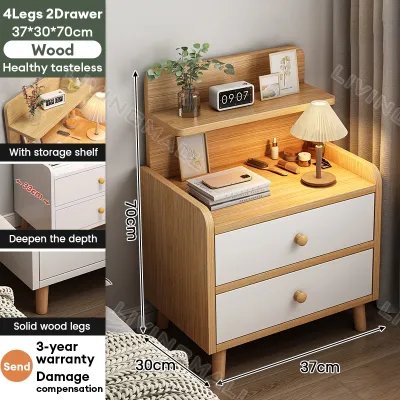
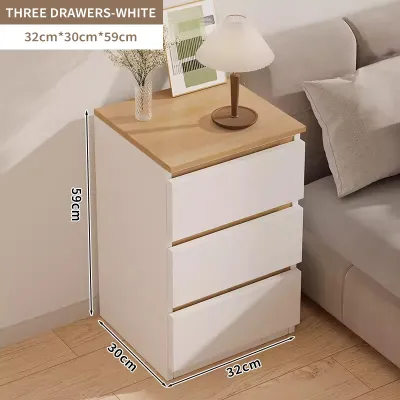
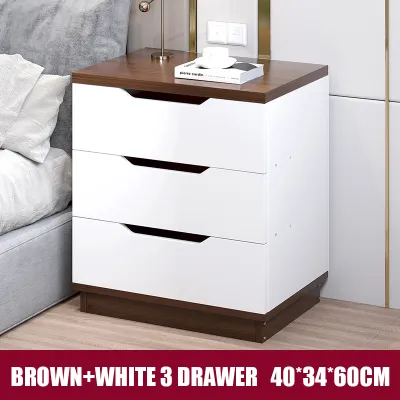
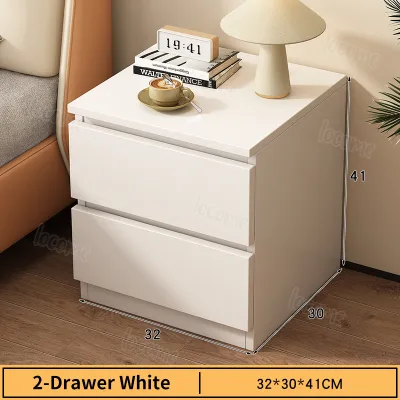
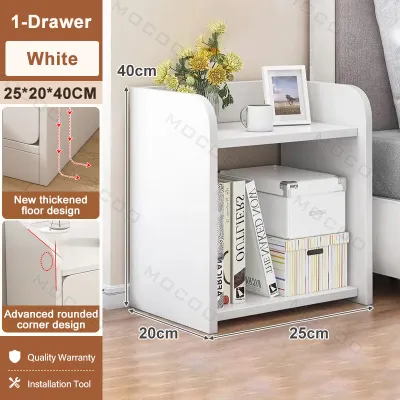
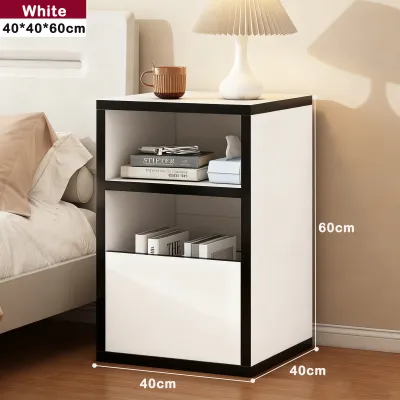
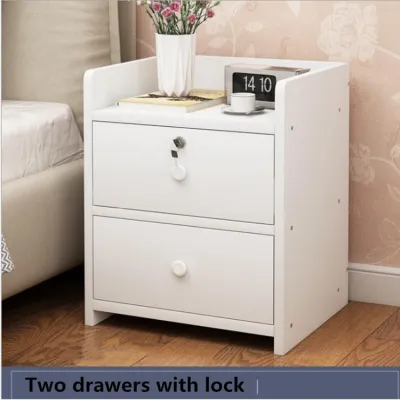
![[On Hand] Bamboo Bedside Table with drawer side table bedroom Storage Cabinet](https://img.lazcdn.com/g/p/d4244dd65e8e8408cc6da72ec85ce232.jpg_400x400q80.jpg_.webp)
Prices are valid at publication and may change. Please refer to the product page for the latest price.
The height of your bedside table should align closely with the top of your mattress to ensure comfortable ergonomic reach. A table that is significantly taller or shorter than your sleeping surface makes reaching for a glass of water, a phone, or a lamp awkward and potentially unsafe in the dark. Take note of any bed frame overhangs or thick headboards that might create a gap between the wall and your table, as these gaps can cause small items to fall behind the furniture. Comparing the height of your mattress, including any added mattress toppers, against the specified height of the table ensures a seamless, level transition.
Evaluating Drawer Configurations for Storage Efficiency
The internal layout of a bedside table determines how effectively it can organize your daily essentials without becoming a chaotic junk drawer. A single deep drawer is highly beneficial if you need to store taller items, such as thick novels, tablet computers, or larger personal care bottles. However, deep drawers can easily become disorganized if you only store small items like charging cables, sleep masks, and medications.

For better organization of small accessories, a multi-tiered configuration with two or three shallow drawers is often more efficient. This setup allows you to dedicate specific levels to different categories of items, keeping your daily essentials separated and easy to locate. When evaluating multi-drawer units, check the manufacturer’s specifications for the internal height of each drawer to ensure your specific items will fit upright.
The hardware supporting these drawers is just as critical as the layout itself. Look for smooth drawer slide mechanisms, such as metal roller runners or ball-bearing slides, which prevent the drawers from sticking or jamming during daily use. In humid tropical climates, wooden drawer guides without metal tracks can swell and bind, making them difficult to open. Additionally, check the weight capacity limits for each drawer to ensure the tracks can support your items without sagging or failing over time.
To maximize the utility of limited drawer space, consider units that accommodate built-in dividers or removable organizer inserts. Some modern bedside tables feature hidden compartments or false bottoms within the drawers, providing a discreet space to secure valuable personal items. If the table does not come with integrated dividers, verify that the internal drawer dimensions match standard, widely available plastic or bamboo organizer trays.
Design Features That Reduce Visual Clutter
In a small bedroom, heavy or bulky furniture can make the entire space feel cramped and dark. Wall-mounted or floating bedside tables with drawers are excellent alternatives for opening up a room because they leave the floor space beneath them completely clear. This open floor area not only creates the illusion of a larger room but also makes sweeping, mopping, and vacuuming much easier. If wall mounting is not an option due to rental restrictions or wall material limitations, look for freestanding tables with tall, slim legs that elevate the drawer cabinet off the floor.
The color and finish of your bedside table play a significant role in how light moves through your bedroom. Light-colored finishes, such as oak, ash, matte white, or soft cream, reflect natural light and help the furniture blend into light-colored walls. Matte textures are highly practical for daily use as they resist showing fingerprints and dust, while subtle reflective surfaces or glass accents can help bounce light around darker corners. Avoid overly dark, heavy finishes unless your bedroom receives abundant natural light and has a neutral color palette to balance the weight.
To maintain clean sightlines and prevent painful bumps in tight walkways, prioritize streamlined exterior designs. Bedside tables with recessed pulls, angled finger-grooves, or push-to-open drawer mechanisms eliminate the need for protruding metal handles. These hardware-free designs prevent loose clothing, bedding, or power cords from snagging as you move around the bed. Smooth, rounded corners on the tabletop also reduce the risk of injury if you accidentally bump into the furniture in a dimly lit room.
Material and Build Quality Checks for Daily Use
High humidity levels in the Philippines can severely impact the lifespan of wooden furniture, making material selection a primary durability factor. When reviewing product descriptions on online marketplaces, inspect the specifications for moisture-resistant materials. Medium-density fiberboard (MDF) or particleboard should be sealed with a high-quality melamine or laminate finish to protect the inner wood fibers from damp air and spills. Solid wood options, such as sustainably sourced rubberwood or mahogany, should be treated with protective topcoats to prevent warping or cracking over time.
Before purchasing, carefully examine the construction details shown in product images or display models. Look for clean edge banding along the corners of laminated boards, as peeling edges are a common sign of poor manufacturing and allow moisture to penetrate the core. Check that the joints of the drawer boxes are sturdy, preferably utilizing dovetail or dowel construction rather than simple glue and staples. High-quality hardware, including rust-resistant screws and hinges, is essential for ensuring the table remains stable through years of opening and closing.
Stability is a critical safety consideration, especially for taller or narrower bedside tables with multiple drawers. When multiple drawers are pulled out simultaneously, the center of gravity shifts forward, which can cause the unit to tip over. Check if the manufacturer includes wall-anchoring hardware or anti-tip kits, which are highly recommended if you have pets or young children in the home. Review the overall weight of the unit; a heavier base often indicates better stability, whereas an extremely lightweight table may wobble when you open a fully loaded drawer.
Always cross-reference the manufacturer’s maximum load limits for both the tabletop and the individual drawers. A standard bedside table should comfortably support a table lamp, a book, and a glass of water on top, which typically requires a load capacity of at least 10 to 15 kilograms. Individual drawers should be rated to hold at least 3 to 5 kilograms of weight without straining the tracks or causing the drawer bottom to bow downward.
Building Your Shortlist: Pre-Purchase Verification
Once you have narrowed down your choices based on dimensions and materials, you must verify the practical logistics of delivery and assembly. Many budget-friendly bedside tables sold online arrive flat-packed and require self-assembly. Review the product listing to see if the necessary tools, such as hex keys or screwdrivers, are included, and check customer feedback to gauge the clarity of the assembly instructions. If you prefer not to assemble the furniture yourself, look for retailers that offer professional assembly services upon delivery, which often costs an additional fee of around ₱300 to ₱500 but ensures proper construction.
Before finalizing your order on any ecommerce platform, carefully read the retailer’s return and refund policies. Pay close attention to how the seller handles size discrepancies, transit damage, or manufacturing defects. Because shipping furniture can be costly, verify who covers the return shipping fees if the item arrives damaged or does not match the advertised dimensions. Taking screenshots of the product specifications and saving your order details can help resolve any disputes quickly.
Finally, consider the physical path the package must take to reach your bedroom. If you live in a high-rise condominium or a multi-story apartment building, check the dimensions of the service elevator, stairwells, and doorways to ensure the delivery box can pass through easily. Some buildings have strict weight limits or specific delivery hours that you must coordinate with your property management office. Confirming these logistical details beforehand prevents delivery delays and ensures a smooth setup process.
Frequently Asked Questions (FAQ)
Can I use a small chest of drawers as a bedside table?
Yes, you can use a small chest of drawers as a bedside table, provided the height aligns comfortably with your mattress. Standard chests of drawers are often taller than dedicated nightstands, which can make reaching items from a lying position difficult and create a top-heavy look in a small room. If you choose this option, ensure the depth of the chest does not block your bedside walkway, and style the top surface with minimal, low-profile items to maintain a balanced visual scale.
How much space should I leave between the bed and the bedside table?
You should ideally leave a gap of 5 to 10 centimeters between your bed frame and the bedside table. This small clearance prevents your blankets, duvets, or sheets from getting caught between the furniture and allows you to change the bed linens easily. If your bed frame has built-in side-rail drawers or an adjustable base, you may need to increase this gap to ensure those mechanisms can operate without hitting the bedside table.

Community discussion
Share your experience or ask a question. Comments are reviewed before publication.