
Finding the right space-saving shoe rack for a Philippine condominium or apartment requires balancing tight floor plans with high tropical humidity. Because urban living spaces often feature compact layouts, a standard shoe cabinet can easily overwhelm a room or fail to fit inside a built-in wardrobe. Selecting the ideal organizer is a practical calculation of your closet’s physical dimensions, door clearance, and ventilation needs. By matching your specific closet layout to the right rack design—whether stackable, vertical, over-door, or pull-out—you can maximize your storage capacity while keeping your footwear protected from dust and moisture.
Measure Your Available Space Before Buying
Before browsing online marketplaces or visiting local furniture showrooms, you must establish the exact physical boundaries of your storage area. Begin by measuring the internal floor width, depth, and vertical clearance of your closet. Use a metal measuring tape for accuracy, as fabric tapes can stretch and lead to errors that might prevent a rigid rack from fitting. Write down these dimensions and keep them handy when comparing product specifications.
Next, account for the operational clearance within the closet. If you have hinged doors, measure the door swing radius to ensure a freestanding rack near the entrance will not obstruct the door from opening fully. For sliding doors, measure the depth of the tracks; a rack that is too deep can prevent the doors from sliding smoothly. Do not forget to measure the height of your lowest hanging clothes to determine how much vertical clearance remains on the floor for a shoe organizer.
Products mentioned in this guide
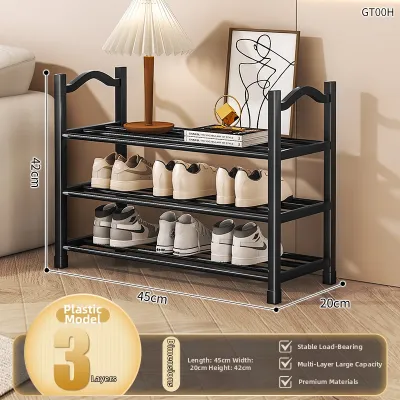
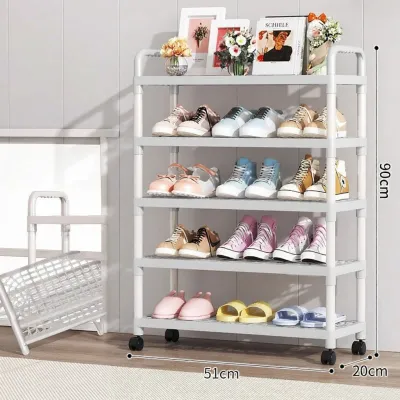
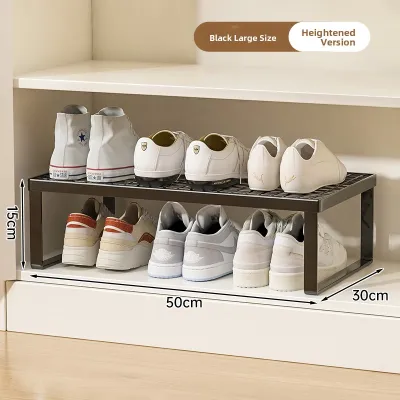
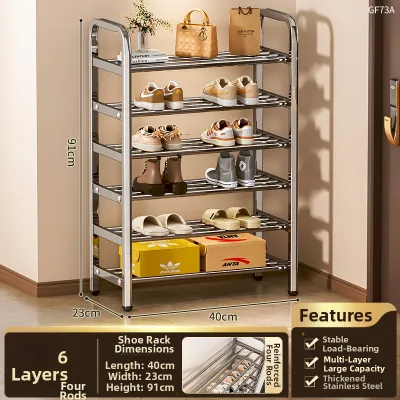
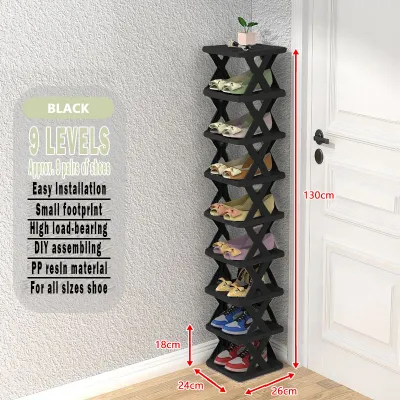
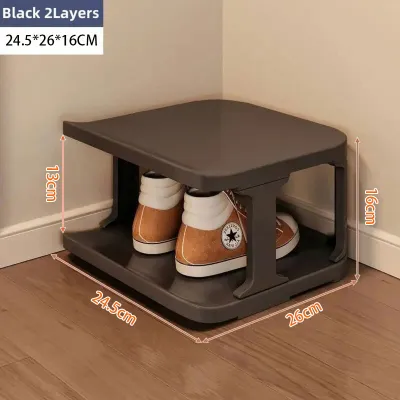
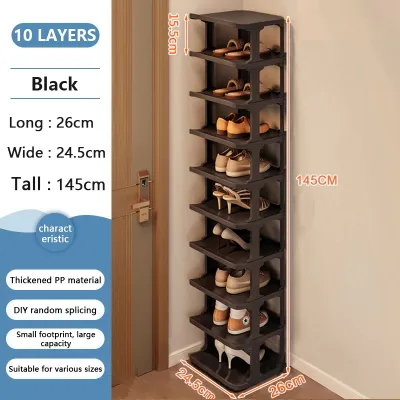
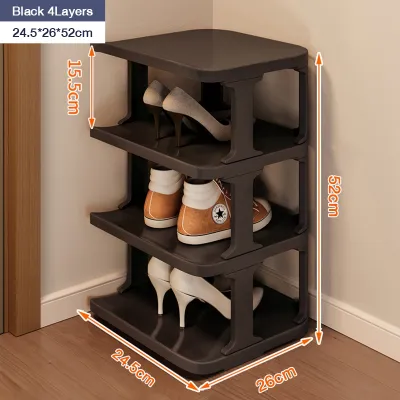
Prices are valid at publication and may change. Please refer to the product page for the latest price.
Finally, inspect the physical structure of the floor and walls. Check the thickness of your baseboards, as they can prevent a freestanding unit from sitting flush against the wall, causing it to lean forward. Use a spirit level to check for floor unevenness, which is common in older apartment buildings. An uneven floor can make tall, narrow shoe towers unstable unless they are anchored to the wall or adjusted with leveling feet.
Match Shoe Rack Designs to Specific Closet Dimensions
Different closet layouts demand distinct storage configurations to maximize efficiency. By analyzing your measured dimensions, you can identify which shoe rack design aligns with your available space and daily routine.

Stackable and Tiered Racks for Wide, Low Clearances
Stackable and tiered shoe racks are highly effective for closets that offer ample horizontal floor width but have limited vertical clearance, such as the space directly beneath hanging shirts and jackets. These units typically feature two to four tiers and can be expanded horizontally or stacked vertically as your shoe collection grows. They allow you to utilize the entire width of your closet floor without wasting valuable vertical space.
When selecting a tiered rack, check if the shelves or bars are adjustable. High heels, wedge sandals, and high-top sneakers require more vertical clearance between tiers than flat step-ins or slippers. Adjustable brackets or removable panels allow you to customize the height of individual shelves to accommodate different shoe profiles.
It is also essential to verify that the fully expanded width of the rack does not block adjacent closet components. If your wardrobe has built-in drawers or side shelves, a rack that is too wide may block access to them. Ensure there is at least a two-inch buffer on either side of the rack to allow for easy positioning and to prevent the frame from scraping against the closet walls during assembly.
Vertical and Tower Racks for Narrow, Tall Spaces
If your closet has a narrow footprint but boasts significant vertical clearance, a vertical shoe tower is the most efficient choice. These designs stack shoes vertically, often accommodating one pair per tier, which minimizes the floor space required. They are particularly useful for tight corners, narrow walk-in closets, or the small gap between a wardrobe and an adjacent wall.
Because vertical towers are tall and narrow, verifying their stability is critical. Check the manufacturer’s specifications for the base width and the overall center of gravity. A tower with a narrow base can easily tip over when loaded with heavier footwear like leather boots or thick-soled sneakers. Look for models that include wall-anchoring hardware or strap systems to secure the unit to the closet wall, especially if you live in a high-rise condominium prone to minor building vibrations.
Additionally, confirm that the top tier of the tower does not interfere with upper closet shelves, hanging rods, or internal lighting fixtures. There should be enough clearance at the top to easily retrieve shoes without hitting your hands against the ceiling or upper shelving. If the top tier is too close to a light bulb, the heat generated could damage delicate shoe materials over time.
Over-Door and Hanging Organizers for Zero-Floor-Space Layouts
When floor space is completely unavailable, over-door and hanging fabric organizers offer a practical way to utilize vertical surfaces. Over-door organizers hang from the top of standard closet doors using flat metal hooks, while hanging organizers attach directly to the closet rod using heavy-duty hook-and-loop fasteners or integrated hangers. These options are excellent for storing lightweight footwear such as flats, sandals, and slippers.
Before purchasing an over-door model, measure the thickness of your closet door to ensure the included hooks will fit over the top edge. You must also check the clearance between the top of the door and the door frame when closed; if the gap is too tight, the metal hooks may scrape the frame or prevent the door from latching shut. Ensure the hooks do not interfere with the door hinges or cause the door to sag under the weight of the shoes.
For hanging fabric organizers, verify the weight capacity of your closet rod. A rod that is already sagging under the weight of heavy winter coats or dense clothing may bend or break if you add a hanging organizer filled with multiple pairs of shoes. Additionally, consider the visual bulk of these organizers. In a compact condo bedroom, a bulging over-door organizer can make the space feel cluttered and restrict the door from opening fully against an adjacent wall.
Pull-Out and Sliding Systems for Deep or Built-In Closets
Deep wardrobes and custom built-in closets often suffer from underutilized space at the back, where shoes can easily become lost in the shadows. Pull-out and sliding shoe systems solve this problem by bringing the entire collection forward on metal tracks, allowing you to access shoes stored at the very rear of the cabinet.
Installing a pull-out system requires highly precise measurements of the internal cabinet depth and side-panel clearance. You must ensure that the sliding tracks have enough room to extend fully without hitting the closet doors or surrounding trim. Measure the width of the cabinet opening at its narrowest point, taking into account any door hinges or sliding door overlaps that might protrude into the opening space.
Verify the quality and smooth operation of the sliding tracks, especially when they are fully loaded with shoes. Look for ball-bearing drawer slides that offer smooth movement and have a rated load capacity that matches your footwear collection. Keep in mind that most pull-out systems require drilling into the closet floor or side panels, so you should assess whether you have the tools and skills for a secure installation or if you need to hire a professional carpenter.
Verify Installation, Weight Capacity, and Ventilation
Selecting the right design is only half the battle; you must also ensure the shoe rack is safe, stable, and suited to the local environment. Always review the manufacturer’s specified weight limits per tier and for the total unit. Overloading a shoe rack can cause the shelves to sag, the joints to loosen, or the entire structure to collapse, potentially damaging your footwear and creating a safety hazard.
If you select a wall-anchored or door-hung model, carefully inspect the mounting hardware requirements. Ensure you have the correct wall anchors for your specific wall type, whether it is concrete, drywall, or hollow block, which are common in Philippine condo construction. Avoid relying solely on adhesive hooks for heavy organizers, as high humidity can weaken the adhesive over time, causing the rack to fall.
In the tropical climate of the Philippines, humidity control is a major factor in closet organization. Enclosed shoe cabinets can trap moisture, leading to mold growth, musty odors, and the deterioration of leather and synthetic materials. Choose shoe racks with open wire grids, slatted wooden shelves, or breathable fabric pockets that allow air to circulate freely around your shoes. Ensure there is adequate spacing between tiers so that shoes do not touch each other, which helps prevent the transfer of moisture and dirt.
Common Space-Matching Mistakes to Avoid
One of the most common mistakes when choosing a space-saving shoe rack is ignoring the thickness of baseboards. Many freestanding racks are designed with straight vertical legs that must sit flush against the wall for stability. If your baseboards push the bottom of the rack away from the wall, the unit will lean forward, increasing the risk of tipping. Look for racks with recessed back legs or adjustable feet that can compensate for baseboard clearance.
Another frequent error is overloading over-door organizers. While these units are convenient, overloading them with heavy leather boots or thick sneakers can strain the door hinges, leading to misalignment and difficulty closing the door. Reserve over-door pockets for lightweight footwear and distribute the weight evenly across the organizer to minimize stress on the door frame.
Finally, do not forget to measure the actual depth of your shoes, rather than just the rack’s shelf depth. Men’s shoes and athletic sneakers are often longer than standard shelf depths, meaning they will overhang the front of the rack. If your closet doors are close to the front of the shoe rack, this overhang can prevent the doors from closing or cause them to scrape against the heels or toes of your shoes every time you open them.
Frequently Asked Questions (FAQ)
Can I use a freestanding shoe rack inside a sliding-door closet?
Yes, you can use a freestanding shoe rack inside a sliding-door closet, provided you maintain strict clearance for the sliding mechanism. Measure the depth of the sliding door tracks and ensure the shoe rack sits completely behind them, leaving at least an inch of clearance so the door does not rub against the rack or your shoes. It is best to choose a low-profile, tiered rack that fits comfortably under your hanging clothes and does not interfere with the sliding panels.
How do I prevent shoes from smelling in a closed closet?
To prevent odors and mold in a closed closet, never store damp or sweaty shoes immediately after wearing them; let them air out in a well-ventilated area first. Use moisture-absorbing sachets, silica gel packs, or charcoal deodorizers on your shoe rack to control humidity. Additionally, select a shoe rack design with open slats or wire mesh to maximize airflow, and periodically open your closet doors to let fresh air circulate throughout the space.

Community discussion
Share your experience or ask a question. Comments are reviewed before publication.