
Finding the right workspace for a compact condominium or apartment in the Philippines requires balancing limited floor space with daily ergonomic comfort. The ideal solution is a multi-functional, compact work surface that adapts to your daily routine without overwhelming your living area. When searching for options like a regi space saving table or a versatile folding desk, understanding how different designs fit your specific layout is key to creating a productive remote work setup.
Selecting the right furniture involves evaluating your room’s physical boundaries, your daily work habits, and the local environmental conditions. By focusing on smart design, structural stability, and moisture-resistant materials, you can establish a highly functional home office that blends seamlessly into a multi-use living space.
Understanding Condo Home Office Constraints in the Philippines
Urban living in major Philippine business districts often means dealing with compact residential footprints. Studio and one-bedroom condominiums frequently range from 18 to 35 square meters, requiring single rooms to serve multiple purposes. In these layouts, a home office rarely has its own dedicated room; instead, it must share space with the bedroom, the living room, or even the dining area. Introducing a bulky, traditional desk into this environment quickly disrupts the flow of the room, creating physical obstacles and visual clutter that can make your living space feel cramped and stressful.
Products mentioned in this guide
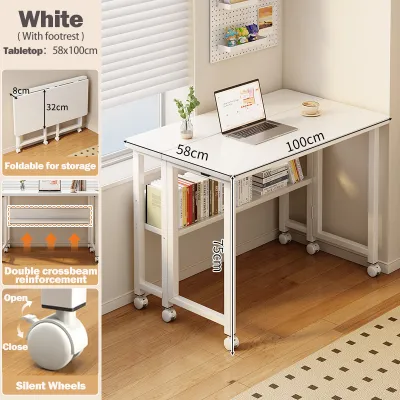
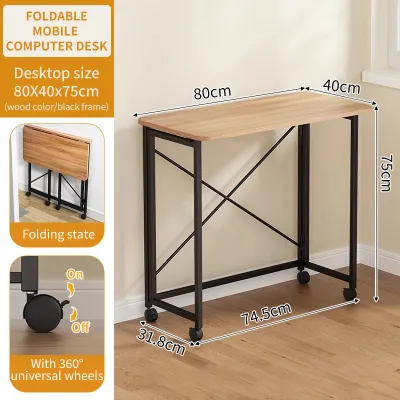
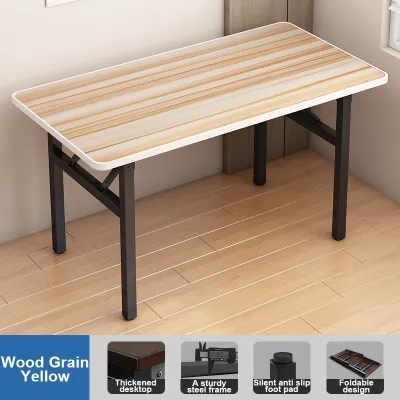
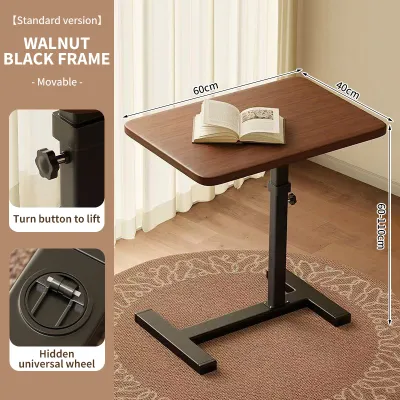
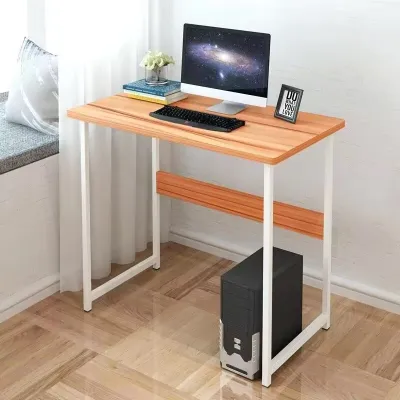
![[On Hand]Folding Desk Home Bedroom Computer Desk Solid Wood Bookshelf Integrated Office Desk Dressing Table](https://img.lazcdn.com/g/p/130c3b5dfeff4f8eb65c9f1cd508d4b3.jpg_400x400q80.jpg_.webp)
Prices are valid at publication and may change. Please refer to the product page for the latest price.
To maintain a balanced home, furniture must minimize its physical footprint when not in use while still providing a stable, comfortable surface during working hours. Visual clutter can be reduced by choosing clean lines, light colors, and designs that can be folded, rolled, or tucked away. A desk that easily transitions from a work station to a clean decorative element helps preserve the relaxing atmosphere of your home once the workday ends.
Additionally, the tropical climate of the Philippines presents unique challenges for furniture preservation. High relative humidity, seasonal rains, and ambient moisture can severely affect wood-based materials, especially if your workspace is set up near a window, a balcony door, or in a poorly ventilated corner. Standard particleboard and low-grade fiberboard are highly susceptible to absorbing airborne moisture, leading to swelling, warping, and peeling laminate. Selecting tables constructed with moisture-resistant materials, sealed edges, and rust-resistant hardware is essential for ensuring your investment survives the local climate.
Best Space-Saving Table Types for Small Layouts
The most effective space-saving table for your home depends heavily on your specific floor plan, wall structures, and how you prefer to work. Rather than looking for a generic desk, categorizing your options by their mechanical design allows you to match the table’s function to the exact layout of your condo.

Wall-Mounted and Drop-Leaf Desks
Wall-mounted or floating desks are permanently anchored to the wall, completely eliminating the need for desk legs. Drop-leaf variations feature a hinged tabletop that can be folded flat against the wall when your work is finished, leaving the floor space entirely clear. This design is highly effective for ultra-small studio apartments where every square inch of walking space is critical to keeping the room functional.
Before purchasing a wall-mounted desk, you must verify the construction of your walls and the location of structural supports. In the Philippines, condo partition walls are often made of lightweight drywall or fiber cement boards, which cannot support a heavy desk without being anchored directly to internal metal studs. If you are mounting onto a structural concrete wall, you will need a hammer drill and heavy-duty masonry anchors to ensure a secure installation.
Because these desks rely entirely on wall anchors for support, they have strict weight limits. They are ideal for lightweight, laptop-only setups, a tablet, and a notepad. They are not suitable for heavy desktop computer towers, dual-monitor arrays, or clamp-on monitor arms, which exert high torque on the wall brackets and can pull the desk away from the wall.
Folding and Mobile Workstations
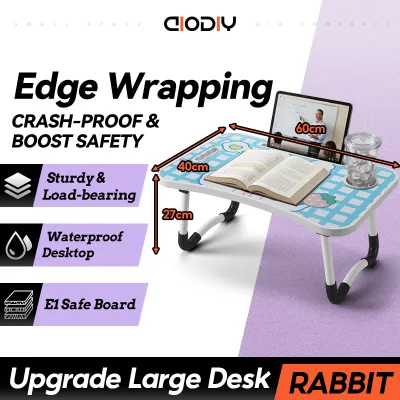
Folding tables and rolling mobile desks offer excellent flexibility for multi-use rooms where your workspace needs to be hidden away or relocated daily. A high-quality folding desk can be set up in minutes and then collapsed flat to slide under a bed, behind a sofa, or inside a closet once your shift is complete. Mobile workstations feature caster wheels, allowing you to easily roll your office from a quiet bedroom during calls to a brighter living area during the afternoon.
When shopping for a mobile desk, look for heavy-duty caster wheels with reliable locking mechanisms to ensure the table remains completely stationary while you type. Check the folding hinges and locking pins carefully; they should operate smoothly without sticking, and include safety locks to prevent accidental collapsing or pinched fingers during setup.
While highly convenient, mobile and folding desks often involve a trade-off between portability and overall stability. Lightweight frames are easy to move but can shake or wobble if you type vigorously or use a heavy mechanical keyboard. To minimize this issue, look for models that feature a reinforced steel frame, cross-bracing, and adjustable leveling feet that can compensate for slightly uneven condo tiling.
Corner and L-Shaped Desks
Corners are often underutilized in small apartments, frequently becoming dead space. A compact L-shaped or triangular corner desk fits snugly into these intersections, maximizing your usable surface area without extending outward into the center of the room. This layout helps define a distinct office zone within a larger shared space.
Before buying a corner desk, take highly accurate measurements of your target corner. Baseboard trims can push the desk away from the wall, creating awkward gaps; look for desks with slightly recessed legs or account for this clearance in your measurements. You must also ensure the desk does not block nearby wardrobe doors, electrical outlets, or the swing path of your room’s entry door.
An L-shaped configuration is highly beneficial for professionals who require a multi-monitor setup, extra room for physical paperwork, or a dedicated area for creative tools alongside their computer. By placing the primary screen on one side of the L and reference materials on the other, you can organize your tasks efficiently without needing a long, traditional desk.
Lift-Top and Storage-Integrated Desks
Multi-functional furniture is a highly practical way to save space in small condos. Lift-top coffee tables feature a top surface that lifts upward and forward, shifting from a low coffee table to a comfortable desk height while you sit on the sofa. Alternatively, desks with integrated shelving, such as ladder desks or secretary desks, utilize vertical wall space for storage, combining a bookshelf and a writing surface within a single footprint.
If you choose a lift-top table, pay close attention to the lifting mechanism. Cheap spring-loaded hinges can be difficult to operate and may snap shut unexpectedly. Prioritize tables equipped with heavy-duty gas struts or hydraulic lifting mechanisms, which provide a smooth, controlled rise and fall, protecting both your fingers and your laptop from sudden impacts.
These multi-functional designs are ideal for living rooms where a dedicated, permanent desk is physically impossible or visually undesirable. They allow you to transition your main living area into an office during the day and return it to a clean, comfortable social space in the evening.
Evaluating Regi and Other Brands for Your Space
The regi space saving table has become a popular choice for urban residents seeking practical, modern furniture solutions. When evaluating offerings from Regi or similar space-saving brands, it is important to look past stylized marketing photos and focus on how the physical specifications align with your home.
Start by visiting the brand’s official website or authorized online furniture stores to access detailed dimension diagrams. You need to compare both the fully extended dimensions and the completely folded or retracted footprint against your measured floor space. A table that looks compact in a photo may still overwhelm a narrow hallway or a small bedroom alcove once fully opened.
Next, examine the materials and hardware used in the construction. In a humid tropical climate, the durability of moving parts is critical. Look for powder-coated steel frames, stainless steel hinges, and high-quality rollers that resist rust and corrosion. Avoid models that use thin, unprotected metal joints, as these can stiffen, squeak, or fail over time due to ambient moisture.
Finally, read verified customer reviews to assess the real-world durability of the folding or lifting mechanisms. Pay attention to feedback regarding how easy the table is to assemble, whether the joints remain tight after months of daily folding, and if the brand provides a reliable warranty on the mechanical parts. Investing in a sturdy, well-engineered mechanism ensures your space-saving table remains safe and functional for years to come.
Crucial Specifications to Verify Before Purchase
To ensure your new space-saving table fits your condo perfectly and lasts for years, compile a checklist of physical and material specifications to verify before making a purchase.
- Dimensions and Clearances: Measure your designated wall and floor area, but do not stop there. Verify the legroom depth to ensure your knees do not hit the back of the desk, and check that your office chair can slide fully under the tabletop when not in use. Additionally, measure your condo building's elevator doors, narrow hallways, and your front door to ensure the boxed furniture can be safely delivered and brought inside.
- Weight Capacity: Always check the manufacturer's maximum weight rating, especially for wall-mounted, folding, or lift-top designs. A standard desk might support 50 kilograms, but a space-saving model may only be rated for 15 to 20 kilograms. Ensure the limit can safely accommodate your laptop, monitor, keyboard, and any desk accessories you plan to use.
- Material and Humidity Resistance: To protect your investment from tropical humidity, prioritize engineered wood with high-pressure laminate (HPL) finishes, sealed edges (such as PVC or ABS edge banding), or solid wood treated with moisture-resistant sealants. Metal frames should be powder-coated to prevent rust. Avoid untreated particleboard, which can quickly swell and disintegrate when exposed to moisture.
- Cable Management: Loose, tangled cords quickly make a small space look cluttered and create tripping hazards in narrow walkways. Look for desks with built-in cable grommets, under-desk wire trays, or magnetic cable organizers to keep your power strips, chargers, and device cables neatly tucked away.
Setup and Cross-Scene Compatibility Tips
Once you have selected your space-saving table, you can optimize your setup to keep your workspace organized and maintain clear walkways in your condo.
To maximize a limited desk surface, utilize the vertical space around you. Install a clamp-on monitor arm to lift your screen off the desk, freeing up valuable space underneath for your keyboard and mouse. You can also mount a pegboard on the wall above or beside your desk to store headphones, stationery, and cables, keeping your work surface completely clear of clutter.
Lighting is another area where you can save valuable desk space. Instead of a traditional freestanding desk lamp, use a USB-powered monitor light bar that clips directly onto the top of your screen, casting light downward without taking up any desk space. Alternatively, you can install a wall-mounted swing-arm sconce that can be folded back against the wall when your workday is done.
Finally, choose your office chair carefully. A bulky, high-back gaming chair or a wide executive chair can block walkways and dominate a small room. Instead, opt for an armless ergonomic chair, a stylish folding chair, or a compact stool that can be tucked completely under the desk when not in use. This keeps your pathways clear and preserves the clean, open feel of your home.
Frequently Asked Questions (FAQ)
Can I install a wall-mounted desk in a rented condo?
Most standard condominium lease agreements in the Philippines prohibit drilling deep holes into structural concrete walls or tiled surfaces without written permission from the landlord or property management. Doing so can lead to the forfeiture of your security deposit when you move out.
If you are renting, consider freestanding alternatives such as a lean-to ladder desk, a folding mobile table, or a tension-pole shelving system that secures between the floor and ceiling without screws. If you must use a wall-mounted desk, consult your landlord first; they may allow the installation if you agree to have the holes professionally patched, sanded, and repainted at the end of your tenancy.
How do I protect an engineered wood desk from Philippine humidity?
To prevent moisture damage, position your desk away from open windows where rain can blow in, and avoid placing it in direct, harsh sunlight, which can crack the protective laminate finish over time. Running an air conditioner or using a small dehumidifier in your workspace helps maintain stable indoor humidity levels.
Always use a waterproof desk mat or coasters to protect the engineered wood from the condensation that forms on cold glasses of water or iced drinks. Periodically inspect the edges of your desk for any peeling laminate or edge banding; if you notice a gap, seal it immediately with a small amount of waterproof wood glue to prevent moisture from entering the inner core and causing it to swell.

Community discussion
Share your experience or ask a question. Comments are reviewed before publication.