
Quick Answer: Which Layered Shoe Organizer Should You Choose?
Selecting the ideal shoes organizer layer system for your closet depends on three primary factors: your closet’s physical depth, your total shoe volume, and your local environmental conditions. In the Philippines, where tropical humidity can accelerate mold growth on leather and dust accumulates quickly in open spaces, choosing the right storage configuration is essential.
For premium protection against dust and moisture, stackable bins are the superior choice. They offer modular flexibility and are ideal for deep shelves or walk-in closets. If you need quick, high-volume access to daily footwear on the closet floor, a tiered shoe rack maximizes floor space and provides excellent natural ventilation. For narrow reach-in closets with limited floor area, hanging shoe layers utilize underutilized vertical hanging space to store lightweight footwear. Balancing accessibility, protection, and your closet’s physical footprint will guide you to the perfect storage solution.
Assessing Your Closet Space and Shoe Collection
Before purchasing any layered shoe organizer, you must accurately evaluate your physical space. Grab a tape measure and record the depth, width, and vertical clearance of your closet. Standard reach-in closets often have a depth of 50 to 60 centimeters, but older or custom-built wardrobes may be shallower. If your closet has sliding doors, remember that only half of the interior is accessible at any given time, which can restrict how you pull out wide racks or open drop-front bins. Check the baseboard depth at the bottom of the closet; thick baseboards can prevent freestanding racks from sitting flush against the wall, causing them to tilt or waste valuable floor space.
Products mentioned in this guide
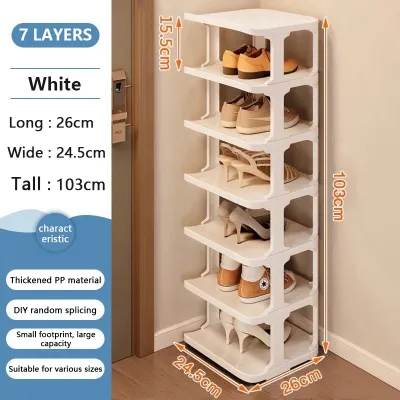
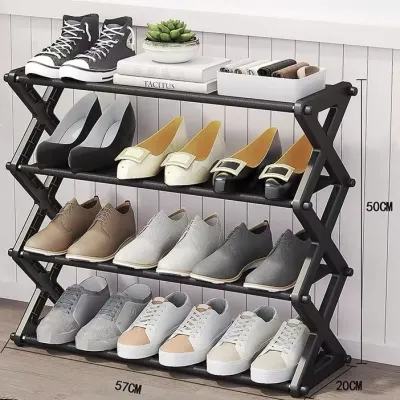
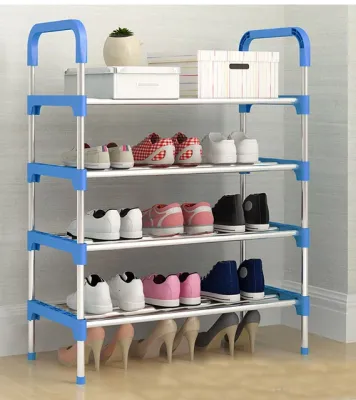
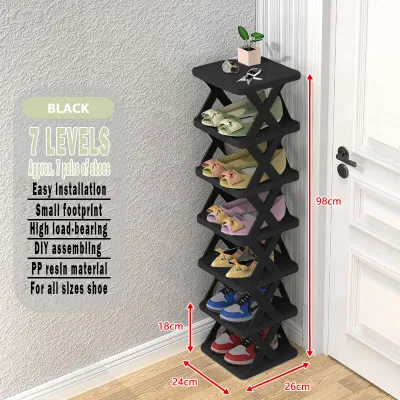
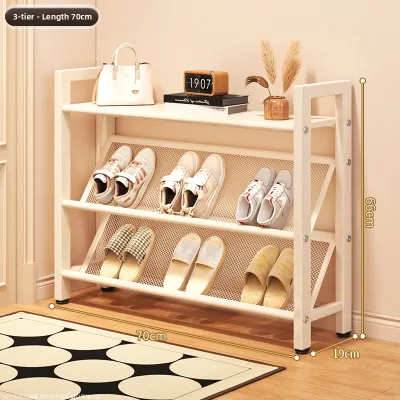
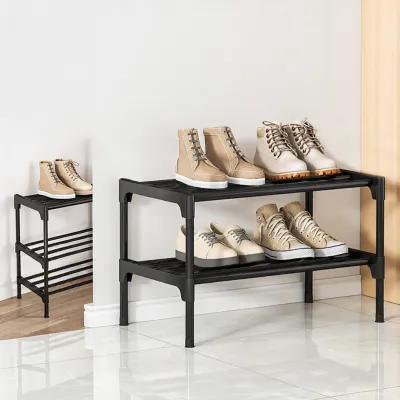
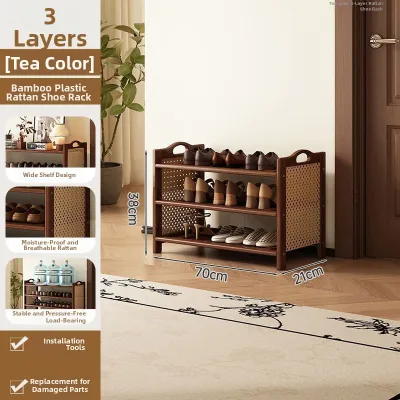
Prices are valid at publication and may change. Please refer to the product page for the latest price.

Next, analyze your shoe collection. Group your shoes by type, height, and frequency of use. In a typical household, you likely have a mix of lightweight slippers (tsinelas), casual sneakers, formal leather shoes, and perhaps high heels or boots. Measure the height of your tallest shoes. High-top sneakers and heels require more vertical clearance than flat sandals. Additionally, separate your daily wear from seasonal or formal footwear. Your daily-use pairs need to be at arm’s reach, while dress shoes or boots worn only occasionally can be placed on higher shelves or in more protective enclosures to shield them from dust and moisture during the rainy season.
Stackable Shoe Bins: Best for Protection and Flexibility
Pros, Cons, and Ideal Closet Setups
Stackable shoe bins are individual boxes designed to lock together, creating a highly modular shoes organizer layer system. Unlike traditional cardboard shoe boxes that deteriorate in humid conditions, modern stackable bins are typically made of durable plastic or acrylic. The primary advantage of stackable bins is their exceptional dust protection. Because each pair is enclosed, they are shielded from ambient dust, pet hair, and accidental scuffs. Many premium models feature drop-front or magnetic doors, allowing you to retrieve a pair of shoes from the bottom of the stack without having to unstack the boxes above. This makes them highly convenient for walk-in closets, deep shelves, or even as freestanding storage against an empty bedroom wall.
However, stackable bins have distinct drawbacks. They carry significant visual bulk, which can make a small closet feel cramped if the bins are opaque or poorly arranged. If you choose clear plastic bins, you must keep the shoes inside clean and organized, as any clutter will be visible. Furthermore, while drop-front doors facilitate easy access, cheaper models with top-opening lids require you to unstack multiple heavy boxes just to reach a single pair at the bottom. In humid tropical climates, completely sealed plastic bins can trap moisture, creating a microclimate that promotes mold and mildew growth on leather shoes. If you opt for bins, look for models with built-in ventilation holes on the back panel to ensure continuous airflow.
Sizing and Stacking Limits to Verify
When purchasing stackable bins, do not rely on generic marketing claims like “fits up to size 12.” Instead, measure the external and internal dimensions of the bins and compare them to your largest shoes. High-top sneakers, wedge heels, and boots require extra height and depth. If your shoes are long, they may not fit straight inside a shallow bin, forcing you to place them sideways, which cuts your storage capacity in half. Check the manufacturer’s specifications for the internal width and length to ensure your shoes can sit naturally side-by-side.
Additionally, verify the maximum recommended stacking height and the integrity of the interlocking mechanisms. Stackable bins rely on tabs, grooves, or magnetic connectors to stay aligned. If you stack them too high without a secure interlocking design, the column can become unstable and tip over, posing a hazard to pets or children. For safety, limit your stacks to a height that remains stable on your floor or shelf, typically no more than six to eight layers high depending on the plastic’s thickness and rigidity. Ensure the total height of the stacked bins leaves at least 10 to 15 centimeters of clearance from the ceiling or shelf above so you can easily access the top bin’s door.
Tiered Shoe Racks: Best for High-Volume Daily Wear
Pros, Cons, and Ideal Closet Setups
Tiered shoe racks are freestanding structures featuring multiple horizontal shelves or bars. They are the traditional workhorses of closet organization, designed to hold a large number of shoes on a minimal footprint. These racks are ideal for closet floors, walk-in wardrobes, or entryways where quick, grab-and-go access is paramount. Because the shelves are open, you can see your entire collection at a glance, making it easy to coordinate your footwear with your outfit. Many tiered racks feature adjustable or angled shelves, allowing you to customize the distance between layers to accommodate different shoe profiles, from flat sandals to tall boots.
The open design of tiered racks is both their greatest strength and their primary weakness. While it provides excellent ventilation—which is crucial to prevent mold and musty odors—it leaves your shoes entirely exposed to dust, light, and humidity. If your closet is located near a window or in a dusty part of the house, shoes stored on open racks will require frequent dusting. Additionally, an open rack can look visually cluttered if shoes are thrown on haphazardly. If you have a large collection of colorful or mismatched footwear, a tiered rack can make your closet look messy unless you commit to organizing the shoes neatly by color or style.
Stability and Clearance Considerations
Stability is a critical factor for freestanding tiered racks, especially when they are loaded with heavy footwear like leather boots or thick-soled sneakers. Before purchasing, check the rack’s frame material and base width. Racks made of lightweight plastic or thin metal tubes can wobble or sag under heavy loads. Look for sturdy materials such as powder-coated steel, solid wood, or heavy-duty engineered composites. If you plan to use a tall rack (five tiers or more), verify if it includes anti-tip anchoring hardware to secure it to the closet wall. This is a vital safety measure in earthquake-prone regions or households with active children and pets.
You must also measure the vertical clearance between the tiers. If the gap between shelves is too narrow, you will struggle to slide your shoes in and out, which can result in the tops of your shoes scraping against the underside of the shelf above. For standard shoes, a clearance of 15 to 20 centimeters is usually sufficient, but high heels and mid-calf boots require 25 to 35 centimeters. Check the total depth of the rack as well; most shoe racks are 30 to 35 centimeters deep. If your closet has shallow bifold or hinged doors, a rack that is too deep will prevent the doors from closing completely, forcing you to position the rack elsewhere.
Hanging Shoe Layers: Best for Narrow or Deep Closets
Pros, Cons, and Ideal Closet Setups
Hanging shoe organizers utilize vertical dead space by suspending multiple fabric or plastic compartments from your closet rod or the back of a door. This shoes organizer layer type is exceptionally space-efficient, making it the perfect solution for narrow reach-in closets with limited floor space. Hanging layers are best suited for lightweight, flexible footwear such as flats, canvas sneakers, sandals, and slippers. By lifting these smaller items off the floor, you free up floor space for larger items or additional storage bins.
However, hanging organizers are not designed for heavy or structured footwear. Heavy leather boots, thick wedge heels, or bulky running shoes can easily distort the fabric shelves, causing the organizer to sag, stretch, or bow inward. This sagging not only looks unsightly but also reduces the usable space in adjacent compartments. Furthermore, hanging organizers can sway when you search through them, which can be frustrating in a tightly packed closet. Because they hang from the closet rod, they also consume valuable horizontal hanging space that would otherwise be used for shirts, dresses, or jackets. If your wardrobe is already crowded with hanging clothes, adding a hanging shoe organizer will compress your garments, leading to wrinkles.
Mounting Types and Weight Verification
Hanging shoe organizers generally come with two types of mounting systems: heavy-duty Velcro straps that wrap around the closet rod, or metal hooks that hang over the top of the door. If you choose a rod-mounted model, verify the diameter of your closet rod to ensure the straps or hooks will fit securely. For over-door models, measure the thickness of your closet door. Standard doors are usually 3.5 to 4.5 centimeters thick; if the hooks are too narrow, they will not fit, and if they are too wide, the organizer will slide and rattle every time you open the door.
Weight capacity is the most critical specification to verify with hanging organizers. Check the manufacturer’s maximum weight rating for both the individual compartments and the overall unit. Overloading a hanging organizer can bend your closet rod, pull door hinges out of alignment, or tear the organizer’s fabric seams. To prevent these issues, look for organizers reinforced with rigid cardboard, plastic inserts, or MDF panels in the shelves to distribute weight evenly. Always place your heaviest shoes in the bottom compartments to keep the center of gravity low, which minimizes swaying and reduces strain on the mounting points.
Direct Comparison: Matching the Organizer to Your Needs
To help you decide which shoes organizer layer system fits your closet layout and lifestyle, let us compare the three main types across key performance dimensions.
| Dimension | Stackable Bins | Tiered Racks | Hanging Layers |
|---|---|---|---|
| Dust Protection | Excellent (Fully enclosed) | Poor (Fully open) | Moderate (Semi-enclosed pockets) |
| Accessibility | Moderate (Requires opening doors) | Excellent (Grab-and-go) | Good (Easy slide-in pockets) |
| Floor Space Used | High (But can be stacked vertically) | High (Requires dedicated floor space) | Zero (Hangs on rod or door) |
| Best Shoe Type | Sneakers, formal leather, heels | Daily wear, sandals, boots | Slippers, flats, light sneakers |
| Moisture Risk | High (If unventilated in humid areas) | Low (Excellent airflow) | Low to Moderate (Breathable fabric) |
Choose Stackable Bins if:
- You have high-value shoes, such as designer heels or collectible sneakers, that need maximum protection from dust and physical damage.
- Your closet has deep, underutilized shelves where you can stack bins several layers high.
- You live in a dusty area and do not mind the extra step of opening a door to retrieve your shoes.
- Your budget allows for modular options, which typically range from ₱150 for basic plastic to ₱800+ per piece for premium acrylic.
Choose Tiered Racks if:
- You need quick, daily access to a large volume of shoes.
- You have ample floor space at the bottom of your closet or a walk-in wardrobe.
- You have a diverse shoe collection that includes tall boots and heavy footwear.
- You prefer a cost-effective, high-capacity solution, with prices generally ranging from ₱300 to ₱1,500 depending on materials.
Choose Hanging Layers if:
- Your closet has zero available floor space but plenty of unused hanging rod space or an empty door back.
- Your collection consists primarily of lightweight shoes, flats, and slippers.
- You want an affordable, non-permanent storage solution that is easy to install and move, with most models priced between ₱150 and ₱500.
Installation and Maintenance Tips for Layered Organizers
Proper installation and regular maintenance will extend the life of both your shoes organizer layer system and your footwear. When assembling tiered racks or stacking bins, always follow the manufacturer’s step-by-step instructions. Ensure all joints, screws, and interlocking tabs are fully tightened and aligned. If you are using a freestanding rack or high stack of bins on a carpeted floor, check for stability; uneven surfaces can cause the organizer to lean, increasing the risk of tipping.
To maintain a clean and hygienic storage environment, adopt these simple, low-risk habits:
- Distribute weight evenly: Always place your heaviest shoes on the bottom layers of your racks or hanging organizers to lower the center of gravity and improve stability.
- Use shelf liners: Place washable plastic shelf liners on wire or wooden tiered racks to prevent dirt, mud, and water from dripping from the soles of upper shoes onto the pairs stored below.
- Clean periodically: For stackable plastic bins, wipe the interiors with a damp microfiber cloth and a mild soap solution every few months, ensuring they are completely dry before placing shoes back inside.
- Manage humidity: In the humid tropical climate, place silica gel packets or small hanging dehumidifiers inside your closet and stackable bins to absorb excess moisture and prevent mold growth.
Frequently Asked Questions (FAQ)
Can I mix different shoe organizer types in the same closet?
Yes, mixing different organizer types is often the most efficient way to maximize closet space. You can use a tiered rack on the closet floor for your daily-use shoes and slippers, allowing for quick grab-and-go access. For seasonal footwear, formal shoes, or sneakers you wear less frequently, stack plastic bins on the top shelves of your closet where they are protected from dust. Finally, hang a fabric organizer on the back of the closet door to store lightweight sandals, slippers, or accessories. This hybrid approach ensures every shoe type is stored in its ideal environment.
How do I prevent dust buildup on open tiered racks?
To prevent dust from accumulating on open tiered racks, keep your closet doors closed when the wardrobe is not in use. If your closet does not have doors, you can purchase a breathable, washable fabric cover designed specifically for shoe racks. These covers drape over the entire rack and usually feature zippered front panels for easy access, keeping dust out while allowing air to circulate. Additionally, running an air purifier in your bedroom can significantly reduce ambient dust. For long-term storage of shoes on open racks, consider placing individual pairs in breathable cotton dust bags rather than airtight plastic wraps, which can trap tropical humidity and cause mold.

Community discussion
Share your experience or ask a question. Comments are reviewed before publication.