
During a house move, or lipat bahay, transporting garments securely requires more than just throwing them into random bags. Standard cardboard boxes often collapse under pressure, while loose plastic bags offer zero protection against crushing, dust, or sudden tropical downpours. Utilizing a dedicated stackable clothes organizer ensures your garments remain clean, folded, and structurally protected throughout the relocation process.
A successful move relies on organizers that feature rigid or semi-rigid structures capable of maintaining their shape when stacked under significant weight. Look for secure locking lids, reinforced handles, and uniform base-to-top dimensions to ensure stable transit in a moving vehicle. The optimal choice depends on your clothing volume, the cargo space of your moving vehicle, and the distance of your relocation across local roads.
Key Selection Criteria for Transit and Stacking
Dimensional Uniformity
Standard tapered plastic bins might save space when nested empty, but they are highly unstable when stacked full. The sloped sides of tapered containers create empty gaps between them and reduce the contact area between the lid of the bottom bin and the base of the top bin. For transit, choose organizers with straight, vertical walls. This design ensures that the weight of the upper bins is distributed directly down the structural corners of the lower bins, preventing tipping and sliding on bumpy roads.
Products mentioned in this guide
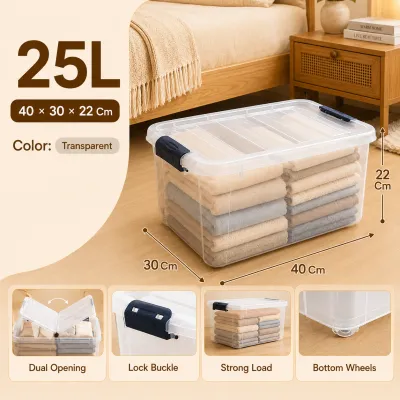
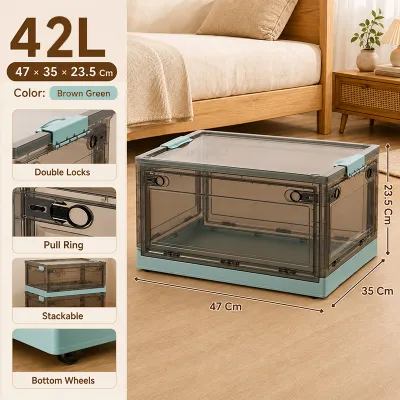
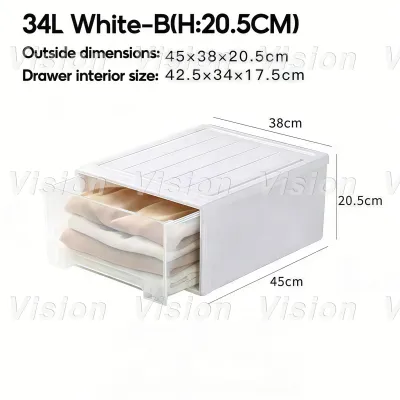
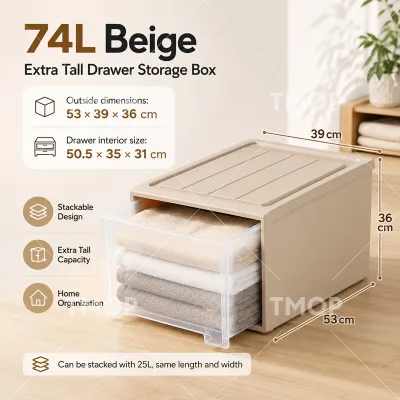
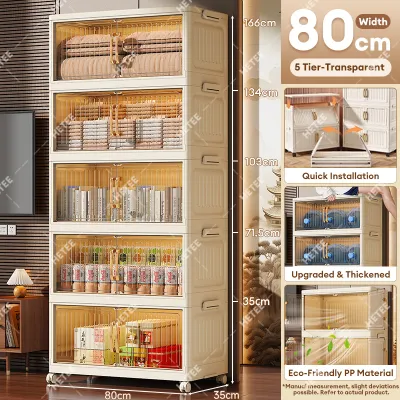
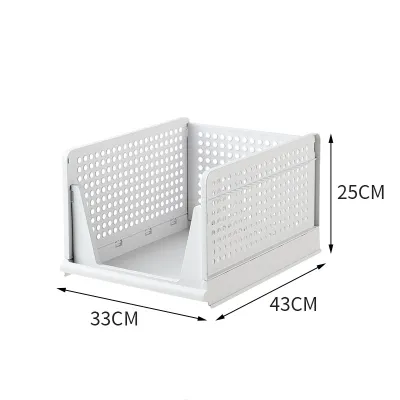
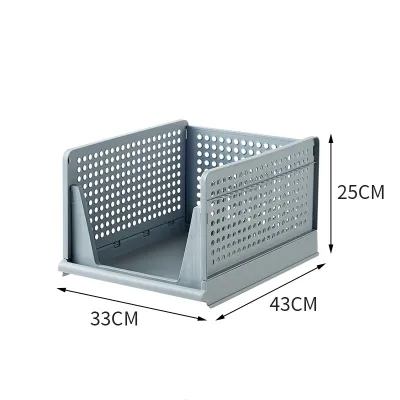
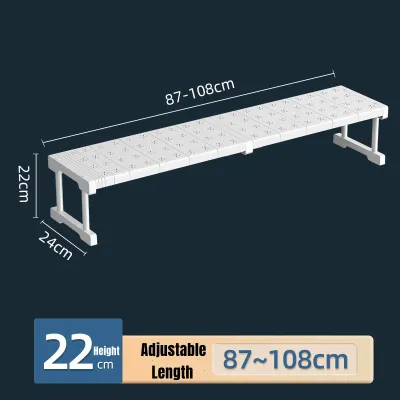
Prices are valid at publication and may change. Please refer to the product page for the latest price.
Weight Capacity and Material Limits
Do not rely on visual thickness alone to judge the strength of a container. Different plastic formulations, such as polypropylene or high-density polyethylene, offer varying levels of flexibility and load tolerance. Always check the manufacturer’s specifications for maximum load limits before purchasing. Overloading an organizer beyond its rated capacity can cause the plastic to bow, which compromises the lid fit and leads to stack failure during transport.
Handle and Grip Design
Moving heavy textiles like denim, jackets, or thick bed linens requires sturdy lifting points. Look for organizers with integrated, molded handles rather than thin, clip-on plastic latches that double as handles. Ergonomic grips that allow you to wrap your fingers fully around the handle will reduce hand fatigue and prevent accidental drops during the carrying process.
Lid Security
The vibrations of a moving truck can easily dislodge loose lids. Friction-fit lids, which simply press onto the rim, are prone to popping off under pressure or when the container flexes. For a secure move, prioritize snap-lock lids with heavy-duty latches on both sides. These latches lock the lid firmly to the base, keeping your clothes clean and contained even if the organizer is tilted.
Comparing Organizer Types for Moving Suitability
Rigid Plastic Drawers and Bins
These containers offer excellent crush resistance and protection against external elements. They are highly suitable for protecting delicate garments from dust, moisture, and pests during transit. The primary trade-off is their permanent volume; they occupy the same amount of space in your new home or moving truck when empty, which can limit storage flexibility later. Front-opening drawer models allow you to access your clothes without unstacking the entire pile, though you must secure the drawers with tape during transit to prevent them from sliding open.

Collapsible Fabric Bins with Rigid Frames
These bins feature internal metal or plastic wire frames that prop up the fabric walls. They are highly convenient because they fold completely flat when not in use, saving valuable space in your new home. However, you must verify the sturdiness of the internal frame before stacking them. Heavy items should not be placed on top of fabric bins unless the frame is specifically rated for vertical loads, making them better suited for lighter clothing like t-shirts and activewear.
Stackable Vacuum Storage Bags with Hard Bases
These are highly effective for compressing high-volume, low-weight items such as pillows, comforters, and seasonal clothing. The vacuum seal removes excess air, dramatically reducing the space required in the moving vehicle. To stack these successfully, choose models that feature a rigid outer base or box. Without a flat, hard surface, compressed bags become lumpy and irregular, making them difficult to stack safely in a moving vehicle without rolling off.
Corrugated Plastic Boxes
Often used as a durable, water-resistant alternative to traditional cardboard boxes, these containers are lightweight and highly resilient. They handle humidity much better than paper-based boxes, which can soften and collapse in tropical climates. When selecting corrugated plastic, inspect the corner joints and edge reinforcements, as these areas bear the brunt of the weight when stacked in a moving truck.
Packing and Stacking Strategies for Safe Transport
Weight Distribution
Proper weight distribution is key to maintaining a low center of gravity. Pack your heaviest garments, such as jeans, jackets, and sweaters, at the bottom of the organizer. Place lighter items, like t-shirts and undergarments, on top. When loading the moving vehicle, always place the heaviest organizers on the floor and stack the lighter ones on top to prevent the entire stack from becoming top-heavy and tipping over.
Filling Empty Spaces
Loose clothes inside an organizer will shift during transit, altering the balance of the container. Fill any remaining gaps with soft, small items like rolled socks, hand towels, or clean packing paper. A tightly packed organizer prevents shifting, keeps your folded clothes neat, and adds internal support to the walls of the container, reducing the risk of the plastic cracking under external pressure.
Stacking Order in the Vehicle
Arrange your stacked organizers against the solid walls of the moving truck or van. Grouping containers of identical dimensions together creates a cohesive block that resists movement. Avoid mixing different types of organizers in a single vertical stack, as mismatched footprints can cause the stack to lean and collapse during transit.
Securing the Stack
Even the most stable stacks can tip during sudden stops or sharp turns on local roads. Use ratchet straps or heavy-duty bungee cords anchored to the vehicle’s tie-down points to bind the stacks together. Placing moving blankets or non-slip rubber mats between the plastic containers can also prevent them from sliding against each other during transit.
Purchasing Checklist and Space Verification
Measuring Available Space
Before ordering any organizers, measure the exact cargo dimensions of your vehicle, whether you are using a personal car, a pickup truck, or a hired closed van. Additionally, measure the closets, shelves, or storage areas in your new home where the organizers will live permanently. This ensures that the containers you buy will fit both during transit and after arrival.
Verifying Online Listings
Photos on e-commerce platforms can be highly deceptive due to camera angles and digital editing. Never rely on product images alone to judge size. Always scroll down to the product specifications and verify the exact external dimensions in centimeters or inches. Compare these measurements against your pre-measured space to avoid purchasing containers that are too large or too small for your needs.
Budgeting and Bulk Pricing
When shopping on online marketplaces, look for bundle deals or multi-pack offers, which often provide a lower price per unit in ₱. Keep in mind that large, lightweight items like plastic bins are often subject to volumetric shipping rates. This means the shipping cost may be calculated based on the package size rather than its actual weight, which can significantly increase your total expense.
Return and Warranty Policies
Plastic organizers are vulnerable to cracking and warping during shipping and handling. Inspect your items immediately upon delivery before confirming receipt on your shopping app. Check the seller’s return policy to ensure you can easily exchange any damaged or defective bins, especially if you are purchasing in bulk for a major move. Documenting the unboxing process with a quick video can also serve as helpful proof if you need to file a return claim.
Frequently Asked Questions (FAQ)
Can I use regular storage bins without lids for stacking during a move?
Using open-top bins without lids is highly risky for a house move. Without a solid lid, you cannot stack another container directly on top without crushing the clothes inside. Open bins also expose your garments to dust, road grime, and moisture during transit. If you must use lidless bins, cover the tops securely with multiple layers of heavy-duty stretch wrap or secure cardboard covers with packing tape to create a flat, protective barrier.
How do I prevent mold in clothes stored in plastic organizers during a move?
Tropical humidity can easily trap moisture inside sealed plastic containers, leading to mold and musty odors. Ensure that all clothes are completely clean and dry before packing them. Avoid packing your organizers in high-humidity environments or during active rain. To protect your garments, place several silica gel packets or commercial moisture-absorbing sachets inside each organizer before sealing the lid, and unpack them as soon as possible after arriving at your new home.

Community discussion
Share your experience or ask a question. Comments are reviewed before publication.