
Selecting the ideal study table for your home office is not about finding a universally perfect design; it is about matching a specific desk type to your physical space, daily workflow, and financial limits. While standing, foldable, and L-shaped desks each solve distinct problems, picking the wrong one can lead to cramped rooms, unstable setups, or wasted budget. To make the right choice, you must evaluate your room’s physical dimensions, your daily equipment requirements, and your long-term budget.
In the Philippines, where home workspaces often share room with bedrooms, living areas, or dining zones, the physical footprint of your furniture is critical. High humidity and tropical conditions also mean you must pay close attention to material finishes and joint stability. By taking a systematic approach to your purchase, you can avoid the frustration of a desk that is too large for your doorway or too weak for your computer setup.
Step 1: Assess Your Available Space and Room Layout
Before browsing online marketplaces or visiting local showrooms, you must obtain precise measurements of your designated work area. Use a physical measuring tape to map out the maximum width, depth, and height your room can comfortably accommodate. Do not forget to measure the clearance of your doorways, hallways, and stairwells, especially if you are considering a pre-assembled L-shaped study table that cannot be easily disassembled.
Products mentioned in this guide
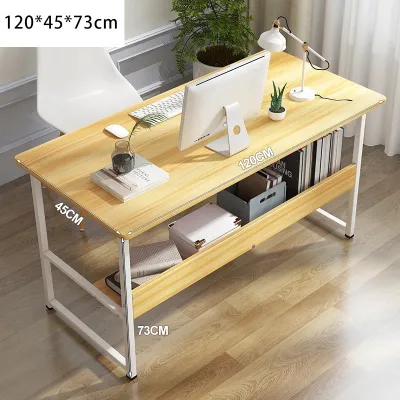
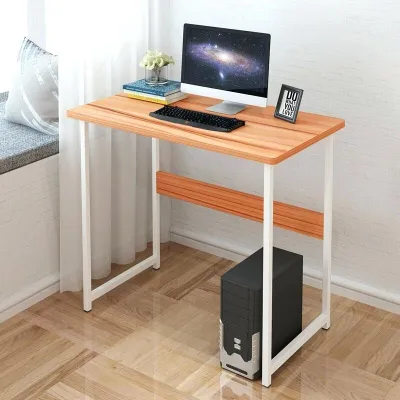
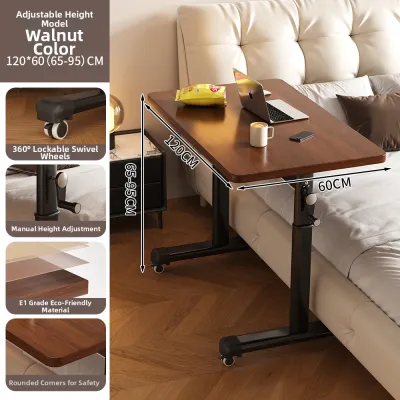
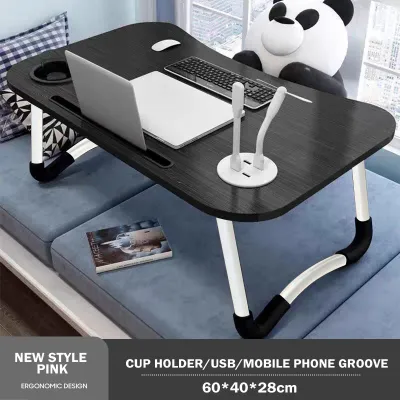
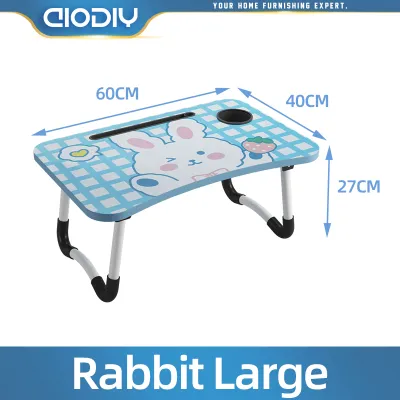
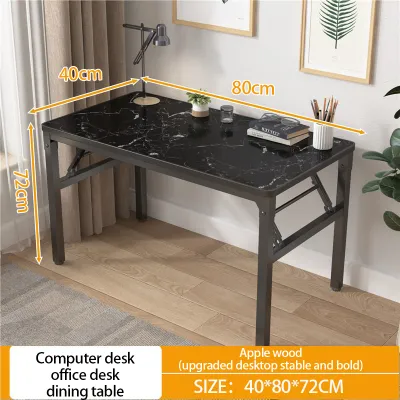

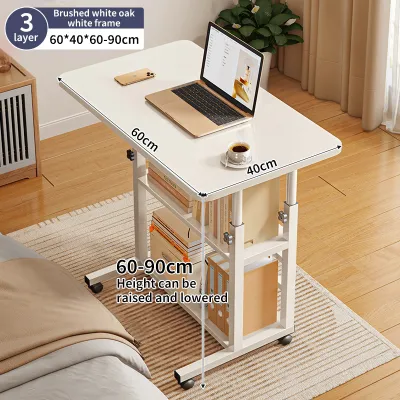
Prices are valid at publication and may change. Please refer to the product page for the latest price.
Your room’s layout dictates which desk shapes are structurally viable. For instance, an L-shaped desk requires a dedicated corner with sufficient depth on both sides, or a long, uninterrupted wall. If you position it incorrectly, it can block natural light, cover electrical outlets, or obstruct the swing of closet doors and entryways.
Wall-mounted foldable desks introduce unique structural demands. These space-saving options must be anchored to solid concrete walls or sturdy wall studs to prevent collapse under daily use. Mounting a foldable desk to thin drywall or hollow partitions without proper reinforcement can lead to severe structural failure and damage to your equipment.
In multi-use spaces, such as a shared bedroom or a living room, the ability to reclaim floor space is invaluable. Foldable desks that can be tucked away or collapsed against the wall allow you to transition the room from a professional office during the day back to a relaxing personal space in the evening. This flexibility is particularly beneficial in compact urban condominiums where every square meter counts.
Step 2: Evaluate Your Work Style and Equipment Needs
Your daily tasks and the physical gear you use should heavily influence your choice of a study table. If your workflow involves multiple monitors, a large desktop computer, external hard drives, and physical documents, surface area is your primary constraint. An L-shaped desk provides two distinct, expansive zones, allowing you to keep your screens on one side while leaving the other free for writing, reading, or organizing paperwork.

For those who spend long hours in front of a screen, physical comfort and posture are major considerations. A standing desk allows you to alternate between sitting and standing throughout the day, which can help mitigate the physical fatigue associated with sedentary work. When evaluating standing desks, check the product specifications to determine whether the model uses a manual hand crank or an electric motor, and verify the maximum weight capacity listed on the label.
If your work setup is highly minimalist—consisting of just a single laptop, a mouse, and a notepad—a large, permanent desk may be unnecessary. A compact foldable desk offers a practical surface for focused work sessions without permanently occupying valuable floor space. However, because these desks rely on folding joints, you must carefully inspect the hinge mechanisms and leg bracing specifications to ensure they will not wobble during typing.
Consider also how your equipment’s weight is distributed across the surface. Heavy items concentrated in one area can cause thinner desk tops to bow or sag over time. If you plan to mount monitor arms or heavy accessories, look for desks with reinforced steel frames or solid wood tops, rather than thin particleboard, to ensure long-term stability.
Step 3: Align Your Budget with Long-Term Value
Establishing a realistic budget requires looking beyond the initial purchase price of the study table. Generally, foldable desks are the most economical option, making them ideal for temporary setups or tight budgets. L-shaped desks occupy the mid-to-high price range, with costs varying based on size, drawer integration, and material quality. Motorized standing desks typically represent the highest financial investment due to their electronic components and heavy-duty steel frames.
Hidden costs can quickly inflate your overall expenditure. For example, a standing desk often requires specialized cable management trays and longer, flexible power strips to prevent cords from stretching or unplugging when the desk rises. An L-shaped desk might require additional support legs or brackets if you plan to place heavy equipment near the corner joint, while a wall-mounted foldable desk will require high-quality masonry anchors and drill bits for safe installation.
Assembly is another critical factor that affects both your budget and your time. Many modern study tables are delivered flat-packed, requiring self-assembly with basic tools. While simple foldable desks often arrive fully assembled or require minimal setup, complex L-shaped desks and motorized standing desks involve intricate frame alignments and electrical wiring. If you are not confident in your DIY skills, you may need to budget extra for professional assembly services.
Finally, consider the interaction between your desk and your flooring. Heavy desks, particularly large L-shaped models loaded with equipment, can leave permanent indentations on soft vinyl tiles or scratch delicate wooden floors. Check the weight of the desk and verify if it includes adjustable leveling feet or protective rubber pads. If your room’s structural limits or flooring conditions seem incompatible with a heavy desk, pause and consult the manufacturer or a local contractor before proceeding.
The Final Verdict: Match Your Profile to the Right Desk
To simplify your decision, match your personal circumstances to one of the following profiles:
Path A: Compact Space and Strict Budget If you work in a shared room, need to reclaim your floor space at the end of the day, and primarily use a single laptop, a foldable desk is your best match. It provides a functional workspace when needed and folds away easily, keeping your living area clutter-free without requiring a major financial commitment.
Path B: Heavy Workflow and Ample Space If you use multiple monitors, handle physical paperwork, and have a dedicated corner in your home, choose an L-shaped study table. This configuration maximizes your corner space, provides distinct zones for different tasks, and offers the structural stability needed for heavy desktop setups.
Path C: Ergonomic Focus and Flexible Budget If you experience physical discomfort from sitting for extended periods and have a flexible budget, invest in a standing desk. The ability to transition between sitting and standing supports better physical engagement throughout your workday, provided you choose a model with a reliable frame and motor.
Stop Condition: If you cannot verify your wall’s structural integrity for a wall-mounted desk, if you are unsure of your floor’s weight-bearing capacity, or if your spatial measurements are tight, do not rush the purchase. Pause and consult the retailer’s detailed specification sheet or contact a local contractor to verify that your home can safely accommodate your chosen desk.
Frequently Asked Questions (FAQ)
Can I convert a regular study table into a standing desk?
Yes, you can convert an existing study table into a standing workspace by using a desktop riser or converter. This is a practical, budget-friendly alternative to buying an entirely new motorized desk. However, before purchasing a converter, you must verify the weight capacity and stability of your current table. Desktop risers add significant weight, and when raised to their maximum height, they shift the center of gravity, which can cause an unstable or lightweight base table to tip over.
Are foldable desks stable enough for dual monitors?
Generally, most standard foldable desks are not recommended for dual-monitor setups. These tables are typically engineered for lightweight, mobile devices like laptops and tablets. Before attempting to mount multiple screens, check the manufacturer’s explicit load limits and inspect the leg bracing design. Heavy dual monitors, especially when mounted on a single clamp-on monitor arm, create concentrated pressure and uneven weight distribution that can cause a foldable desk to wobble, sag, or structurally fail at the hinge joints.

Community discussion
Share your experience or ask a question. Comments are reviewed before publication.