
If you have a dedicated room or a permanent corner where you can leave your workstation set up, and your priority is physical comfort through posture changes, a standing study table with drawers is your best match. This setup allows you to transition between sitting and standing throughout long working hours, keeping your essential office supplies within arm’s reach.
Conversely, if you work from a shared living room, a dining area, or a compact studio apartment where space must be reclaimed at the end of the day, a foldable study table with drawers is the practical choice. It offers a temporary workspace that can be packed away, keeping your home feeling like a home rather than a permanent office.
Ultimately, the right decision hinges on verifying your specific room measurements, checking the weight capacity of the desk, and assessing your daily physical mobility needs. Let us break down how these two popular WFH desk styles compare across space, ergonomics, storage, and structural stability.
Products mentioned in this guide
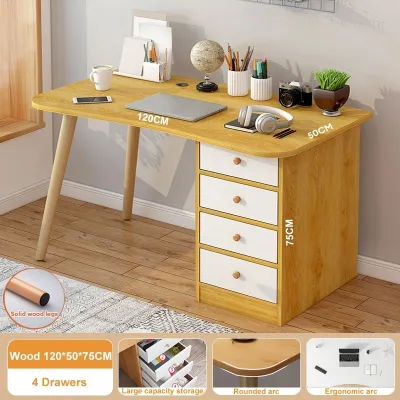
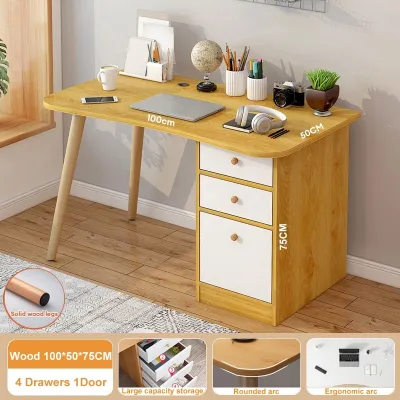
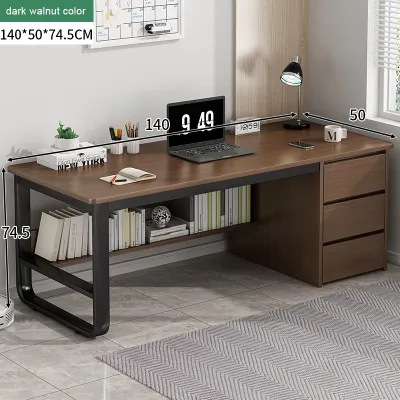
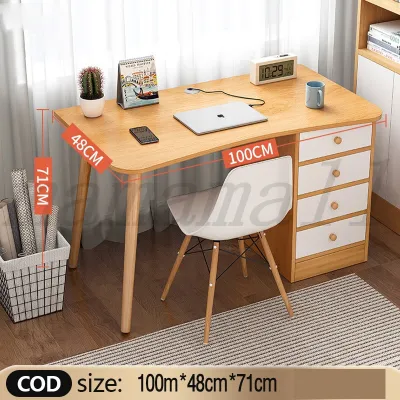
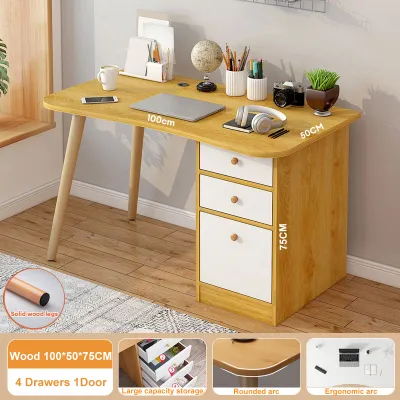
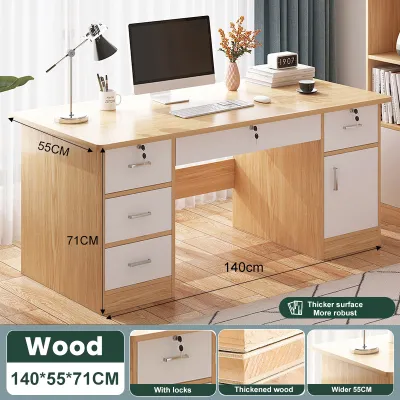
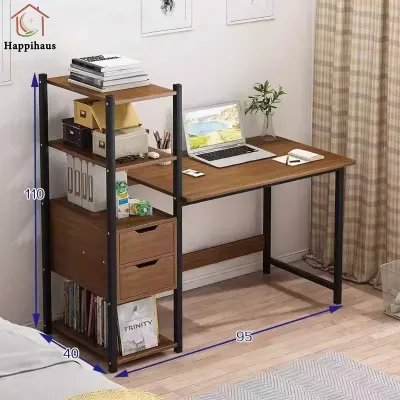
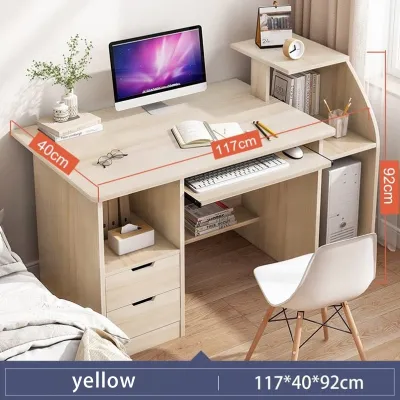
Prices are valid at publication and may change. Please refer to the product page for the latest price.
Space and Layout: Measuring Your Room and Desk Footprint
Before browsing online marketplaces or local furniture showrooms, you must map out the physical boundaries of your designated work area. A standing desk requires a permanent footprint. Even when lowered, its frame and tabletop occupy a fixed volume of space that cannot be easily cleared. You need to measure not just the width and depth of the tabletop, but also the clearance around it to ensure it does not block walkways or cabinet doors when fully assembled.
For a foldable study table with drawers, your measurements must cover two distinct states: the fully unfolded working footprint and the folded storage footprint. Measure the closet, the gap behind the sofa, or the under-bed space where you plan to store the desk when it is not in use. Ensure the folded thickness, including any protruding drawer handles or structural hinges, fits comfortably within your intended storage zone without scratching your walls or other furniture.
Do not overlook the journey the desk must take to reach your room. In urban condominiums and multi-story homes in the Philippines, narrow hallways, tight stairwells, and compact lifts present delivery challenges. Check packaged box dimensions against doorway widths and lift clearances. A heavy tabletop or pre-assembled foldable unit can easily become wedged if you do not plan the delivery path.
Finally, evaluate the surrounding environment of your chosen spot. A permanent standing desk needs close proximity to power outlets to run its electric adjustment motors, and you must manage the cables so they do not stretch or unplug when the desk rises. A foldable desk offers more flexibility in placement, allowing you to chase natural light near a window during the day, but you must ensure that setting it up daily does not block essential household traffic or safety exits.
Ergonomics and Posture: Adapting to Your Daily Work Habits
Your physical comfort during long shifts is directly tied to how well your desk adapts to your body. Standing desks excel in this category because they feature adjustable height mechanisms, either manual hand-cranks or electric dual-motor systems. This allows you to alternate between sitting and standing positions, which helps reduce physical fatigue and keeps you active during long working hours.

When evaluating a standing study table with drawers, check the height range to ensure it accommodates your sitting and standing elbow heights. If sharing the desk, a wider adjustment range is necessary. Keep in mind that electric models require a smooth transition speed so that items on your desk do not wobble or slide during adjustment.
Foldable desks, on the other hand, typically feature a fixed height designed around standard seating postures. If you choose a foldable model, you must compensate for this lack of adjustability to maintain healthy ergonomics. Consider pairing the desk with an adjustable ergonomic office chair, a supportive footrest to keep your knees at a ninety-degree angle, or a portable monitor riser to bring your screen to eye level.
Regardless of which style you prefer, always verify the manufacturer’s maximum weight capacity before loading the desk with multiple monitors, heavy laptops, and desk organizers. A standing desk motor can burn out or strain if overloaded, while an overloaded foldable desk risks structural bowing or joint failure. Look for clear weight ratings on product labels or user manuals to ensure your equipment falls safely within the desk’s limits.
Storage Capacity: Evaluating Drawer Clearance and Usability
A study table with drawers keeps clutter out of sight, but how these drawers integrate into the frame affects both comfort and functionality. On a standing desk, drawers are typically mounted directly beneath the tabletop. You must verify that this under-desk drawer housing does not compromise your legroom when you are seated, or collide with your knees when you slide your office chair forward.
Furthermore, check how the drawer placement interacts with the desk’s lifting columns and crossbars. Some standing desks place the motor housing or structural support beams right where an aftermarket drawer would go, which is why choosing a model with built-in, factory-integrated drawers is often safer. Ensure the drawers do not add excessive weight to one side of the desk, as an uneven weight distribution can put uneven strain on the lifting motors over time.
For foldable desks, integrating drawers is an engineering challenge. Manufacturers must balance storage with the requirement that the desk fold flat. Some models feature detachable drawer units, while others use fabric or lightweight plastic drawers in a collapsible frame. Evaluate how these drawers affect portability; heavy, built-in drawers can make a folded desk difficult to lift and carry.
Before making a purchase, check the internal dimensions of the drawers to ensure they can actually hold your specific work tools, such as a 15-inch laptop, tablet, or standard folders. Inspect the slide mechanisms as well; smooth metal ball-bearing slides are generally more reliable and less prone to sticking than simple wooden grooves, especially in humid tropical climates where wood can swell and warp.
Stability and Assembly: Structural Checks Before Purchase
A wobbly desk is a constant distraction and a safety hazard for electronics. For standing desks, stability becomes a critical concern when the desk is raised to its maximum height. Look for frames constructed from heavy-duty steel, and check if the design includes a stability crossbar or wide, leveling feet that can be adjusted to compensate for uneven tiled or wooden floors.
For foldable desks, stability depends entirely on the quality of the hinges, locking pins, and frame joints. When the desk is fully unfolded, the locking mechanisms must snap securely into place without any play or wiggle. Check for anti-slip rubber feet on the bottom of the legs; these not only prevent the desk from sliding on smooth floors during a busy typing session but also protect your tiles or laminate flooring from scratches.
Assembly is another major differentiator that requires careful planning. Electric standing desks are often heavy and come in multiple boxes, requiring a systematic assembly of the motor, control box, lifting legs, and tabletop. Review the assembly instructions online beforehand to see if specialized tools are required, and consider having a second person assist you to safely flip the desk upright once the heavy steel frame is attached.
Foldable desks often appeal to those who want to avoid complex assembly, as many models arrive pre-assembled or require only a few steps to attach the wheels or drawer slides. However, you should still inspect all factory-installed screws and hinges upon delivery. Tighten any loose hardware immediately, and establish a routine of checking these joints every few months, as regular folding and unfolding can naturally loosen screws over time.
Decision Framework: Finalizing Your Desk Choice
To make your final decision, weigh your daily work habits against the physical realities of your home environment.
Choose a standing desk with drawers if:
- You have a dedicated, permanent home office space or a corner that does not need to serve other household functions.
- Your daily work involves long, uninterrupted hours where alternating between sitting and standing is essential for your physical comfort.
- You require a highly stable, heavy-duty frame that can support multiple monitors, external speakers, and heavy office equipment.
Choose a foldable desk with drawers if:
- You live in a compact apartment, studio, or shared household where your workspace must be packed away to reclaim floor space after hours.
- You prefer a highly portable setup that can be easily moved to different rooms or stored away during weekends and holidays.
- You want a budget-friendly, low-maintenance desk that requires minimal assembly and can be set up in minutes.
Neither option may fit if:
- You need to support exceptionally heavy specialized equipment that exceeds standard consumer weight limits (typically above 80 kilograms).
- Your available floor space is so restricted that even a compact foldable desk blocks critical pathways or emergency exits.
Verify first if:
- Your rental agreement has strict rules regarding heavy furniture delivery, or if your home's electrical wiring can safely accommodate additional motorized appliances.
- You have specific physical or medical conditions that require a specialized, custom-tailored ergonomic assessment from a professional.
Frequently Asked Questions (FAQ)
How do I prevent drawers from jamming on an adjustable standing desk?
To keep your drawers sliding smoothly, start by checking for any cable management sleeves or power cords that might be catching on the drawer tracks as the desk moves up and down. Ensure that all mounting screws holding the drawer slides to the tabletop are tight and flush, as a loose screw can easily block the roller path. Additionally, use a spirit level to verify that your desk frame is perfectly level; if the desk is tilted or twisting, it can warp the drawer housing and cause the slides to bind.
Can I add aftermarket drawers to a foldable desk if it lacks built-in storage?
Adding aftermarket drawers to a foldable desk is possible but requires caution. Before attaching clamp-on drawers or hanging organizers, check the desk’s total weight capacity and ensure the addition does not exceed this limit. Avoid any modifications that block the folding hinges or prevent the legs from locking securely. Most importantly, test the desk’s center of gravity after installation; adding heavy drawers to one side of a lightweight foldable frame can make it highly unstable and prone to tipping over when bumped.

Community discussion
Share your experience or ask a question. Comments are reviewed before publication.