
Choosing the right work-from-home (WFH) desk is a balancing act between your physical space, daily work habits, and long-term comfort. In the Philippines, where urban living spaces like condominiums often feature compact layouts and high humidity can affect furniture materials, selecting the wrong desk type can lead to cramped quarters or premature wear. High humidity can cause low-grade particle board to swell or warp over time, making material choice just as important as desk shape. Whether you need the active movement of a standing desk, the space-saving agility of a foldable desk, or the expansive surface of an L-shaped desk, understanding how each design interacts with your home environment is the first step to building a productive workspace.
Assessing Your Workspace and Work Habits
Before browsing online marketplaces, grab a tape measure to map out your designated work area. Measure the available floor space, taking note of nearby door swings, electrical outlets, and wall configurations. A desk that blocks a walkway or sits too far from a power source will quickly become a daily frustration. Be sure to also measure the width of your doorways and hallways to ensure the desk parts can actually be carried into your room on delivery day.
Next, evaluate your daily work patterns and equipment needs. If your job requires multiple monitors, heavy reference books, or a dedicated area for writing, a small surface will not suffice. Conversely, if you work solely on a lightweight laptop, a massive desk might unnecessarily crowd your room. Consider whether you prefer to keep your work tools visible and spread out, or if you prefer a clean, minimalist surface that can be cleared off at the end of the day.
Products mentioned in this guide
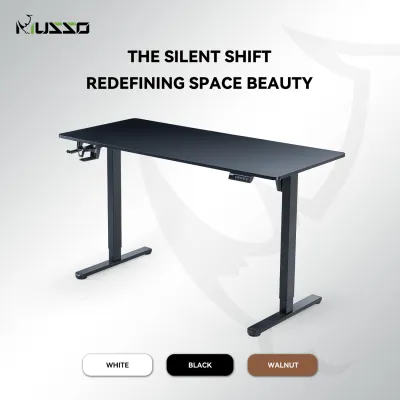
Prices are valid at publication and may change. Please refer to the product page for the latest price.
Finally, establish your budget and ergonomic goals. Consider how many hours you spend at your desk each day and whether you experience physical discomfort from prolonged sitting. Investing in the right desk shape and functionality can directly impact your physical well-being over years of remote work. Setting a clear budget beforehand helps you decide whether to prioritize premium materials, motorized adjustments, or simple space-saving utility.
Standing Desks: Ergonomics and Active Workflows
Standing desks cater to those who want to break up sedentary workdays by alternating between sitting and standing. When evaluating these desks, look closely at the adjustment mechanism, which typically ranges from manual hand cranks to electric dual-motor systems. Electric models offer convenience but require proximity to a power outlet and careful routing of power cords. In areas prone to power fluctuations, it is wise to plug electric desks into a surge protector to safeguard the motorized components.

Weight capacity is a critical specification to verify before purchasing. Ensure the motor or crank system can smoothly lift your monitors, computer tower, and desk accessories without straining. It is also wise to check the manufacturer’s listed weight limit, as exceeding it can burn out motors or cause uneven lifting. Look for desks with dual motors if you plan to support multiple heavy screens and a desktop mount.
Stability is another key factor, especially at maximum height. Some budget-friendly standing desks may exhibit a slight wobble when fully extended, which can be distracting during intense typing sessions. To mitigate this, check the thickness of the steel frame and look for models with wider foot bases and heavy-duty leveling feet. Additionally, ensure your ceiling height and wall-mounted shelves allow enough clearance for your monitors when the desk is raised to its highest point. To combat tropical humidity, verify that the steel frame features a rust-resistant powder coating.
Foldable Desks: Flexibility for Compact Spaces
Foldable desks are designed for multi-purpose rooms where a permanent workstation is not feasible. These desks can be set up in seconds and tucked away behind a door, under a bed, or inside a closet when the workday ends. This flexibility makes them highly popular for shared apartments, studio units, or homes where the dining table must double as an office during the day.
When shopping for a foldable desk, examine the folding mechanism and the collapsed dimensions. Some models fold completely flat, while others retain a slight frame thickness that requires more storage depth. Ensure the folding joints are made of sturdy steel rather than thin plastic, as cheap joints can wear out quickly with daily setup and teardown. A smooth latching system is essential to prevent pinched fingers during daily assembly.
Keep in mind that foldable desks generally offer limited surface area and lower weight capacities. They are ideal for laptop users but may struggle to safely support heavy dual-monitor mounts or bulky desktop computers. To ensure stability while typing, look for models with cross-brace support bars and adjustable leveling feet to compensate for uneven floors. Since these desks are frequently moved, check that the tabletop material is scratch-resistant and has sealed edges to prevent moisture from humid air from seeping into the core.
L-Shaped Desks: Maximizing Corner Space and Multitasking
L-shaped desks are the ultimate solution for professionals who require expansive workspace and distinct zones for different tasks. By fitting snugly into corners, these desks utilize floor space that might otherwise go unused, making them surprisingly efficient for medium to large rooms. They allow you to dedicate one side of the desk to computer work and the other side to physical paperwork, crafting, or secondary devices.
Before choosing an L-shaped desk, measure your corner walls carefully and verify the clearance for your office chair. You need enough room to glide and rotate the chair freely without hitting the desk legs or adjacent walls. Keep in mind that some L-shaped desks have a fixed left- or right-hand return, while others offer a reversible configuration that can be adjusted during assembly. Reversible models offer more flexibility if you decide to rearrange your room layout in the future.
Managing cables on a dual-surface layout requires planning. Look for desks with built-in grommets or under-desk cable trays to keep cords organized and prevent them from stretching awkwardly across the corner bend. Additionally, consider the assembly process; L-shaped desks are heavy, complex units that often require two people to assemble and are difficult to relocate once built. Ensure the joints are reinforced with sturdy metal brackets to maintain structural integrity over time.
Direct Comparison: Matching Desk Types to User Profiles
To simplify your decision, match your primary constraints to the most suitable desk type. Choose a standing desk if you prioritize physical movement, have a flexible budget, and want to reduce the physical strain of sitting for eight hours a day. This option works exceptionally well in dedicated office spaces where the desk can remain plugged in and stationary, allowing you to establish a healthy, active daily routine.
Choose a foldable desk if you live in a compact home, work primarily on a laptop, and need to reclaim your living space after office hours. It is the most budget-friendly option and requires zero permanent floor space, making it ideal for temporary or hybrid work arrangements. It is also highly convenient for renters who move frequently and need furniture that is easy to pack and transport.
Choose an L-shaped desk if you use multiple monitors, handle physical paperwork alongside your computer, and have an underutilized corner in your room. This setup provides the most storage and surface area, though it requires a larger upfront investment and a permanent spot in your home. It is a highly suitable choice for power users, gamers, or professionals who run a home business.
If none of these options fit your needs, consider hybrid alternatives. For example, a compact writing desk with a manual desktop converter can offer a middle ground between a standard desk and a full standing desk. Before making your final purchase on any online marketplace, verify the assembly requirements, return policies, and warranty coverage to ensure a hassle-free setup. Always check customer feedback regarding the actual durability of the materials under humid conditions.
Frequently Asked Questions (FAQ)
Can I convert a standard desk into a standing desk?
Yes, you can use a tabletop desk converter to add height-adjustable functionality to an existing standard desk. Before purchasing a converter, verify that your current desk has sufficient surface depth and a weight capacity high enough to support both the converter itself and your computer equipment. Additionally, check that the converter’s keyboard tray and monitor mount align ergonomically with your height to prevent neck strain.
How do I protect my flooring from heavy or folding desks?
To prevent scratches and indentations on your flooring, place a protective plastic or felt mat under your desk area. For heavy L-shaped desks, use wide furniture cups under the legs to distribute the weight evenly across hardwood, tile, or laminate floors. For foldable desks that are moved frequently, check the feet for sharp metal edges or exposed hardware, and consider adding adhesive rubber pads to cushion the contact points.

Community discussion
Share your experience or ask a question. Comments are reviewed before publication.