
There is no single “best” work-from-home desk; the right choice depends entirely on your available space, daily work habits, and budget. Standing desks suit those prioritizing ergonomics and movement, foldable desks are ideal for tight or multipurpose spaces, and L-shaped desks serve professionals who need expansive surface area for heavy multitasking. This guide compares these three desk types across critical dimensions to help you decide which setup aligns with your specific needs before making a purchase.
Key Factors for Choosing Your WFH Desk
To build a productive home office, you must evaluate your physical environment and daily workflow before browsing online marketplaces. A desk that looks perfect in a photo might not fit through your narrow hallway or might wobble on uneven flooring.
First, measure your available floor space and check the clearance of nearby doors, windows, and wardrobes. In many urban homes, such as condominiums or shared apartments, every centimeter counts. You need to ensure there is enough room not just for the desk itself, but also for your office chair to glide back smoothly without hitting a bed or a wall. Additionally, consider the path the delivery boxes must take through your building’s elevator or stairwell.
Products mentioned in this guide
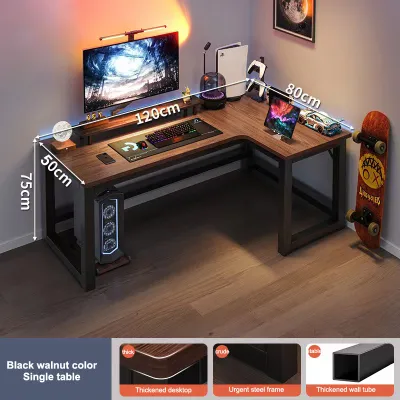
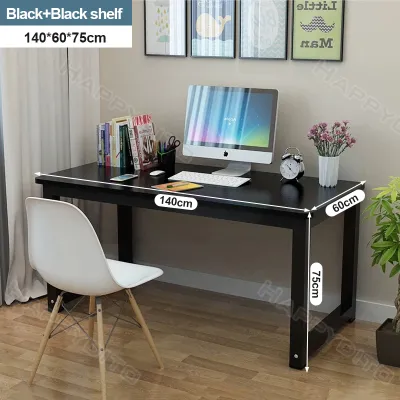
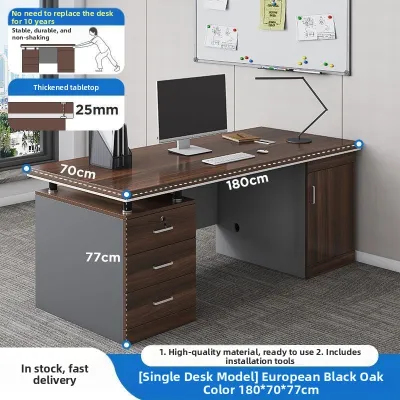
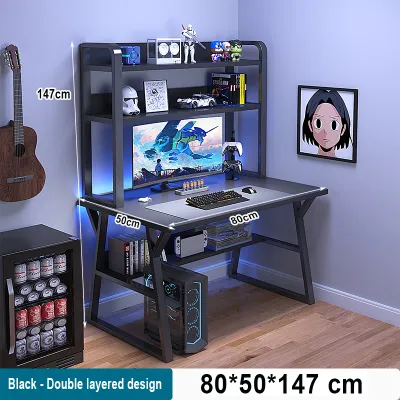
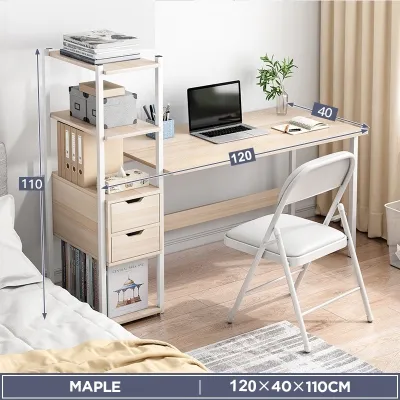
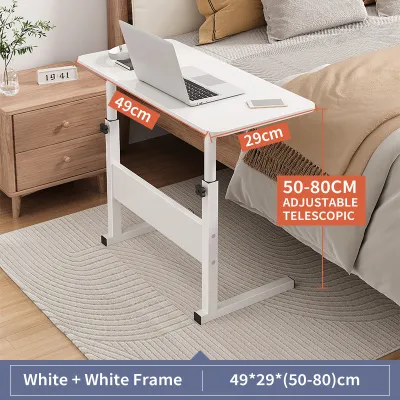
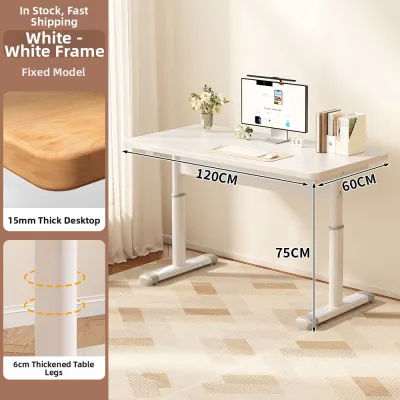
Prices are valid at publication and may change. Please refer to the product page for the latest price.
Next, assess your daily work habits and equipment. A single laptop user has vastly different spatial needs than a software engineer running three monitors, a dedicated microphone, and physical notebooks. If your work requires spreading out physical documents, a small surface will quickly become cluttered and stressful.
Finally, establish your budget and determine if this is a temporary stopgap or a long-term investment. High-quality materials and mechanical components, such as motorized lifting columns or heavy-duty steel hinges, naturally command a higher price. In humid tropical climates, checking the material composition is also vital; untreated particle board can swell or warp when exposed to high humidity, making moisture-resistant finishes or solid wood alternatives worth the extra cost.
Standing Desks: Best for Movement and Ergonomics
Height-adjustable standing desks have become a staple of modern ergonomic workspaces, allowing you to transition between sitting and standing throughout the day. This active movement helps combat the physical fatigue, lower back stiffness, and lethargy that often accompany long hours of sedentary computer work.

When considering a standing desk, your room layout must accommodate its unique physical requirements. Motorized models require reliable access to a grounded power outlet, which means you must plan your desk placement around wall sockets or invest in safe, heavy-duty extension cords. You also need to ensure that cables running from your computer to the floor have enough slack to stretch safely when the desk rises to its maximum height without pulling on ports or creating a tripping hazard.
Stability is a critical factor to verify before purchasing. All standing desks experience some degree of lateral movement or wobble when fully extended to standing heights. To minimize this, check the construction of the frame; dual-motor designs with heavy steel legs and wide leveling feet generally offer greater stability than single-motor or manual hand-crank models.
Before loading your desk with multiple monitors, heavy desktop towers, and desk organizers, always verify the manufacturer’s rated weight capacity. Exceeding this limit can strain the motor, lead to uneven lifting, or cause premature mechanical failure. It is also wise to inspect the tabletop material to ensure it can support clamp-on monitor arms without cracking or bending under the concentrated pressure.
Foldable Desks: Best for Small Spaces and Flexibility
For those living in compact apartments or utilizing multipurpose rooms, a foldable desk offers an elegant way to reclaim your living space at the end of the workday. These desks can be quickly collapsed and tucked away behind a sofa, under a bed, or inside a closet, helping you maintain a healthy boundary between professional hours and personal life.
The primary appeal of a foldable desk is its small footprint and portability. However, this flexibility requires some trade-offs in terms of surface area and structural rigidity. Most foldable models feature lightweight frames and thinner tabletops to make them easy to carry and store. Consequently, they are generally not designed to support heavy dual-monitor mounts, large desktop computers, or aggressive typing styles.
When evaluating a foldable desk, pay close attention to the hinge mechanisms and locking joints. High-quality steel hinges with secure locking pins are essential to prevent the desk from accidentally collapsing or wobbling during use. If you are opting for a wall-mounted drop-leaf style, you must verify the load-bearing capacity of your wall and use appropriate anchors; mounting a desk directly into hollow drywall without securing it to studs can lead to structural damage and equipment failure.
Because these desks are frequently moved and stored, they are highly susceptible to wear and tear. Look for models with scratch-resistant laminate surfaces and powder-coated metal frames that can withstand regular handling. If you live in a high-humidity environment, ensure the metal parts are treated to resist rust, especially if the desk is stored in utility areas or near open windows.
L-Shaped Desks: Best for Multitasking and Large Setups
If your daily workflow involves managing multiple screens, handling physical paperwork, or operating specialized hardware, an L-shaped desk provides the expansive surface area needed to stay organized. By wrapping around your seating position, these desks place a vast amount of workspace within arm’s reach without requiring you to constantly slide your chair side to side.
The dual-surface design allows you to establish distinct functional zones. For example, you can dedicate one side of the “L” entirely to your computer monitors and keyboard, while reserving the other side for writing, reviewing printed documents, or housing secondary equipment like printers and scanners. This physical separation can significantly improve focus and cognitive organization during complex tasks.
However, L-shaped desks demand a significant, permanent footprint. They are typically designed to fit snugly into a corner, but they can also be positioned to project outward into a room to act as a spatial divider. Because of their size and weight, these desks are difficult to relocate once fully assembled. You must carefully measure your room’s dimensions and plan the assembly process, as constructing a large L-shaped desk in a cramped room can be incredibly challenging.
When choosing an L-shaped model, pay close attention to the structural support at the inner corner seam. This area experiences significant stress, especially if you plan to mount monitor arms near the junction. Ensure the frame features robust steel support beams underneath the seam. Additionally, because of the sheer volume of electronics typically placed on these desks, integrated cable management trays or grommet holes are essential to keep cords organized and prevent a cluttered, unsafe workspace.
Quick Comparison: Standing vs Foldable vs L-Shaped Desks
Choosing between these three desk types involves balancing your spatial constraints, work habits, and budget. The table below outlines the key characteristics and trade-offs of each option to help you visualize which desk aligns with your home office requirements.
| Desk Type | Ideal User Profile | Space Requirement | Setup Complexity | Price Tier (₱) |
|---|---|---|---|---|
| Standing Desk | Ergonomics-focused users, active professionals | Moderate (requires power access) | Medium to High (motor assembly) | Mid to High |
| Foldable Desk | Laptop users, compact apartments, temporary setups | Low (collapsible and storable) | Low (minimal or no assembly) | Low to Mid |
| L-Shaped Desk | Multi-monitor users, heavy multitaskers, dedicated offices | High (large corner footprint) | High (multi-panel assembly) | Mid to High |
Note on Weight Capacity: Always verify the specific manufacturer specifications for weight limits before purchasing. Do not rely on general material assumptions, as frame design, joint construction, and motor power vary widely between individual models.
Final Decision Guide: Which Desk Type Fits Your Setup?
To make your final decision, use a structured approach that matches your daily physical reality with the strengths of each desk type.
Choose a Standing Desk if your primary goal is to improve your posture, reduce physical fatigue, and maintain an active lifestyle while working. This option is best if you have a dedicated workspace with easy access to power outlets, and if you are willing to invest the time and budget into a high-quality, stable motorized frame that can safely lift your equipment.
Choose a Foldable Desk if you live in a compact home where rooms must serve multiple purposes throughout the day. This is the ideal choice if your daily work setup is minimal—such as a single laptop and a notebook—and you need the ability to pack away your office completely when your shift ends to reclaim your living space.
Choose an L-Shaped Desk if you are a power user who requires multiple monitors, extensive desk accessories, and dedicated zones for different tasks. This setup is perfect for those with a spacious, dedicated home office who do not plan on moving their furniture frequently and need maximum surface area to stay organized.
Before finalizing any purchase, perform a final physical check of your space. Measure your room’s dimensions, verify that your floor is level (especially important for tall standing desks and heavy L-shaped desks), and ensure that doorways and stairwells can accommodate the delivery packages. Taking these precautions ensures your new desk will integrate seamlessly into your home without unexpected installation headaches.
Frequently Asked Questions (FAQ)
Can I convert a regular desk into a standing desk?
Yes, you can convert a standard desk into a standing workspace by using a desktop riser or converter. These units sit directly on top of your existing desk and feature a gas-spring or motorized mechanism to lift your keyboard and monitor to standing height. This is often a highly cost-effective and convenient alternative to replacing your entire desk. However, before purchasing a converter, you must verify the weight capacity and structural stability of your base desk. A heavy converter loaded with dual monitors can place significant stress on a lightweight or poorly constructed desk, potentially causing it to bow, wobble, or tip over.
What is the best desk shape for a small bedroom?
For a small bedroom, a foldable desk or a compact corner desk is usually the most efficient choice. Foldable desks allow you to reclaim floor space when you are not working, which is crucial in tight sleeping quarters. If you prefer a permanent setup, a small corner desk or a wall-mounted drop-leaf desk can utilize underused areas without blocking walkways. Before purchasing, always measure the clearance needed for your office chair to slide out comfortably. You must also ensure the desk placement does not obstruct wardrobe doors, bedroom doors, or the natural path around your bed.

Community discussion
Share your experience or ask a question. Comments are reviewed before publication.