
Finding the right Sunnyware shoe box size for your closet shelf is a matter of matching your shelf’s physical boundaries with the external dimensions of the organizers and the specific footwear you own. In the Philippines, where tropical humidity can easily damage leather and canvas shoes left in the open, enclosed plastic storage boxes offer an excellent way to protect your collection. However, because closet configurations and shoe sizes vary widely, there is no single universal box that fits every setup. Successful space planning relies on taking accurate measurements of your closet, verifying the manufacturer’s product specifications, and calculating a layout grid before making a purchase. By taking these steps, you can maximize your storage capacity, keep your shoes in pristine condition, and ensure your closet doors close smoothly.
Measure Your Closet Shelf Boundaries First
Before browsing for organizers, you must establish the exact physical limits of your available storage space. Start by clearing your closet shelf completely so you can access every corner. Using a reliable metal tape measure, record the clear width from one side wall to the other, the usable depth from the back wall to the front edge of the shelf, and the vertical clearance between individual shelves. It is crucial to measure the actual usable space rather than the nominal dimensions of the wood or wire shelving, as structural elements often reduce the real storage area.
Pay close attention to physical obstructions that might interfere with placing or removing the boxes. In many built-in wardrobes, sliding door tracks, cabinet door hinges, center support poles, and shelf brackets protrude into the storage zone. If your closet has hanging clothes directly above or adjacent to the shelf, factor in how much those garments drape down or press against the sides. Additionally, always leave a small clearance buffer—ideally a few centimeters of breathing room—at the top and sides of your planned stack. This extra space allows your hands to slide in comfortably to retrieve boxes and promotes air circulation, which is vital for preventing musty odors in humid tropical climates.
Products mentioned in this guide
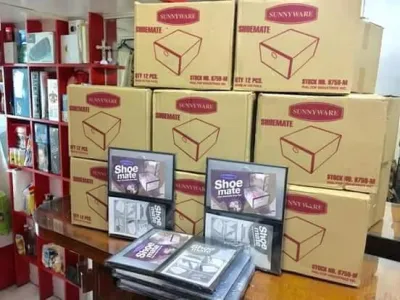
![4pcs set Shoemate S Small ShoeMate Shoebox Size 9 [ Sunnyware 9659-S ]](https://img.lazcdn.com/g/p/1baf12b6ff9254d150295a271b978cd5.jpg_400x400q80.jpg_.webp)
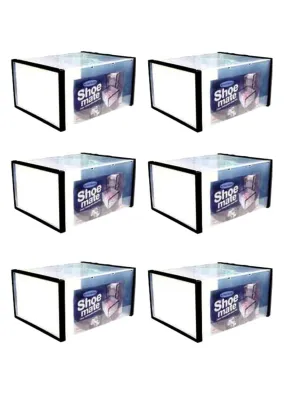
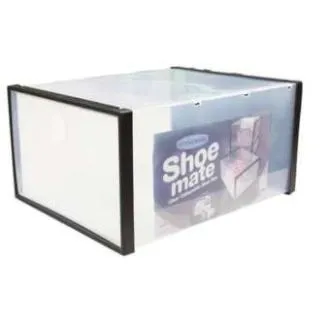
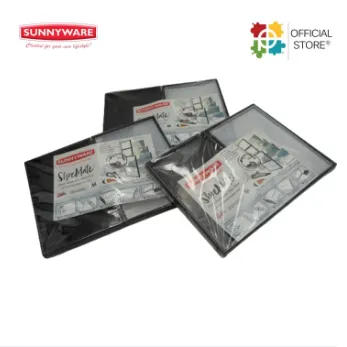
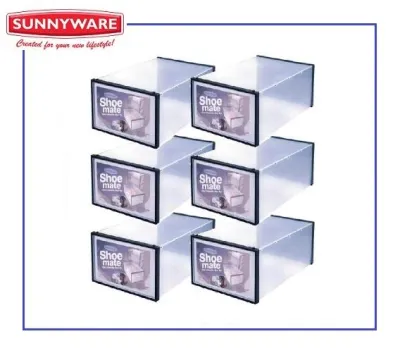
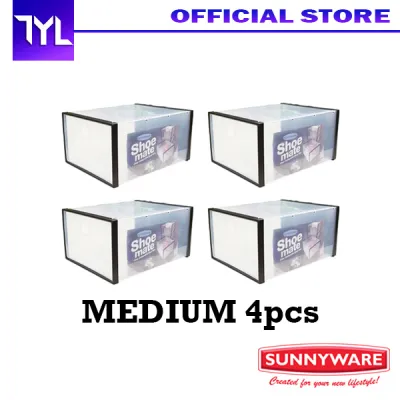
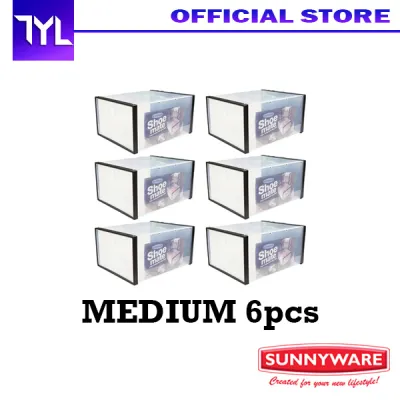
Prices are valid at publication and may change. Please refer to the product page for the latest price.
Verify Sunnyware Shoe Box External Dimensions
Once you have your closet’s exact measurements, the next step is to verify the external dimensions of the specific Sunnyware shoe box models you are considering. Because product lines evolve and different designs serve different purposes, you should always refer to the official product labels, packaging, or manufacturer specifications rather than relying on general estimates. These specifications will provide the precise length, width, and height of each box, allowing you to compare them directly against your shelf measurements.

Keep in mind that Sunnyware offers various styles, including standard sneaker boxes, high-top variations, and drop-front models, each with its own physical footprint. A box designed for flat sandals or low-profile loafers will have a much lower vertical profile than one built to accommodate high-top basketball shoes or ankle boots. Furthermore, you must account for the design elements that facilitate stacking. Many models feature interlocking lids, raised stacking rims, or side-hinge mechanisms that add slightly to the overall external dimensions when the boxes are nested or placed side-by-side. Checking these details on the product label ensures you do not end up with a stack that is slightly too tall or wide for your shelf.
Calculate Shelf Layout and Box Quantity
With your shelf measurements and box dimensions in hand, you can calculate the optimal arrangement and the total number of boxes your shelf can accommodate. To plan the horizontal layout, divide your usable shelf width by the external width of the box. If your shelf is particularly deep, you might also calculate the layout using the box’s length to see if a side-facing orientation allows you to fit more units. This simple division will tell you how many boxes can sit side-by-side in a single row. Always round down to the nearest whole number to ensure you do not force a tight fit that could warp the plastic.
Next, evaluate your vertical stacking limits by dividing the vertical clearance of your shelf by the external height of a single box. When planning vertical stacks, it is essential to consult the manufacturer’s guidelines regarding structural stability and weight limits. Even though plastic organizers are durable, stacking them too high can cause the bottom boxes to bow or tip over, especially if they hold heavier footwear. Creating a simple grid layout on paper or a digital spreadsheet helps you visualize the final setup, ensuring your everyday pairs remain easily accessible without requiring you to dismantle an unstable tower of boxes every morning.
Match Box Styles to Your Footwear Collection
A successful closet organization system must also align with the specific types of shoes you own. Before purchasing your Sunnyware shoe boxes, take inventory of your footwear collection and group them by style and size. You will need to verify that the internal clearance of your chosen box model can comfortably house your bulkiest shoes, such as thick-soled running shoes, high heels, or structured leather shoes, without bending or compressing them. Flat sandals, slippers, and casual slip-ons require far less vertical space and can often be stored in shallower boxes, allowing you to save valuable vertical shelf space.
The accessibility of your shoes is highly dependent on the box style you select. For boxes placed at the bottom of a stack or on high shelves that are difficult to reach, drop-front or side-opening designs are highly advantageous. These styles allow you to retrieve a pair of shoes without lifting the lids of the boxes stacked above them. For shoes that you only wear on special occasions, standard top-lid boxes are perfectly suitable and can be placed in less accessible areas of the closet. Grouping similar shoe types together not only creates a visually cohesive look but also ensures a more stable stacking structure, as boxes of the same model interlock more securely.
Common Closet Space Planning Mistakes
One of the most frequent mistakes in closet planning is ignoring the shelf depth. When boxes protrude past the front edge of the shelf, they can prevent sliding or hinged closet doors from closing properly, creating an untidy appearance and potentially damaging both the doors and the organizers. In walk-in closets or open shelving setups, overhanging boxes can also become tripping hazards or get knocked down easily. Always double-check that the length of the box is fully supported by the depth of the shelf.
Another common oversight is failing to account for the space occupied by shelf support pins, brackets, or corner joints. Forcing a plastic box into a space where it rubs against these metal or wooden supports can scratch the plastic, crack the corners, or make it incredibly difficult to slide the box out. Finally, avoid the temptation to stack boxes all the way to the ceiling or the very top of a deep shelf without verifying the manufacturer’s recommended stacking limits. Overloading a stack compromises the structural integrity of the lower boxes, risking a collapsed pile that could damage your valuable footwear and cause unnecessary frustration.
Frequently Asked Questions (FAQ)
Can I mix different Sunnyware shoe box sizes on the same shelf?
Yes, you can mix different sizes, but you must plan their placement carefully to maintain stability and visual order. While different models may not always interlock perfectly when stacked directly on top of one another, you can place different sizes side-by-side in separate columns. If you must stack different sizes vertically, always place the larger, wider, and heavier boxes at the bottom of the stack to establish a stable base, and keep the lighter, smaller boxes on top. Checking the interlocking compatibility of the lids and bases on the manufacturer’s product labels will help you determine if different models can be safely stacked together.
Do Sunnyware shoe boxes require assembly before placing them on the shelf?
Many plastic shoe organizers, including certain Sunnyware models, are shipped flat-packed to save space and protect the components during transit. Before you begin organizing your closet, check the packaging or the included instruction manual to see if assembly is required. Most designs utilize a simple folding or snapping mechanism that allows you to assemble each box in a few minutes without the need for specialized tools. It is highly recommended to assemble all your boxes in a spacious, open area outside of your closet first, ensuring every joint is securely locked in place before you begin arranging them on your shelves.

Community discussion
Share your experience or ask a question. Comments are reviewed before publication.