
When trying to stay cool during warm, humid nights in the Philippines, your choice of mattress material plays a decisive role in how deeply you sleep. Traditional woven tatami mattresses and natural latex mattresses sleep significantly cooler than traditional memory foam. Tatami mats leverage thin profiles and natural fibers to maximize ventilation, while latex relies on an open-cell structure and engineered air channels to dissipate body heat. Traditional memory foam tends to trap heat, though modern open-cell or gel-infused formulations can improve performance when paired with a highly breathable cover.
Choosing the right sleeping surface is not just about picking a material name; it requires understanding how your bed interacts with your room’s temperature and humidity. Whether you rely on a steady air conditioner or prefer sleeping with an electric fan and open windows, the way a mattress manages heat conduction and airflow will determine your comfort. By examining the physical properties of tatami, latex, and memory foam, you can select a surface that aligns with your body’s cooling needs and your home’s environment.
How Mattress Materials Actually Regulate Heat
To understand why some mattresses feel like ovens while others stay refreshingly cool, you must look at how heat moves between your body and your bed. Heat regulation relies on two primary mechanisms: conduction and convection. Conduction occurs when your body heat transfers directly into the mattress material. Convection, or air circulation, occurs when warm air escapes away from your body and is replaced by cooler ambient air. If a material cannot circulate air, it acts as an insulator, storing your body heat and radiating it back to you throughout the night.
Products mentioned in this guide
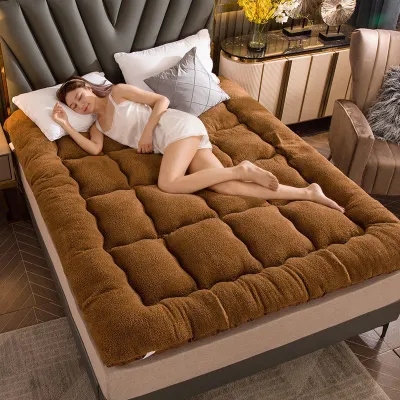
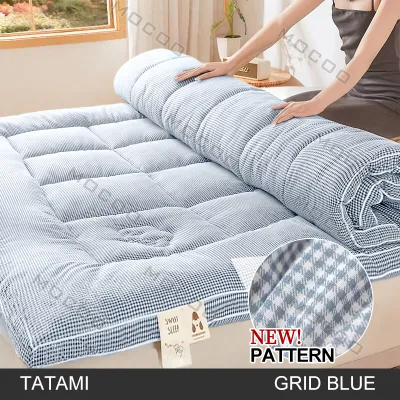
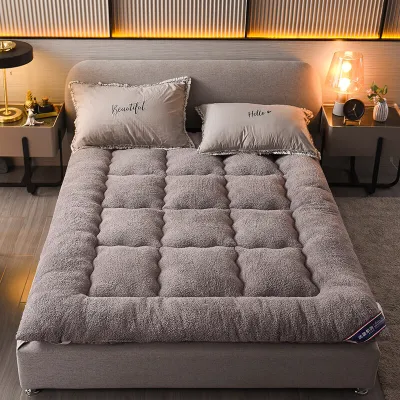
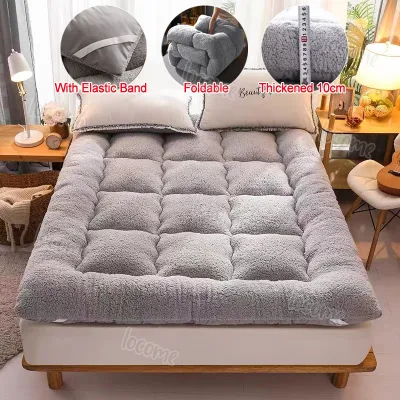
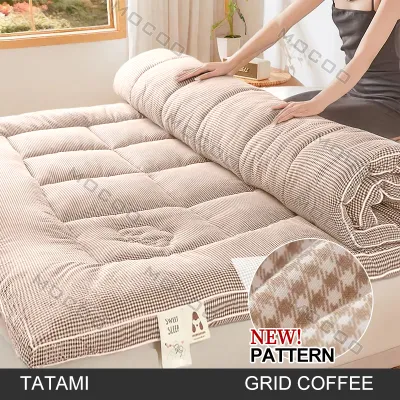
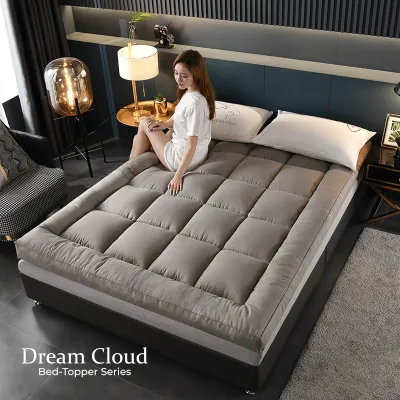
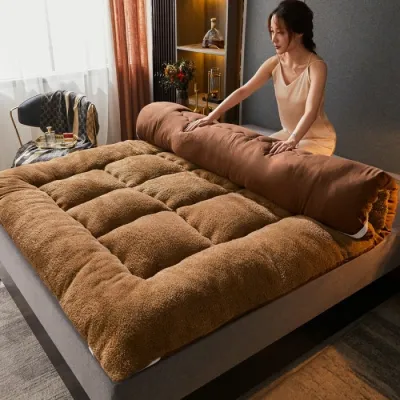
Prices are valid at publication and may change. Please refer to the product page for the latest price.
Material density and overall mattress thickness also play major roles in deep heat trapping. Thick, dense mattresses contain more physical mass, which means they can absorb and store a larger volume of thermal energy. When you sink deeply into a thick mattress, the material wraps around your body, reducing the surface area exposed to the air and blocking natural ventilation. Conversely, thinner or firmer sleeping surfaces keep your body elevated, allowing air to flow freely across your skin.
Finally, the mattress cover is the first barrier to heat transfer. Even if a mattress has an advanced cooling core, a thick, tightly woven synthetic cover can block airflow and trap moisture. For tropical climates, a cover made from breathable, moisture-wicking fibers is essential to allow heat to escape into the deeper layers of the mattress or dissipate into the room.
Tatami Mattresses: Breathability and Low-Profile Cooling
Originating as traditional Japanese flooring, tatami mattresses have become popular in tropical regions due to their exceptional breathability and minimalist design. Traditional tatami is crafted from woven rush grass or similar natural fibers like rattan, wrapped around a compressed straw or wood-chip core. The natural weave of rush grass contains thousands of microscopic air pockets that naturally absorb moisture from the air and release it when the environment dries out, helping to regulate local humidity around your body.

The low-profile, thin design of a tatami mattress—typically ranging from two to five centimeters in thickness—prevents the deep heat accumulation common in thick foam beds. Because you do not sink into a tatami mat, almost your entire body remains exposed to the ambient air currents in your bedroom. This makes tatami an excellent choice for those who sleep with electric fans, as the moving air can easily cool the skin without being blocked by contouring foam.
However, using a tatami mattress in a highly humid tropical climate requires specific care. Because natural fibers absorb sweat and environmental moisture, placing a tatami mat directly on a solid floor or a non-breathable platform can trap dampness underneath. Over time, this trapped moisture can lead to mold, mildew, and fiber degradation. To prevent this, tatami must be paired with a slatted bed frame or elevated platform that allows air to circulate underneath, and it should be periodically aired out in a dry, shaded area.
Latex Mattresses: Open-Cell Structure and Airflow
Natural latex is harvested from the sap of rubber trees and processed into a highly resilient, supportive foam. Unlike synthetic polyurethane foams, natural latex possesses an inherent open-cell structure. At a microscopic level, this structure resembles an interconnected web of tiny air passages rather than a series of closed bubbles. This allows air to flow through the material when you move, pushing warm air out and drawing cooler air in.
To enhance this natural breathability, manufacturers mold latex cores with a grid of vertical pinholes. These aerated channels run from the top of the mattress to the bottom, creating a highly effective pathway for heat dissipation. When you shift positions during sleep, the mattress acts like a bellows, actively pumping warm air out through the sides and bottom of the bed. This makes latex highly responsive to temperature changes, preventing the surface from warming up to match your body temperature.
Despite these cooling benefits, the thickness and density of a latex mattress still require careful consideration. Extra-thick latex mattresses, particularly those exceeding 25 centimeters, can trap heat if they feature high-density comfort layers without proper zoning or ventilation channels. When shopping for a latex mattress in a tropical climate, look for models that feature zoned aeration—where pinholes are larger or more concentrated in high-heat areas like the shoulders and hips—to ensure consistent airflow across the entire sleeping surface.
Memory Foam: Heat Retention vs. Cooling Technologies
Traditional memory foam, or viscoelastic foam, is notorious for retaining heat in warm climates. Because memory foam is engineered to soften in response to body heat and pressure, it contours closely to your shape. This deep contouring increases the contact area between your skin and the bed, sealing off airflow. Furthermore, traditional memory foam has a closed-cell structure, meaning the individual air bubbles within the foam are sealed off from one another, trapping warm air inside the mattress core.
To address this inherent limitation, manufacturers have developed various cooling technologies. Gel-infused memory foam incorporates liquid gel beads or gel layers designed to absorb initial body heat and conduct it away from the surface. Other variations use copper or graphite infusions, which are highly conductive materials intended to accelerate heat transfer. Open-cell memory foam formulations break the cell walls during manufacturing, creating pathways for air to move more freely than in traditional closed-cell designs.
While these technologies can noticeably improve surface temperature regulation, their effectiveness is often limited by the surrounding environment. In a room without air conditioning, gel-infused foam will eventually warm up to match the ambient room temperature, losing its cooling advantage after a few hours of continuous sleep. Additionally, if the mattress cover is made of thick polyester or lacks moisture-wicking properties, it will block your body heat from reaching the cooling gel layers, rendering the technology ineffective.
Decision Framework: Which Material Fits Your Sleep Profile?
Choosing between these three materials requires balancing your comfort preferences, maintenance habits, and bedroom setup. The following comparison matrix summarizes how each material performs across key cooling and structural dimensions:
| Material | Airflow Mechanism | Firmness Profile | Ideal Sleeper Type | Maintenance Needs |
|---|---|---|---|---|
| Tatami Mattress | Natural woven fibers & thin profile | Extremely firm | Back/stomach sleepers, minimalist setups | High; requires regular airing to prevent mold |
| Natural Latex | Open-cell structure & aerated pinholes | Medium-firm to firm with bounce | Hot sleepers needing pressure relief | Low to medium; needs a slatted frame |
| Memory Foam | Conduction via gel/open-cell tech | Soft to medium with deep contouring | Side sleepers, motion isolation seekers | Low; requires rotation but resists moisture well |
To help narrow down your choice, consider which of the following profiles matches your sleeping habits:
Choose Tatami if:
- You prefer an extremely firm, traditional sleeping surface that keeps your body fully elevated.
- Your bedroom relies primarily on electric fans or natural cross-ventilation rather than continuous air conditioning.
- You are willing to perform regular maintenance, such as lifting the mattress to air it out and keeping your room's humidity levels in check.
Choose Latex if:
- You want a balance of deep pressure relief and active cooling without sinking too deeply into the bed.
- You prefer a responsive, bouncy feel that makes it easy to turn over during the night.
- You want a durable, natural material that maintains its structural integrity and airflow properties for many years.
Choose Memory Foam if:
- You require deep contouring to relieve joint pain and prefer a "hugged" sensation when sleeping.
- You sleep in an air-conditioned room where the ambient temperature can help keep the foam cool.
- You can verify that the mattress features open-cell foam, cooling gel infusions, and a highly breathable, lightweight cover.
Beyond the Mattress: Optimizing Your Sleep Environment
No mattress material can keep you cool if the rest of your sleeping environment is working against it. The foundation supporting your mattress is just as important as the bed itself. Placing any mattress, especially a tatami mat or a thick latex bed, on a solid wooden platform or directly on the floor blocks the downward escape of heat and moisture. Opt for a slatted bed frame with gaps of five to eight centimeters to allow air to flow freely beneath the mattress, carrying away trapped warmth.
Your choice of bedding also dictates how much heat reaches your mattress. Synthetic sheets, such as those made from polyester or microfiber, trap heat and sweat against your skin, neutralizing the cooling properties of your bed. Instead, choose lightweight, breathable sheets made from natural fibers like long-staple cotton, linen, or bamboo. These materials naturally wick moisture away from your body, allowing your skin’s natural cooling process to work efficiently.
Finally, managing your bedroom’s overall climate is essential for optimal sleep. In high-humidity environments, using a dehumidifier can make a significant difference in how cool your mattress feels, as dry air allows sweat to evaporate more quickly. If you use an air conditioner, setting a ceiling fan or a standing fan to circulate air across the room will help dissipate the heat rising from your mattress, ensuring a comfortable, sweat-free night.
Frequently Asked Questions (FAQ)
Do I need a special bed frame for a tatami mattress in a humid climate?
Yes, a tatami mattress requires a highly breathable foundation to prevent mold and mildew growth in humid tropical climates. Placing a thin tatami mat directly on a solid floor or a solid platform bed traps body sweat and environmental moisture beneath the woven fibers. To ensure proper air circulation, use a slatted bed frame made of solid wood or metal, with slats spaced no more than five to eight centimeters apart. This elevation allows air to flow continuously under the mat, evaporating any absorbed moisture and extending the lifespan of the natural fibers.
Will a cooling mattress topper fix a hot memory foam mattress?
A cooling mattress topper can improve surface temperature regulation, but it cannot completely fix a hot memory foam mattress. A topper made of natural latex, gel-infused open-cell foam, or breathable wool can create a helpful barrier between your body and the heat-retaining memory foam beneath. However, if the base memory foam mattress is exceptionally thick and dense, it will still absorb and hold onto your body heat over the course of the night. While a topper is a cost-effective temporary solution, it works best when paired with breathable sheets and a well-ventilated room.

Community discussion
Share your experience or ask a question. Comments are reviewed before publication.