
A 4-layer metal rack can be an excellent storage solution for a home office or study, but its actual weight capacity depends entirely on its structural design, material thickness, and assembly quality. While a light-duty wire rack might only support 15 to 20 kilograms per shelf, a heavy-duty boltless steel rack can easily handle 100 kilograms or more per tier. Because books, paper reams, and office equipment are deceptively heavy, understanding these limits is essential to prevent structural failure, bowing, or dangerous tip-overs in your workspace.
To determine if a specific rack can safely hold your collection, you must compare the manufacturer’s rated weight limits against the actual weight of your items. This guide explains how to interpret those specifications, calculate your storage load, arrange your items safely, and perform essential structural checks to keep your study organized and secure.
Decoding Manufacturer Weight Specifications
Before placing a single book on your new shelf, you must locate and understand the manufacturer’s official weight ratings. These specifications are typically found on the product packaging, the assembly instruction manual, or the official product listing on local ecommerce platforms. Manufacturers usually provide two distinct figures: the maximum capacity per shelf and the total weight capacity for the entire four-layer unit. Never assume that a high total capacity means you can stack all that weight onto a single tier; doing so will overload the individual shelf and cause it to collapse.
Products mentioned in this guide

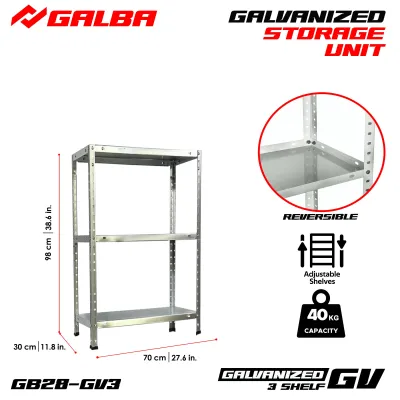
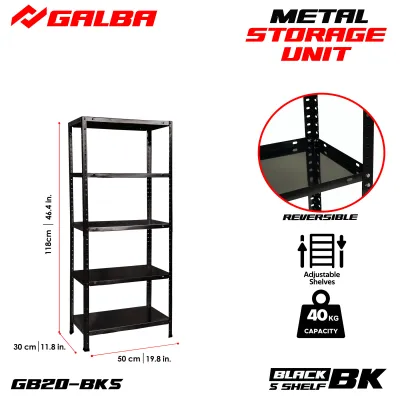
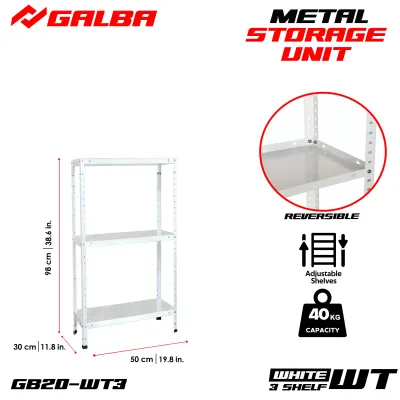
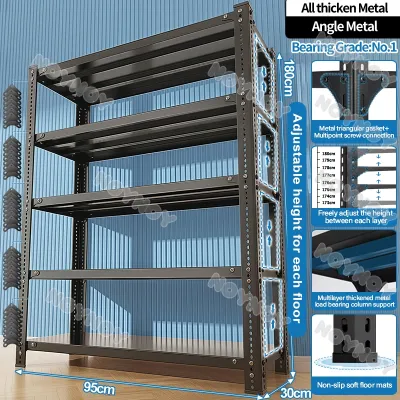
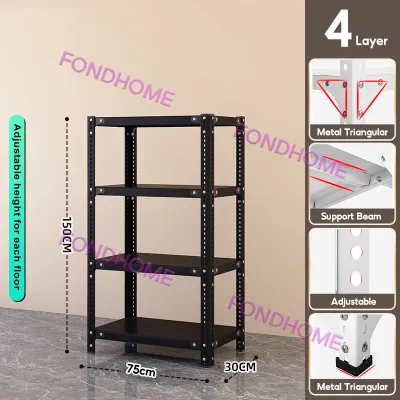
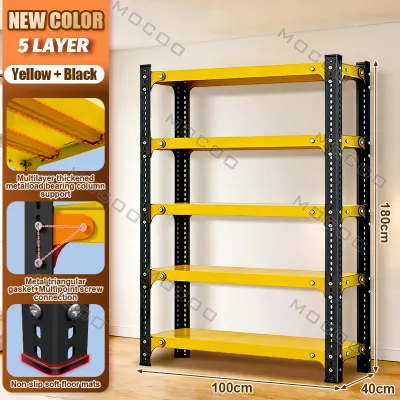
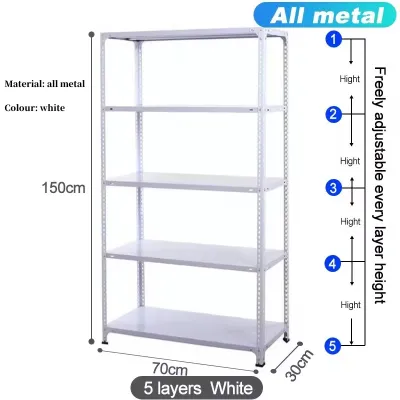
Prices are valid at publication and may change. Please refer to the product page for the latest price.
When reading these specifications, look for the term “Uniform Distributed Load” (UDL). This rating assumes that the weight of your books and office supplies will be spread evenly across the entire surface of the shelf. If a shelf is rated for 50 kilograms UDL, it cannot safely support a single 50-kilogram object placed directly in the center. Concentrated point loads put intense stress on a localized area, which can bend the metal frame or cause the shelf panel to buckle long before you reach the official weight limit.
It is also important to recognize that the word “metal” is not a universal guarantee of strength. Metal racks come in various forms, including thin wire shelving, hollow steel tubes, and thick slotted angle iron. A lightweight decorative metal rack designed for light office accessories will have a fraction of the capacity of an industrial-grade steel shelving unit. Always rely on the verified structural specifications provided by the manufacturer rather than making assumptions based on the visual appearance of the metal.
Estimating Your Load: Books and Office Equipment
Books and office supplies are among the densest items you can store in a home. A single shelf filled tightly with heavy textbooks, legal binders, or reference manuals can easily exceed the weight capacity of a standard light-duty organizer. To avoid overloading your rack, you should estimate the total weight of your inventory before arranging it on the shelves.

An easy way to calculate this is by using a standard household scale. Weigh a sample stack of your typical books, paper reams, or binders to establish an average weight per shelf-inch or per book. For example, a standard ream of A4 printer paper weighs approximately 2.5 kilograms, and a row of five thick hardcover textbooks can easily exceed 7 kilograms. Multiply these sample weights by the total length of the shelves to get a realistic estimate of your planned load.
Do not forget to account for heavy office equipment like desktop printers, paper shredders, or flatbed scanners. These items not only carry significant weight but also concentrate that weight in a small footprint. If you plan to place a printer on one of the layers, check its product manual for its exact weight and ensure the shelf’s UDL rating can comfortably accommodate it with room to spare.
Finally, always build a safety margin into your calculations to account for future accumulation. Book collections and office archives tend to grow over time. Leaving a buffer of at least 20 percent below the manufacturer’s maximum weight limit ensures that your rack remains stable and safe even as you add new novels, files, or office accessories to your collection.
Safe Loading Strategies to Prevent Tipping and Sagging
How you distribute weight across your 4-layer metal rack is just as important as the total amount of weight you place on it. Proper weight distribution keeps the rack stable, protects the metal from warping, and minimizes the risk of the unit tipping forward into your living space.
The golden rule of shelving safety is to place your heaviest items on the bottom layer. Storing heavy encyclopedia sets, boxes of printer paper, and heavy filing boxes at the very bottom lowers the unit’s center of gravity. This simple adjustment dramatically reduces the risk of the rack tipping over if it is accidentally bumped or during minor seismic vibrations, which are common in some regions. As you move up the rack, the items should become progressively lighter, leaving the top shelf for lightweight decorative items, small stationery organizers, or empty binders.
Within each individual shelf, always distribute the weight evenly from left to right and from front to back. Avoid clustering all your heavy books in the exact middle of the shelf, as this concentrates the stress on the weakest part of the metal span. Instead, place heavier books near the vertical support posts at the sides, where the frame is strongest, and place lighter items toward the center.
If you notice any mid-span bowing or sagging on a shelf, it is a clear sign that the weight is either too heavy or poorly distributed. Over time, even minor sagging can permanently deform the metal, weakening the entire structure and increasing the likelihood of a sudden collapse. If sagging occurs, immediately remove some items and redistribute the remaining load.
Structural Checks and Anti-Tip Safety Measures
A metal rack’s weight capacity is only as reliable as its assembly. Even the sturdiest steel rack can fail if the components are not put together correctly. During assembly, pay close attention to the locking clips, screws, bolts, or cross-braces. Ensure that every connection is fully seated, tightened, and locked into place according to the instruction manual. For boltless keyhole-style racks, use a rubber mallet to gently tap the beams into the lowest part of the slots to guarantee a secure joint.
Once the rack is assembled and loaded, perform a thorough physical inspection. Check that the unit stands perfectly level on your floor. In tropical climates where high humidity can affect flooring materials, or on slightly uneven tiled floors, use adjustable leveling feet if your rack has them. Look closely for any visible deformation, bowing, or stress marks on the metal shelves and vertical posts. If you notice any twisting in the frame, unload the rack immediately to inspect the joints.
For maximum safety, especially in homes with children or pets, you should secure the 4-layer rack to the wall using anti-tip anchors. Tall, narrow metal racks loaded with books can easily become top-heavy if someone attempts to climb them or pulls on a shelf. Most heavy-duty racks include wall-mounting hardware, but if yours did not, you can purchase universal anti-tip straps or L-brackets from a local hardware store. Anchoring the rack to a wall stud or solid concrete wall provides an essential layer of protection against accidental tip-overs.
Frequently Asked Questions (FAQ)
Can I reinforce a metal shelf if it starts to sag?
Adding makeshift supports, such as wooden planks or metal bars, to a sagging shelf is not recommended. These modifications can void the manufacturer’s warranty and often create uneven stress points that can damage other parts of the frame. If a shelf begins to deform under load, it has reached its structural limit. You should immediately unload the shelf, inspect it for permanent damage, and either reduce the weight or replace the unit with a higher-capacity model.
Does thicker metal always mean a higher weight limit?
While thicker metal generally provides more rigidity, a rack’s overall weight capacity is determined by its entire structural design. The engineering of the frame, the presence of support channels under the shelves, the quality of the joints, and the use of rear cross-bracing all play critical roles in load capacity. A well-engineered rack made of high-tensile, thinner steel can sometimes support more weight than a poorly designed rack made of thicker, low-grade sheet metal. Always rely on the manufacturer’s certified weight ratings rather than visual thickness alone.

Community discussion
Share your experience or ask a question. Comments are reviewed before publication.