
Finding the perfect round dining table involves balancing spatial constraints with the need for comfortable hosting. To seat 6 to 10 people, you will need a table diameter ranging from 54 inches to 84 inches. Specifically, a 54-inch to 60-inch table comfortably hosts 6 people, a 60-inch to 72-inch table accommodates 8, and a 72-inch to 84-inch table is required for 10 diners. Choosing the right size ensures your guests can dine, converse, and move without feeling cramped, while keeping your dining room functional.
Selecting the correct size requires looking beyond simple seat counts. You must also consider chair designs, base structures, and the physical clearances of your dining room. By understanding how these dimensions interact, you can select a round dining table that serves as a comfortable, welcoming centerpiece for daily meals and large family gatherings alike.
Standard Diameter Ranges for Seating 6 to 10 People
When matching table diameters to seating capacity, the baseline dimensions must accommodate both the physical width of the diners and the items on the table. For a group of 6 people, a table diameter of 54 to 60 inches (137 to 152 cm) is the industry standard. If you expect to host up to 8 people regularly, you should look for a diameter of 60 to 72 inches (152 to 183 cm). For large gatherings of 10 people, a table diameter of 72 to 84 inches (183 to 213 cm) is necessary to keep everyone comfortable.
Products mentioned in this guide
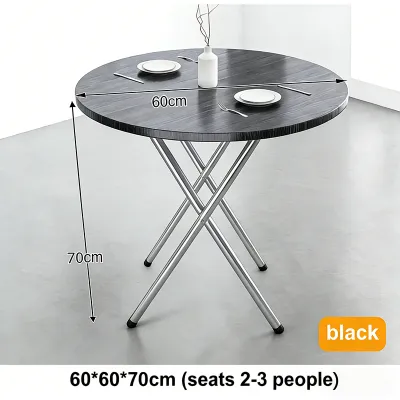

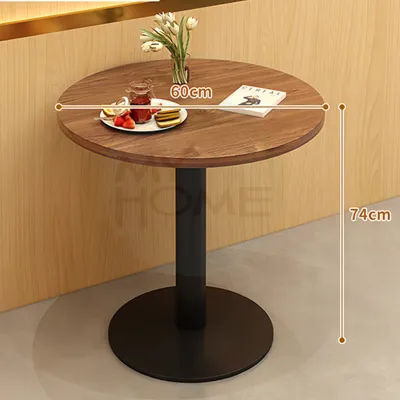
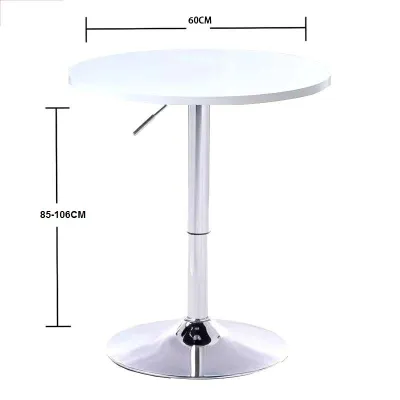
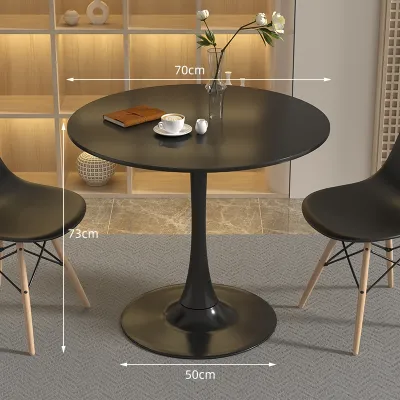
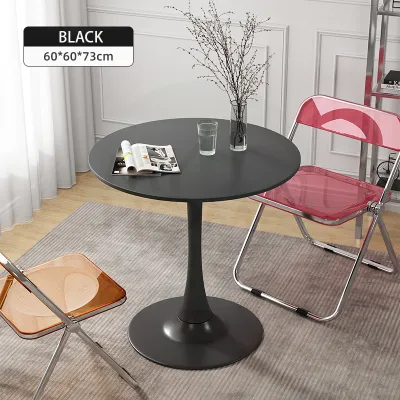
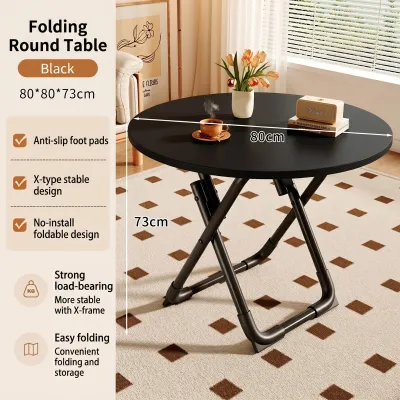
Prices are valid at publication and may change. Please refer to the product page for the latest price.
To understand these ranges, apply the “comfort factor” rule of thumb, which allocates 24 to 30 inches (61 to 76 cm) of table edge perimeter per person. This perimeter measurement ensures that diners have enough elbow room to eat without bumping into their neighbors and sufficient space for standard place settings. For example, a 60-inch round table has a perimeter of approximately 188 inches. Dividing this by 6 guests yields a generous 31 inches of edge space per person, whereas dividing it by 8 guests reduces the edge space to a tighter 23.5 inches per person.
Your choice of dining chairs also dictates where you should aim within these diameter ranges. Standard armless dining chairs typically measure 18 to 20 inches in width, allowing them to fit easily within the lower end of the recommended table diameters. In contrast, armchairs or wide-profile upholstered chairs require 22 to 26 inches of width. If you plan to use armchairs, you must select a table at the upper end of the diameter spectrum to prevent the chair frames from clashing beneath the table edge.
Finally, distinguish between formal banquet-style seating and daily dining comfort. Formal events often utilize tighter spacing, sometimes squeezing guests into 20 to 22 inches of perimeter space because courses are served sequentially and fewer platters sit on the table. For daily residential use, however, you need the upper end of the ranges. This extra space accommodates shared serving bowls, drinkware, centerpieces, and the casual, relaxed posture of family and friends.
Measuring Your Space: Clearances and Room Dimensions
Even the most beautiful table will fail to provide a good dining experience if it crowds the room. To ensure functional traffic flow, apply the “pull-out” rule of thumb. This rule requires a minimum of 36 inches (91 cm) of clear space from the table’s edge to the nearest wall, sideboard, or architectural obstacle. This clearance allows guests to slide their chairs back, stand up, and sit down easily without striking surrounding surfaces.

In high-traffic areas, you must plan for walkway clearances beyond the basic pull-out space. If your dining area serves as a primary pathway through the home, or if it sits adjacent to a busy kitchen entrance or a serving station, add an extra 12 to 24 inches (30 to 60 cm) to the clearance zone. This ensures that someone can walk behind a seated guest without forcing them to tuck their chair in or lean forward.
To determine the maximum table diameter your room can handle, use a simple formula. Measure the length and width of your dining space in inches, select the smaller dimension of the two, and subtract 72 inches (which accounts for the 36-inch clearance required on opposite sides of the table). For example, if your dining room’s narrowest wall-to-wall dimension is 12 feet (144 inches), subtracting 72 inches leaves you with a maximum allowable table diameter of 72 inches. If the room features a buffet or console table, measure from the front edge of that furniture piece rather than the wall.
Before finalizing your purchase, perform critical delivery and installation checks. Large round tables, particularly solid-top models measuring 72 inches or more, cannot be disassembled into smaller pieces like rectangular tables often can. You must verify that the tabletop can physically clear standard doorways, tight stairwell turns, and especially condominium elevators, which are common in urban areas like Metro Manila. Measure the diagonal height of your entryways and the interior dimensions of your building’s elevator cabin to ensure the delivery team can safely transport the table to your dining room.
Pedestal vs. Leg Bases: Maximizing Seating Comfort
The structural base of a round dining table directly influences its real-world seating capacity and legroom. Central pedestal bases are highly recommended for maximizing seating because they eliminate the perimeter legs that define four-legged tables. Without corner legs blocking the perimeter, you can arrange chairs flexibly around the entire circumference, making it much easier to slide in an extra guest when necessary.
For configurations seating 8 to 10 people, a pedestal base is almost always the superior choice. On a four-legged round table, the legs are often angled or set inward, which inevitably forces certain guests to straddle a table leg during dinner. A central pedestal keeps the entire perimeter clear, providing uniform legroom for every seat and allowing chairs to tuck in completely when the table is not in use.
However, large-diameter pedestal tables present unique engineering and stability challenges. As the tabletop extends to 72 or 84 inches, any weight applied to the outer edge—such as a guest leaning heavily on their elbows—can cause the table to tip if the base is not sufficiently wide or heavy. When shopping for large round tables, look for designs featuring a heavy cast iron, steel, or solid hardwood pedestal with a wide, flared footprint or a weighted base plate to ensure structural stability.
To ensure your chairs fit properly, always cross-reference the pedestal’s base footprint with your chair dimensions. Some pedestal designs feature wide, sculptural columns or sprawling trestle legs that, while stable, can still obstruct feet or prevent chairs with low stretchers from sliding fully under the table. Measure the height and width of the pedestal base at floor level and compare it to the clearance space between your dining chair legs.
Common Sizing and Layout Mistakes to Avoid
One of the most frequent errors when buying a large round dining table is failing to account for chair armrests. Armchairs require more lateral space along the table edge and often cannot tuck under the table apron if the clearance is too low. This forces the chairs to remain permanently pulled out, which narrows your walkways and disrupts the visual flow of the room. Always measure the distance from the floor to the underside of the table apron to ensure your chair arms can slide underneath.
Another common mistake involves incorrect area rug sizing. An area rug under a dining table must be large enough to keep all chair legs on the rug, even when guests pull their chairs out to sit down or stand up. This means the rug should extend at least 24 to 30 inches (61 to 76 cm) beyond the table’s edge on all sides. For a 60-inch round table, you will need a circular or square rug that is at least 108 to 120 inches (9 to 10 feet) in diameter; a smaller rug will cause chair legs to catch on the edge, creating a tripping hazard.
Avoid the temptation to overestimate capacity by assuming you can easily squeeze extra chairs around the table for daily use. While you can occasionally add a seat for a temporary guest, planning for a permanent setup that crowds your diners compromises the comfort of everyone at the table. If you regularly host 8 people, buy a table designed for 8 rather than attempting to force 8 chairs around a 54-inch table built for 6.
Finally, consider the visual weight of a large round table within your space. A solid, dark wood 72-inch table can easily dominate a room, making a medium-sized or open-concept space feel cramped even if the physical clearances are technically correct. If you are concerned about visual clutter, look for tables made with lighter-colored materials, glass tops, or slender metal pedestal bases. In warm, humid tropical climates, choosing lighter finishes like ash, white oak, or natural stone can help keep the dining area feeling airy, open, and cool.
Frequently Asked Questions (FAQ)
Can an extendable round table comfortably seat 10 people?
Yes, an extendable round dining table can comfortably seat 10 people, but it is important to understand how the shape changes. When you add extension leaves to a round table, the top typically transforms into an oval shape. This oval configuration provides the extra length needed for 10 seats while keeping the width manageable, preventing the table from overwhelming the center of the room.
Before purchasing, verify that the table’s base mechanism is sturdy enough to support the extended ends without sagging. Many high-quality extendable tables feature central support legs or heavy-duty steel slides designed specifically to handle the weight of the leaves. Additionally, make sure to measure your room using the fully extended oval dimensions to guarantee you still have the required 36 inches of clearance around the entire perimeter.
Is a 60-inch round table too big for just 6 people?
A 60-inch round table is not too big for 6 people; in fact, it provides a very spacious and luxurious dining experience with plenty of room for individual place settings, glassware, and decorative centerpieces. This size allows guests to sit comfortably without any risk of bumping elbows, making it excellent for long, leisurely dinners.
However, a potential drawback of a 60-inch diameter is the physical distance it creates across the center of the table. With the center point sitting 30 inches away from each diner, passing food across the table can become difficult. To solve this issue and make sharing dishes easier, consider adding a rotating Lazy Susan to the center of the table, which is a highly practical and popular addition for large family-style meals.

Community discussion
Share your experience or ask a question. Comments are reviewed before publication.