
The ideal size for a folding low table on a small balcony is not a single fixed number; it is determined by your balcony’s net usable floor area, your seating choice, and the physical clearance needed to move around safely. For a typical compact balcony, a table with a surface area of roughly 60 by 40 centimeters often strikes the right balance, but the true fit depends on how much space remains once you subtract structural obstacles and account for the table’s folded profile. By focusing on spatial math rather than guesswork, you can select a piece that serves your morning coffee or laptop sessions without turning your outdoor escape into an impassable obstacle course.
Measure Your Balcony's Usable Space
To find the right table size, you must first determine the actual floor space you can use. Grab a tape measure and record the total length and width of your balcony floor, measuring from the inner walls directly to the base of the railing. This total area represents your starting point, but it is rarely the actual space available for furniture.
Next, identify and subtract the footprint of any permanent fixtures. In many apartments and condominiums, the balcony floor is partially occupied by air conditioning condenser units, heavy built-in planters, or thick concrete railing bases. Sliding door tracks and drainage grates also restrict where table legs can safely rest.
Products mentioned in this guide
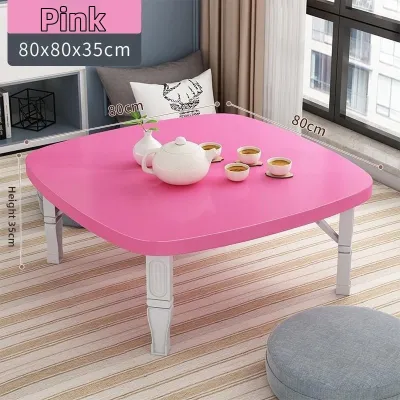
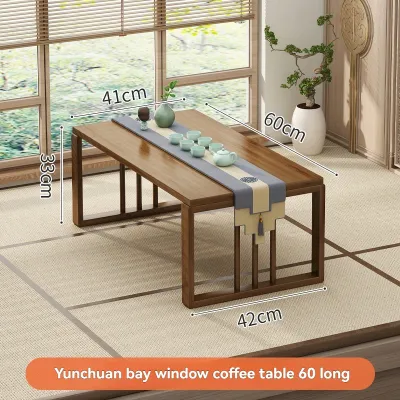
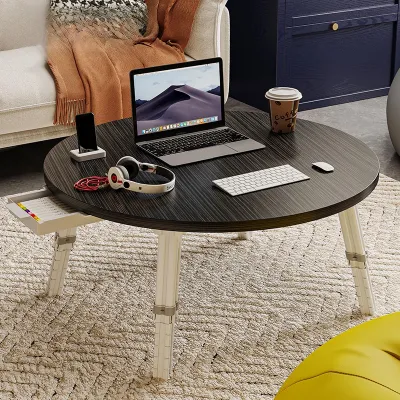
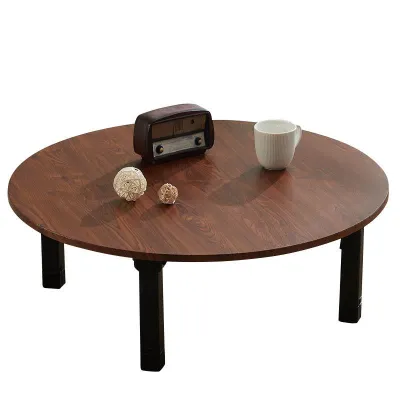
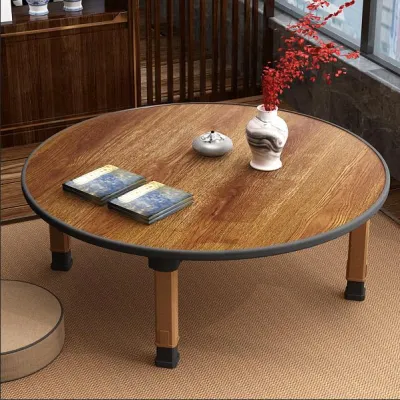
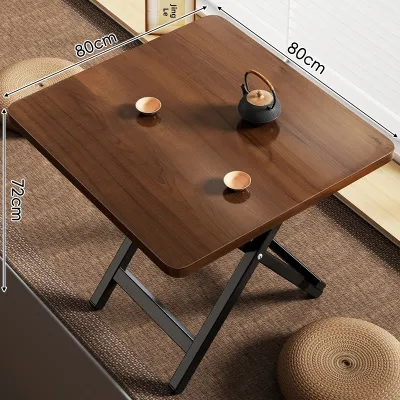
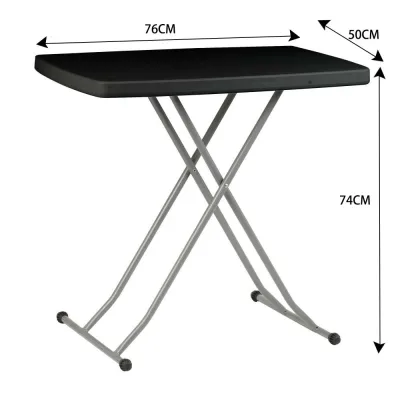
Prices are valid at publication and may change. Please refer to the product page for the latest price.
Subtracting these obstacles gives you the net usable area. This is the true boundary for your layout. If your net usable width is narrow, a table that extends too far from the wall will block your exit, regardless of how compact it looked online. Always base your purchase decisions on this net measurement rather than the gross floor plan of your unit.
Match Table Dimensions to Your Balcony Activities
Once you know your net usable area, define how you intend to use the table. A solo morning coffee or a quick evening drink requires very little surface area—often just a small square or round top of 40 to 50 centimeters. If you plan to use the space as a temporary laptop workstation or for dining with a partner, you will need a wider surface, typically starting at 60 to 80 centimeters in length.

Seating height is the next critical factor, especially for low tables. If you prefer sitting on floor cushions, tatami mats, or very low stools, the table height must match your seated posture. Measure the thickness of your cushions when compressed under your weight, and ensure there is enough vertical clearance between the cushion top and the underside of the tabletop for your legs to slide under comfortably.
Visual proportions also play a major role in how comfortable the space feels. A table that physically fits but takes up more than a third of the net usable floor area will make a small balcony feel cramped and cluttered. Aim for a balanced scale where the table feels like an intentional accent rather than an oversized centerpiece that dominates the entire outdoor view.
Plan for Clearance and Movement Pathways
A folding table is only practical if you can move around it safely when it is fully deployed. Start by mapping the swing radius of your balcony doors, screen doors, or windows. The table must be positioned completely outside this arc so that you can step onto the balcony or retreat indoors quickly without having to fold the table first.
You also need to preserve a clear walking path. In tight outdoor spaces, a minimum clearance path of 50 to 60 centimeters is recommended to allow a person to walk past comfortably without shuffling sideways. If your balcony is narrow, placing the table flush against a wall or railing can help keep the main pathway open.
Do not forget to calculate the space required for your body when seated. When you sit down, your body and your seating choice extend beyond the edge of the table. Ensure there is enough push-back space behind your cushion or stool so you do not find yourself pressed uncomfortably against the railing or blocking the entryway when you sit down to relax.
Evaluate Folding Mechanisms and Storage Footprint
The magic of a folding low table lies in its ability to disappear when not in use, but different folding mechanisms require different storage strategies. Bi-fold tables fold in half like a book, which reduces their surface footprint but doubles their thickness. Roll-up wooden or aluminum slat tables collapse into a cylindrical shape, making them easy to tuck into narrow vertical gaps.
Drop-leaf designs mount directly to a wall or railing and fold flat downward when not in use. While these save the most floor space, they require secure mounting hardware and a stable wall or railing structure. Before choosing a style, inspect the locking mechanisms and joint stability in product photos or specifications to ensure the table will not wobble on uneven balcony tiles.
Plan your exact storage location before making a purchase. If you choose a freestanding folding table, verify that its collapsed dimensions allow it to slide easily behind a door, under a bench, or into a corner. Storing the table securely prevents it from becoming a tripping hazard or getting knocked over by strong winds during tropical storms.
Common Sizing Mistakes to Avoid
One of the most frequent errors is forgetting to account for baseboards, wall skirting, or protruding railing brackets. If your balcony has a thick baseboard or an uneven railing design, a table meant to sit flush against the wall will be pushed several centimeters forward, eating into your precious walking path.
Another common oversight is ignoring the extra volume added by the table’s hardware. Manufacturers often list the folded thickness of the tabletop itself, but they may omit the extra depth of protruding legs, hinges, and locking brackets. These small protrusions can prevent the table from fitting into tight storage slots between your wall and washing machine.
Finally, avoid the temptation to buy a larger table “just in case” you have guests. On a small balcony, daily comfort and easy movement are far more important than occasional hosting capacity. Prioritize a table size that perfectly accommodates your daily routine, and rely on temporary, highly compact solutions if you occasionally need to host others.
Frequently Asked Questions (FAQ)
Can a folding low table be left outside on the balcony permanently?
Whether a table can remain outdoors depends entirely on its specific material treatments and finishes rather than the material name alone. In tropical climates like the Philippines, high humidity, intense sunlight, and heavy seasonal rains can quickly degrade untreated wood, rust standard steel joints, or warp cheap plastics. Check the manufacturer’s care instructions to verify if the table is rated for continuous outdoor exposure. If it is not explicitly weather-rated, it is best to store the table indoors when not in use or protect it with a heavy-duty, waterproof furniture cover.
How do I know if a low table height is comfortable for floor seating?
To find a comfortable height, you must measure the relationship between your seating and the table’s underside. Sit on your preferred floor cushion or low stool and measure the distance from the floor to the top of your thighs. A comfortable low table typically leaves at least 15 to 20 centimeters of clearance between your lap and the bottom of the table frame. Testing this height beforehand with a stack of books or an existing box can help you visualize the legroom and ensure you can sit comfortably without hunching over.

Community discussion
Share your experience or ask a question. Comments are reviewed before publication.