
Quick Guide: Folding Table Sizes for 6 to 10 Guests
To comfortably seat 6 to 10 people for family dinners, you will need either a 6-foot or an 8-foot folding table, depending on your exact guest count and desired elbow room. A standard 6-foot folding table typically accommodates 6 to 8 people, while an 8-foot table is necessary to comfortably seat 8 to 10 guests.
In the context of family dining, “comfortable” seating means providing each person with enough lateral space to eat without bumping elbows, along with sufficient room for standard-sized dining chairs. Popular industry standards, such as a lifetime folding table, follow these precise dimensional guidelines, making them reliable reference points when planning your dining layout. Selecting the right size ensures that your family gatherings remain relaxed and enjoyable, rather than cramped and chaotic.
Standard Folding Table Dimensions and Seating Capacity
Understanding the physical dimensions of folding tables is the first step in planning a successful family gathering. While manufacturers often list maximum seating capacities, these numbers usually assume narrow, armless folding chairs and minimal table settings. For a proper family dinner—where serving platters, rice bowls, and drinkware occupy the center of the table—you must look closely at the actual surface area and how chairs fit around the perimeter.
Products mentioned in this guide

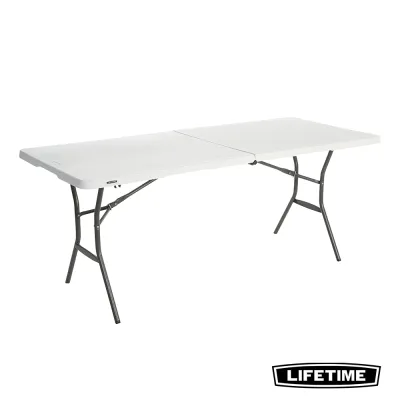
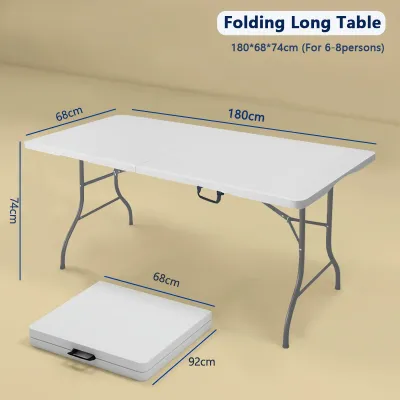
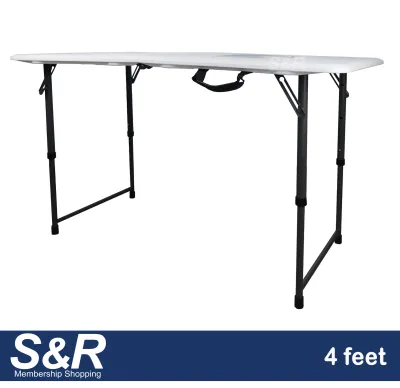
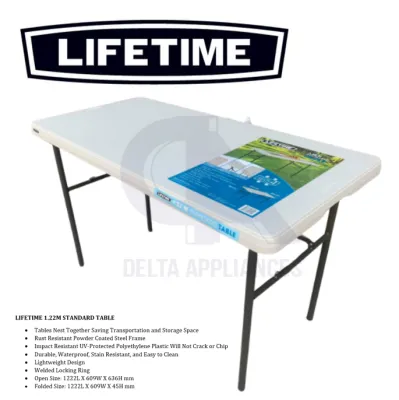
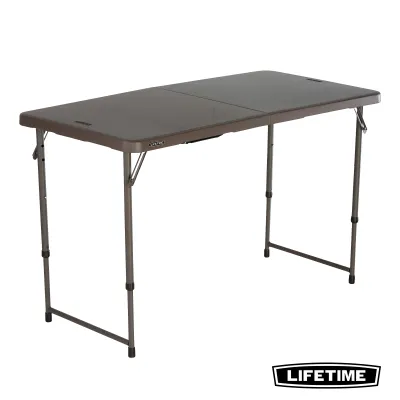
Prices are valid at publication and may change. Please refer to the product page for the latest price.

6-Foot Folding Tables (Best for 6 to 8 People)
A standard 6-foot folding table measures approximately 72 inches in length, 30 inches in width, and 29 to 30 inches in height. This size is highly versatile and fits easily into most residential dining rooms, car trunks, or storage closets.
When setting up a 6-foot table for a family dinner, the optimal layout is to place three guests along each of the long sides and one guest at each of the short ends. This configuration utilizes the entire perimeter of the table. However, while you can physically fit eight people using this layout, the arrangement can feel quite snug. It requires using narrow folding chairs and keeping table decorations to an absolute minimum.
For a truly comfortable and spacious family dinner, a 6-foot table is ideal for six people. Seating three people on each long side while leaving the ends open allows everyone ample room to move their arms, place their drinks, and sit comfortably in standard-sized dining chairs. This setup also leaves plenty of space down the center of the table for large serving dishes, such as a central soup tureen or a large platter of food.
8-Foot Folding Tables (Best for 8 to 10 People)
An 8-foot folding table offers a substantial upgrade in surface area, measuring approximately 96 inches in length, 30 inches in width, and 29 to 30 inches in height. This is the definitive choice for larger family gatherings where the guest list consistently reaches 8 to 10 people.
The standard seating layout for an 8-foot table places four guests along each long side and one guest at each of the short ends. This layout distributes ten people evenly around the perimeter. Unlike the tight squeeze of a 6-foot table, the 8-foot length provides each of the eight side guests with approximately 24 inches of linear table space. This 24-inch standard is the benchmark for comfortable dining, as it allows guests to cut food, raise glasses, and converse without rubbing shoulders with their neighbors.
Additionally, the extra two feet of length on an 8-foot table provides critical breathing room for the tabletop itself. When hosting ten people, the volume of plates, cutlery, glasses, and serving dishes increases dramatically. The extended surface area ensures that you do not have to crowd individual place settings just to make room for the food. If your family dinners frequently feature multi-course meals or buffet-style platters on the table, the 8-foot option prevents the dining experience from feeling cluttered and overwhelming.
How to Measure Your Space for a Folding Dining Setup
Before purchasing a lifetime folding table or any large furniture piece, you must verify that your physical space can accommodate both the table and the guests. A common mistake is measuring only the table’s footprint and forgetting that people need space to pull out chairs, sit down, and walk behind one another. This spatial planning is especially critical in the Philippines, where high-density condo living in Metro Manila or compact open-plan townhouses require careful layout optimization. During the humid summer months or the heavy rains of the wet season, indoor dining is highly preferred, making efficient indoor space planning essential.
To calculate the total footprint required for your dining setup, start with the dimensions of the table and add 24 to 30 inches of clearance on all sides. For a 6-foot table (72 x 30 inches), the minimum usable area should be at least 120 inches long and 78 inches wide. For an 8-foot table (96 x 30 inches), the required space expands to at least 144 inches long and 84 inches wide. This extra clearance ensures that guests can push their chairs back to stand up without hitting walls or adjacent furniture.
Traffic flow is another vital consideration. Observe the pathways in your dining area and identify potential obstructions. Ensure that when the table is fully occupied, there is still a clear path of at least 36 inches for people to walk from the kitchen to the table, or to access the bathroom. Take note of nearby furniture, such as sideboards, display cabinets, or sofas, and ensure that cabinet doors or drawers can still open. You should also check the swing radius of nearby doors to prevent them from hitting a guest’s chair when opened.
Finally, perform a thorough delivery and access check. Because an 8-foot folding table does not disassemble, its folded dimensions remain quite large—typically around 96 inches long, 30 inches wide, and about 2 inches thick, unless you purchase a fold-in-half model. Before ordering, measure the height and width of all doorways, narrow hallways, stairwells, and elevator cabins. If you live in a high-rise condominium, verify the elevator’s internal diagonal measurements to ensure the delivery team can transport the table to your floor. A table that cannot fit through your front door or elevator will result in a frustrating return process.
Essential Features for Large Family Dining Tables
When hosting a large family dinner, your folding table must be structurally sound and capable of supporting significant weight. A fully set table carries not only the weight of the dinnerware and heavy serving platters but also the physical pressure of guests leaning on the surface. To ensure safety and longevity, look for specific engineering and material features.
Frame and leg stability should be your primary concern. Look for tables constructed with high-strength, powder-coated steel frames. Features such as wishbone legs or integrated cross-bracing provide superior lateral stability, preventing the table from swaying or wobbling when guests cut their food or shift in their seats. A stable frame is crucial for preventing accidental spills of hot soups or drinks, which can cause burns or damage surrounding flooring.
The surface material is equally important for durability and maintenance. High-density polyethylene (HDPE) tops, which are standard on a quality lifetime folding table, are highly recommended for family dining. HDPE is lightweight, impact-resistant, and virtually immune to stains from spilled soy sauce, vinegars, or colorful local dishes. It is also easy to wipe clean with mild soap and water. However, do not assume that all plastic or resin tops have the same load capacity. Always check the manufacturer’s specific weight capacity label on the product. A high-quality utility folding table typically supports several hundred kilograms of evenly distributed weight, but cheaper imitations may bow or crack under heavy loads.
Safety locking mechanisms are essential for preventing catastrophic structural failures. Ensure the table features reliable gravity rings or sliding locks on the leg hinges. These mechanisms slide over the joints automatically when the legs are unfolded, locking them securely in place. Some premium models also feature center-lock buttons for fold-in-half designs, ensuring the tabletop remains perfectly flat and rigid throughout the meal.
Common Sizing and Setup Mistakes to Avoid
Achieving a comfortable dining experience requires avoiding several common pitfalls during selection and setup. The first mistake is overestimating the capacity of a smaller table. Squeezing ten people around a 6-foot table forces guests to sit shoulder-to-shoulder, leaving no room for proper arm movement and forcing some to eat with their plates practically in their laps. If you regularly host more than eight people, invest in the 8-foot table or use multiple smaller tables arranged strategically.
Another frequent error is ignoring chair dimensions. Standard folding chairs are usually 18 inches wide, but formal dining chairs, upholstered seats, or chairs with armrests can easily measure 22 to 24 inches in width. If you plan to use your existing indoor dining chairs with a folding table, measure their widest points. Using wide chairs reduces the number of people you can fit along the sides of the table, regardless of the table’s length.
Setting up on uneven surfaces is a safety hazard, particularly during outdoor garden parties or patio dining. Placing a folding table on uneven tiles, grass, or gravel can cause the table to rock, risking spills of hot food and drinks. To prevent this, use adjustable leg levelers or sturdy shims under the legs to ensure the table is perfectly level before setting the table.
Finally, watch out for height mismatches. Standard dining tables and folding tables stand at 29 to 30 inches tall, which pairs perfectly with standard dining chairs that have an 18-inch seat height. Avoid pairing your folding table with low benches, bar stools, or lounge chairs. A seat that is too low or too high forces guests into awkward postures, leading to back discomfort and an unpleasant dining experience.
Frequently Asked Questions (FAQ)
Can I connect two 4-foot folding tables to seat 10 people?
Yes, you can connect two 4-foot folding tables end-to-end to create an 8-foot dining surface, which theoretically provides enough space for 10 people. However, this setup has several practical drawbacks. The seam in the middle where the two tables meet can be uneven, causing plates, glasses, or serving bowls to wobble and potentially spill. Additionally, unless the tables are from the same manufacturer and batch, there may be slight height mismatches. The extra table legs in the center will also interfere with the legroom of the guests sitting near the middle, making their seating arrangement uncomfortable.
What is the standard height for a folding dining table?
The standard height for a folding dining table is approximately 29 to 30 inches (74 to 76 cm). This height is designed to provide optimal ergonomic comfort for adults when paired with standard dining chairs that have a seat height of approximately 18 inches (46 cm). This combination ensures about 11 to 12 inches of clearance between the seat and the underside of the tabletop, allowing guests of various heights to sit comfortably with proper posture and adequate legroom.

Community discussion
Share your experience or ask a question. Comments are reviewed before publication.