
Finding the right lazy susan rotating organizer for a large dining table that seats 6 to 10 people requires balancing accessibility with table space. To ensure everyone can reach the shared dishes without knocking over their drinks, the ideal turntable diameter typically ranges from 16 to 24 inches, depending on your table’s shape and dimensions. The golden rule is to maintain a clear border of 12 to 16 inches (approximately 30 to 40 centimeters) around the entire perimeter of the table to accommodate individual place settings, glassware, and elbow room.
How to Measure Your Dining Table for a Lazy Susan
Start by measuring the total width of your dining table. For a round table, measure the diameter from one edge to the opposite edge through the center point. For rectangular or oval tables, focus on the narrowest width rather than the length, as this dimension limits how large your organizer can be without encroaching on individual dining zones.
Next, calculate the clearance zone required for each diner. A standard dinner plate measures about 10 to 11 inches in diameter. When you add space for glassware, cutlery, and comfortable elbow movement, each person needs a minimum of 12 inches of depth, though 14 to 16 inches is highly recommended for a more relaxed dining experience. This clearance must be reserved on all sides of the table.
Products mentioned in this guide
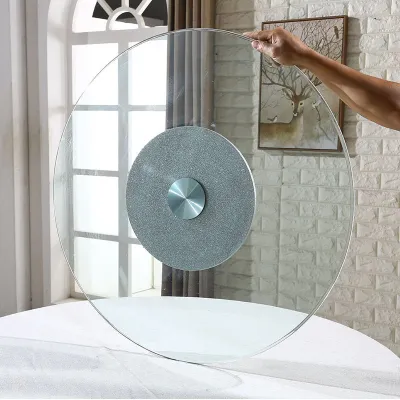
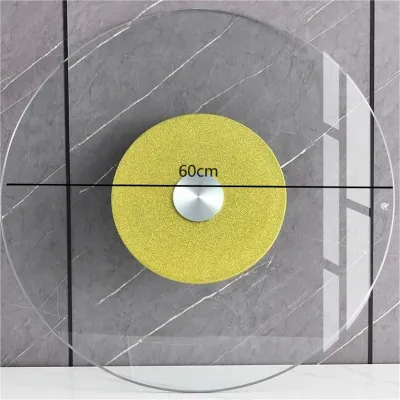
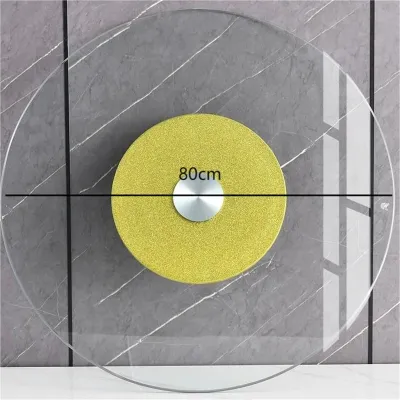
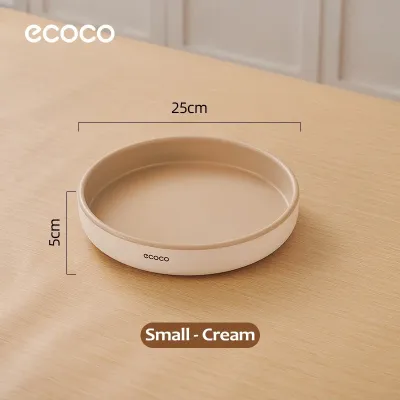

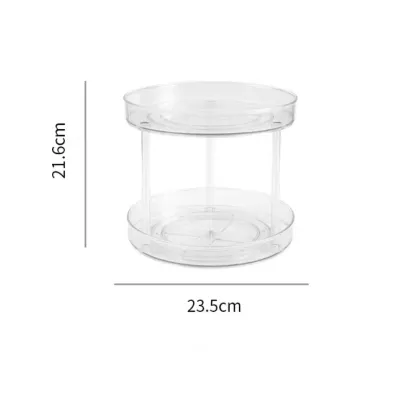
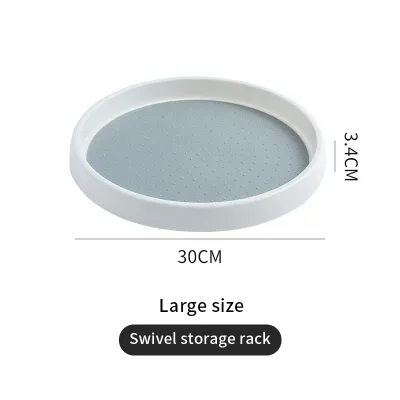
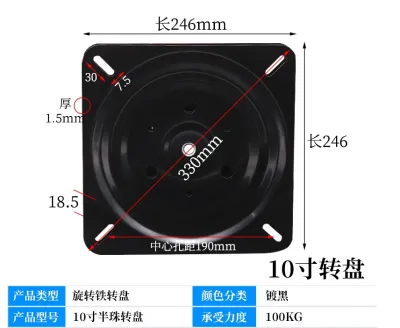
Prices are valid at publication and may change. Please refer to the product page for the latest price.
To find the maximum allowable diameter for your lazy susan, apply a simple subtraction formula. Multiply your desired clearance depth by two (to account for both sides of the table) and subtract that number from the total table width. For example, if you have a round table with a diameter of 60 inches and want a comfortable 16-inch clearance on all sides, multiply 16 by two to get 32 inches. Subtracting 32 from 60 leaves you with a maximum lazy susan diameter of 28 inches.
Estimating the Right Diameter for 6-10 Person Tables
For round tables seating 6 to 8 people, which typically measure around 48 to 60 inches in diameter, visual balance is just as important as physical clearance. A turntable that is too small looks lost in the center, while one that is too large makes the table feel cramped. A 20-inch or 24-inch rotating organizer generally provides a balanced proportion for these tables, leaving ample room for individual settings while keeping shared dishes within arm’s reach.

Rectangular or oval tables seating 8 to 10 people present a different spatial challenge. Because these tables are long and narrow, a single large circular lazy susan in the center will leave the diners at the far ends unable to reach the food. Instead of one massive unit that might overhang the narrow sides of the table, consider using two smaller, strategically placed 12-inch or 14-inch rotating organizers. This dual-unit setup ensures that shared items like condiments, dipping sauces, and side dishes are accessible to everyone along the length of the table.
If you use an extendable dining table with removable leaves, your spatial needs will shift depending on whether the table is fully extended. Measure the table in both its collapsed and extended states. It is usually best to size your lazy susan based on the daily, unextended size of the table, or choose a highly portable, lightweight model that can be easily added or removed when the extra leaves are installed for larger gatherings.
Essential Specifications to Verify Beyond Size
Beyond physical dimensions, you must verify the structural integrity of the organizer to ensure it can handle the demands of family-style dining. Large gatherings often involve heavy ceramic serving bowls, cast-iron platters, and glass pitchers. Check the manufacturer’s specified weight capacity before purchasing, as overloading a turntable can damage the internal mechanism and prevent smooth rotation.
The rotating mechanism itself is a critical point of evaluation. Look for organizers equipped with high-quality steel ball bearings rather than simple plastic tracks. Steel bearings distribute weight more evenly, allowing the turntable to spin smoothly even when loaded with heavy dishes. A jerky or stiff rotation can lead to spilled drinks and tipped-over glasses during a busy meal.
Safety features are equally vital when dealing with rotating hot dishes. Verify whether the lazy susan has a raised edge lip or a non-slip surface treatment. A lip of even half an inch can prevent bowls and condiment bottles from sliding off the edge due to centrifugal force or accidental bumps. If you prefer a flat, modern aesthetic without a lip, look for models that feature a textured or high-friction surface material.
Finally, balance material durability with your household budget. In tropical climates with high humidity, materials like solid wood or bamboo require proper sealing to prevent warping or mold growth over time. Tempered glass and heavy-duty plastics are highly durable, easy to wipe clean, and resistant to moisture, making them practical choices for daily use. Compare these material benefits against your target budget, which typically ranges from ₱800 for basic plastic models to upwards of ₱3,500 for premium hardwood or tempered glass designs.
Common Sizing and Placement Mistakes to Avoid
One of the most frequent mistakes is choosing a lazy susan that is too large, which crowds the table and leaves no room for glassware. When diners have to place their water glasses or wine stems inside the clearance zone, a single spin of the turntable can knock over multiple drinks, leading to messy spills and interrupted meals. Always err on the side of a slightly smaller organizer if your measurements are on the borderline.
Conversely, selecting an organizer that is too small defeats its primary purpose. If the turntable’s diameter is insufficient, diners sitting at the outer edges of a large 10-person table will still have to stand up or stretch awkwardly to reach the dishes. The goal is to bring the food close enough that a simple turn makes it accessible without anyone needing to lean over their neighbor’s plate.
Another overlooked factor is the vertical profile of the organizer. A very thick or double-tiered lazy susan can block the line of sight across the table, making conversation difficult. Additionally, high-profile turntables can interfere with low-hanging dining room light fixtures, pendant lamps, or decorative centerpieces. Measure the vertical clearance from the tabletop to any hanging fixtures before deciding on a model with significant height.
Frequently Asked Questions (FAQ)
Can I use a lazy susan on a rectangular dining table?
Yes, you can use a lazy susan on a rectangular table, but you must plan the layout carefully. Because rectangular tables are narrow, a large circular turntable can easily block the place settings on the long sides. To avoid this, choose a smaller diameter that respects the narrowest width of the table, or use two smaller rotating organizers spaced evenly along the center line. This keeps the food accessible to all guests without crowding those seated along the sides.
How much weight can a typical large lazy susan hold?
The weight capacity of a large lazy susan varies significantly depending on its construction materials and bearing quality. While some lightweight plastic models are designed only for light condiments, heavy-duty wood, metal, or tempered glass organizers can often support substantial weight. Always check the manufacturer’s product label or manual for the exact weight limit, and distribute heavy serving bowls evenly around the center to maintain balance and prevent strain on the rotating mechanism.
Should I get a single-tier or double-tier rotating organizer?
For a main dining table, a single-tier lazy susan is almost always the better choice. Single-tier models keep the profile low, ensuring that guests can see each other across the table and that tall serving dishes remain stable. Double-tier organizers are excellent for pantry storage or organizing small spice bottles, but their height and potential instability make them impractical and unsafe for holding heavy, hot serving platters during a family meal.

Community discussion
Share your experience or ask a question. Comments are reviewed before publication.