
Finding the right Mandaue folding bed for a compact condominium in the Philippines requires balancing sleeping comfort with daily room functionality. To prevent your bed from trapping you inside your room or blocking your wardrobe doors, you must match the bed’s fully deployed footprint against your room’s actual open floor area. The ideal size is not just about the mattress label; it depends on the clearance needed for closet doors to swing open and for you to walk comfortably around the frame. By verifying the exact physical dimensions of the bed when both folded and unfolded, you can maintain a highly functional, clutter-free living space.
Measuring Your Condo Bedroom for a Folding Bed
Before browsing any furniture catalog, you must map out the exact floor area of your bedroom. A common mistake is measuring only the space where the bed will sit when you are asleep. In a tight condo layout, you must account for two distinct states: the folded storage footprint and the fully deployed sleeping footprint. The folded footprint dictates where the unit will rest during the day, while the deployed footprint determines how much floor space is consumed at night.
To ensure your wardrobe remains fully functional, you must calculate the swing radius of your closet doors. If you have traditional hinged doors, measure the distance from the hinge to the edge of the door panel, then trace that arc onto your bedroom floor. For sliding closet doors, check the track clearance to ensure the bed frame does not sit so close that it prevents the panels from gliding smoothly. Any overlap between the bed’s footprint and these operational zones will make accessing your clothes highly inconvenient.
Products mentioned in this guide
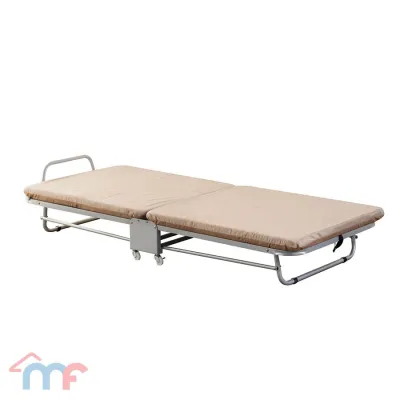

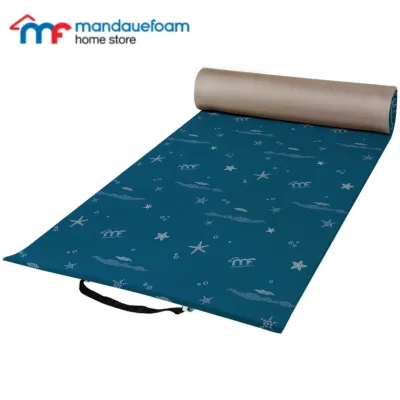
Prices are valid at publication and may change. Please refer to the product page for the latest price.
Walkway clearance is another critical factor for daily comfort and safety. As a general rule for small spaces, try to maintain a clear path of at least 50 to 60 centimeters around the sides and foot of the bed when it is fully unfolded. This space allows you to move around the room without shuffling sideways or bumping your shins against the frame. If your bedroom layout is exceptionally tight, you may need to position one side of the bed against a wall, but always ensure the path to the main door and the bathroom remains completely unobstructed.
Evaluating Mandaue Folding Bed Dimensions Against Your Space
When shopping for a Mandaue folding bed, relying on generic terms like “single,” “semi-double,” or “double” can lead to costly spatial errors. Standard mattress sizes often refer only to the sleeping surface, ignoring the extra centimeters added by the metal frame, headboard, or wheel base. To avoid layout conflicts, you must read the official product tags, spec sheets, or user manuals to find the exact outer dimensions of the fully assembled unit.

Pay close attention to the folded thickness and the overall height of the bed when it is stored upright. Some models fold into a slim profile that easily slides into a narrow closet, while others feature thicker mattresses or integrated headboards that require a deeper storage alcove. Additionally, check the unfolded length from the very edge of the headboard to the foot of the frame, as structural protrusions can add several centimeters to the total footprint.
The wheel base and transport handles are other physical features that extend beyond the mattress area. Many rollaway beds feature caster wheels that flare outward to provide stability when the bed is folded and rolled. If these wheels protrude beyond the frame, they can snag on curtains, scratch baseboards, or prevent the bed from fitting flush against a wall. Always verify these outer structural limits rather than assuming the bed will perfectly match the nominal mattress size.
Optimizing Layouts to Maintain Closet and Wardrobe Access
Strategic placement is the key to keeping your condo bedroom functional when using a temporary sleeping solution. Look for dead zones in your room layout—such as the space behind an open entry door, a shallow alcove, or the blank wall opposite your wardrobe—where the folded bed can be stored during the day. Keeping the stored bed away from your primary closet hinges ensures you can access your clothes at any time without having to roll the bed out of the way first.
You must also plan your daily unfolding routine to avoid creating physical traps. If the bed unfolds directly toward your closet, make sure you can easily stand to the side to lower the frame. A layout that forces you to stand inside a narrow closet opening just to deploy the bed can be frustrating and physically awkward. Ensure that the path from the bed to the room’s main exit remains clear at all times, especially in the dark or during an emergency.
In tropical condo units, vertical space and ceiling fixtures require careful consideration. Before purchasing a folding bed that stands upright when stored, measure the vertical clearance of your walls and check for low-hanging light fixtures, air conditioning units, or ceiling fans. A tall folding bed stored upright must not interfere with the airflow of your wall-mounted split-system air conditioner or come into contact with rotating fan blades when you roll it into position.
Essential Pre-Purchase and Delivery Checks for Condos
Selecting the perfect bed size is only half the battle; you must also ensure the unit can actually reach your bedroom. Condo living involves navigating shared spaces, which means you must measure the height, width, and depth of your building’s service elevator and stairwells. A large, fully assembled folding bed might fit your bedroom floor plan but fail to clear a low ceiling in a hallway or a tight turn in a stairwell during delivery.
Doorways and entry passages within your unit also require careful verification. Measure the clear opening width of your main entrance door and your bedroom door, taking into account the space lost to door stops and open door panels. If the folded bed is wider or taller than these openings, you may need to choose a model that requires on-site assembly or opt for a more compact size that can easily pass through standard doorways.
The type of flooring in your condo should influence your choice of caster wheels and frame design. Hardwood, laminate, and vinyl floors can scratch or dent under the concentrated weight of heavy metal frames and hard plastic wheels. Look for models equipped with soft rubber or polyurethane casters that distribute weight evenly and roll smoothly without leaving marks. Finally, review the manufacturer’s assembly instructions and warranty terms to confirm if the bed is rated for daily folding and unfolding in a high-humidity tropical environment.
Frequently Asked Questions (FAQ)
How do I prevent the folding mechanism from sticking over time?
To keep your folding bed operating smoothly, regularly inspect the hinges, joints, and lock mechanisms for dust, lint, or debris. In humid tropical climates, dust can mix with moisture and create a sticky residue that binds moving parts. Wipe down the metal frame with a dry microfiber cloth to prevent buildup.
Always refer to the manufacturer’s care label or instruction manual before applying any lubricants to the joints. Avoid using heavy household oils or unauthorized chemical sprays, as these can attract more dust and eventually degrade the mechanism or stain the mattress. If the manual permits, use only the recommended light lubricant sparingly on the pivot points.
If you notice the frame becoming difficult to open, squeaking excessively, or showing signs of physical misalignment, stop using force immediately. Forcing a stuck mechanism can bend the metal frame or strip the rivets. Inspect the joints for loose bolts or bent brackets, and if the issue persists, consult a professional technician or contact the manufacturer’s customer service for guidance.

Community discussion
Share your experience or ask a question. Comments are reviewed before publication.