
To comfortably seat 6 to 10 people for a meal, a portable folding dining table requires a length of 180 to 270 centimeters (6 to 9 feet) for rectangular shapes, or a diameter of 150 to 180 centimeters (5 to 6 feet) for round designs. Finding the ideal size is not just about fitting the physical tabletop into your dining room; it is about ensuring every family member has enough elbow room to eat comfortably and enough space to navigate the room safely.
During large family gatherings, holiday feasts, or casual weekend get-togethers, the dining table becomes the focal point of the home. Choosing the wrong dimensions can lead to cramped seating, bumped knees, and a chaotic dining experience where serving dishes cannot fit on the table. By understanding standard space requirements, table shapes, and room clearances, you can select a versatile, portable setup that accommodates your guests without overwhelming your living space.
Space Requirements for Comfortably Seating 6 to 10 Guests
To prevent your dining area from feeling like a crowded transit station, you must first establish the baseline spatial needs of an individual diner. A standard rule of thumb is to allocate 60 to 75 centimeters of table width per person. This lateral space ensures that guests can cut their food, raise their glasses, and gesture during conversations without knocking elbows with their neighbors.
Products mentioned in this guide
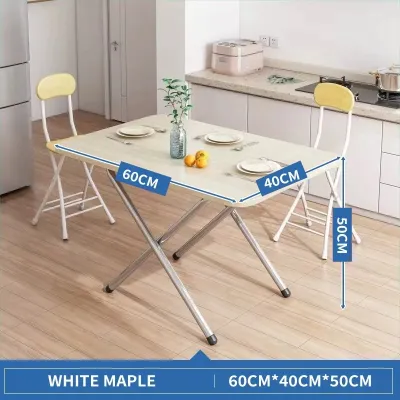
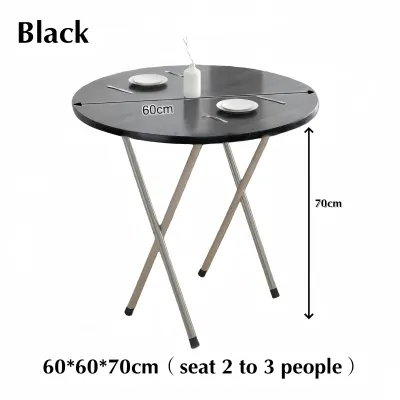
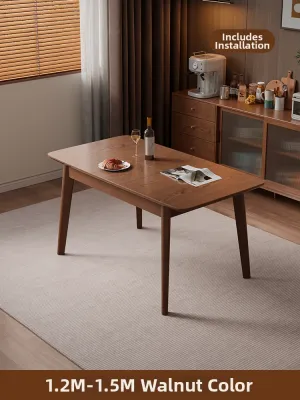
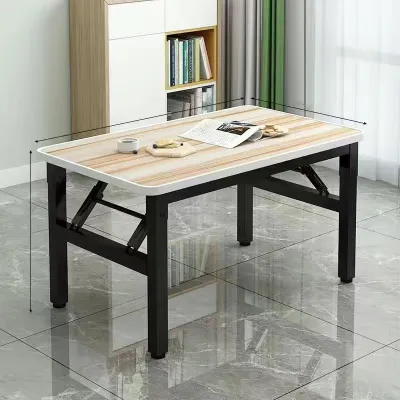
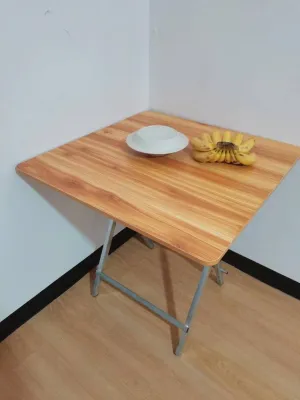
Prices are valid at publication and may change. Please refer to the product page for the latest price.
Depth is equally critical when calculating individual space requirements. Each place setting requires a minimum depth of 35 to 45 centimeters from the table edge inward to accommodate dinner plates, flatware, and glassware. When two diners sit directly opposite each other, their combined place settings consume up to 90 centimeters of the table’s width, leaving a central zone for shared items.
The style of dining heavily influences these spatial requirements. For casual meals or Western-style plated dining, where food is portioned in the kitchen, a narrower table may suffice. However, for traditional family-style dining—such as a classic Filipino salo-salo—the center of the table must hold multiple large serving platters, rice bowls, soup tureens, and individual dipping saucers. In these scenarios, prioritizing wider tables prevents the dining surface from becoming cluttered and unmanageable.
Finally, the physical bulk of your seating plays a major role in the overall footprint. Standard armless dining chairs typically measure 45 to 55 centimeters in width. If you plan to use armchairs or wider, heavily padded seats, you must add an extra 10 to 15 centimeters of lateral space per chair. Bulky chairs not only reduce the number of people you can fit along the table edge but also require more room to be pulled back when guests sit or stand.
Standard Dimensions for Rectangular and Round Folding Tables
Selecting the right table shape is the next step in planning your seating layout. Rectangular and round folding tables distribute space differently, affecting both the physical capacity of the table and the social dynamic of your gathering.

Sizing Rectangular and Oval Tables
Rectangular and oval tables are highly efficient for linear spaces, allowing you to maximize seating along the long sides of the room. To seat 6 people comfortably, a rectangular portable table folding model should measure 150 to 180 centimeters in length. For a gathering of 8 guests, look for a length of 180 to 210 centimeters. If your target is to seat 10 people, you will need a table that spans 240 to 270 centimeters in length.
Table width is a critical dimension that is often overlooked in portable models. A width of 90 centimeters is the recommended minimum for seating groups of 6 to 10. Anything narrower than 80 centimeters will result in guests knocking knees under the table and leaves virtually no room for central serving platters once individual plates are set down.
Oval folding tables offer a slight variation on the rectangular layout. The rounded corners of an oval table soften the visual profile of the furniture and make it easier to squeeze an extra chair or two around the curved ends. However, because the corners are cut away, oval tables offer slightly less total surface area for serving dishes compared to a sharp-edged rectangular table of the identical length and width.
Sizing Round Tables and Pedestal Limits
Round tables excel at fostering conversation because everyone faces the center, making them ideal for intimate family gatherings. To seat 6 people, a round portable folding table requires a minimum diameter of 120 to 135 centimeters. For 8 guests, a diameter of 150 centimeters is necessary, while a gathering of 10 people requires a substantial 180-centimeter diameter table.
Leg placement on round folding tables can significantly impact comfort. Many portable round tables feature perimeter legs that fold flat against the underside. While highly stable, these legs can align awkwardly with chair positions, forcing some guests to sit with a metal leg between their knees. Central pedestal bases avoid this issue entirely by freeing up legroom, but they are less common in heavy-duty folding designs due to the structural complexity of folding a central support flat.
It is also important to recognize the practical limits of large round tables. A 180-centimeter round table for 10 people occupies a massive square footprint in a room and makes the center of the table incredibly difficult to reach. Passing dishes across a 1.8-meter span becomes impractical, making a rectangular or oval table a much more user-friendly choice for groups of 10.
Configurations for Flexible Seating Capacity
If you do not host large groups every day, a permanently massive table can make your daily living space feel cramped. Flexible configurations allow you to scale your dining setup up or down depending on the occasion.
Many high-quality folding tables feature leaf inserts or drop-leaf sides that allow you to expand the surface area only when needed. When evaluating these models, always check the manufacturer’s instructions regarding the weight limits and stability of the extended sections. Under high-humidity tropical conditions in the Philippines, wooden leaf tracks can swell or warp if not properly maintained, so look for smooth-sliding metal tracks or robust support brackets that lock securely into place.
Another common approach is to push two smaller portable folding tables together. For example, joining two 120-centimeter tables can easily accommodate 8 to 10 people. For this setup to succeed, the tables must have identical heights and flat, straight edges that can flush together tightly. Any height discrepancy or rounded edge will create an unstable seam where glasses can tip over easily.
Choosing between a single large folding table and multiple smaller modular tables involves clear trade-offs. A single 240-centimeter folding table provides a seamless, highly stable surface but is often heavy, awkward to carry, and difficult to store in standard closets. Multiple smaller modular tables are much lighter, easier to transport in a standard vehicle, and can be repurposed for other tasks—such as a buffet station or a workspace—when not being used for dining.
Measuring Your Dining Area for a Portable Table
Before purchasing any portable table folding model, you must measure your physical space to ensure the table can be set up, used, and stored without causing traffic jams in your home.
Calculating Chair Clearance and Walkways
A table that physically fits into a room is useless if your guests cannot sit down or stand up. To ensure basic comfort, maintain a minimum clearance of 90 centimeters from the edge of the table to the nearest wall, cabinet, or doorway. This distance allows a guest to pull their chair out, sit down, and tuck themselves back in without hitting an obstacle.
If you expect people to walk behind seated guests during the meal—such as serving food from the kitchen or moving toward a restroom—you must increase this clearance to 110 to 120 centimeters. Failing to account for this walkway space will result in a claustrophobic dining experience where guests are constantly forced to stand up to let others pass.
When planning your layout, always calculate the total footprint of the table combined with fully extended chairs, rather than looking at the table’s dimensions in isolation. A 240 x 90-centimeter rectangular table actually requires a total active floor area of at least 420 x 270 centimeters once you factor in the 90-centimeter clearance zone on all four sides.
Checking Doorways and Hallways for Portability
Because these tables are designed to be portable, you must verify that the folded unit can actually travel from its storage location to the dining area. Measure the width and height of all entryways, narrow hallways, tight stairwell corners, and elevator doors, especially if you live in a multi-story townhouse or a high-rise condominium in urban centers.
Compare the table’s folded dimensions and total weight against these physical constraints. A 240-centimeter table that folds in half (a bi-fold design) still measures roughly 120 x 90 x 15 centimeters when closed and can weigh upwards of 20 to 25 kilograms. Ensure you have a clear, unobstructed path to carry this weight safely without scraping your walls or straining your back.
Additionally, check the clearance of your designated storage area. Whether you plan to slide the table under a bed, stand it upright in a utility closet, or store it in a garage, measure the space beforehand to ensure the folded frame fits comfortably without blocking access to other household items.
Evaluating Stability and Structural Support
A large folding table must be structurally sound to handle the weight of heavy ceramic dishes, hot soup pots, and the occasional leaning guest. The longer the table, the more critical its structural engineering becomes.
As table length increases, the distance between the legs expands, which can lead to sagging in the center if the frame is weak. High-quality portable tables feature a continuous steel underframe that runs the entire length of the tabletop to distribute weight evenly. Look for models that incorporate center support legs or heavy-duty cross-bracing to prevent the center of the table from bowing under a heavy load.
Always inspect the locking mechanisms, hinges, and safety rings before setting up your table. Gravity locks or sliding rings that slide down over the hinge joints are essential for preventing the legs from accidentally folding inward if the table is bumped. Ensure these components operate smoothly and lock tightly without excessive play or wobbling.
Keep in mind that material names alone do not guarantee durability. A table labeled as “heavy-duty plastic” or “solid hardwood” can still fail if the joints and frame are poorly constructed. Inspect the thickness of the metal frame, the quality of the welds, and the surface treatment. For tropical environments with high humidity, powder-coated steel frames are highly recommended to prevent rust, while weather-resistant resin or sealed wood surfaces help prevent warping and moisture damage. Always refer to the manufacturer’s care instructions to maintain these protective finishes.
Common Sizing and Placement Mistakes to Avoid
Avoiding common pitfalls during the planning phase will save you from post-purchase regret and ensure your family gatherings run smoothly.
One of the most frequent mistakes is ignoring the design of the table legs. Trestle-style legs, diagonal braces, or wide wishbone legs can severely restrict where chairs can be placed. If a leg mechanism blocks the ends of the table, you may find that a table advertised for 10 people can only comfortably seat 8 because guests cannot slide their chairs in without their legs hitting the metal frame.
Another common error is underestimating the space required for the center of the table. If you choose a narrow 75-centimeter table to save space in a tight room, you will quickly find that once dinner plates and water glasses are set down, there is no room left for serving bowls, rice platters, or centerpieces. This forces you to set up a separate side table for food, defeating the purpose of a unified family meal.
Finally, avoid purchasing a table based solely on its maximum stated seating capacity without verifying its actual weight limits. A lightweight plastic folding table might physically fit 10 chairs around it, but if its load capacity is low, a full spread of heavy cast-iron pots, beverage dispensers, and dinnerware could push the structure to its breaking point. Always verify the manufacturer’s specified load limits before loading the table with food and drinks.
Frequently Asked Questions (FAQ)
How much clearance is needed behind a dining chair?
To pull out a dining chair and sit down comfortably, you need a minimum clearance of 90 centimeters from the table edge to the nearest wall or obstacle. If you want to allow enough space for a person to walk behind a seated guest without disruption, increase this clearance to 110 to 120 centimeters.
Can two smaller folding tables be pushed together to seat 10 people?
Yes, you can push two smaller folding tables together, provided they are the exact same height and have flat, flush edges. However, be aware of potential drawbacks, such as an uneven center seam where liquids can spill, instability if the tables are bumped, and leg placement conflicts where the two tables meet, which can restrict legroom for guests sitting near the seam.

Community discussion
Share your experience or ask a question. Comments are reviewed before publication.