
To comfortably seat 6 to 10 people around a round table and chair set, you need a table diameter ranging from 54 inches to 84 inches. The precise size depends on your exact seating target: a 6-seater requires a diameter of 54 to 60 inches, an 8-seater needs 60 to 72 inches, and a 10-seater demands 72 to 84 inches. Choosing the right set involves balancing the physical dimensions of the table with your chair designs and the clearance of your dining room to ensure smooth traffic flow and comfortable elbow room.
In the Philippines, where dining spaces often host extended family gatherings, finding this balance is key to creating an inviting home environment. Whether you are furnishing a spacious suburban home or a compact urban condominium, understanding the relationship between table circumference, chair width, and room clearance will help you make a practical, lasting investment.
Quick Sizing Guide: Round Table Diameters for 6 to 10 Diners
When shopping for a round table and chair set, understanding standard furniture heights is the first step toward ensuring ergonomic comfort. Most standard dining tables feature a finished height of 28 to 30 inches (71 to 76 cm) from the floor to the tabletop. To pair with this, standard dining chairs typically have a seat height of 18 inches (46 cm). This height difference leaves a comfortable gap of 10 to 12 inches (25 to 30 cm) for legroom, allowing diners to sit comfortably without their knees hitting the underside of the table apron.
Products mentioned in this guide
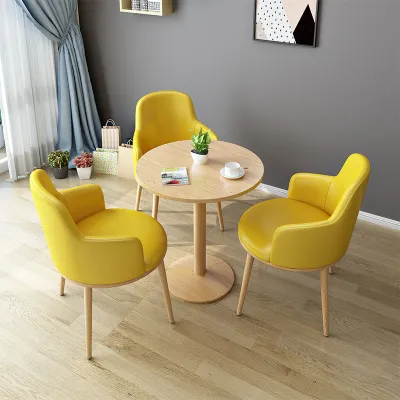
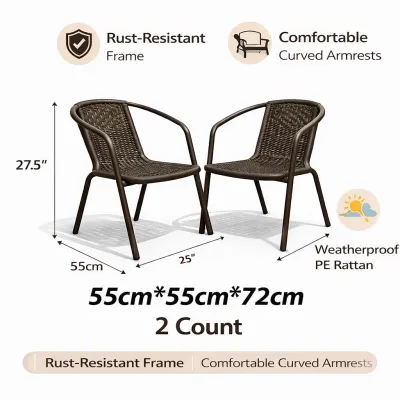
Prices are valid at publication and may change. Please refer to the product page for the latest price.
The overall diameter of your round table directly dictates how many chairs can fit around its perimeter. Here is a breakdown of the recommended diameter ranges based on standard seating capacities:
- 6-Seater Round Tables: A diameter of 54 to 60 inches (137 to 152 cm) is ideal. A 54-inch table offers an intimate dining experience for six, while a 60-inch table provides extra breathing room for serving platters and larger place settings.
- 8-Seater Round Tables: A diameter of 60 to 72 inches (152 to 183 cm) is required. While you can squeeze eight people around a 60-inch table using narrow, armless chairs, a 72-inch table is far more comfortable for regular use, offering ample personal space for each guest.
- 10-Seater Round Tables: A diameter of 72 to 84 inches (183 to 213 cm) is necessary. A 72-inch table can accommodate ten diners in a pinch, but an 84-inch table is the gold standard for comfortably seating ten people without crowding.
These diameter recommendations assume you are using standard-width dining chairs. If your preferred chairs are wider than average, feature bulky armrests, or have thick padding, you must look toward the upper end of these diameter ranges or select a larger table size altogether to avoid a cramped dining experience.
How Chair Dimensions and Design Impact Seating Capacity
The physical dimensions and design of your dining chairs play a massive role in determining how many seats can actually fit around a round table. To ensure comfortable dining, professional space planners rely on the “24-inch rule.” This guideline dictates that each diner needs at least 24 inches (61 cm) of table perimeter to have sufficient elbow room and space for a full place setting. Without this clearance, guests may bump elbows while eating, and table settings may overlap.

To verify how many chairs will fit around a specific table, you can calculate the table’s total circumference using the formula: Circumference = Table Diameter × 3.14. Once you have the circumference, divide that number by the width of your chosen chairs plus a small buffer for spacing. For example:
- A 60-inch table has a circumference of approximately 188.4 inches (478 cm). Dividing this by 24 inches of personal space yields exactly 7.85, meaning it can comfortably seat six people with generous room, or eight people if you use compact, armless chairs.
- A 72-inch table has a circumference of approximately 226 inches (574 cm). Dividing this by 24 inches yields 9.4, showing that it easily seats eight people and can accommodate nine or ten if the chairs are sleek and narrow.
The style of the chair also dictates seating capacity. Standard side chairs (armless chairs) usually measure 18 to 20 inches in width, making them easy to align along a curved edge. Dining armchairs, however, often measure 22 to 24 inches or wider. The bulky arms of these chairs prevent them from being tucked closely together, drastically reducing the number of seats you can place around a fixed-diameter table.
Additionally, consider the depth of the chairs and the curvature of their backrests. Deep chairs with high, angled backs require more physical space to pull out and cannot be tucked fully under the table when not in use. If you have a smaller dining room, look for chairs with low profiles and curved backs that mirror the arc of the round table, allowing them to slide neatly underneath to save floor space.
Measuring Your Dining Space for Clearance and Flow
Before purchasing a large round table and chair set, you must measure your dining room to ensure the furniture fits comfortably within the space without blocking walkways or creating a cramped atmosphere. The most critical rule of thumb for dining room layouts is the 36-inch clearance rule. You must maintain a minimum of 36 inches (approx. 91 cm) of open space from the edge of the table to the nearest wall, sideboard, cabinet, or other furniture piece. This clearance allows diners to pull their chairs out, sit down, and rise from the table comfortably, while leaving enough room for someone to walk behind them.
To determine if a specific round table will fit your room, use this simple formula to calculate the total required room diameter:
- Required Room Diameter = Table Diameter + 72 inches (183 cm)
This formula accounts for the 36-inch clearance zone on all sides of the table. For example, if you are eyeing a 60-inch (5-foot) round table, your dining room needs a clear, unobstructed circular space of at least 132 inches (11 feet or 3.35 meters) in diameter. If you are planning for an 84-inch (7-foot) table to seat ten people, the required room diameter jumps to 156 inches (13 feet or 3.96 meters).
In high-traffic areas, near main walkways, or in dining rooms with swinging doors or nearby kitchen counters, you should increase this clearance to 42 or 48 inches (107 to 122 cm). This extra space prevents collisions and ensures that the dining area remains safe and easy to navigate, even during busy family gatherings.
To avoid expensive purchasing mistakes, always perform a pre-purchase visualization step. Use painter’s tape or lay down large sheets of newspaper on your dining room floor to map out the exact footprint of the table diameter you are considering. Next, measure and outline the 36-inch clearance zone around it. Walk around the taped area, pull imaginary chairs out, and open nearby cabinet doors to test the physical feel of the space. If the layout feels tight or blocks major pathways, you may need to downsize the table or consider a flexible alternative.
Extendable Round Tables: A Flexible Solution for Large Gatherings
For many homes, keeping a massive 72-inch or 84-inch round table permanently set up is impractical. It swallows valuable floor space during daily life when only a few family members are dining. An extendable round table offers a highly practical, space-saving solution for these scenarios, allowing you to maintain a compact footprint for daily meals while expanding the table to accommodate 8 to 10 guests for special occasions.
Extendable round tables utilize several different mechanisms to expand their surface area:
- Center-Leaf Extensions: The tabletop splits down the middle, sliding apart on metal tracks to allow one or more separate wooden panels (leaves) to be inserted into the center.
- Butterfly Leaves: These built-in leaves are hinged and folded flat beneath the tabletop. When the table is pulled open, the butterfly leaf flips up and locks into place, eliminating the need to store separate leaves in a closet.
- Drop-Leaf Tables: The outer curved edges of the table are hinged and can be folded down when not in use, converting a round table into a narrow rectangular or square shape that can be pushed against a wall.
While extendable tables offer unmatched flexibility, they do change shape when fully extended. Adding a rectangular leaf to a round table transforms it into an oval shape. This change alters the spatial footprint of the table, making it longer in one direction. You must ensure your dining room has the length to accommodate this oval footprint while still maintaining the required 36-inch clearance at the ends.
When choosing an extendable table, pay close attention to the base design and structural stability. Pedestal bases are highly popular for round tables, but when extended, they must be heavy and wide enough at the bottom to prevent tipping. If guests lean heavily on the extended ends of the table, a poorly balanced pedestal can wobble or tip. Always check the manufacturer’s specifications for load capacity and look for robust locking mechanisms that secure the extension leaves firmly in place.
Additionally, consider the local climate when maintaining your dining set. In tropical environments with high humidity, solid wood tables can expand and contract. Before buying, verify that the table’s wood joints are reinforced and that the finish is moisture-resistant. Regularly inspect the sliding tracks and mechanisms, applying appropriate lubricants as recommended by the manufacturer to keep the extension process smooth and prevent sticking.
Common Sizing and Layout Mistakes to Avoid
Selecting a large dining set involves more than just matching a table diameter to a chair count. Avoiding these common layout and purchasing mistakes will ensure your new set is both functional and comfortable:
- Ignoring the Table Base Design: The design of the table legs significantly impacts legroom and chair placement. A central pedestal base is the superior choice for round tables because it eliminates perimeter legs, allowing you to slide chairs in at any angle without guests bumping their knees against table legs. If you choose a table with four standard legs or a trestle base, carefully measure the distance between the legs to ensure your chairs can actually tuck under the table when not in use.
- Forgetting Delivery Access: A massive solid wood tabletop measuring 72 or 84 inches in diameter cannot be disassembled. Before ordering, measure every doorway, hallway, stairwell, and elevator door in your home or apartment building to ensure the delivery crew can physically bring the tabletop into your dining room. Many buyers in urban condominiums face the frustrating reality of a beautiful table that cannot fit inside the building's service elevator.
- Overlooking Rug Sizing: If you plan to place an area rug under your round dining set, the rug must be large enough to accommodate the chairs even when they are pulled out. As a rule, the rug should extend at least 24 inches (61 cm) beyond the edge of the table on all sides. For a 60-inch round table, you will need a circular rug with a diameter of at least 108 inches (9 feet). If the rug is too small, the back legs of the chairs will catch on the edge of the rug every time a guest sits down or stands up, creating a tripping hazard and damaging the rug over time.
Frequently Asked Questions (FAQ)
What shape of dining room is best for a large round table?
Square or large, open-concept rooms are the best shapes for large round tables. Because a round table requires equal clearance on all sides, a square room naturally accommodates its circular footprint, maintaining a balanced flow. In contrast, narrow rectangular rooms are poorly suited for large round tables; placing a circular table in a long, narrow space leaves wasted areas at the ends while pinching the clearance along the sides, making traffic flow difficult.
Can I use a dining bench instead of chairs on one side of a round table?
Using a standard straight dining bench with a round table is highly impractical due to basic geometry. A straight bench placed against a curved table edge creates uneven gaps, leaving diners at the ends of the bench too far from the table while crowding the person in the middle. This layout makes it difficult to reach food and compromises legroom. If you prefer bench seating, look for specially designed curved dining banquettes or curved benches that match the specific radius of your round table.

Community discussion
Share your experience or ask a question. Comments are reviewed before publication.