
To comfortably seat 6 to 10 people, a stainless table for kitchen use must measure between 60 and 120 inches (152 to 305 cm) in length, depending on your typical guest count and layout. A standard group of 6 requires a table length of 60 to 72 inches. Stepping up to 8 people requires 72 to 96 inches, while a full gathering of 10 demands a length of 96 to 120 inches. Along with length, a minimum width of 30 to 36 inches (76 to 91 cm) is essential to accommodate individual plates alongside shared serving dishes.
In the Philippines, where family gatherings (salo-salo) are central to daily life, choosing the right dining table size is critical. The tropical climate and high humidity also make stainless steel an exceptionally practical choice, as it resists moisture and pests far better than wood. However, because a table seating up to 10 people is a massive piece of furniture, careful spatial planning is required to ensure it does not block daily kitchen workflows.
Standard Dimensions for 6 to 10 Person Stainless Steel Tables
To establish a comfortable dining environment, you must first understand the basic ergonomic requirements of a single diner. Each person requires a personal zone of at least 24 inches (60 cm) of width and 12 to 15 inches (30 to 38 cm) of depth. This spacing ensures that guests can dine and move their arms naturally without constantly bumping elbows with their neighbors. When scaling this up for larger groups, the overall physical footprint of the table must expand proportionally to maintain this level of personal space.
Products mentioned in this guide
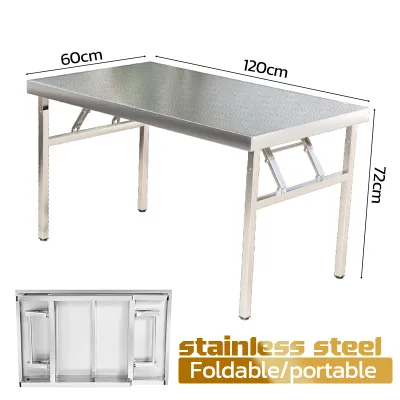
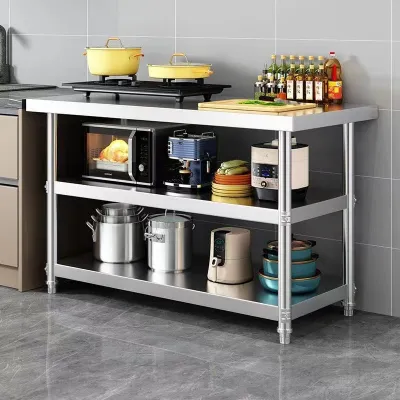
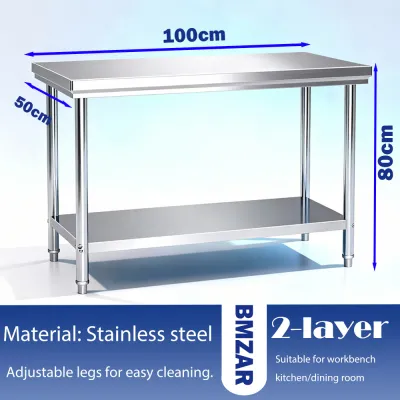
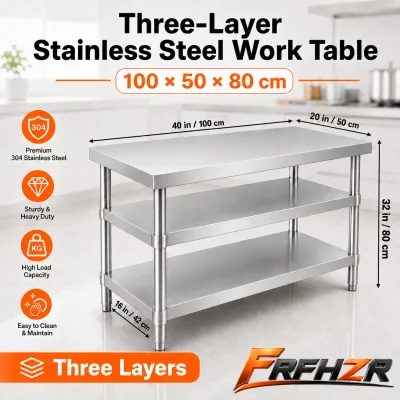
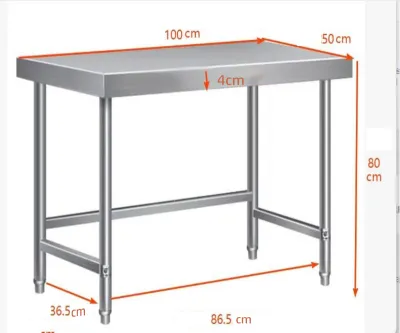
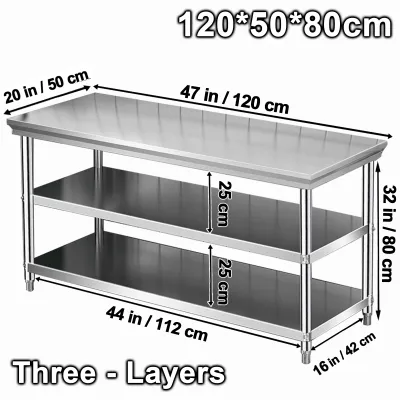
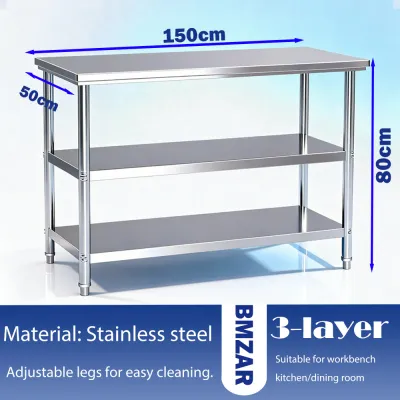
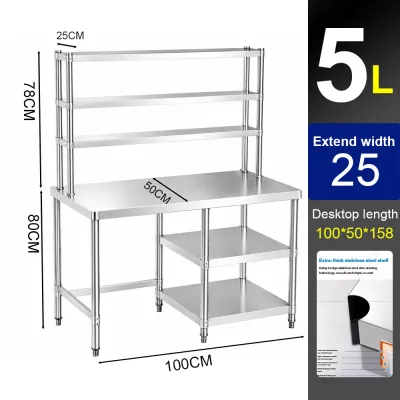
Prices are valid at publication and may change. Please refer to the product page for the latest price.
For a seating capacity of 6 people, the minimum table length is 60 inches (152 cm), which allows for three diners on each long side. If you prefer a more generous layout where guests have extra room to spread out, or if you plan to place diners at the heads of the table, a 72-inch (183 cm) table is highly recommended. At this size, the table provides a much more relaxed dining experience and easily accommodates larger plates.
When seating 8 people, a length of 72 to 96 inches (183 to 244 cm) is necessary. A 72-inch table can seat 8 if you utilize the two head-of-table positions, though this can feel slightly snug. Upgrading to a 96-inch table allows you to comfortably place four diners along each long side, or three on each side and one at each end, offering a much more spacious feel.
For a full gathering of 10 people, a table length of 96 to 120 inches (244 to 305 cm) is mandatory. A 96-inch table can accommodate 10 diners if you place four on each side and one at each end, but this setup leaves very little breathing room. A 120-inch table is the ideal choice for 10 people, providing ample space for individual comfort and leaving plenty of room in the center of the table for shared food.
Table width is just as critical as length for large group dining. While a narrow 30-inch (76 cm) table can work in tight spaces, it leaves almost no room for serving dishes once individual plates are set down. A width of 36 to 42 inches (91 to 107 cm) is the sweet spot for family-style dining, allowing you to place large serving bowls down the center of the table without crowding the diners’ personal space.
Standard dining tables stand at a height of 28 to 30 inches (71 to 76 cm) from the floor. This height pairs with standard dining chairs or stools that have a seat height of 18 inches (45 cm), leaving a comfortable 10 to 12 inches of legroom. However, stainless steel tables designed for kitchen use often feature robust structural elements that differ from traditional wooden furniture.
Many stainless steel kitchen tables are built with thicker metal frames, reinforcing crossbars, or lower utility shelves. These structural components can significantly impact the usable legroom and prevent chairs from sliding fully underneath the table. Before finalizing your purchase, always check the manufacturer’s detailed specification drawings to ensure that any support bars or H-frames do not block the knees of your guests.
How Table Shape Affects Seating and Kitchen Flow
The geometric shape of your dining table plays a major role in how it interacts with the surrounding kitchen environment. A large table must integrate seamlessly with your kitchen islands, countertops, and primary walkways. Selecting the wrong shape can disrupt the flow of your home, turning a functional kitchen into a frustrating obstacle course.

When choosing between angular and curved designs, you must weigh the efficiency of seating capacity against the ease of physical movement. Angular tables maximize surface area and align neatly with walls, while curved tables soften the room’s visual lines and make navigating tight spaces much safer and more comfortable.
Rectangular Tables
Rectangular shapes are highly efficient for seating 8 to 10 people in long, narrow kitchens. Their straight edges allow them to sit flush against a wall when not fully occupied, helping to preserve valuable floor space during daily activities. When it is time to host a large meal, the table can be pulled out into the center of the room to accommodate the maximum number of diners.
The seating distribution on a rectangular table naturally influences the social dynamic of your meals. Placing diners along the long sides keeps everyone relatively close, but conversations between guests seated at opposite ends of an 8-foot or 10-foot table can be difficult to maintain. Additionally, the head-of-table seats carry a traditional sense of prominence, which may or may not suit your family’s preferred dining style.
While rectangular tables offer excellent spatial efficiency, they do require significant linear wall space to look balanced. In high-traffic kitchen zones, the sharp, hard corners of a stainless steel table can be a safety hazard. To mitigate this risk, look for stainless steel tables designed with rounded corners, often referred to as bullnose or eased edges, which soften the impact of accidental bumps.
Round and Oval Tables
Oval stainless steel tables offer a fantastic compromise for large families, combining the high capacity of a rectangular table with the safety and visual softness of curved edges. The rounded ends of an oval table make it much easier for family members to navigate through busy kitchen walkways without worrying about sharp corners. This shape is particularly beneficial in open-plan spaces where the dining area transitions directly into the cooking zone.
In contrast, true round tables are highly impractical for seating 10 people in a typical kitchen. To comfortably seat 10 diners, a round table must have a diameter of at least 60 to 72 inches (150 to 180 cm). A table of this size requires a massive, perfectly square footprint that can easily overwhelm a standard kitchen. Furthermore, the center of a large round table becomes a “dead zone” that is virtually impossible to reach without standing up, making family-style serving highly inconvenient.
One of the greatest benefits of curved tables is the inclusive dining experience they create. Without distinct “head” seats, everyone sits at a slight angle facing one another, which naturally encourages lively, shared conversations across the entire group. This democratic arrangement is ideal for casual family meals where everyone wants to feel equally connected.
Space Planning: Clearances and Kitchen Workflow
To ensure your large stainless steel table fits comfortably in your kitchen, you must perform careful space planning before making a purchase. A table that looks perfectly sized in a spacious showroom can easily overwhelm a residential kitchen if you do not account for the necessary clearances.
The foundational guideline for dining room layout is the “clearance rule.” You must maintain a minimum of 36 inches (91 cm) of open space between the edge of your table and any surrounding obstacles, such as walls, cabinets, or kitchen islands. This 36-inch clearance provides just enough room for a person to pull out their chair, sit down, and rise comfortably without hitting the wall behind them.
If the space behind the chairs serves as a primary walkway, or if family members will frequently walk behind seated diners, you must increase this clearance to 42 to 48 inches (107 to 122 cm). This extra space ensures that someone carrying a heavy tray or a hot pot can walk safely through the kitchen without risking a collision with a seated guest. In a busy tropical kitchen where multiple people may be cooking and serving simultaneously, this extra clearance is vital for safety.
Beyond basic walkways, you must account for kitchen-specific obstacles and appliance door swings. Measure the full extension of your oven door, dishwasher rack, and refrigerator doors. Your dining table and chairs must be positioned far enough away that these appliances can be opened completely without striking the furniture. Similarly, ensure that lower cabinet drawers and pantry doors can open fully without obstruction.
Finally, do not forget to measure your home’s entryways and delivery paths. A large, fixed stainless steel table is incredibly sturdy, but its rigid frame can be highly challenging to maneuver through tight spaces. Measure the width, height, and clearance of all doorways, hallways, stairwells, and elevator cabins. If your table features a fully welded frame that cannot be disassembled, you must ensure that the delivery team can safely transport the table from the delivery truck all the way into your kitchen without damaging your walls.
Fixed vs. Extendable Stainless Steel Designs
If your kitchen must accommodate 10 people for special occasions but usually only holds 6 for daily meals, you face a choice between a fixed 10-person table and an extendable design. A fixed table is incredibly durable and stable, but it occupies a massive amount of floor space every single day, which can make a medium-sized kitchen feel permanently cramped.
An extendable stainless steel table offers the perfect solution, allowing you to maintain a compact 6-person footprint for daily family life and expand the table to seat 10 when hosting guests. However, because stainless steel is a heavy and rigid material, the engineering of these extension mechanisms is critical.
Common extension designs include drop-leaf panels, butterfly leaves that fold and store inside the table frame, or sliding track systems that allow you to insert separate leaf panels. When shopping for an extendable stainless steel table, test the mechanism to ensure it operates smoothly and does not bind or stick. In the high humidity of the Philippines, lower-quality metal tracks can easily corrode or stiffen over time, so look for high-grade, rust-resistant hardware.
While extendable tables offer outstanding spatial flexibility, they do come with a few practical trade-offs. If the table uses separate expansion leaves, you will need to find a clean, dry closet or storage area to keep them safe when they are not in use. Additionally, extendable tables naturally feature seams on the tabletop where the panels meet. These seams can easily trap crumbs, dust, and spilled liquids, requiring careful and regular cleaning to maintain proper hygiene.
To ensure long-term durability, always review the manufacturer’s detailed specifications. Look for the gauge of the stainless steel used for the tabletop; a thicker gauge (such as 14 or 16-gauge) provides superior structural integrity and prevents the surface from flexing or bowing when fully extended. Check the maximum weight capacity of the extension tracks, and verify that the leg structure offers adequate support at the outer edges of the table when it is fully expanded to prevent tipping hazards.
Common Sizing and Placement Mistakes
Avoiding common pitfalls during the planning phase can save you from a costly and frustrating mistake. Many homeowners focus solely on the look of the table and overlook the practical realities of daily use.
Measuring Only the Tabletop Footprint: The most frequent error is measuring only the physical dimensions of the table itself while ignoring the space occupied by chairs. Remember that chairs add significant depth when tucked in, and even more when someone is seated. Always perform your space calculations using the “extended footprint,” which includes both the table and the fully pulled-out chairs.
Ignoring Visual Weight: A massive, solid stainless steel table has a very strong visual presence. In a residential kitchen, an excess of cold, reflective metal can easily make the space feel sterile, uninviting, or overly industrial. To prevent this, balance the metal’s visual weight by pairing the table with warm wooden chairs, soft upholstered cushions, or textured woven placemats, and install warm, soft lighting overhead to create a welcoming atmosphere.
Placing the Table Too Close to Heat and Water: Positioning a large dining table directly adjacent to a hot stove or a high-splash sink area is a major placement mistake. The heat from cooking can make nearby diners highly uncomfortable, while grease and water splatters will constantly soil the table’s surface. Keep the dining area a safe, comfortable distance away from active prep and cooking zones to ensure a pleasant dining experience.
Assuming All Seating Options Provide Equal Comfort: Many people assume that any table advertised for 10 people will offer the same level of comfort regardless of how guests are seated. While choosing bench seating allows you to squeeze more people around the table and tuck the benches away to save space, benches lack back support and make it highly inconvenient for guests seated in the middle to get up. For long, comfortable family meals, individual chairs with supportive backs are always the superior choice.
Frequently Asked Questions (FAQ)
How do I prevent scratches on a stainless steel kitchen table?
To protect the metal surface, always use placemats, coasters, and felt-bottomed trivets under all plates, glasses, and serving dishes. Avoid sliding heavy, unglazed ceramic pots or rough-bottomed cookware directly across the table. When cleaning, wipe in the direction of the brushed metal grain using a soft microfiber cloth and a mild, non-abrasive cleaner recommended by the manufacturer.
Can a stainless steel table withstand the heat of hot pots?
Stainless steel is highly heat-resistant and will not melt or burn under normal kitchen conditions. However, extreme thermal shock from a boiling pot placed directly on the cold metal surface can cause localized warping or temporary discoloration. To keep your tabletop perfectly flat and pristine, always place hot pots and pans on heat-resistant trivets or silicone pads.
Is bench seating a good idea for a 10-person kitchen table?
Benches are an excellent, space-saving option because they can slide completely underneath the table when not in use, keeping kitchen walkways clear. However, they do not provide back support for long meals and make it physically awkward for individuals seated in the middle to stand up or leave the table without disturbing everyone else on the bench.

Community discussion
Share your experience or ask a question. Comments are reviewed before publication.