
Finding the right table for kitchen and dining spaces is a balancing act between daily comfort and hosting capacity. To comfortably seat 6 to 10 people, you must account for both the physical dimensions of the tabletop and the clearance required for movement around the room. A table that is too small leads to bumped elbows and crowded plates, while an oversized table can overwhelm your dining area and block natural walkways.
For a household that regularly accommodates 6 to 10 diners, the ideal solution often depends on whether you need this seating capacity daily or only for special occasions. A standard fixed table that seats 10 people requires a significant amount of floor space, which might not be practical for everyday living. Understanding how to calculate individual dining zones and room clearances will help you make an informed decision before purchasing your next table.
Calculating the Ideal Dimensions for 6 to 10 Seats
To ensure everyone can dine comfortably, start with standard ergonomic guidelines. Each person requires approximately 60 cm of table width and 30 cm of depth to eat without overlapping elbows or bumping into neighbors. This personal dining zone accommodates standard dinner plates, cutlery, and glassware, while leaving a central shared space for serving dishes, water pitchers, or decorative centerpieces.
Products mentioned in this guide
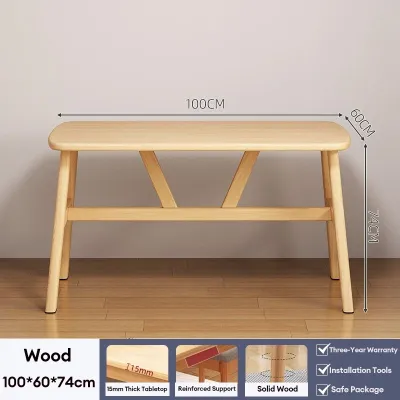
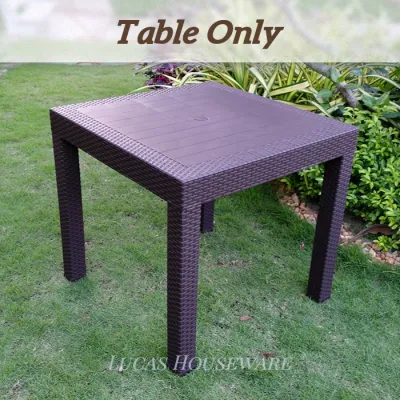
Prices are valid at publication and may change. Please refer to the product page for the latest price.
When calculating linear dimensions for rectangular tables, you must factor in whether guests will sit along the long sides or at the heads of the table. To seat 6 people, a rectangular table should measure at least 150 cm to 180 cm in length. If you place one person at each end (the heads of the table) and two on each long side, a 150 cm table works well. However, if you prefer to seat all 6 people along the sides (three on each side), you will need a length of at least 180 cm.
To scale up to 8 or 10 people, the length must increase accordingly. An 8-person rectangular table typically requires a length of 200 cm to 220 cm. For 10 people, you will need a table length of 240 cm to 300 cm, depending on the seating arrangement. If you place two people at the heads of the table, the long sides must still accommodate four people each, requiring a minimum of 240 cm of clear side space.
Round tables offer a different set of dimensional requirements. A round table with a diameter of 120 cm to 150 cm can comfortably seat 6 people. To accommodate 8 people, the diameter should be at least 150 cm to 180 cm, while seating 10 people requires a diameter of 180 cm to 210 cm. While round tables are excellent for conversation, keep in mind that as the diameter increases, the center of the table becomes harder to reach, making it less practical for passing dishes unless you install a rotating tray or lazy Susan.
Before finalizing your purchase, always cross-reference your calculated estimates with the manufacturer’s stated seating capacity and specific product dimensions on the label or spec sheet. Some tables feature thick legs or decorative aprons that reduce the actual usable seating width, so relying solely on general guidelines without checking the product specifications can lead to unexpected fit issues.
Measuring Your Room and Clearance Space
A large table can only function well if it fits comfortably within your home’s physical boundaries. Begin by measuring the total length and width of your designated dining or kitchen area. Be sure to note any architectural obstructions such as structural pillars, built-in cabinets, low windows, or swinging doors that could interfere with the table or chairs.

Once you have the room’s total dimensions, subtract the necessary clearance space to determine the maximum table size your room can handle. As a general rule, you need a clearance of 90 cm to 120 cm between the edge of the table and the walls or surrounding furniture. This space allows diners to pull their chairs out easily, sit down comfortably, and permits others to walk behind seated guests without forcing them to lean forward.
If your dining area is integrated into an open-plan kitchen, you must also consider the workflow around countertops and appliances. A large table should not block the path between the refrigerator, sink, and stove. Ensuring a clear walkway of at least 100 cm around high-traffic kitchen zones prevents accidents, especially when carrying hot dishes or heavy trays.
In addition to room clearance, you must plan for the delivery and assembly process. In many homes in the Philippines, navigating narrow doorways, tight hallways, steep staircases, or small condominium elevators can be a major challenge for large furniture pieces. Verify the packaged dimensions of the table before ordering. Choosing a flat-packed table that can be assembled directly in the dining room is often the most practical way to avoid delivery bottlenecks.
Fixed vs. Extendable Tables for Large Families
For large families or those who love to host, choosing between a fixed and an extendable table is a critical decision. Evaluate your daily household usage first. If your immediate family consists of 5 or 6 people, but you regularly host extended family gatherings of 10 on weekends, a permanent 10-seater table might make your dining room feel cramped and obstructed during the week.
An extendable table offers the flexibility to reclaim your floor space for daily living while expanding easily for guests. When shopping for an extendable model, inspect the extension mechanisms carefully. Common designs include butterfly leaves, which fold and store neatly beneath the tabletop, drop-leaf designs, or separate insert panels that must be stored in a closet when not in use. Test these mechanisms for stability, ease of use, and structural integrity when fully expanded.
You should also check for visual consistency and structural balance. Look closely at the wood grain patterns and joints to ensure they align seamlessly when the table is extended. In humid tropical climates, solid wood can expand and contract with seasonal moisture changes. Verify that the extension tracks are made of durable, rust-resistant materials and have enough clearance to slide smoothly even during the humid rainy season.
Finally, ensure the table base remains stable and does not tip or sag when extended to its maximum 10-person capacity. A high-quality extendable table should feel solid and secure at the center joints, even when fully loaded with heavy serving platters and tableware.
Choosing the Right Table Shape and Seating Configurations
The shape of your table plays a significant role in how well it fits your room’s layout and supports your family’s social dynamics. Rectangular tables are the most popular choice for large groups because they fit naturally into long, narrow dining rooms. They maximize the seat count along the straight edges and allow you to place a dining bench on one side, which can be pushed completely under the table to save space when not in use.
Round or oval tables are ideal for square rooms because they soften the hard lines of the space and foster a more inclusive, conversational atmosphere. Because there are no sharp corners, it is often easier to squeeze in an extra chair when unexpected guests arrive. However, round tables require a larger overall footprint in the center of the room and can quickly make a tight space feel crowded if the diameter exceeds 150 cm.
When selecting a table, pay close attention to the design of the base. A central pedestal base is highly beneficial for seating large groups because it eliminates corner legs that can obstruct legroom and interfere with chair placement. If you choose a table with four traditional corner legs, check that the legs are positioned at the very outer corners of the frame to maximize the clear seating width between them.
Frequently Asked Questions (FAQ)
Can I use a dining bench to seat more people at a kitchen table?
Yes, dining benches are an excellent way to maximize seating capacity along the sides of a kitchen table. Because benches lack individual armrests and wide gaps, they can comfortably accommodate more people—especially children—per linear meter than individual chairs. Additionally, when the meal is over, you can slide the bench completely under the table to reclaim valuable walkway space in your kitchen. However, keep in mind that benches offer less individual back support for long dinners, and you must verify that the bench height matches the table’s under-apron clearance before buying.
What should I check if I am buying a second-hand extendable table?
When purchasing a pre-owned extendable table, prioritize structural integrity over cosmetic appearance. Test the extension tracks and locking mechanisms multiple times to ensure they slide smoothly and lock securely without sagging or wobbling in the middle. Inspect all joints, hinges, and under-table supports for signs of wood splitting, metal fatigue, or stripped screws. Finally, verify that all original extension leaves are included, fit flush with the main tabletop, and match the color and finish of the main table sections.

Community discussion
Share your experience or ask a question. Comments are reviewed before publication.