
To comfortably seat 6 to 10 people while using a turntable for shared dishes, you generally need a round dining table with a diameter between 60 and 84 inches (150 to 210 cm). The turntable itself should be sized to leave at least 12 to 16 inches (30 to 40 cm) of clear space around the edge for individual place settings. Selecting the right combination requires balancing guest capacity, dish presentation, and your physical dining room dimensions.
In many households, especially during large family gatherings or Sunday lunches, dining is a highly communal experience. Serving dishes like large bowls of soup, platters of rice, and shared mains require a setup that keeps food accessible to everyone without crowding the table. Choosing the correct table and turntable dimensions ensures that your meals remain comfortable, interactive, and organized.
Determining the Right Table Size for 6 to 10 Diners
To plan your dining setup, start with the standard space allocation per person. Each diner typically requires about 24 to 30 inches (60 to 76 cm) of table perimeter to eat comfortably without bumping elbows. On a round table, this perimeter translates directly to the table’s overall diameter, which dictates how many chairs can fit side-by-side.
Products mentioned in this guide
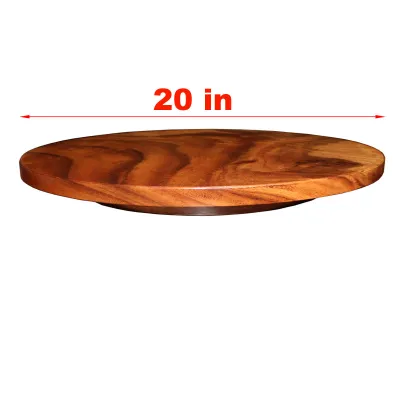
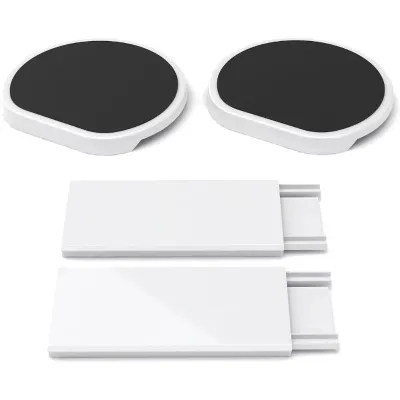
Prices are valid at publication and may change. Please refer to the product page for the latest price.
For a gathering of 6 to 8 guests, a round table with a diameter of 60 to 72 inches (150 to 180 cm) works beautifully. If your guest list regularly reaches 9 to 10 people, you will need to step up to a table diameter of 72 to 84 inches (180 to 210 cm). However, keep in mind that once a round table exceeds 72 inches, the distance across the center increases significantly, which can make natural conversation feel a bit distant.
While a large round table is the classic choice for a turntable setup because it keeps everyone equidistant from the center, you can also consider a rectangular table. A long rectangular table can accommodate a central turntable, but it creates a different spatial dynamic. Diners at the far ends of a rectangular table will find it much harder to reach a central rotating tray, meaning you may need to pass dishes manually or use multiple smaller turntables.
Choosing the Correct Turntable Diameter
Selecting the right turntable diameter is a balancing act between maximizing the space for shared dishes and preserving room for individual place settings. The standard clearance rule is to maintain a zone of 12 to 16 inches (30 to 40 cm) between the outer edge of the turntable and the edge of the dining table. This zone must accommodate a standard dinner plate, drinking glasses, and cutlery without any overlap.

To calculate the maximum turntable diameter for your table, subtract twice the desired clearance from the total table diameter. For example, if you have a 60-inch round table and want a comfortable 14-inch clearance on all sides, you subtract 28 inches (14 inches x 2) from 60 inches, leaving you with a recommended turntable diameter of 32 inches. If you have a larger 72-inch table, a 40-inch turntable will maintain that same 16-inch clearance.
Beyond diameter, you must evaluate the turntable’s physical stability and weight capacity. Large serving bowls filled with heavy dishes can put significant stress on the rotating mechanism. Check the manufacturer’s specifications for the weight limit of the bearing system and ensure the turntable has a wide, stable base footprint to prevent it from tipping or tilting when a heavy dish is placed on one side.
Measuring Your Dining Room for Clearance and Access
A large dining table requires a substantial amount of floor space, not just for the furniture itself, but for comfortable movement around it. As a general rule, you should allow at least 36 to 48 inches (90 to 120 cm) of clear space between the edge of the table and the nearest wall or piece of furniture. This clearance allows diners to pull out their chairs and sit down easily, and it leaves enough room for someone to walk behind seated guests to serve food.
Before finalizing your purchase, carefully measure the delivery path. Large round table tops, especially those made of solid wood, stone, or glass, cannot be folded or easily angled. Measure the width and height of all doorways, hallways, stairwells, and elevator doors to ensure the tabletop can physically reach your dining room. If you live in a condominium or multi-story home, check if the table base and top can be delivered in separate pieces for on-site assembly.
Do not forget to account for other fixed furniture in your dining room layout. If you have a buffet cabinet, a display shelf, or a side table, measure the clearance with those pieces in place. In tropical climates like the Philippines, where dining rooms often feature standing fans or air conditioning units, ensure the table placement does not block the airflow or crowd these essential appliances.
Evaluating Turntable Mechanisms and Table Materials
The usability of your turntable table depends heavily on the quality of its rotating mechanism. When shopping, test the bearing smoothness by spinning the turntable both empty and with some weight on it. Look for a mechanism that rotates quietly and smoothly without wobbling, jerking, or grinding noises, which can indicate poor-quality ball bearings or an uneven base.
Material selection is critical, particularly in warm, humid environments. High humidity can cause certain solid woods to warp or swell if they are not properly sealed, while frequent spills from hot soups require a highly durable surface. Check the manufacturer’s care instructions to verify that the tabletop and turntable materials are resistant to heat, moisture, and scratches from heavy ceramic or stoneware dishes. Tempered glass, sintered stone, and high-quality sealed hardwoods are popular choices that withstand daily wear and tear.
If your guest count fluctuates significantly between daily family meals and large weekend gatherings, consider an extendable or modular table design. Some modern round tables feature hidden extension leaves that transform the table into an oval shape, or modular setups where a removable turntable can be stored away when not in use, giving you maximum flexibility for different dining scenarios.
Frequently Asked Questions (FAQ)
Can I use a turntable on a rectangular dining table?
Yes, you can use a turntable on a rectangular dining table, but the layout requires careful planning. Because a rectangular table is narrower than it is long, a round turntable will be limited by the table’s width. You must ensure that the turntable’s diameter leaves at least 12 to 16 inches of clearance on the narrower sides of the table. Keep in mind that guests sitting at the far ends of a long rectangular table may still have difficulty reaching the turntable, so this setup is best suited for shorter rectangular tables or casual dining styles.
How do I prevent the turntable from sliding on the table?
To prevent a tabletop turntable from sliding or scratching your dining table’s finish, check the bottom of the turntable base for protective padding. If it does not come with built-in protection, you can apply self-adhesive silicone or rubber bumper pads to the underside of the base. Alternatively, placing a thin, non-slip silicone mat or a felt pad underneath the turntable base will keep it securely in place during rotation while protecting your table’s lacquer, varnish, or glass surface from friction damage.

Community discussion
Share your experience or ask a question. Comments are reviewed before publication.