
Finding the right ergonomic chair in the Philippines can feel overwhelming, especially when local online marketplaces display thousands of options ranging from cheap plastic seats to high-end professional models. If you spend hours working from home in a warm, tropical climate, investing in proper seating is not just about comfort; it is a critical health decision. Setting a realistic budget is the first step, but understanding what your money actually buys in terms of adjustability, frame stability, and material durability is what prevents buyer’s remorse. By breaking down the features available at ₱3,000, ₱7,000, and ₱15,000, you can align your budget with your physical needs and avoid overpaying or under-investing.
Quick Guide: What Each Budget Tier for an Ergonomic Chair Actually Delivers
At the ₱3,000 tier, you are paying for basic seat height adjustment, a fixed backrest contour, and lightweight plastic frames. It is a step up from a dining chair but offers very little customization. Moving up to the ₱7,000 tier introduces the sweet spot for most remote workers: adjustable lumbar support, multi-angle tilt locks, and higher-density molded foam or breathable mesh that can withstand daily use. At the ₱15,000 tier and above, you enter the premium category, which delivers synchronous tilt mechanisms, fully adjustable 4D armrests, highly durable elastomeric mesh, and extensive manufacturer warranties that protect your investment for years.
Prices on local e-commerce platforms and online marketplaces frequently fluctuate due to seasonal campaigns, double-digit sales, and shipping promotions. Because of this, it is wiser to focus on the structural and mechanical features of a chair rather than chasing a specific model name. Ultimately, a higher budget does not just buy a more modern aesthetic; it secures more advanced mechanical engineering, more points of physical adjustment to match your unique frame, and longer-lasting materials that will not sag or break after a few months of use.
Products mentioned in this guide
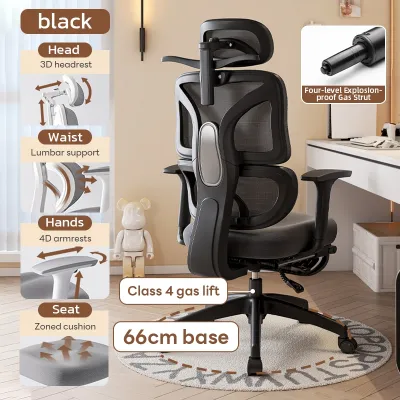
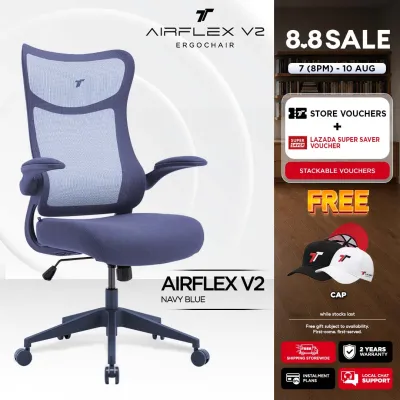
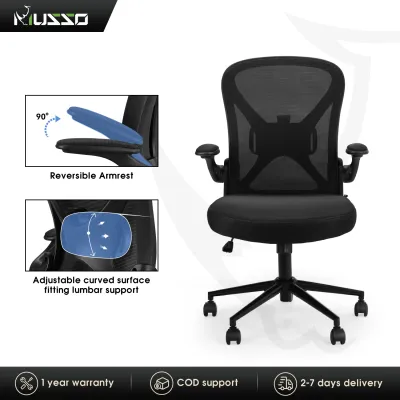
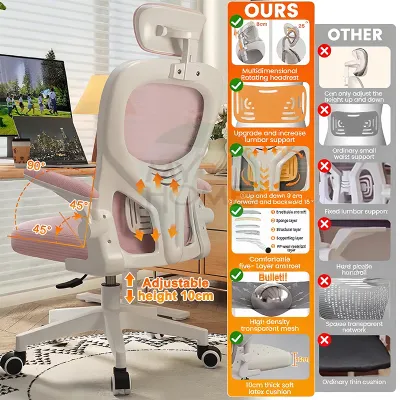
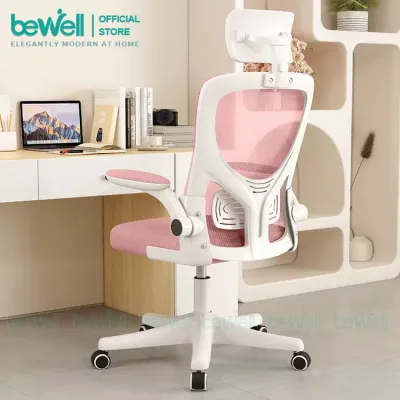
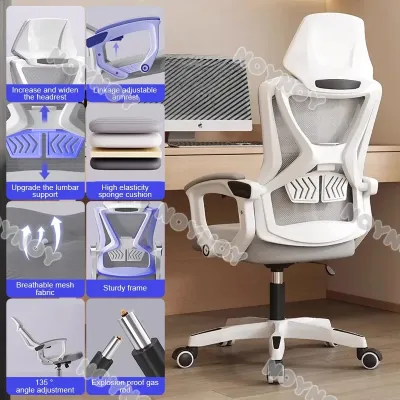
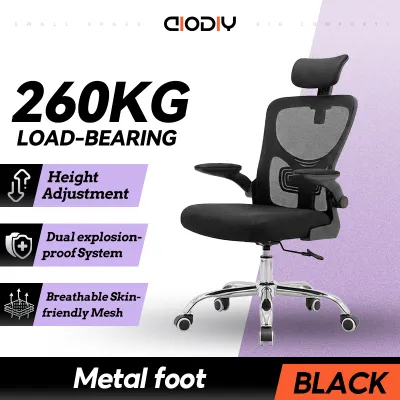
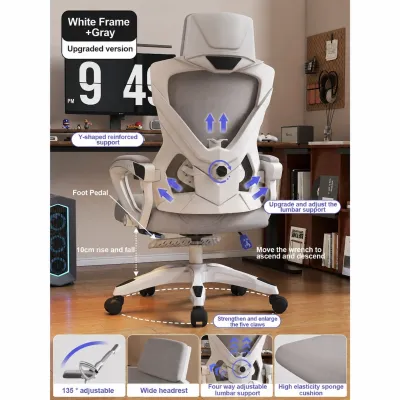
Prices are valid at publication and may change. Please refer to the product page for the latest price.
The ₱3,000 Tier: Basic Support and Where to Expect Compromises
When shopping with a strict budget of around ₱3,000, expectations must be carefully managed. At this entry-level price point, an ergonomic chair will provide the bare essentials. You can expect a basic pneumatic gas lift for seat height adjustment, fixed or simple 1D (height-only) armrests, and a basic tilt mechanism with a tension adjustment knob underneath the seat. The backrest is typically made of standard nylon mesh, while the seat cushion relies on thin cut foam covered in fabric.

The compromises in build quality at this price point are significant and directly impact durability. The frames are primarily constructed from thin, lightweight plastics and basic bent metals. The weight capacity is generally limited, often rated for lighter loads. The pneumatic cylinders are typically Class 2 or lower, which may lose pressure over time, causing the seat to slowly sink during the day.
Furthermore, ergonomic adjustments are highly restricted. You will rarely find adjustable lumbar support; instead, these chairs rely on a fixed plastic curve built into the backrest frame, which may or may not align with your lower back. The tilt mechanism is usually a simple “center-tilt” that lets you rock back slightly, but it rarely allows you to lock the backrest at different angles. Warranties at this level are minimal, typically spanning only a few months, and often cover only the gas lift cylinder rather than the entire frame or fabric.
This tier is best suited for short-duration sitting—ideally under four hours a day. It is a reasonable option for students, secondary home workstations, or occasional tasks. However, buyers should be highly skeptical of online listings claiming “full ergonomic adjustability” or “premium orthopedic support” at this price. These marketing terms often mask low-grade materials, such as cheap mesh that stretches and sags within a few weeks, or brittle plastic star bases that pose a structural safety risk if subjected to sudden movements.
The ₱7,000 Tier: The Sweet Spot for Daily Remote Work
For professionals working a standard 8-hour shift from home, the ₱7,000 tier represents the practical sweet spot where ergonomic utility meets financial sensibility. At this price, the quality of both materials and mechanisms takes a major leap forward. You can expect high-density molded foam cushions that retain their shape over years of use, or high-tension mesh seats that keep you cool in the humid climate.
Adjustability becomes far more precise in this mid-range bracket. You will typically find dedicated lumbar support systems that can be adjusted for height, and sometimes depth, allowing you to position the support exactly against your lumbar spine. Armrests upgrade to 2D or 3D configurations, meaning they can adjust not only in height but also slide forward, backward, or pivot inward to support your forearms while typing. The tilt mechanism transitions from a simple rocker to a multi-function tilt lock, allowing you to lock the backrest at three or four distinct angles for working, reading, or relaxing.
The structural components also see a major upgrade. Star bases are typically made of reinforced heavy-duty nylon or entry-level polished aluminum, paired with smoother, quiet-rolling casters that glide easily without damaging floors. The pneumatic cylinder is almost always a certified Class 3 or Class 4 gas lift, providing stable height adjustment and a higher weight capacity.
The primary ergonomic value here is superior weight distribution and continuous back support throughout a full workday. This significantly reduces muscular fatigue and lower back strain. When shopping in this tier, always verify the exact range of the lumbar adjustment and check the seat depth dimensions. Many mid-tier chairs still feature fixed seat depths; if you are exceptionally tall or short, a fixed seat depth might cause the edge of the seat to press uncomfortably against the back of your knees or fail to support your thighs properly.
The ₱15,000 Tier: Premium Mechanisms and Long-Term Durability
At the ₱15,000 tier, you are no longer just buying a place to sit; you are investing in advanced mechanical engineering designed to support your body’s natural micro-movements. The defining feature of this premium bracket is the synchronous tilt (synchro-tilt) mechanism. Unlike basic chairs where the seat and back tilt back at the same angle, a synchro-tilt mechanism reclines the backrest at a faster rate than the seat (typically a 2:1 ratio). This keeps your feet flat on the floor and maintains proper spinal alignment as you lean back.
Another critical feature at this price point is seat depth adjustment (seat slider). This allows you to slide the seat pan forward or backward to match the length of your thighs, ensuring a safe gap between the seat edge and your knees while fully supporting your upper legs. Armrests upgrade to 4D, adding width adjustment and angle rotation to the existing height and depth controls. The mesh used in these chairs is high-grade elastomeric mesh, which uses specialized woven fibers that stretch to distribute your weight evenly and spring back to their original tension without sagging, even after years of continuous use.
The build quality at this level is exceptional, featuring heavy-duty polished aluminum frames, reinforced joints, and premium casters designed to roll silently on both hard tiles and carpets. Because these chairs are built to industrial standards, they come with substantial manufacturer warranties, often ranging from 5 to 12 years. These warranties typically cover structural frames, mechanisms, and mesh, with local distributors keeping spare parts on hand for easy repairs.
This tier is highly recommended for anyone spending 8 to 12 hours a day at their desk, individuals with pre-existing back issues, or those who view their home office setup as a long-term health investment. While the upfront cost is higher, the cost-per-year of ownership is often lower than buying multiple cheap chairs that require replacement every year or two.
How to Match Your Daily Work Habits to the Right Budget
Choosing the right budget requires an honest assessment of your daily habits, physical needs, and immediate environment.
Assess Sitting Duration: If you only use your home office for occasional bill paying or casual gaming on weekends, a ₱3,000 chair will likely suffice. However, if your job demands that you remain seated for 6 to 10 hours a day, opting for anything less than the ₱7,000 tier risks long-term physical discomfort and repetitive strain injuries.
Identify Non-Negotiable Features: If you suffer from chronic lower back pain, adjustable lumbar support is a non-negotiable feature that immediately rules out most chairs under ₱5,000. Similarly, if your height falls outside the average range (for example, under 5’2″ or over 6’0″), seat depth adjustment—typically found in the ₱15,000 tier—is essential to prevent poor circulation and poor posture.
Consider the Workspace Environment: In the Philippines, residential flooring is dominated by ceramic tiles, terrazzo, or polished concrete. Cheap, hard plastic casters found on entry-level chairs can scratch these surfaces or create a loud, distracting scraping noise. Mid-to-high-tier chairs often feature polyurethane (PU) coated casters that roll quietly and protect your flooring. Additionally, our high tropical humidity can cause cheap synthetic PU leather to peel and crack rapidly due to moisture exposure. If you cannot afford a premium leather chair, opting for a high-quality mesh back and seat at the ₱7,000 or ₱15,000 level is highly recommended for breathability and longevity.
When to Wait and Save: If your current budget is around ₱5,000, it is highly recommended to wait and save up the additional ₱2,000 to reach the ₱7,000 tier. Settling for a compromised ₱3,000 chair will likely result in a saggy seat and a squeaky frame within six months, forcing you to spend more money on a replacement sooner than expected.
Pre-Purchase Checks and Hidden Costs for Online Orders
Buying an ergonomic chair online in the Philippines requires careful attention to logistical details that go beyond the product description.
Dimension Verification: Before clicking buy, always measure your current desk. Check the under-desk clearance to ensure the chair’s armrests can slide underneath when not in use. Compare the chair’s maximum and minimum seat height with your own leg length to ensure your feet can rest flat on the floor. Also, check the overall footprint of the star base to ensure it fits comfortably within your designated workspace without blocking doorways or walkways.
Shipping and Assembly: Most online orders arrive flat-packed to save on shipping volume. This means you will need to assemble the chair yourself using the provided hex keys and bolts. Always check if the seller offers an option for pre-assembled delivery, especially if you have physical limitations. Furthermore, be mindful of shipping costs. While shipping within Metro Manila might be affordable or even free during promotional events, delivering a heavy, bulky 15 to 25-kilogram box to provinces in Luzon, Visayas, or Mindanao can add an unexpected ₱1,500 to ₱3,000 to your total bill.
Return Policies and Warranties: Do not confuse an online marketplace’s short return window with the manufacturer’s structural warranty. A return policy only protects you if the item arrives damaged or defective out of the box. For long-term peace of mind, verify the manufacturer’s warranty terms. Ensure that moving parts—such as the gas lift cylinder, the tilt mechanism, and the casters—are covered for at least one to two years, and confirm whether the local distributor has a physical service center or customer support channel in the Philippines to handle parts replacement.
Frequently Asked Questions (FAQ)
Is a budget ergonomic chair better than a standard dining or basic office chair?
Yes, even an entry-level ₱3,000 ergonomic chair offers significant benefits over a standard dining chair. A dining chair features a completely flat back and seat, which forces your spine into unnatural angles during prolonged sitting. An entry-level ergonomic chair provides essential height adjustment to keep your feet flat and a curved backrest that mimics the natural S-curve of your spine. However, if you plan to sit for more than four hours daily, a basic office chair without adjustable lumbar support or advanced tilt mechanisms will still cause muscle fatigue, making a mid-tier upgrade highly advisable.
Do I really need an adjustable headrest on my ergonomic chair?
An adjustable headrest is not a strict ergonomic necessity for active task work. When you are typing, writing, or leaning slightly forward to look at a monitor, your head does not actually touch the headrest. Headrests are primarily designed to support your neck and head when you recline, take phone calls, or rest between tasks. If you are working within a tight budget, it is always better to prioritize core features like adjustable lumbar support, high-quality seat foam, or a stable gas lift over an adjustable headrest.

Community discussion
Share your experience or ask a question. Comments are reviewed before publication.