
The Short Answer: Best Foam for Hot and Humid Nights
For parents navigating the tropical climate of the Philippines, finding a mattress that keeps a child cool is essential for restful sleep. Natural latex foam with an open-cell structure stands out as the absolute best foam type for temperature regulation. Unlike synthetic alternatives, natural latex naturally allows air to pass through its core, preventing the buildup of stagnant heat.
Traditional memory foam, by contrast, relies on a dense, closed-cell structure that contours closely to the body. While this provides excellent pressure relief, it acts as a thermal insulator, trapping body heat and sweat. This heat retention is particularly problematic in bedrooms that rely on open windows or electric fans rather than continuous air conditioning.
It is important to remember that no mattress foam possesses active cooling properties like a fan or an air conditioning unit. Instead, the coolest foam is simply the one that excels at passive heat dissipation and moisture management, allowing your child’s body heat to escape rather than bouncing it back.
Products mentioned in this guide
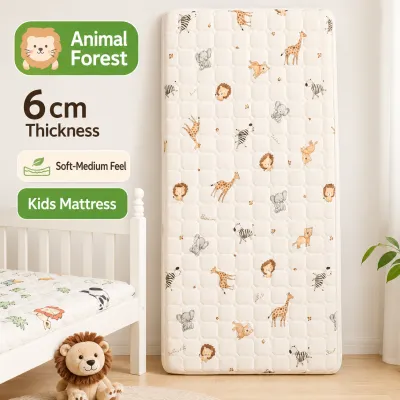
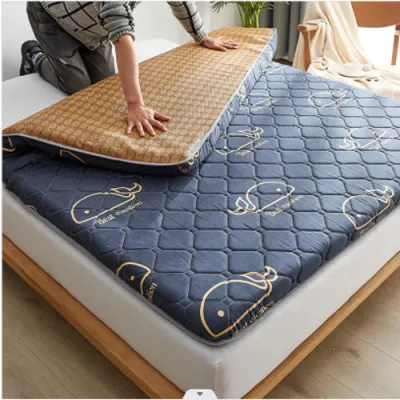
Prices are valid at publication and may change. Please refer to the product page for the latest price.
How Tropical Heat and Humidity Change Mattress Performance
The climate of the Philippines presents a unique set of challenges for indoor furniture, particularly bedding. High ambient temperatures combined with elevated relative humidity levels mean that the air is already saturated with moisture. When a child lies down to sleep, their body naturally undergoes thermoregulation, releasing heat and perspiring to cool down.

In a highly humid environment, this sweat cannot evaporate efficiently from the skin. If the mattress material traps this moisture, the sleep surface quickly becomes damp, sticky, and uncomfortable. This creates a distinction between simple heat retention—where the foam absorbs and holds onto physical warmth—and moisture buildup, where humidity and sweat become locked within the mattress fibers.
Children are particularly vulnerable to these environmental factors. Because they have higher metabolic rates and a larger skin-surface-area-to-mass ratio than adults, their bodies generate significant heat. A mattress that fails to breathe can cause rapid temperature fluctuations during the night, leading to fitful sleep, frequent waking, and physical discomforts such as heat rash or skin irritation. Ensuring proper ventilation in their bed is not just a matter of comfort; it is a fundamental requirement for their health and hygiene.
Comparing Foam Types for Temperature Regulation
When selecting a kids bed foam, understanding the physical structure of each material is crucial. Different manufacturing methods alter how air moves through the mattress, directly impacting how cool the bed remains throughout the night.
Natural Latex Foam: The Breathable Standard
Natural latex is harvested from the sap of rubber trees and processed into a supportive, springy foam. During the manufacturing process, the liquid latex is poured into molds containing metal pins. When cured, these pins leave behind a network of vertical air channels, commonly referred to as a pinhole design. This structural feature allows air to pump through the mattress every time your child moves.
There are two primary manufacturing methods for latex: Dunlop and Talalay. Dunlop latex is poured in a single continuous process, resulting in a denser, slightly firmer foam that is highly durable. Talalay latex involves a vacuum and flash-freezing step before curing, which creates an incredibly uniform, highly airy open-cell matrix. While both styles sleep significantly cooler than synthetic foams, Talalay offers slightly superior airflow, whereas Dunlop provides robust, long-lasting support that is ideal for growing children.
Beyond temperature control, the humid Philippine climate makes mold, mildew, and dust mites a constant threat to household hygiene. Natural latex is inherently resistant to these allergens and microbes. It does not provide the hospitable, damp environment that dust mites thrive in, making it an excellent choice for children with asthma or allergies.
However, the thermal benefits of natural latex can easily be compromised by poor accessories. If the latex core is encased in a thick, synthetic polyester cover, the airflow will be blocked. To maximize the material’s natural cooling properties, always verify that the mattress utilizes a highly breathable, natural-fiber cover.
Memory Foam: Heat Retention and Cooling Workarounds
Memory foam, or viscoelastic polyurethane foam, is highly popular for its body-contouring comfort. It reacts to body heat and pressure, softening to cradle the sleeper’s joints. However, this close contouring is precisely what makes it problematic in a hot climate. By wrapping closely around your child’s body, memory foam increases the surface area of the mattress in direct contact with the skin, leaving very little room for air to circulate.
The core issue lies in its dense, closed-cell molecular structure. Traditional memory foam acts like a dense sponge, trapping pocketed air and preventing it from escaping. In a room without air conditioning, this trapped heat builds up rapidly, turning the mattress into a heat sink within a few hours of sleep.
To combat this, many manufacturers introduce “cooling” modifications, such as infusing the foam with gel beads, copper particles, or graphite. Some brands also offer plant-based memory foam, which replaces a portion of the petroleum products with natural oils to create a slightly more open cell structure. While these technologies do help conduct heat away from the body initially, they have physical limits.
These infusions function by absorbing heat until they reach thermal equilibrium with the sleeper’s body. Once this limit is reached, the cooling effect fades. In a non-air-conditioned room during the warmest months of the year, gel-infused memory foam will eventually warm up, offering little long-term relief for a sweating child.
High-Resilience (HR) Polyurethane Foam: The Airflow Alternative
High-Resilience (HR) polyurethane foam represents a middle ground between the contouring of memory foam and the breathability of latex. Unlike standard, low-cost polyfoams, HR foam is engineered with an irregular, highly open cell structure. This random cell pattern allows air to move more freely through the mattress under compression.
A key benefit of HR foam for children is its responsive, springy support profile. Instead of sinking deeply into the mattress as they would on memory foam, children sleep “on” the surface of HR foam. This keeps their body elevated, maximizing the skin surface exposed to ambient room airflow and reducing the amount of heat trapped beneath them.
When evaluating HR foam mattresses, it is essential to check the foam density listed on the product label or manufacturer specifications. Higher density HR foams (typically above 40 kg/m³ or 2.5 lbs/cu.ft.) offer superior durability and spinal alignment for growing bodies, but they can retain slightly more heat than lower density options due to the sheer mass of the material. Look for medium-density HR foams that strike a balance between structural support and open-cell breathability.
Beyond the Core Foam: Covers, Bases, and Airflow
A cool mattress is the result of a complete sleep system, not just the foam core. Even the most breathable natural latex mattress will sleep hot if it is paired with the wrong cover or placed on an unsuitable bed frame.
The mattress cover is the first barrier between your child and the foam. Avoid synthetic fabrics like polyester or nylon, which act like plastic barriers, trapping sweat and heat against the skin. Instead, prioritize natural fibers such as organic cotton, bamboo-derived rayon, or Tencel (lyocell). These materials are highly breathable and possess natural moisture-wicking properties, helping to draw sweat away from your child’s body so it can evaporate quickly.
The foundation supporting the mattress is equally critical for maintaining airflow. Always use a slatted bed base rather than a solid platform or a box spring. The spaces between the slats allow warm air to escape from the bottom of the mattress, creating a continuous ventilation loop. When choosing a slatted base, ensure the slats are spaced no more than 2 to 3 inches apart to provide adequate support for the foam while maintaining optimal airflow.
Placing a foam mattress on a solid wooden board, a metal plate, or directly on the floor blocks bottom ventilation entirely. In the high humidity of the Philippines, this trapped air will condense into moisture against the cool floor or solid base. Over time, this constant dampness can lead to mold and mildew growth on the bottom of the mattress, which can ruin the foam and present serious respiratory risks for your child.
Caring for a Foam Mattress in High Humidity
Maintaining a foam mattress in a tropical climate requires proactive care to prevent moisture accumulation, preserve hygiene, and extend the lifespan of the bed. High humidity can soften certain polyurethane foams prematurely if they are allowed to remain damp.
Regular airing is one of the simplest and most effective maintenance steps. Every few weeks, strip the bedsheets and stand the mattress vertically against a wall. Position it near an open window to catch the breeze, or run an electric fan or a dehumidifier in the room for a few hours. This helps to dry out any deep-seated moisture that has accumulated within the foam core from night sweats and ambient humidity.
Protecting the mattress from sweat and spills is essential, but you must choose your protective layers carefully. A standard plastic or vinyl mattress protector will trap heat and create a loud, crinkly, hot sleep surface. Instead, invest in a breathable, waterproof mattress protector that utilizes a microscopic polyurethane membrane. This membrane is designed to block liquid molecules while allowing air and vapor to pass through freely, keeping the mattress dry without sacrificing cooling.
Always check the manufacturer’s care label for specific cleaning instructions. Never saturate foam with water or use harsh chemical cleaners, as moisture trapped inside the foam is incredibly difficult to dry out and can lead to internal mold growth. Additionally, avoid exposing foam mattresses to direct, intense midday sunlight for extended periods, as extreme ultraviolet (UV) rays can degrade the molecular structure of the foam, causing it to crumble and voiding the manufacturer’s warranty.
Frequently Asked Questions (FAQ)
Is gel-infused memory foam actually cool enough for a room without air conditioning?
In a room without active air conditioning in the Philippines, gel-infused memory foam is generally not sufficient to keep a child cool throughout the entire night. The gel particles work by absorbing and conducting heat away from the body temporarily, but they eventually reach the same temperature as the surrounding air and the child’s body. Once this thermal equilibrium is met, the dense, closed-cell structure of the memory foam will begin to trap heat and moisture, often leaving the child feeling warm and sweaty by the early morning hours.
Can I put a foam mattress directly on the floor to save space?
You should avoid placing a foam mattress directly on the floor, especially in a hot and humid climate. The floor blocks all airflow to the bottom of the mattress, preventing heat and moisture from escaping. Body heat combined with high ambient humidity creates condensation between the mattress and the floor, turning the underside of the bed into a prime breeding ground for mold and mildew. To ensure proper hygiene and longevity, always elevate the mattress on a slatted bed base.

Community discussion
Share your experience or ask a question. Comments are reviewed before publication.