
Selecting the right desk for your home office depends on balancing your daily work habits with the physical boundaries of your room. Whether you are working with a tight corner in a Metro Manila condominium, a spacious dedicated study, or a multi-purpose living room, your spatial limits will dictate whether a standing, foldable, or L-shaped desk is your best option. Finding the perfect fit requires looking beyond aesthetics to analyze floor space, ceiling clearance, and daily room traffic.
When browsing the san yang official store or authorized online channels, you will encounter diverse configurations designed for different spatial needs. A standing desk offers vertical versatility for active professionals, a foldable desk maximizes flexibility in tight or shared rooms, and an L-shaped desk provides an expansive workstation for heavy workloads. To make the correct investment, you must first measure your environment and evaluate how each desk style interacts with your specific room layout.
How to Measure Your Home Office Space and Layout
Before committing to any furniture purchase, you must establish the exact boundaries of your workspace. Begin by clearing the target area and using a steel measuring tape to record the maximum usable floor length and width. Avoid relying on visual estimates, as even a discrepancy of a few centimeters can prevent a desk from fitting between a wall and a door frame. Write down these measurements and sketch a basic floor plan to visualize how different desk shapes will occupy the physical footprint.
Products mentioned in this guide
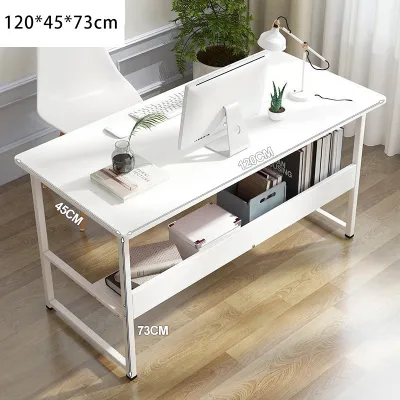
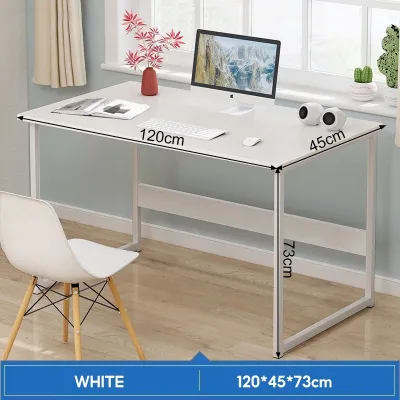
Prices are valid at publication and may change. Please refer to the product page for the latest price.
Vertical clearance is equally critical, particularly if you are considering an adjustable standing desk. Measure the height from the floor to the ceiling, taking note of any low-hanging light fixtures, ceiling fans, or wall-mounted shelves that could obstruct the desk when fully raised. In tropical environments like the Philippines, wall-mounted air conditioning units are common; ensure your desk setup does not block the airflow or sit directly beneath a unit where condensation might drip onto your equipment.
Next, identify the fixed architectural constraints of the room. Note the swing path of doors, closet doors, and windows to ensure the desk will not obstruct their movement. Locate all nearby power outlets, internet ports, and telephone jacks, as your desk placement should allow easy access to electricity without stretching cables across high-traffic walkways. If you must place the desk near a window, check the height of the window sill to verify whether the desk surface or a mounted monitor will block natural light or be exposed to direct afternoon sun and sudden rain showers.
Finally, define the primary function of the room to determine how much permanent floor space you can allocate to a workstation. If you have a dedicated home office, you can safely dedicate a significant portion of the room to a permanent, heavy desk. However, if your workspace is integrated into a shared bedroom, dining area, or living room, you must preserve enough floor space for daily household activities. This distinction will help you decide whether you need a permanent fixture or a highly adaptable, temporary desk solution.
Matching San Yang Desk Styles to Your Room Layout
Every desk configuration interacts differently with room geometry, traffic patterns, and daily workflows. Choosing the right style from the san yang official store involves aligning your available space with the physical characteristics of standing, foldable, and L-shaped models. By understanding how each design utilizes floor area and vertical space, you can select a setup that enhances your productivity without overcrowding your home.

Standing Desks for Active and Compact Workflows
A standing desk occupies a floor footprint similar to a standard rectangular desk, making it a highly efficient option for compact, dedicated work zones. Its primary spatial advantage lies in its vertical movement, allowing you to transition between sitting and standing postures throughout the day without expanding your physical footprint. This makes it ideal for professionals who want an active workflow but lack the room for separate sitting and standing workstations.
When planning for a standing desk, you must perform strict vertical clearance and stability checks. Ensure that the wall space behind the desk is free of fixed shelves, picture frames, or wall lamps that could be struck as the desktop rises. Additionally, check that your computer monitor arms, desk organizers, and cable management trays have sufficient clearance at the desk’s maximum height.
Because standing desks house mechanical components and support valuable electronics, stability is paramount. Verify the manufacturer-specified weight capacity and ensure the desk frame is placed on a flat, level floor to prevent wobbling when extended. In humid coastal regions of the Philippines, moisture can slowly affect floor leveling and joint stability over time; regular checks of the leveling feet and frame joints are recommended to maintain a safe, solid work surface.
Foldable Desks for Multi-Purpose and Small Rooms
For studio apartments, shared bedrooms, or multi-purpose living areas, a foldable desk offers unmatched spatial flexibility. When your workday ends, the desk can be folded flat and stored against a wall, under a bed, or inside a closet, instantly reclaiming valuable floor space for evening relaxation or family activities. This style is designed specifically for users with light to moderate workflows who prioritize room adaptability over a massive, permanent desktop surface.
Before purchasing a foldable model, you must verify its folded dimensions against your designated storage area. Measure the depth of your closet or the clearance under your bed to ensure the folded frame fits comfortably out of sight. If you plan to lean the folded desk against a wall, ensure it can be secured safely so it does not tip over, especially in homes with active pets or young children.
You must also inspect the structural support of the folding mechanism. Since these desks are designed to be moved and folded repeatedly, check the quality of the hinges, locking pins, and joints. Ensure that your floor surface is level so the desk stands firmly when deployed, and always adhere strictly to the manufacturer’s weight limits, as foldable frames are generally built for lightweight laptops and basic writing materials rather than heavy multi-monitor setups.
L-Shaped Desks for Corner Setups and Heavy Workloads
An L-shaped desk is the ultimate solution for maximizing unused corner space or filling a large, dedicated wall area. By wrapping around the user, this configuration provides a vast, continuous work surface that can easily accommodate multi-monitor setups, printers, and extensive paperwork. It allows you to establish distinct physical zones for different tasks, such as computer-based work on one side and manual writing, sketching, or sorting on the other.
To successfully integrate an L-shaped desk, you must measure both wall lengths extending from the corner to ensure the desk legs do not overlap with doorways or air conditioning vents. Pay close attention to the inner corner clearance; there must be enough room for your office chair to rotate, glide, and push back comfortably without your knees hitting the inner desk supports.
Because L-shaped desks have a substantial physical presence, they require a permanent commitment of floor space. They are best suited for dedicated home offices where they can sit flush against the walls. Before buying, verify whether the desk has a reversible configuration (allowing the longer return to be assembled on either the left or right side) so you can adapt the layout to your room’s specific electrical outlet locations and window placements.
Planning for Delivery, Assembly, and Daily Clearance
A desk that fits perfectly on paper can still fail if you do not plan for its physical delivery, assembly, and daily operation. Many homeowners overlook the logistical journey of flat-packed furniture, which can lead to damaged walls or return headaches. Before placing your order, trace the delivery path from your building’s entrance to your home office door. Measure the width and height of all doorways, narrow hallways, stairwells, and elevator cabins to ensure the large, heavy boxes containing your new desk can pass through safely.
Once the boxes arrive, you will need adequate space to assemble the desk. L-shaped and standing desks often require you to assemble the frame upside down on the floor before flipping the completed structure onto its feet. This process demands a clear floor area that is at least twice the size of the desk itself. Protect your floors from scratches by laying down cardboard or a soft blanket during assembly, and ensure you have enough room to maneuver tools and rotate large panels without striking walls or nearby furniture.
After assembly, you must account for daily operational clearance to ensure a comfortable and ergonomic work environment. Leave a minimum of 75 to 90 centimeters of open space behind the desk to allow your office chair to glide back smoothly when you stand up. If your desk features built-in drawers, keyboard trays, or cabinet doors, measure their full extension paths to ensure they do not collide with walls, trash cans, or your own legs. Maintaining these clear pathways prevents a cramped, frustrating layout and protects your furniture from accidental scuffs and impacts.
Common Space-Matching Mistakes to Avoid When Buying Online
One of the most frequent errors when purchasing furniture online is ignoring the “visual weight” of a desk. Even if a heavy, dark-colored wooden desk technically fits within your measured floor dimensions, its bulky frame can make a small room feel incredibly cramped and dark. For smaller spaces, consider desks with open metal frames, light wood finishes, or glass tops, which allow light to pass through and create the illusion of a more open, airy room.
Another common oversight is forgetting to account for baseboards or skirting boards along the bottom of your walls. These decorative strips protrude slightly from the wall surface, preventing a flat-backed desk from sitting completely flush. If your measurements are extremely tight, this small gap can push the front of your desk forward, blocking a door swing or overlapping with a walkway. Measure your space from the baseboards rather than the bare walls to ensure an accurate fit.
Cable management and peripheral storage also require dedicated physical space that is often forgotten during the planning phase. A desk pushed flat against a wall leaves no room for power cords, monitor cables, and power strips, forcing you to pull the desk forward and lose valuable floor space. Look for desks with built-in cable grommets, wire management trays, or recessed back panels that accommodate cords while allowing the desk to sit as close to the wall as possible.
Finally, do not assume that all compact or foldable models share the same stability and weight capacity. Always check the specific product specifications on the san yang official store rather than relying on generic product photos. Some lightweight models are engineered purely for temporary laptop use, while others feature reinforced steel frames capable of supporting heavier desktop setups. Matching your actual equipment weight to the manufacturer’s rated capacity is essential for preventing structural sagging or catastrophic failure.
Frequently Asked Questions (FAQ)
Can I assemble a San Yang L-shaped desk by myself in a small room?
Assembling a San Yang L-shaped desk alone in a confined space is highly challenging and not recommended. Because of the desk’s size, weight, and multi-panel construction, aligning the joints and flipping the completed frame requires significant physical effort and space. To prevent injury, damage to the wood panels, or misalignment of the steel frame, consult the manufacturer’s assembly instructions, which typically recommend having at least two people for the setup. Ensure you clear the room of all obstacles before beginning to give yourself maximum maneuvering room.
Do foldable desks from the San Yang official store require wall drilling?
Whether a foldable desk requires wall drilling depends entirely on the specific model design. The san yang official store offers freestanding foldable desks that feature self-supporting folding legs and require absolutely no wall mounting or drilling. However, if you choose a wall-mounted drop-leaf table or a floating fold-out desk, secure anchoring to a solid wall is mandatory. Always verify the mounting hardware requirements on the product listing and check your wall type (concrete, drywall, or hollow block) before purchasing to ensure a safe and stable installation.

Community discussion
Share your experience or ask a question. Comments are reviewed before publication.