
Choosing the right wooden drafting table for your work-from-home (WFH) setup is a decision that directly impacts both your daily productivity and your physical comfort. The ideal configuration depends on your primary tasks, the physical limits of your workspace, and whether you require a permanent workstation or a flexible, multi-purpose setup. A tilting top table offers excellent ergonomic support for active sketching and manual drawing, a foldable model provides a space-saving solution for compact or shared rooms, and a fixed surface table delivers the robust stability needed for heavy digital equipment and multi-monitor setups.
By evaluating how you work and analyzing your physical space, you can select a wooden drafting table that serves as a reliable, long-term investment. Each configuration has distinct structural characteristics, maintenance needs, and spatial requirements that perform differently under various home environments.
Assessing Your WFH Space and Workflow Needs
Before browsing different styles of wooden drafting tables, you must accurately assess the physical constraints of your home. Start by measuring the designated floor area where the desk will stand, keeping in mind that you need comfortable clearance behind the chair to push back and stand up. In many urban homes and condominiums in the Philippines, space is highly optimized, making precise measurements essential. Do not forget to measure the clearance of your doorways, narrow hallways, and stairwells. Solid wood furniture is often heavy and shipped in large, flat-packed boxes or pre-assembled sections that require a clear path for delivery and setup.
Products mentioned in this guide
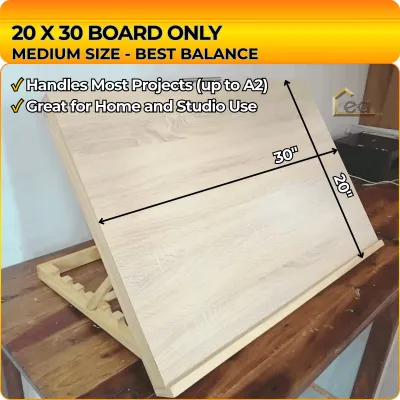
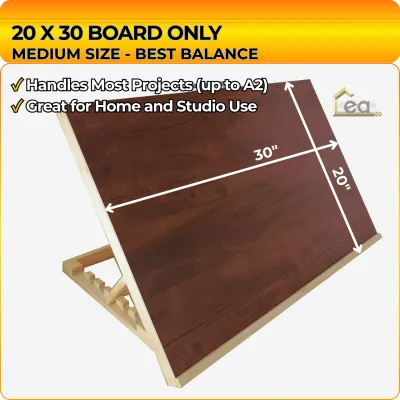
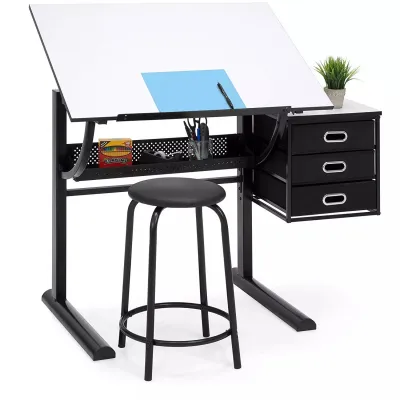
Prices are valid at publication and may change. Please refer to the product page for the latest price.
Next, analyze your daily workflow and the tools you use. If your work is primarily digital, involving heavy monitors, desktop towers, or clamp-on microphone arms, your structural needs will differ significantly from someone who primarily sketches on paper or works with lightweight tablets. Calculate the approximate weight of all your equipment to ensure the table frame can support the load without bowing or shaking.
Finally, consider the nature of the room itself. If you have a dedicated home office, a permanent, heavy desk is highly practical. However, if your workspace doubles as a living room, dining area, or bedroom, you will need a solution that can either blend seamlessly with your existing decor or fold away entirely when your workday ends.
Tilting Top Wooden Drafting Tables: Best for Dynamic Tasks
Tilting top wooden drafting tables are designed specifically for hands-on creative work, such as sketching, architectural drawing, painting, or reading large-format documents. By allowing you to angle the work surface, these tables bring your work closer to your line of sight, which helps reduce neck, shoulder, and lower back strain during long hours of manual work. This ergonomic adjustability makes them a favorite among traditional artists, designers, and hobbyists.

When evaluating a tilting wooden table, the adjustment mechanism is the most critical component to inspect. Look for heavy-duty steel ratchets, secure locking knobs, or smooth counterbalanced systems that hold the heavy wooden top firmly in place at any angle. Verify the weight capacity of the surface when it is tilted, as a slipping mechanism can lead to damaged projects or equipment. Additionally, ensure the table features a functional, built-in pencil ledge or sheet stopper along the bottom edge to prevent your pens, rulers, and papers from sliding onto the floor when the surface is angled.
Spatial clearance is another important factor to consider with tilting designs. When the wooden top is fully elevated, the rear edge of the table may shift backward or upward. If the desk is placed directly against a wall or beneath low-hanging wall shelves, this movement can cause scratches or restrict the range of motion. Ensure there is a small buffer zone around the desk to accommodate these adjustments. In humid tropical climates, it is also wise to check that the moving metal parts of the tilt mechanism are treated to resist rust, ensuring smooth operation year-round.
Foldable Wooden Drafting Tables: Best for Compact Spaces
For professionals working in shared apartments, studio units, or multi-purpose rooms, a foldable wooden drafting table offers an excellent balance of functionality and space efficiency. These tables allow you to establish a dedicated, professional workspace during the day and reclaim your valuable floor space once your tasks are complete. They are highly suited for temporary setups or hybrid workers who only need a drafting surface a few days a week.
Because foldable furniture relies on moving joints, structural integrity is paramount. When shopping, closely examine the safety locks, hinge durability, and cross-bracing of the frame. A high-quality foldable table should feel rigid and stable when fully deployed, without any noticeable side-to-side wobble while you are drawing or writing. Look for models with locking pins or tension bars that secure the legs firmly in the open position.
It is also essential to assess the folded dimensions and the overall weight of the unit. Solid wood is naturally dense and heavy, so a foldable table made of high-quality timber will still carry significant weight. Ensure that you can comfortably lift, fold, and carry the table to its storage spot—such as a closet, under a bed, or flat against a wall—without physical strain. If you plan to move the table frequently, look for designs that incorporate lightweight yet sturdy wooden frames or integrated transport wheels.
Fixed Surface Wooden Drafting Tables: Best for Dedicated Studios
If your daily routine revolves around a permanent, highly stable setup, a fixed surface wooden drafting table is often the most practical choice. These tables are built for dedicated home offices and creative studios where the desk does not need to be moved or adjusted. Because they lack complex folding or tilting joints, fixed tables offer unmatched structural rigidity, making them ideal for high-precision work.
This configuration is particularly beneficial for digital professionals who use multiple monitors, heavy computer towers, or clamp-on accessories like monitor arms and microphone mounts. A thick, solid wood fixed top can easily handle the concentrated clamping force of heavy monitor stands without cracking or warping. When selecting a fixed table, check the overall footprint and ensure the under-desk area offers plenty of legroom and space for cable management trays or small filing cabinets.
Since the height of a fixed table cannot be adjusted on the fly, ergonomics must be managed through your seating. Standard drafting tables are often taller than typical writing desks, requiring a high-drafting chair or stool. Ensure your chair has a wide range of height adjustments and a built-in footring, or pair the setup with a sturdy footrest. This ensures your feet are fully supported, keeping your knees at a comfortable ninety-degree angle and preventing pressure on the back of your thighs.
Cross-Scenario Compatibility and Final Decision Checklist
When choosing between these three types, you will inevitably face trade-offs. Opting for a foldable table means sacrificing some weight capacity and surface area. Choosing a tilting top means you lose a flat, stable surface for items like coffee mugs, external hard drives, or secondary monitors, unless the table features a split-top design with a fixed side shelf.
To help narrow down your choice, use this quick decision framework:
- Select a Tilting Top if your primary work is manual drawing, sketching, or reading, and you require precise ergonomic angles to prevent physical fatigue.
- Select a Foldable Table if you live in a compact space, work in a multi-purpose room, and need to store your desk away to maintain a clear living area.
- Select a Fixed Surface if you use a multi-monitor computer setup, require maximum weight capacity, and have a dedicated room where the desk can remain permanently in place.
Before finalizing your purchase, always verify the assembly requirements. Some solid wood drafting tables require complex assembly with specific tools, while others arrive partially put together. Review the manufacturer’s warranty conditions and return policies, as shipping heavy wooden furniture back due to a measurement error can be costly and inconvenient.
Frequently Asked Questions (FAQ)
How do I maintain the wooden surface of a drafting table?
To preserve the beauty and structural integrity of your wooden drafting table, dust it regularly with a dry, soft microfiber cloth. In tropical environments with high humidity, keep the table away from direct sunlight and damp walls to prevent the wood from warping, cracking, or developing mold. Always use coasters under drinks to avoid water rings, and place a protective cutting mat or writing pad over the surface when using sharp tools or heavy pressure. For cleaning, refer to the manufacturer’s manual for recommended wood polishes or waxes, and avoid harsh household chemical sprays that can strip the protective finish.
Can I use a drafting table for dual-monitor computer work?
Yes, but a fixed surface wooden drafting table is highly recommended for dual-monitor setups. Fixed tables provide the necessary stability and weight capacity to support heavy screens and clamp-on monitor arms safely. If you attempt to use dual monitors on a tilting top table, the shifting angle can cause the monitors to slide, tip over, or put excessive strain on the adjustment joints. If you must use a tilting table for computer work, look for a split-top design where one section remains completely flat and fixed for your monitors, while the other section tilts for your drawing tablet or paperwork.

Community discussion
Share your experience or ask a question. Comments are reviewed before publication.