
Choosing the right wooden pastry display cabinet goes beyond aesthetics; it directly impacts pastry preservation, customer appeal, and operational efficiency. Because home bakeries and small cafés in the Philippines operate under vastly different spatial, traffic, and environmental constraints, a one-size-fits-all approach rarely works. This guide breaks down the specific demands of each scenario to help you identify the cabinet style, structural features, and material checks that align with your actual business needs before making a purchase.
Core Differences Between Home Bakery and Small Café Needs
A home bakery typically operates within a residential kitchen where counter space is highly valuable. Floor plans are often shared with daily household activities, meaning a pastry cabinet must have a minimal footprint and be easy to move when cleaning. In contrast, a small café has a dedicated commercial layout designed for customer flow, where the display cabinet serves as a central visual anchor near the cash register to drive impulse purchases.
Daily customer traffic and restocking frequency also dictate your choice. A home baker usually works on a pre-order or small-batch basis, meaning pastries are displayed briefly before pickup, requiring less overall capacity. A café, however, experiences continuous foot traffic throughout the day, demanding a larger display volume and a design that allows staff to restock items rapidly from the back without disrupting the customer’s view.
Products mentioned in this guide
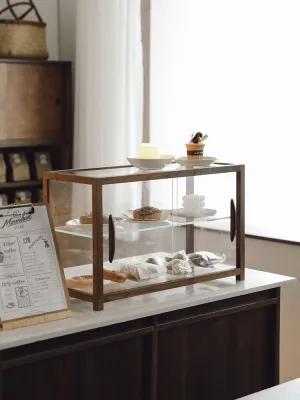
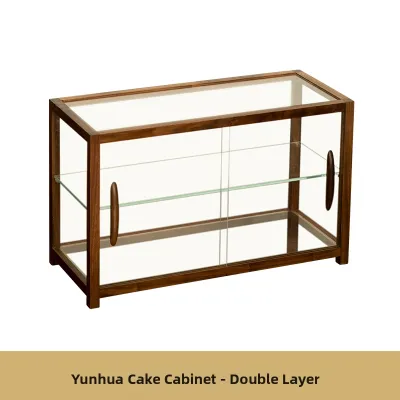
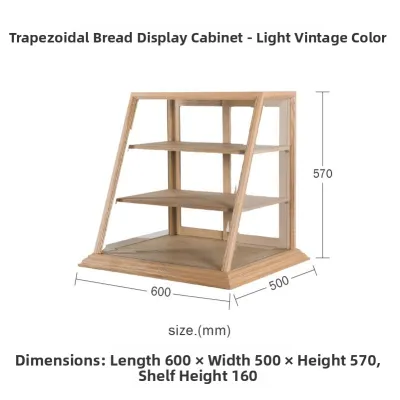
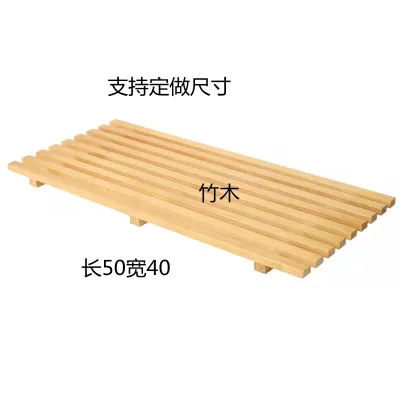
Prices are valid at publication and may change. Please refer to the product page for the latest price.
Environmental control is another critical factor. Home kitchens may rely on natural ventilation or intermittent air conditioning, exposing wooden cabinets to fluctuating tropical humidity that can make pastries soggy. Commercial cafés often maintain continuous air conditioning, which creates a more stable environment but still requires careful cabinet selection to prevent the wood from warping and the pastries from drying out under constant airflow.
Best Wooden Display Cabinet Styles for Home Bakeries
Operating a bakery from home requires furniture that balances professional presentation with residential practicality. The ideal wooden cabinet should enhance the warmth of homemade treats while fitting seamlessly into a domestic kitchen setup.

Countertop and Compact Freestanding Options
For home bakers utilizing kitchen islands or existing countertops, compact wooden display cases offer an elegant solution without sacrificing valuable workspace. Before purchasing, check the weight limits of your existing countertops to ensure they can safely support both the wooden cabinet and the heavy ceramic or glass platters placed inside. A heavy solid wood unit might strain lighter laminate counters, so verifying the cabinet’s dry weight is a crucial first step.
Portability is another major consideration in a home environment. You will likely need to shift the cabinet to clean underneath or to clear space for large-scale baking prep days. Look for compact models with integrated side handles or lightweight frames that allow for easy repositioning. Additionally, verify the door clearance and hinge mechanisms; front-opening or sliding rear doors are ideal for tight spaces where swinging doors might hit nearby appliances or walls.
Space-Saving and Multi-Tiered Vertical Designs
When counter space is exceptionally tight, vertical wooden cabinets allow you to expand your display area upward rather than outward. To make the most of this design, review the adjustability of the internal shelves. Pastries come in all shapes and sizes, and having the flexibility to shift shelves accommodates everything from flat cookies to tall, multi-tiered cakes without wasting vertical space.
Before buying a tall vertical unit, measure its overall height against your kitchen’s ceiling clearance and any low-hanging light fixtures or overhead cabinets. A cabinet that is too tall can block light or feel overwhelming in a standard residential room. Furthermore, ensure the base structure is wide and stable enough to provide adequate tip-over resistance, especially if you cannot anchor the unit to a rental wall or if it sits on a slightly uneven tiled floor.
Ideal Wooden Display Cabinets for Small Cafés
In a commercial café setting, a wooden pastry cabinet is a hardworking piece of operational equipment that must withstand constant use while reinforcing your brand’s aesthetic.
Full-Height and High-Capacity Floor Models
For cafés with dedicated floor space, full-height wooden display cabinets offer maximum visibility and storage capacity. Because these units hold large quantities of baked goods, you must verify the load-bearing capacity of the wooden shelves. Commercial platters, slate boards, and multiple tiers of pastries add up to significant weight, which can cause cheap or thin wooden shelves to sag over time.
The durability of the wood’s surface finish is equally important in a high-traffic café. The cabinet will face daily spills, crumbs, sticky glaze residues, and frequent wiping with commercial sanitizers. Check that the wood is sealed with a durable, water-resistant coating that can handle daily cleaning without stripping, fading, or absorbing odors. For added operational flexibility, look for floor models that feature lockable casters, allowing staff to roll the unit aside easily during after-hours floor cleaning or layout changes.
Glass-Enclosed and Climate-Considerate Designs
To protect delicate pastries from dust, pests, and humidity while keeping them highly visible, a glass-enclosed wooden cabinet is indispensable. The quality of the glass panels and the precision of the wooden joinery play a major role in maintaining a stable internal microclimate. Poorly sealed cabinets can let in humid tropical air, causing crispy pastries like croissants to lose their texture quickly.
However, completely sealing a cabinet can trap moisture released by warm baked goods, leading to condensation on the glass and soggy crusts. Look for designs that incorporate passive ventilation slots or small, screened gaps that allow air to circulate naturally without letting in insects. Additionally, verify how easily the glass panels can be accessed or removed; rear-sliding glass doors allow baristas to serve customers and restock items rapidly during peak morning rushes without blocking the front view.
Essential Buying Checks for Wooden Pastry Cabinets
Before finalizing your purchase of a wooden pastry display cabinet, a few practical checks can prevent costly delivery and operational headaches. First, measure your entire delivery pathway. This includes measuring the width and height of all doorways, tight hallway corners, stairwells, and elevator doors from the delivery vehicle to your kitchen or café floor. A fully assembled wooden cabinet can be incredibly difficult to maneuver through standard residential entryways.
Next, inspect the wood treatment and sealants used on the cabinet. Because the wood will come into direct or indirect contact with food, you must confirm that the finishes, stains, and sealants are certified food-safe and non-toxic. The sealant should also be highly resistant to moisture, oils, and sugar stains, preventing grease from seeping into the wood grain and causing permanent discoloration or bacterial growth.
Assembly and installation requirements should also be reviewed carefully. Determine whether the cabinet arrives flat-packed or fully assembled, and check if specialized tools or professional installation are required. If you are opting for a tall or top-heavy model, verify if the manufacturer includes wall-anchoring hardware to secure the unit safely. Finally, always measure the internal shelf dimensions and compare them against your standard baking trays, cake boards, and pastry boxes to ensure your existing kitchen tools fit perfectly inside without wasting space.
Can One Cabinet Serve Both Scenarios?
For bakers who are starting at home with plans to transition into a physical café, or those operating a hybrid pop-up model, finding a versatile cabinet is highly beneficial. Modular wooden cabinets are an excellent option, as they allow you to start with a single countertop unit and add matching vertical tiers or side-by-side extensions as your business grows. This scalability saves you from having to buy an entirely new display system later on.
However, using a heavy, commercial-grade cabinet in a home kitchen comes with clear trade-offs. Commercial units are often built with dense hardwoods and thick glass, making them incredibly heavy and difficult to move within a residential space. They may also have oversized dimensions that overwhelm a home kitchen’s layout. If you plan to use one cabinet for both settings, look for mid-sized designs with neutral wood finishes—such as light oak or warm teak—and interchangeable shelving that can easily adapt to both a cozy home kitchen and a modern, minimalist café aesthetic.
Frequently Asked Questions (FAQ)
How do I maintain the wood finish in a humid kitchen?
To protect your wooden cabinet from the high humidity of a tropical kitchen, clean it daily using a soft, damp, non-abrasive microfiber cloth and a mild, wood-safe soap. Avoid harsh chemical cleaners or excessive water, which can penetrate the wood and cause warping or mold growth. Regularly inspect the corners, joints, and shelf supports for early signs of wood expansion, dampness, or finish degradation. Always refer to the manufacturer’s care label to see if periodic resealing or polishing with food-safe mineral oil is recommended to maintain the protective barrier.
Do wooden cabinets require special ventilation for pastries?
Yes, wooden cabinets require balanced ventilation to keep pastries fresh. Fully enclosed wooden boxes tend to trap humidity and heat, which can quickly turn crispy pastries like danishes and croissants soggy, while also accelerating mold growth. When shopping, look for cabinets designed with built-in ventilation gaps, slatted wooden shelves, or breathable rear mesh panels. Always match your cabinet’s airflow design to the specific storage needs of your baked goods; highly moisture-sensitive pastries benefit from active air circulation, while iced cakes may require a more enclosed, cool environment.

Community discussion
Share your experience or ask a question. Comments are reviewed before publication.