
Sleeping comfortably in the Philippines requires managing both high temperatures and intense relative humidity. A hybrid mattress can either be a highly breathable sanctuary or a heat-trapping frustration, depending entirely on how its layers are constructed and how you manage your bedroom environment. Because these mattresses combine an open coil support system with dense foam comfort layers, they do not inherently sleep hot, but their performance depends heavily on the specific materials used in the top layers. Understanding how these components interact with tropical air is the key to making an informed purchase.
How Hybrid Mattress Construction Influences Sleep Temperature
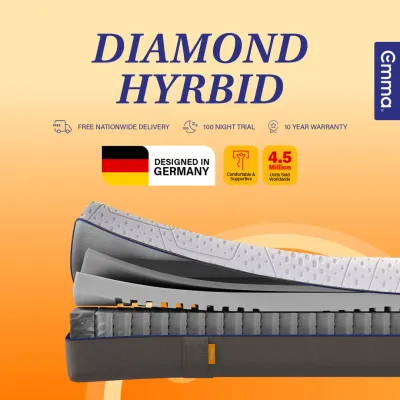
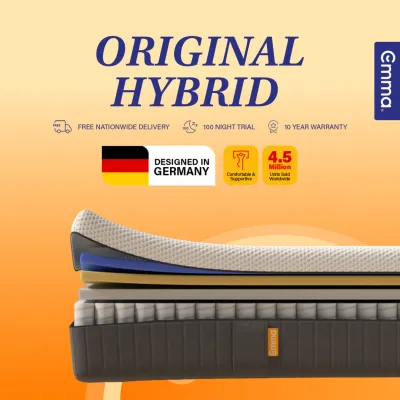
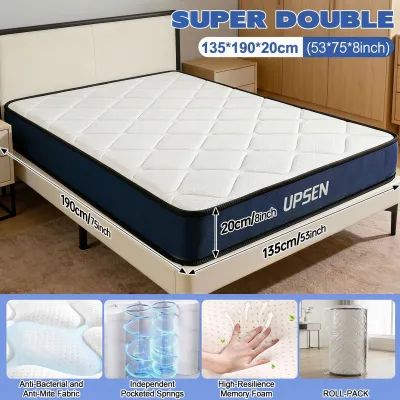
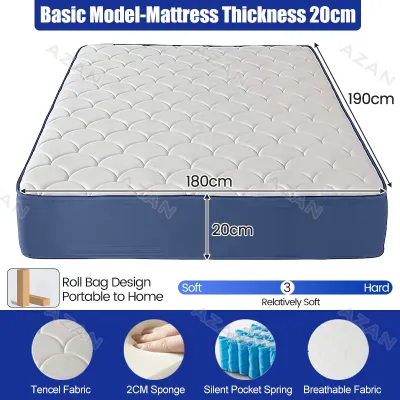
To understand how a hybrid mattress manages heat, you must look at its dual-layer architecture. The core of a hybrid mattress consists of an innerspring system, typically made of individually wrapped pocketed coils. This open-air chamber is highly beneficial for temperature regulation. Unlike solid foam mattresses, which restrict air movement, the spaces between steel coils allow heat to disperse downward and escape through the sides and bottom of the bed.
However, the comfort layers positioned directly on top of these coils can act as an insulating barrier. Traditional memory foam is highly dense and reacts to body heat by softening and contouring to your shape. While this provides excellent pressure relief, it also wraps closely around your body. This deep contouring reduces the surface area of your skin exposed to ambient air, trapping body heat close to the surface and creating a warm sleeping environment.
Products mentioned in this guide
![[ONHAND]URATEX HYBRID TRILL MATTRESS/TRILL MATTRESS WITH POCKET SPRING MATTRESS/URATEX FOAM /HYBRID MATTRESS/TRILL /URATEX FOAM #uratexhybridtrillmattress #trillmattress #new #100%originaluratexhybridmattress #new #10yearswarranty #trill #](https://img.lazcdn.com/g/p/f35556e287ef329c3ca3eed3c2d7f147.jpg_400x400q80.jpg_.webp)

Prices are valid at publication and may change. Please refer to the product page for the latest price.
Different foam types behave differently under tropical conditions. Natural or synthetic latex has a more open physical structure and does not rely on body heat to contour, making it inherently more breathable than traditional memory foam. Standard polyurethane foam sits somewhere in between, with its breathability determined by its density and cell structure. High-density foams generally retain more heat than low-density options, though they offer better long-term durability.
In the Philippines, high ambient humidity complicates this dynamic. When the air is saturated with moisture, the body’s primary cooling mechanism—the evaporation of sweat—is severely hindered. If a mattress comfort layer traps moisture against your body, you will experience a clammy, hot sensation. Therefore, a mattress must not only allow heat to escape but also facilitate moisture transfer away from the sleeping surface.
Cooling Features to Verify When Shopping in a Tropical Climate
When shopping for a hybrid mattress, look closely at the cover fabric, as this is your direct contact point. Fabrics like organic cotton, bamboo-derived rayon, or specialized phase-change materials help pull moisture away from the skin. Avoid synthetic polyester covers that lack moisture-wicking treatments, as they tend to lock in sweat and create a humid microclimate.

Examine the foam modifications carefully. Manufacturers often market gel-infused, copper-infused, or graphite-infused foams as cooling solutions. It is important to understand that these additives do not act as active air conditioners; rather, they increase the thermal conductivity of the foam, helping to draw heat away from your body initially. Open-cell foam structures are generally more effective for long-term temperature regulation because they physically allow air to pass through the material, preventing heat from building up over hours of sleep.
Evaluate the coil system design. Pocketed coils, where each spring is encased in its own fabric sleeve, allow for independent movement and excellent airflow. Look for zoned support systems that use different coil gauges; these not only align the spine but also maintain structural integrity, preventing you from sinking too deeply into the mattress where heat can accumulate.
Always check the manufacturer’s care instructions and warranty terms. High humidity can accelerate the degradation of certain foams, particularly low-density memory foams. Ensure the warranty covers premature sagging or softening caused by environmental moisture, and verify if the manufacturer specifies a maximum humidity level or requires a specific type of support base to maintain the warranty.
Optimizing Your Bedroom Environment for Better Airflow
The mattress does not exist in a vacuum; its performance is deeply tied to the bed frame. A solid platform base or a solid plywood sheet blocks the bottom of the mattress, trapping warm air and moisture inside the coil chamber. Instead, prioritize a slatted bed frame. The gaps between the slats allow air to circulate freely through the bottom of the hybrid mattress, helping to dissipate the heat that filters down from the comfort layers.
Your choice of bed linens is equally critical. Even the most breathable hybrid mattress will feel hot if it is covered with high-thread-count synthetic sheets. Opt for lightweight, breathable sheets made from natural fibers such as bamboo, linen, or long-staple cotton. These materials work in tandem with the mattress cover to wick sweat and allow air to reach the upper foam layers.
Finally, manage the ambient room climate. In tropical regions, relying solely on passive ventilation may not be enough during the hottest months. Using an air conditioner to lower the ambient temperature helps the mattress foams remain firm and supportive. If you prefer using a fan, pairing it with a dehumidifier can significantly improve comfort by lowering the relative humidity, allowing your body’s natural cooling processes to function efficiently even on a hybrid surface.
Routine Care to Prevent Moisture and Heat Buildup
Maintaining a hybrid mattress in a humid climate requires consistent care to prevent moisture accumulation and structural softening. Rotate your mattress 180 degrees every three to six months. This prevents localized body impressions from forming. When a mattress develops deep indentations, you sink deeper into the foam, which restricts airflow around your body and creates localized hot spots.
Use a breathable, waterproof mattress protector. While it might seem counterintuitive to add a waterproof layer, modern protectors use polyurethane membranes that block liquid sweat and spills while still allowing microscopic water vapor to escape. This protects the internal foam layers from absorbing body moisture, which can lead to mold growth and rapid material breakdown in tropical climates.
Periodically air out your mattress. Strip the sheets and protector on a dry, breezy day and let the mattress sit bare for a few hours with the bedroom windows open or a fan running. Avoid exposing the mattress to direct, prolonged sunlight, as ultraviolet rays and extreme heat can degrade the molecular structure of both memory foam and latex, causing them to crumble or lose their supportive properties.
If you observe persistent dampness, unusual musty odors, or significant sagging that does not recover, stop using the mattress and consult the manufacturer. These are signs that moisture may have compromised the internal comfort layers or that the coil system is no longer providing adequate support.
Frequently Asked Questions (FAQ)
Is a hybrid mattress generally cooler than an all-foam mattress?
Yes, hybrid mattresses generally offer better temperature regulation than all-foam models. The core of a hybrid consists of pocketed coils, which are mostly open air, allowing heat to escape much more easily than it would through a solid block of support foam. However, the overall temperature experience still depends heavily on the top comfort layers. If a hybrid uses a thick, dense layer of traditional memory foam without any cooling modifications, it can still feel warm, though it will typically retain less heat than an equivalent all-foam mattress.
Does high room humidity affect the feel of a hybrid mattress?
High humidity can indeed alter how a hybrid mattress feels. Many polyurethane and memory foams are sensitive to moisture and ambient temperature; high humidity can make them feel slightly softer and slower to recover their shape. This increased sinkage can reduce airflow around your body, making you feel warmer. Keeping your bedroom well-ventilated or using a dehumidifier helps maintain the mattress’s intended firmness, support, and breathability.

Community discussion
Share your experience or ask a question. Comments are reviewed before publication.