
Finding the right seating solution for your home office or corporate workspace in the Philippines requires a careful balance of comfort, durability, and cost. If you are looking at a xpanse ergonomic chair, your choice will largely be determined by how much you are willing to invest and how many hours you plan to spend sitting each day. At the ₱3,000, ₱7,000, and ₱15,000 price points, the feature sets, material choices, and mechanical capabilities of these chairs scale significantly. Understanding these differences ensures you do not overspend on features you do not need, or conversely, underspend on a chair that fails to support your posture during long working hours.
The core decision logic when shopping for an ergonomic chair centers on how well the chair adapts to your unique body proportions. While budget-friendly options provide basic upright support, premium models offer dynamic adjustments that move with your body. In the tropical climate of the Philippines, factors like mesh breathability, frame stability, and local warranty support also play critical roles in long-term satisfaction. By analyzing what each budget tier offers, you can make an informed decision that protects both your physical health and your wallet.
What Changes as You Increase Your Xpanse Ergonomic Chair Budget
As you move up the pricing ladder for a xpanse ergonomic chair, the primary evolution occurs in the complexity of the internal mechanisms and the adjustability of the contact points. At the entry-level price point of around ₱3,000, chairs are designed with simple upright utility in mind. They typically feature basic tilt mechanisms where the backrest and seat pan tilt back together in a fixed ratio, which can sometimes lift your feet off the floor and strain your thighs. The materials are functional but standard, utilizing basic nylon bases and fixed plastic armrests.
Products mentioned in this guide
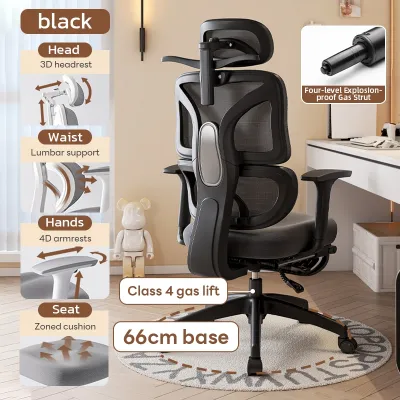
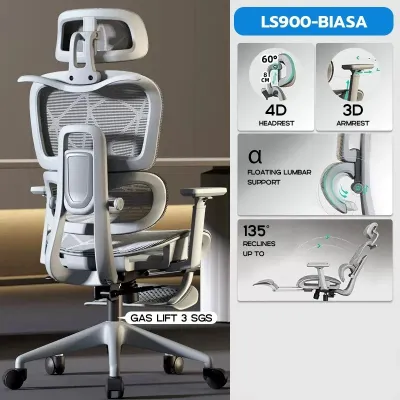
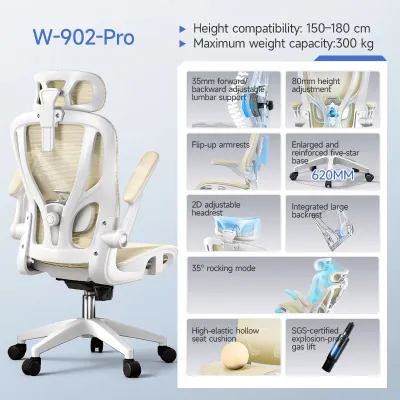
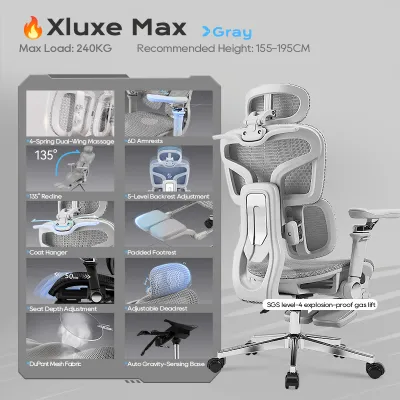
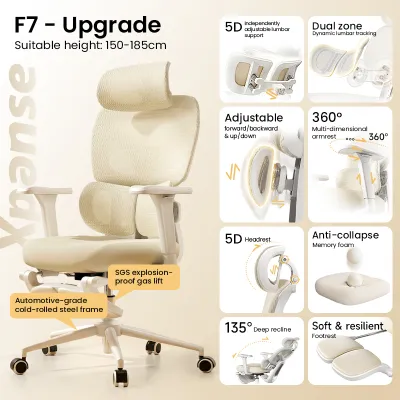
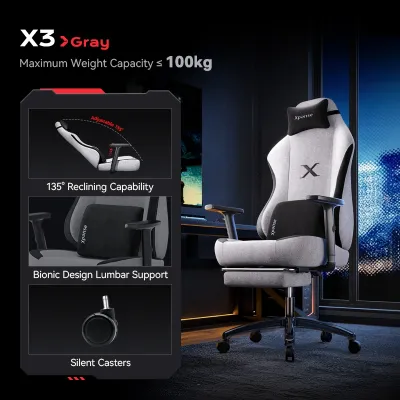
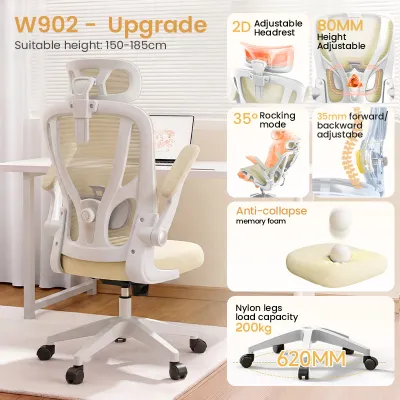
Prices are valid at publication and may change. Please refer to the product page for the latest price.
When you double your budget to the ₱7,000 range, the focus shifts toward personalized ergonomics. At this level, you transition from basic tilt to multi-angle locking mechanisms, allowing you to secure the backrest at various angles of recline. The lumbar support becomes adjustable rather than fixed, which is crucial for targeting the lumbar curve of different torso lengths. Armrests also upgrade to multi-directional designs, and the mesh quality improves to offer better tension retention and airflow, which is highly beneficial in warm, humid Philippine households.
At the premium ₱15,000 tier, you are paying for advanced mechanical engineering and heavy-duty structural components. The defining feature of this tier is often a synchronized tilt mechanism, which reclines the backrest and the seat pan at different ratios (typically 2:1). This keeps your feet flat on the floor and maintains proper spinal alignment throughout the recline. Additionally, you can expect highly adjustable 4D armrests, premium elastomeric mesh that resists sagging over years of use, polished aluminum bases, and robust gas lifts that carry international safety certifications.
The ₱3,000 Budget: Entry-Level Essentials and Necessary Compromises
At the ₱3,000 price point, you are looking at the entry-level tier of the ergonomic chair market. For this budget, an entry-level xpanse ergonomic chair provides the essential framework of supportive seating without the advanced customization found in high-end models. You can expect a sturdy nylon base, a basic mesh backrest that provides standard ventilation, and a seat cushion made of medium-density foam covered in fabric. The armrests at this level are typically fixed to the frame or offer simple height adjustment (1D), providing basic support for your forearms during typing tasks.

To stay within this budget, you must accept several practical compromises. The lumbar support is usually a fixed plastic band or a minimally adjustable pad, which may not align perfectly with your lower back if you are exceptionally tall or short. Furthermore, the recline mechanism is generally limited to a simple tilt-tension knob with a single upright lock, meaning you cannot lock the chair in a reclined position for resting. The overall weight capacity is also lower at this tier, typically rated for lighter to moderate loads, and the structural frames rely heavily on standard molded plastics rather than reinforced composites.
This entry-level tier is best suited for specific user profiles and use cases. If you are a student, a hybrid worker who only spends two to three hours a day at your desk, or someone looking to furnish a secondary study room, these chairs offer a cost-effective upgrade over a standard dining chair. They provide the necessary upright alignment for short sessions without requiring a major financial commitment.
Before purchasing a chair at this price point, it is highly recommended to check the manufacturer’s product label or online specifications sheet for the maximum weight capacity and the exact seat depth. Because the seat pan is fixed and cannot slide forward or backward, you must verify that the seat depth matches your thigh length. A seat pan that is too deep will press against the back of your knees and restrict blood circulation, while one that is too shallow will not provide adequate thigh support.
The ₱7,000 Budget: Mid-Range Adjustability for Daily Use
Stepping up to the ₱7,000 budget tier brings you into the mid-range category, which represents the sweet spot for the majority of full-time office workers and remote professionals in the Philippines. At this price level, a mid-range xpanse ergonomic chair introduces significant ergonomic upgrades that allow you to customize the chair to your body’s specific dimensions. The lumbar support is a standout feature here, typically offering both height and depth adjustments to ensure it cradles your lower back precisely where you need it most.
The mechanical components receive a major upgrade in this tier, transitioning to multi-function tilt-lock mechanisms. This allows you to recline the chair and lock it at several pre-set angles, making it much easier to transition from an active typing posture to a relaxed reading or viewing angle. The armrests also upgrade to 2D or 3D configurations, allowing you to adjust not only their height but also their depth (forward and backward) and angle (pivoting inward or outward) to support your arms during different tasks.
Another critical upgrade is the quality of the mesh upholstery. In the warm and humid climate of the Philippines, standard foam seats can trap body heat and sweat, leading to discomfort during long working hours. Mid-range chairs often feature high-tension, breathable mesh on both the backrest and sometimes the seat pan, promoting continuous airflow and keeping you cool even in non-air-conditioned rooms.
This tier is ideal for professionals, content creators, and students who spend six to eight hours a day at their desks. The added adjustability helps prevent the physical fatigue, shoulder tension, and lower back pain associated with prolonged sitting.
When shopping in this range, take the time to verify the exact range of the lumbar support adjustment and the minimum and maximum heights of the armrests. You should measure your desk height from the floor and ensure that the chair’s armrests can be adjusted to align perfectly with your desk surface. This alignment allows your elbows to rest at a comfortable 90-degree angle, reducing strain on your shoulders and neck during long typing sessions.
The ₱15,000 Budget: Premium Ergonomics and Advanced Mechanisms
At the ₱15,000 tier, you are investing in a premium xpanse ergonomic chair designed for maximum physical support, superior materials, and long-term durability. The defining characteristic of this premium tier is the synchronized tilt mechanism. Unlike basic chairs where the back and seat tilt together, a synchronized mechanism moves the seat pan at a slower rate than the backrest when you recline. This dynamic movement keeps your torso open, maintains your gaze level, and ensures your feet remain firmly planted on the floor, preserving proper circulation and spinal alignment.
The build quality at this price point is exceptionally robust, replacing standard plastics with heavy-duty materials. You can expect a polished aluminum alloy base, which offers superior stability and structural integrity compared to nylon bases. The structural frame is often reinforced with fiberglass or aluminum connectors, and the gas lift is typically a heavy-duty Class 4 cylinder designed to handle higher weight capacities and frequent height adjustments over many years. The armrests upgrade to full 4D adjustability, allowing you to customize height, depth, angle, and width to accommodate any shoulder width or keyboard setup.
The mesh used in these premium models is of a much higher grade, often woven with elastomeric fibers that provide firm, responsive support while resisting sagging or stretching over time. Many models at this price point also include fully adjustable headrests that can be tuned for height and angle, providing crucial neck support during deep recline angles.
This premium tier is designed for power users who spend eight or more hours a day sitting, individuals with pre-existing back or neck issues, and those who view their office chair as a long-term investment in their health. It is also highly suitable for taller or heavier individuals who require the enhanced stability and wider adjustment ranges that premium engineering provides.
Before finalizing a purchase at this price level, carefully inspect the product specifications for international safety and performance certifications, such as those from SGS or BIFMA. These certifications indicate that the gas lift and structural joints have undergone rigorous load and durability testing. Additionally, verify the manufacturer’s warranty terms specifically for moving parts, mechanical linkages, and mesh sagging, as premium chairs should ideally be backed by multi-year coverage to protect your investment.
How to Compare Key Ergonomic Specs Before You Buy
To help you visualize how these features scale across the different price points, it is helpful to compare their core technical specifications side by side. When shopping for a xpanse ergonomic chair, matching these specifications to your daily routine and physical requirements will help you identify which tier offers the best value for your specific needs.
Below is a comparison framework detailing the typical specifications you can expect to find at each of the three major budget tiers:
| Budget Tier | Lumbar Adjustability Type | Armrest Dimensions | Tilt Mechanism Type | Base Material |
|---|---|---|---|---|
| ₱3,000 Tier | Fixed or basic height-only pad | Fixed or 1D (height-only) adjustment | Simple tilt-tension with single upright lock | Standard molded nylon |
| ₱7,000 Tier | Height and depth adjustable | 2D or 3D (height, depth, angle) | Multi-angle tilt lock with tension control | Reinforced nylon or standard steel |
| ₱15,000 Tier | Dynamic self-adjusting or fully customizable | 4D (height, depth, angle, width) | Synchronized tilt (2:1 ratio) with multi-lock | Polished aluminum alloy |
When reviewing these specifications on online marketplaces or at local retail shops in the Philippines, remember that these are general benchmarks. If a specific price tier does not currently have an active model available in the Xpanse lineup, look for the closest alternative price point or verify if a mid-range model can be upgraded with optional accessories to meet your requirements. Always prioritize structural stability and lumbar fit over purely aesthetic features.
Verifying Total Costs, Assembly, and Warranty Conditions
When purchasing an ergonomic chair online in the Philippines, the listed price is often not the final amount you will pay. Bulky furniture items require specialized shipping, and delivery fees can vary significantly depending on your location. While delivery within Metro Manila might be relatively affordable or sometimes promotional, shipping to provincial areas in Luzon, Visayas, or Mindanao can add a substantial amount to your total bill. Always calculate these shipping costs at checkout to ensure the total purchase remains strictly within your budget.
Most ergonomic chairs are delivered flat-packed to minimize shipping volume and protect the components during transit. This means you will need to assemble the chair yourself upon arrival. Before purchasing, verify whether the package includes all necessary assembly tools, such as Allen keys and screws, and a clear instruction manual. If you do not feel comfortable assembling the chair yourself, check if the seller offers an optional professional assembly service, though this may incur an additional fee.
Warranty terms are a crucial indicator of a chair’s long-term value and the manufacturer’s confidence in their product. Before checking out, read the seller’s warranty policy carefully to understand what is covered and for how long. A reliable warranty should cover the gas lift cylinder, the tilt mechanism, and the structural frame for at least one to three years. Be sure to clarify how warranty claims are handled—specifically, whether you must ship the heavy chair back to the seller at your own expense or if they provide replacement parts directly to your home.
Finally, perform a thorough inspection of the chair immediately upon unboxing. Test the gas lift by sitting on the chair and adjusting the height multiple times to ensure smooth operation without sinking. Check the mesh fabric for any signs of tearing, loose threads, or uneven tension, and inspect the base and frame for scratches or structural cracks. Documenting any issues with photos or videos immediately upon delivery is essential for securing a hassle-free return or replacement from the seller.
Frequently Asked Questions (FAQ)
How do I know if a Xpanse chair will fit under my desk?
To determine if your chair will fit comfortably, start by measuring the distance from the floor to the underside of your desk surface. Next, compare this measurement against the chair’s technical specifications, specifically looking at the minimum seat height and the minimum armrest height. For proper ergonomic posture, your armrests should be able to slide completely under the desk, allowing you to sit close enough to your keyboard without hunching forward. If your desk has a drawer or a thick support beam underneath, be sure to measure from the lowest point of that obstruction to ensure adequate clearance for your thighs and the chair’s armrests.
Is a full mesh chair better than a mesh-back with a foam seat?
The choice between a full mesh chair and a mesh-back chair with a foam seat depends on your local climate and personal comfort preferences. In the hot and humid climate of the Philippines, a full mesh chair offers superior breathability by allowing air to circulate freely around your back and thighs, which helps prevent sweat buildup. However, some users find that full mesh seats can feel too firm or cause friction along the plastic frame edges if they sit cross-legged. A high-density foam seat provides a more familiar, cushioned feel and distributes body weight more evenly, making it a highly comfortable option for long hours, provided your workspace is air-conditioned to mitigate heat retention.

Community discussion
Share your experience or ask a question. Comments are reviewed before publication.